ZEENAT-UL MASJID - THE CLOUD MOSQUE OF MUGHAL DELHI Also commonly known as Ghata Masjid (cloud mosque), Zeenat-ul Masjid was built in the year 1707 AD by Zinat-ul-Nissa, Aurangzeb's second daughter. The mosque is believed to be inspired by Jama Masjid in Chandni Chowk, built by her illustrious and much loved grandfather, Shah Jahan. Though much smaller in scale, and barely ever visited by travellers to the city, the mosque still stands on it's own - looking glorious, despite obvious signs of decay.
Zeenat-ul ghata Masjid old delhi The sun setting behind the mosque
Zeenat-ul ghata Masjid old delhi Inside the mosque
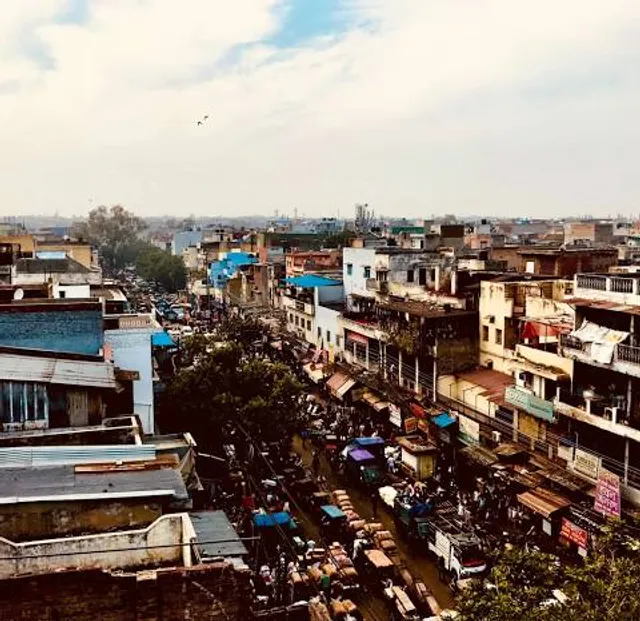
The mosque is located at Shahjahanabad in Daryaganj, which used to be the heart of the old Mughal capital. Now here's an interesting anecdote about the locality itself - Daryaganj was originally designed to be a market next to the river Yamuna, the lifeline of Delhi. However, once the British took control of Delhi they made several changes, including rerouting of the river. Unfortunately with this change in the course of river (darya), the market was no longer next to the river, though the name continued to be used.
I digress, as I always do when I tell tales from the past. Well, let's try and answer why it's called Ghata Masjid. There are actually two theories around it. The first one is about it's tall minarets which reach the clouds or ghata (not literally, of course), and the second story is about the banks of river Yamuna with it's ghat (steps leading to the river). Maybe there is another story too, but it doesn't really matter - the name has stuck, even though some people call it ghaata (loss) masjid too.
The mosque saw some dark times during India's first independence struggle in 1857 when the Mughal rulers in Delhi joined the revolt against the British. Unfortunately, the war was lost and with that the Mughal empire in India came to an end. Bahadur Shah Zafar, the last Mughal, was exiled to Rangoon (Burma or Myanmar used to be a part of British India then) and large parts of Delhi were completely destroyed, including almost everything inside the Red Fort. The mosque wasn't razed to the ground, but the British decided to convert it into a bakery. The tomb of Zinat-ul-Nissa was moved, but no one really knows where her final mortal remains are now.
Zeenat-ul ghata Masjid old delhi Time for birds to go back home
Connection with Taj Mahal
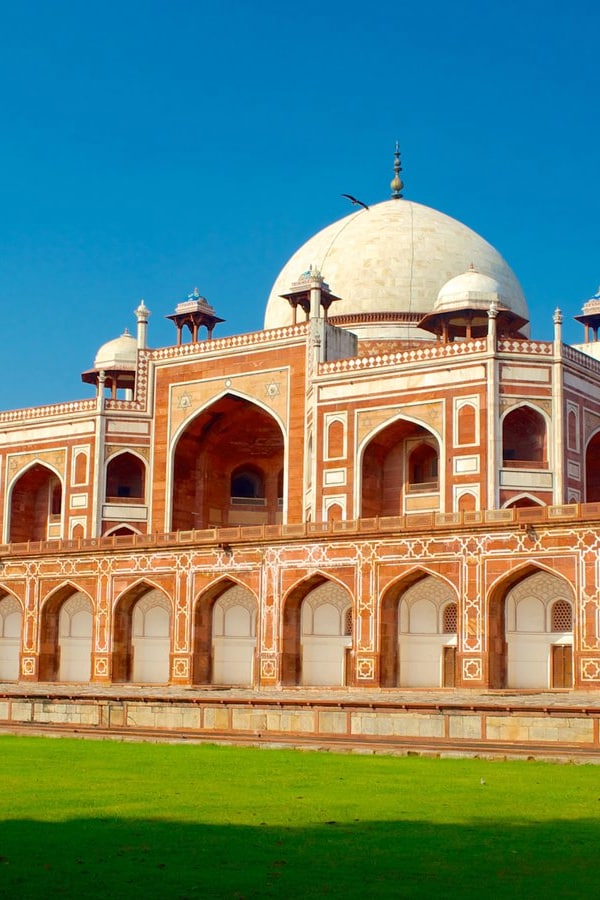
Here's another story from her family, and this one is about her mother, Dilras Banu Begum. She was Aurangzeb's favourite wife and her story takes us all the way to Deccan where she was buried in the majestic Bibi ka Maqbara in Aurangabad. Here's the interesting bit - the mosque built by her was a miniature version of Jama Masjid in Delhi, while Bibi ka Maqbara is a miniature version of Taj Mahal in Agra. What's even more interesting is the fact that both were built by Shah Jahan, Aurangzeb's father, who was thrown off from his throne by Aurangzeb himself and leter imprisoned till death in Agra's Red Fort.
Such are the fascinating tales from the Mughal era. I can just keep exploring them all my life!
Zeenat-ul ghata Masjid old delhi Time for prayer at the mosque Zeenat-ul ghata Masjid old delhi Ghata masjid or Zeenat-ul masjid in Old Delhi
Planning a visit to Ghata Masjid
Reaching the mosque: I would recommend taking a cab and coming here, or if you are already in Old Delhi you can take an auto-rickshaw too. The closest metro stations are Chawri Bazaar and Chandni Chowk, but you will still need to take some transportation from there to reach the mosque.
Entry fee: The entry to the mosque is free
Timings: There are no fixed timings, and you can easily come here from sunrise to sunset
Dress-code: I don't know if there is any, but it's recommended not to...
Read moreTucked away in the bustling lanes of Daryaganj, the Zeenat-ul Masjid, also referred to as the Ghata Masjid, is a captivating and often overlooked monument of Old Delhi. This beautiful mosque stands as a testament to the architectural prowess of the late Mughal era, and a quiet spiritual haven in the heart of the city's commercial chaos. Constructed in 1707 AD by Zeenat-un-Nissa Begum, the second daughter of Mughal Emperor Aurangzeb, the mosque's history is as intriguing as its architecture. It is a magnificent example of Islamic and Mughal architecture, with its design intended to be a smaller-scale replica of the grand Jama Masjid built by her grandfather, Shah Jahan. The name 'Ghata Masjid' or 'Cloud Mosque' is said to have been given to it because of a large, beautiful baoli (stepwell) that once stood beside it, creating a cloud-like mist. The mosque is distinguished by its three elegant domes and two tall minarets that stand sentinel over the courtyard. During the British period, the mosque suffered significant harm. It was confiscated and used as a bakery, which greatly damaged its beauty. Sadly, Zeenat-un-Nissa Begum's tomb, which was originally located within the mosque complex, was also destroyed and her remains were shifted to an unknown location. Despite this period of desecration, the mosque was eventually restored and remains an active place of worship today, a vibrant part of Delhi's rich heritage and a testament to its...
Read moreZeenat-ul-Masajid,also written as Zeenat-ul-Masjid and popularly known as the Ghata Masjid (lit. 'Cloud Mosque' is an 18th-century Mughal mosque located in Delhi, India. The mosque was commissioned by Zeenat-un-Nissa, second daughter of the Mughal emperor Aurangzeb. The Zeenat-ul-Masajid was built in the beginning of the 18th century by Zeenat-un-Nissa,during the reign of her father Aurangzeb.Its construction was part of an increased patronage of mosques by the Mughal elite during the 18th century.
During the Siege of Delhi, the Zeenat-ul-Masajid was confiscated by British military forces and subsequently converted into a bakery for troops. The building was later partially used as a residence.
The Zeenat-ul-Masajid is built on a high plinth. It has three marble domes striped with red sandstone and topped by inverted lotus-blossoms. The mosque's pishtaq is adorned with marble and framed by thin turrets. The mosque's facade bears three archways on either side of the main entrance, each of which is supported by piers. At both ends of the mosque's facade are three-storey minarets. The mosque shows close influence from Shah Jahan's Jama Masjid in features such as the height of the pishtaq and the domes; however, elements of Aurangzeb-era architecture are also evident in the domes' bulbous shape and constricted necks, and the mosque's...
Read more