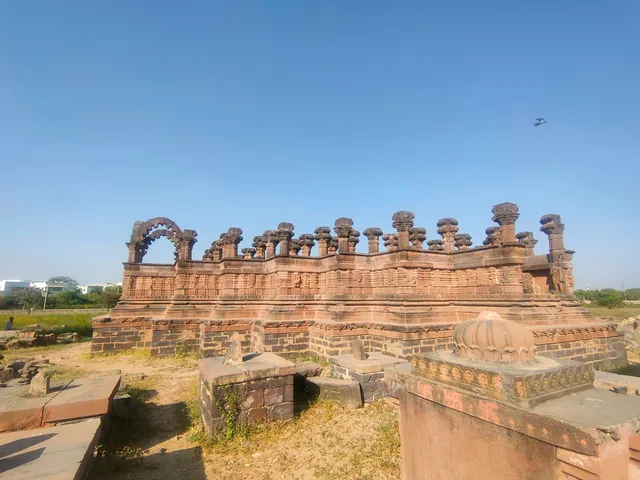
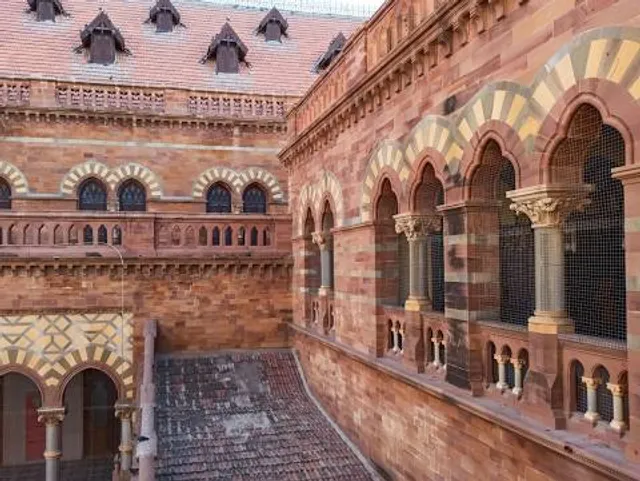
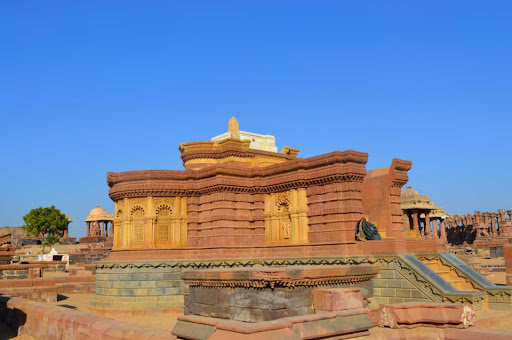
Chhatardi Bhuj, also known as the Royal Chhatris or Cenotaphs of Bhuj, is a notable historical monument located near Hamirsar Lake in Bhuj, Kutch, Gujarat. These cenotaphs were constructed in the 18th century by the Jadeja rulers of Kutch to honor and memorialize the warrior kings and royal family members who ruled the region. The site stands as a tribute to the rich royal heritage of the Jadeja dynasty and is a remarkable example of Kutch's architectural and cultural legacy.
The term "Chhatardi" derives from the Gujarati word "Chhatri," meaning "umbrella," which refers to the distinctive umbrella-shaped domes topping the cenotaphs. These structures serve as empty tombs—memorials erected to honor the deceased rulers—reflecting a long-standing Rajput tradition. Unlike mausoleums, the ashes of the deceased were not interred within but were scattered in sacred rivers, following Hindu funerary customs.
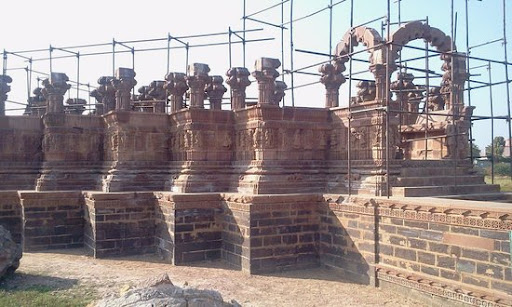
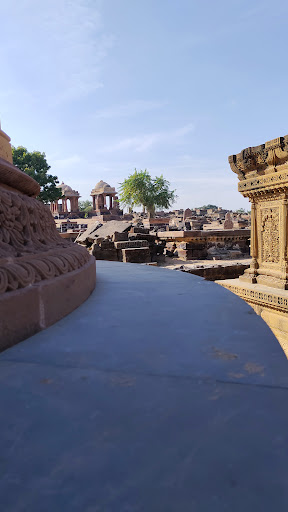
Architecturally, the Chhatardis are a fascinating blend of Rajputana and Mughal styles, showcasing the cultural synthesis that influenced the region. They are predominantly carved out of red sandstone, adorned with intricate carvings, floral patterns, and detailed sculptures representing daily life, hunting scenes, and figures of dancers, musicians, and courtesans. Islamic architectural influences are also evident in the use of geometric jalis (stone screens) and polylobed arches. The complex consists of multiple cenotaphs, the most significant being the chhatri of Rao Lakha, designed by the famous artisan Ram Singh Malam, who also contributed to other important structures in Kutch.
The Rao Lakha Chhatri is polygonal in shape, with balconies and a striking blue dome influenced by Turkish architecture. It contains two galleries and two entrances. A unique and poignant aspect of this cenotaph is a stone slab that mentions fifteen of Rao Lakha’s wives committed sati (self-immolation) on his funeral pyre, an ancient practice that adds a dramatic historical element to the site. The cenotaph is richly ornamented with life-sized statues of women and men carved on pillars, providing a vivid depiction of the dress, jewelry, and customs of the time, giving visitors a glimpse into the past lifestyle and culture.
The surrounding area of Chhatardi Bhuj is peaceful and spacious, often quiet with few visitors, providing a tranquil atmosphere ideal for history enthusiasts, photographers, and those seeking to connect with the heritage of Kutch. The proximity to Hamirsar Lake adds to the scenic value, especially at sunset, making it a memorable experience for visitors.
However, the site suffered significant damage during the 2001 Gujarat earthquake. While some monuments lie in ruins, efforts at restoration and preservation continue, particularly for the cenotaphs of Rao Lakha, Raydhanji II, and Desarji, which remain relatively intact. Visitors can still appreciate the grandeur and artistic excellence of the remaining structures despite the losses.
Chhatardi Bhuj is open to visitors throughout the day with no entry fee. There are no strict restrictions, although climbing on the actual cenotaphs is discouraged out of respect for the monuments. The site has caretakers who can provide basic historical information to visitors, enhancing the educational value of...
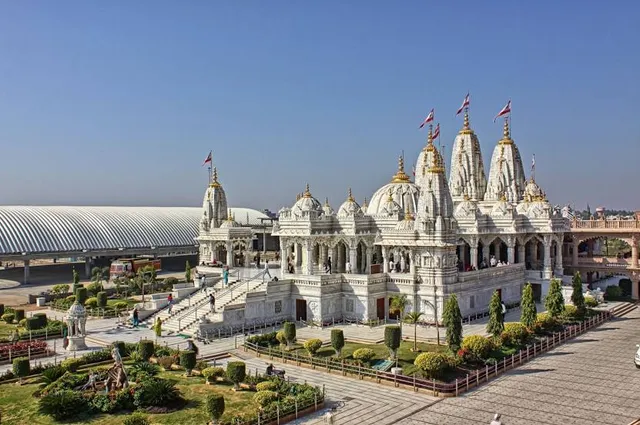
Read moreThe Chhatris in Bhuj were constructed in the 18th century by Jadeja ruler Rao Lakhpatji. The structure of these monuments is a unique mix of Rajputana and Mughal architectural styles. These umbrella-shaped dome structures are specimens of fine carvings in red sandstone.Also known as Royal Chhatris or Cenotaphs, these are basically monuments dedicated to the lives of warrior Rajput rulers of the Kutch. I was there at sunset and I highly recommend it.The word Chhatedi derives from Chhatri which means umbrella after the shape of the domes of the monument. Chhatris are popular all over Rajasthan and Gujarat. The Royal cenotaphs are usually associated with the resting places of the rulers of the region. Locals treat the structures with respect and they expect the same from the tourists. The Chhatedis at Bhuj were cThere are a lot of figures and images on the pillars around the Rao Lakha Chhatri. In the absence of historical information, I would just let my imagination run wild and construct stories about the human figures.onstructed by the Jadeja rules in 18th century.Not much was written about Chhatedi around the site. I saw one sign board and all my historical information comes from that source. The most ornate complex is called the Rao Lakha Chhatri. The architecture style is a mixture of Rajputana and Mughal styles. They are carved out of red sandstone.The Rao Lakha Chhatris are designed by Ram Singh Malam. A stone slab in the complex also suggests that 15 of the King’s wives gave up their life at the funeral pyre of Rao Lakha. Many of the Chhatris were damaged in the 2001 earthquake at Bhuj.I highly recommend a visit to Chhatedi in Bhuj, more so if you can manage go around the sunset time. Not too many people visit it. You might like to stay for 2 hours if you wish to take a lot of pictures. Swami Narayan Temple is nearby and that too is a beauty to hold...
Read moreIts Very Amazing Place. the reasons for this before suggesting some possible methods of attracting local people.
The main factor is the different motivations of tourists and local people. For a tourist, the aim when visiting another country, city or region, is to learn about that new place and possibly to understand its culture and history. Visiting historical sites and museums is an excellent way to do this. On the other hand, local people have often lived in the area for much of their lives, and have either learned this at school or understand it through personal experience. In addition, tourists are on holiday and have set aside time and money for these activities. However, local people may be too busy working and prefer to prioritise their spending on such things as school, shopping and socialising.
Despite this, attendance of local people could be encouraged in a variety of ways. First and foremost, the perception of museums and historical sites could be changed by holding events at these places. For example, they could hold cultural festivals or galas for the community to celebrate a unique aspect of that particular place. Another possibility is to have special promotions, such as a reduced price or free tickets provided in local newspapers and magazines. Related to this, concession cards could also be provided to local people so they are encouraged to come more regularly.
In conclusion, tourists have different motivating factors to local people, which accounts for the reasons that they are more likely to visit museums and historical sites. That said, it is possible to encourage attendance by local people through cultural events...
Read more