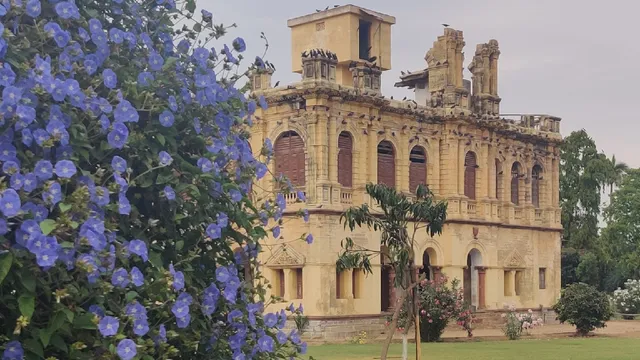
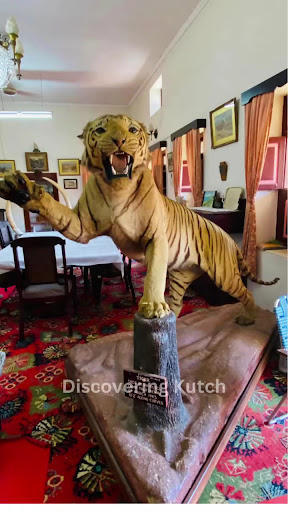
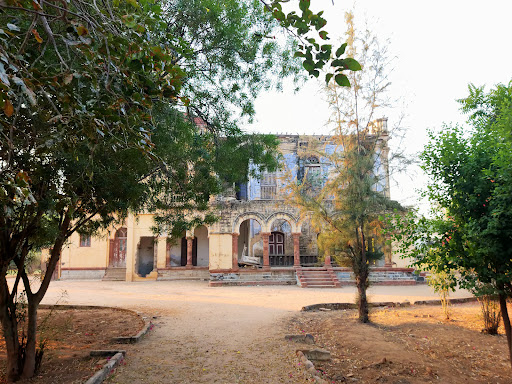
LOCATION AND HISTORY Nestled amidst the enchanting city of Bhuj, Gujarat, lies the serene oasis of Sharad Baug Palace, also affectionately known as Sharad Bagh Palace. A regal testament to history, this majestic palace, built in 1867, stands as a poignant reminder of a bygone era when royalty graced its halls. Located on the picturesque Sanjog Nagar Road, overlooking the tranquil Hamirsar Lake, the palace exudes an aura of grandeur and elegance, drawing visitors from far and wide to bask in its splendor. Old tiger, leopard ext animals of their times is available to see.
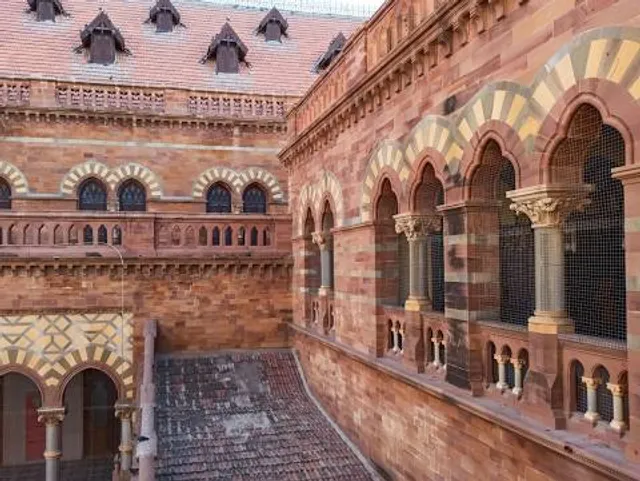
ARCHITECTURE Stepping into Sharad Baug Palace is akin to embarking on a journey through time, where the fusion of Indian and Italian architectural styles creates an enchanting ambience. Italian-influenced furniture adorns the interiors, while the walls are adorned with exquisite Indian tapestries, weaving a tapestry of cultural richness and opulence.
MUSEUM Although much of the palace's upper floors were lost to the ravages of the 2001 earthquake, the erstwhile dining hall has been transformed into a captivating museum. Here, a treasure trove of artifacts awaits, from captivating paintings and statuettes to finely crafted swords and spears. Visitors can marvel at the collection of fine carpets, and even catch a glimpse of the royal family's hunting trophies, a testament to their prowess and legacy.
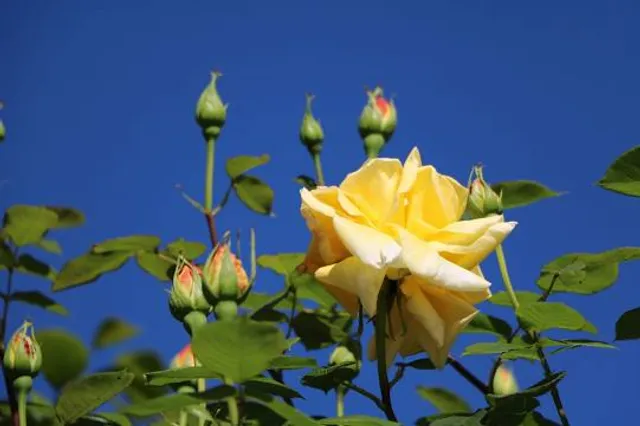
GARDEN Outside, the sprawling grounds of Sharad Baug Palace beckon with their verdant beauty. Sharad Baug Park, brimming with flowering and medicinal plants, serves as a haven for migrating birds seeking respite on their arduous journeys. As the gentle breeze rustles through the foliage, visitors are transported to a realm of tranquility and serenity.
However, amidst the palace's splendor, there are whispers of neglect in certain corners. The allure of a pre-wedding photoshoot is undeniable, with the picturesque backdrop offering an idyllic setting for capturing cherished moments. Yet, a modest fee of 250 rupees is levied for camera shoots, while a nominal entry ticket of 30 rupees grants access to the palace grounds.
Despite its charms, some areas may lack the pristine cleanliness expected of a royal abode, and the hygiene standards in the main toilets may fall short of expectations. Also with palace cleaning.
TIMINGS The place is open 9 AM to 12 PM & 3 PM to 6 PM, and closed on Friday.
In essence, Sharad Baug Palace stands as a testament to Bhuj's rich heritage and cultural tapestry, offering a glimpse into the opulent lifestyle of royalty. While its beauty may be marred by the passage of time and neglect, the palace remains a beacon of history and charm, beckoning visitors to explore its storied halls and gardens, and immerse themselves in the splendor of...
Read moreThis is too graceful ancient Palace in the history of Kachchh state.The Palace built in 1887 .The Palace is the splendid piece of work that reflects a fusion of the Indian and the Italian style of architecture. The Palace set in the shade of the trees. Due to the huge quantity of crow surround You realise as you are in jungles. The palace is staying residents of royal families up to 1991 when Last Maharao(The King) Madansinhaji Jadeja died in this Palace. After terrible earthquake came,the most of third floor of the Palace had lost in 2001. After that upper two stories had been blocked. only ground floor's adjacent dining hall converted in Musium. Because of lake of publicity the palace is not so known in the traveling public. The dynasties of the Kachchh State were the high levels patrons of arts. The last Maharao of Kachchh Madansinhaji was the great high level collector of arts from India and foreign countries,there are huge collection of Maharao Madansinhaji Maharaj Saheb of handicrafts, statue carpets and also the ancient collection of weapons that were used to use by Kachchh's Jadeja cast warriors in battlefield.I appealing to all travellers of India and abroad not to avoid the visit of Sharad Baugh Palace where they...
Read moreWhat splendor the rulers of yesteryears lives in.
Hunting, drinking, and breaking the backs of peasants in order to gain their memberships to tennis clubs in Norway, The British Isles, and elsewhere.
They shot and killed animals on other continents, brought them back and either had them stuffed and hung on walls, or turned into carpets.
But alas, like everything that is susceptible to corruption, theft, and a slow decay, dynasties fell and wealth dried up.
One can see remnants of some glory inside this rather well-kept museum.
Entry is Rs. 20 for Indian citizens, with an additional charge of Rs. 50 for a camera (whether phone camera or a SLR/DSLR), and Rs. 200 for video.
PHOTOGRAPHY IS STRICTLY PROHIBITED INSIDE THE SMALL PALACE STRUCTURE. PLEASE DO NOT VIOLATE THIS POLICY.
Parking is free.
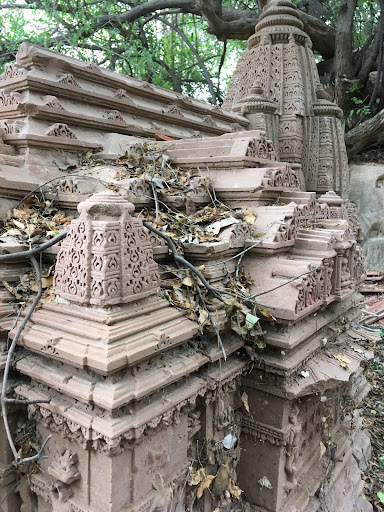
I hope the authorities in charge of this historical place make efforts to keep up the grounds as well as to restore the crumbling structures, outer walls, and gardens.
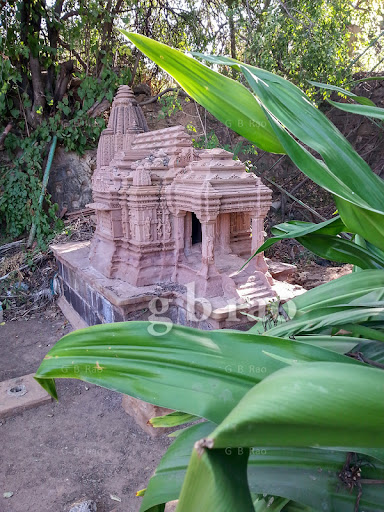
Be mindful that this is a historical place and observe and learn with due respect. Don’t miss the structures on the left as you enter (opposite the plant...
Read more