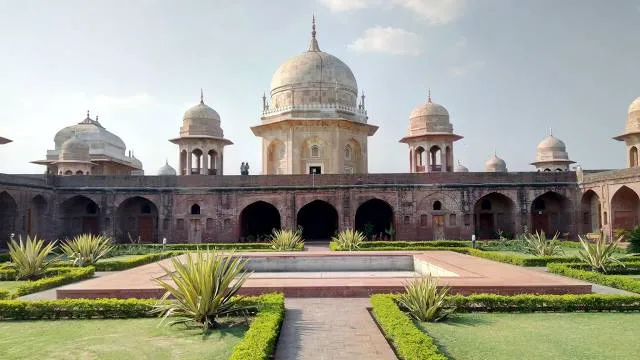
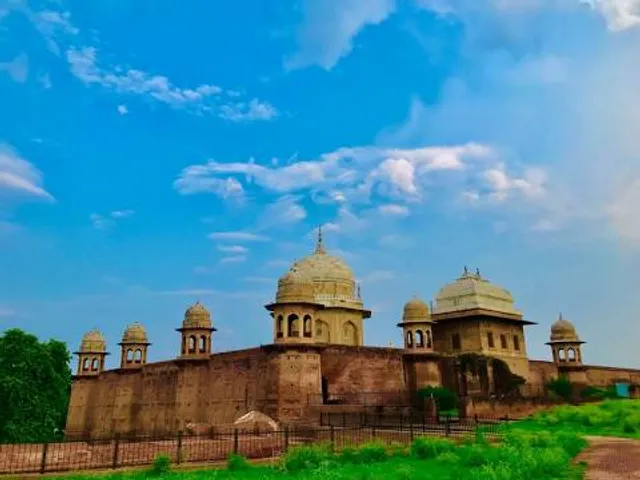
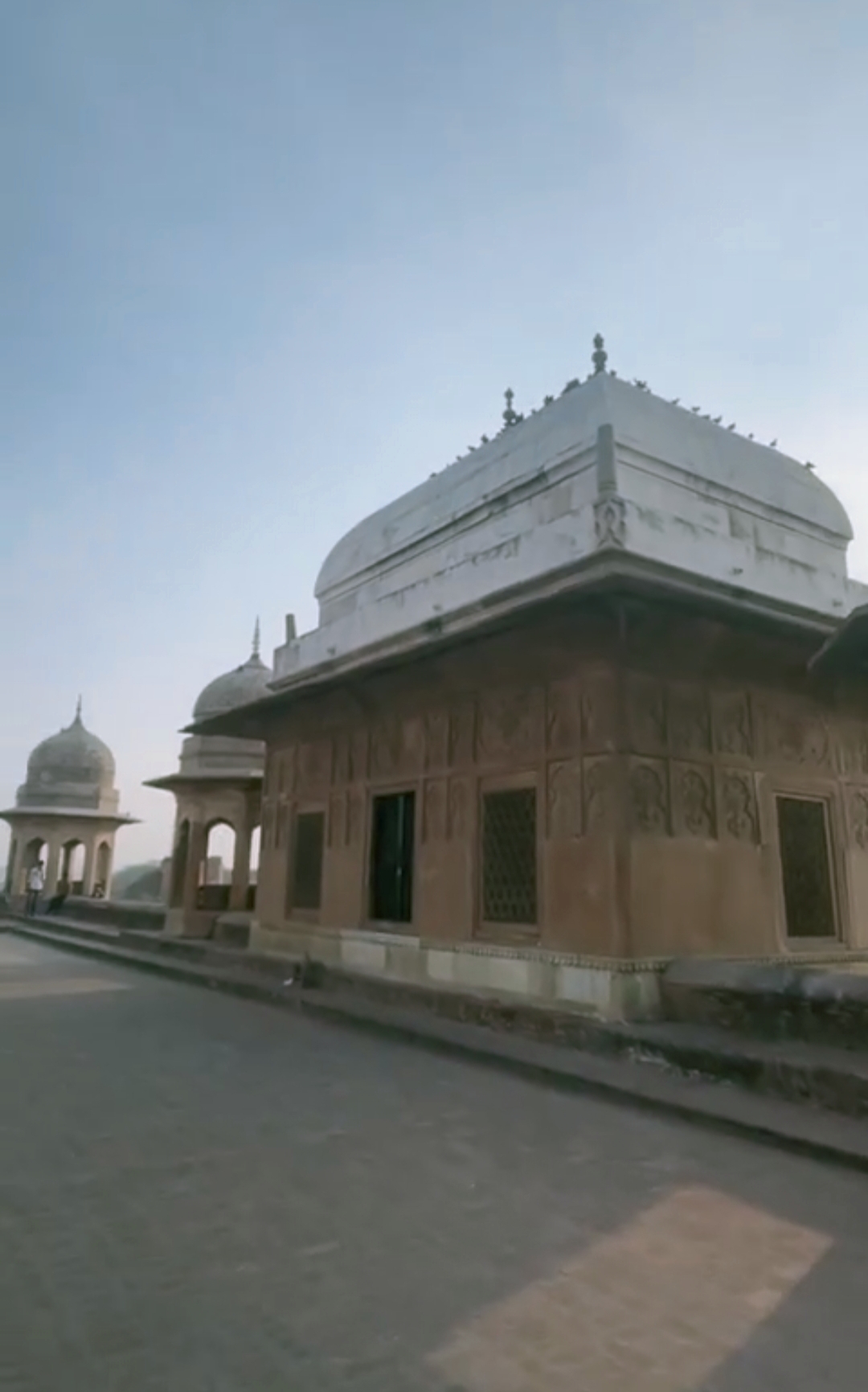
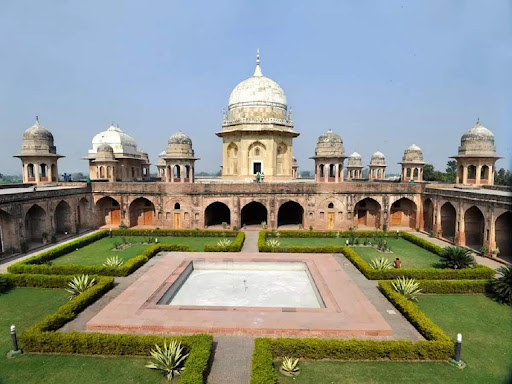
Beautiful place for everyone. Also a museum available here . Sheikh Chilli's Tomb is complex of structures located in Thanesar, in the Kurukshetra district of Haryana, India. It includes two tombs, a madrasa, Mughal gardens and various subsequent features. The main tomb belongs to Sufi Abd-ur-Rahim Abdul-Karim Abd-ur-Razak, popularly known by the name of Sheikh Chilli. He was Qadiriyya Sufi master of Mughal Prince Dara Shikoh. The architectural plan of the tomb shows considerable Persian influence. There is another tomb in the complex, believed to be of Sheikh Chilli's wife. This beautiful tomb and attached Madrasa are associated with the Sufi Saint Abd-ur-Rahim. There is a mosque called Pather Masjid (Stone Mosque) that was built in red sandstone. On the north side are the Mughal Gardens. The ceiling of the mosque, resting on pillars is decorated with floral designs carved in low relief. The pillars are also profusely decorated with floral designs, while the bases over the mouldings show chaitya-window motifs. The Qibla in the centre of the western wall is flanked on either side by two arched niches inscribed with verses from the Quran. The masonry terrace forming the front court was added at a later date. The masjid is assignable to the seventeenth Century A.D. Adjoining the southern flank of the complex (i.e. north of the tomb of Sheikh Chilli) is a large sized building which on account of both stratigraphic evidence and style of construction appears to be a garden complex following the pattern of a typical Mughal Garden and is divided into four equal, symmetrical parts (the charbagh pattern) with a square hauz in the centre. Water to the hauz (tank) was supplied by terracotta pipes from the east, concealed within the wall.
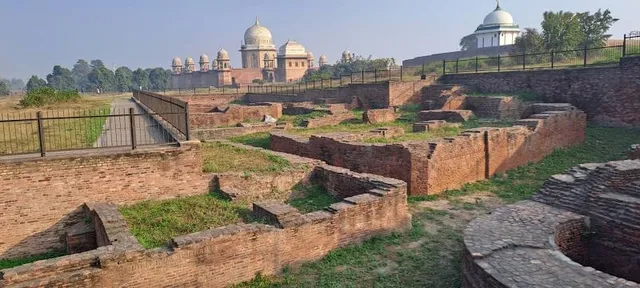
On the eastern side of the central hauz there is a small rectangular tank connected with a raised open drain coming from further east. The tank had on the northern side a small cistern having cussed patterns on both longitudinal ends and a copper fountain in the center. The water used to run through a concealed conduit pipe provided below the lime plastered surface, meant for the flow of water from the cascade. The Park now popular as the Harshvardhan Park is entered through an elaborate double storey gateway, located in the center of the eastern wall from which one of the paths leads to all its four sides, hosting on the exterior, a series of double roomed chambers, on three sides i.e., the east, north and west respectively with provision of niches and alcoves on its walls. The western wing of this sarai however had double storeyed chambers which could be reached through a flight of steps provided at the center and towards the extreme south-western corner. Exactly opposite to the main entrance gateway was another majestic structure, constructed just like the main entrance gateway. However this structure didn't carry any entrance from the ground floor, but had an opening towards the west on the upper storey. This opening on the upper floor gave a direct accessibility from the Raja Harsha-ka- Tila located west of the sarai and the chamber is constructed in such a way that probably this was the place from where an authority used to address the gathering below within the sarai. West of the tomb are the ruins of Harsh-ka- Tila. Excavations conducted at this site revealed a continuous habitation at the site from about the first century A.D. to the late Mughal period. The findings of a few sherds of painted Grey Ware along with associated plain grey, black-slipped and red wares in pre-Kushana levels also suggest the inhabitation of the site in the first...
Read moreVisiting the Sheikh Chilli’s Tomb in Thanesar, Kurukshetra, is like stepping back into a bygone era of Mughal elegance and spiritual introspection. As I approached the complex’s ancient sandstone gateway, the warm hues of the stones glowed softly under the morning sun, immediately setting a reflective, almost meditative mood. The sprawling gardens, meticulously laid out in the traditional Charbagh style, offered vibrant bursts of marigolds and roses, their scent mingling pleasantly with the earthy aroma rising from the dew-kissed pathways.
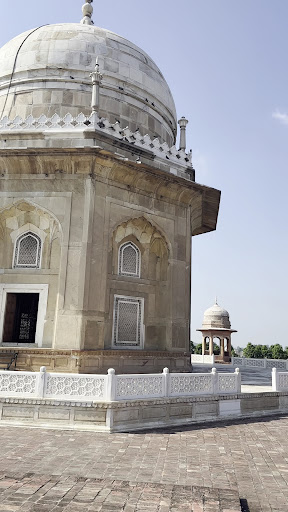
The focal point—the mausoleum itself—stands on a slightly elevated plinth, its domed roof and arched colonnades exemplifying classic Mughal architecture. The finely carved jali screens let shafts of light dance across the marble façade, creating a mesmerizing play of shadow and illumination inside the sanctum. Though centuries old, the structure remains remarkably well-preserved, a testament to the skilled craftsmen who originally conceived it and the caretakers who maintain it today.
Inside, the hushed atmosphere encourages quiet contemplation. The cenotaph of Sheikh Chilli—a renowned Sufi saint and scholar—lies at the center, draped in simple white cloth, symbolizing purity and humility. Nearby, an interpretive museum houses rare manuscripts, coins, and everyday objects from the Mughal period, providing valuable context for the tomb’s historical significance.
Local guides, friendly and knowledgeable, are eager to share legends of Sheikh Chilli’s wit and wisdom, weaving folklore into the architectural narrative. A brief walk through the adjacent Madrasa ruins deepens one’s appreciation for the site’s role as a center of learning.
Overall, Sheikh Chilli’s Tomb is not merely a tourist attraction but a serene oasis of history, spirituality, and art—ideal for history buffs, architecture enthusiasts, and anyone seeking a peaceful retreat from the bustle of...
Read moreReview for Sheikh Chilli’s Tomb, Kurukshetra
Sheikh Chilli’s Tomb in Kurukshetra is one of those places that looks beautiful in pictures but doesn’t quite live up to the expectations when you actually visit. It’s a peaceful and calm spot, perfect if you’re someone who enjoys quiet surroundings and open green spaces. The area around the tomb is well-maintained with lush green lawns and a small park, which add to the charm of the place. However, beyond that, there isn’t much to explore.
The tomb itself is small and doesn’t offer much historical information on-site. There are no guides available to explain the story or significance of Sheikh Chilli, which makes it hard for visitors to connect with the place beyond its architecture. For history lovers, this might feel like a missed opportunity, as the site could be more engaging with even a few signboards or a small museum section.
Practical facilities are another major drawback. There is no drinking water facility, which becomes quite inconvenient, especially during summer. There are also no proper sitting arrangements around the complex, so you have to stand or sit on the grass if you want to rest. The absence of security personnel or safety measures is another concern — the place feels unattended, and visitors are mostly left on their own.
On the positive side, it is indeed a good location for photography. The peaceful environment, the ancient Mughal-style structure, and the surrounding greenery create a lovely backdrop for pictures. Many visitors come here mainly for that reason — to take a few nice shots rather than to explore something deeply historical.
In conclusion, Sheikh Chilli’s Tomb is a serene but underdeveloped tourist spot. It’s worth a short visit if you’re nearby, but it lacks basic facilities, maintenance, and informative value that could make it a more fulfilling...
Read more