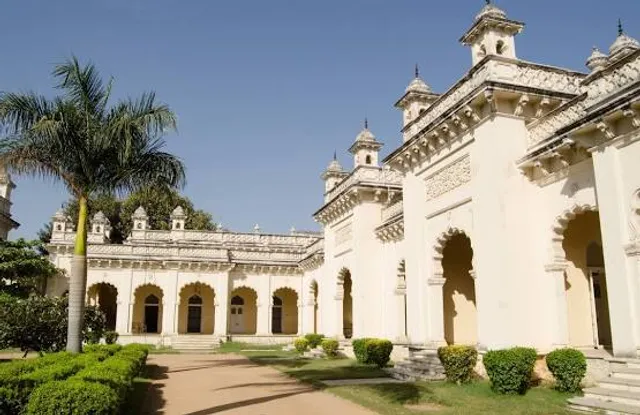
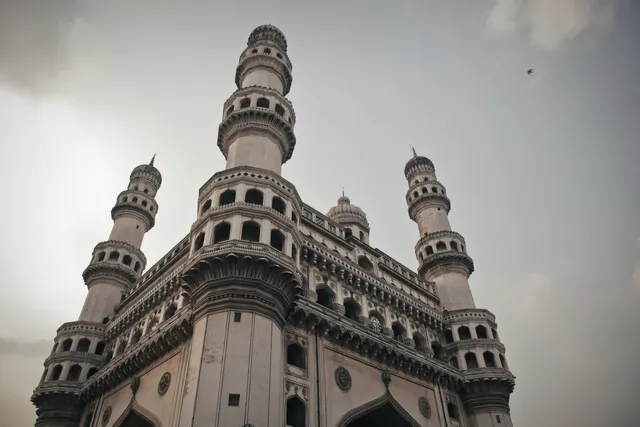
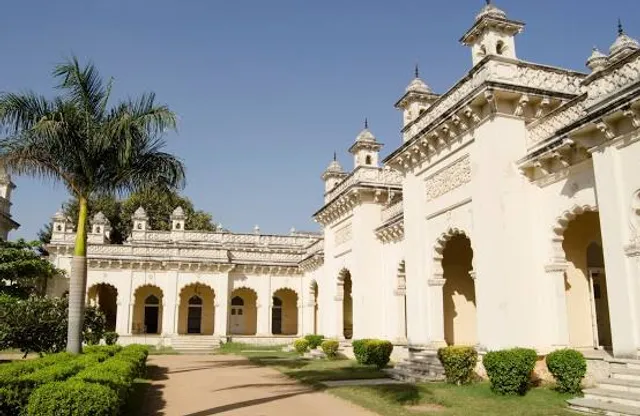
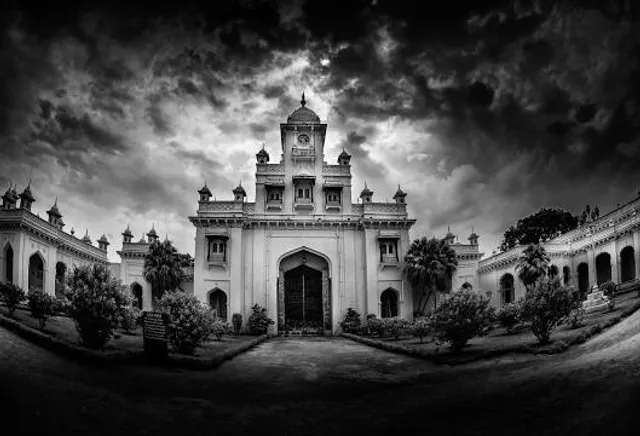
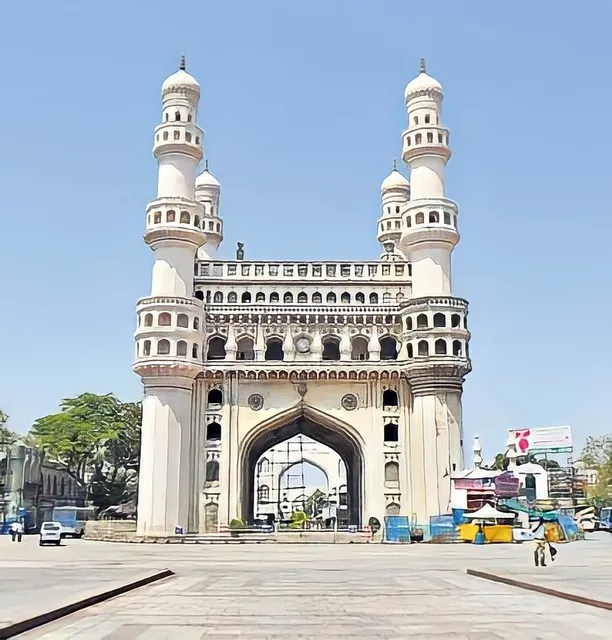
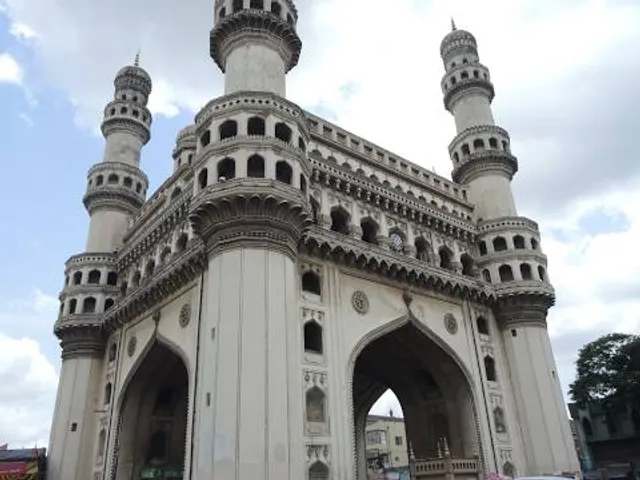
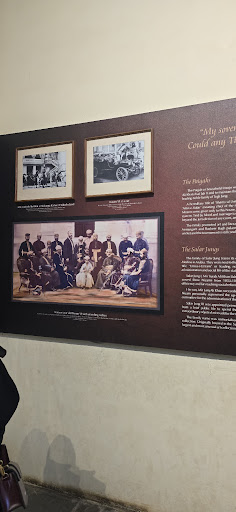
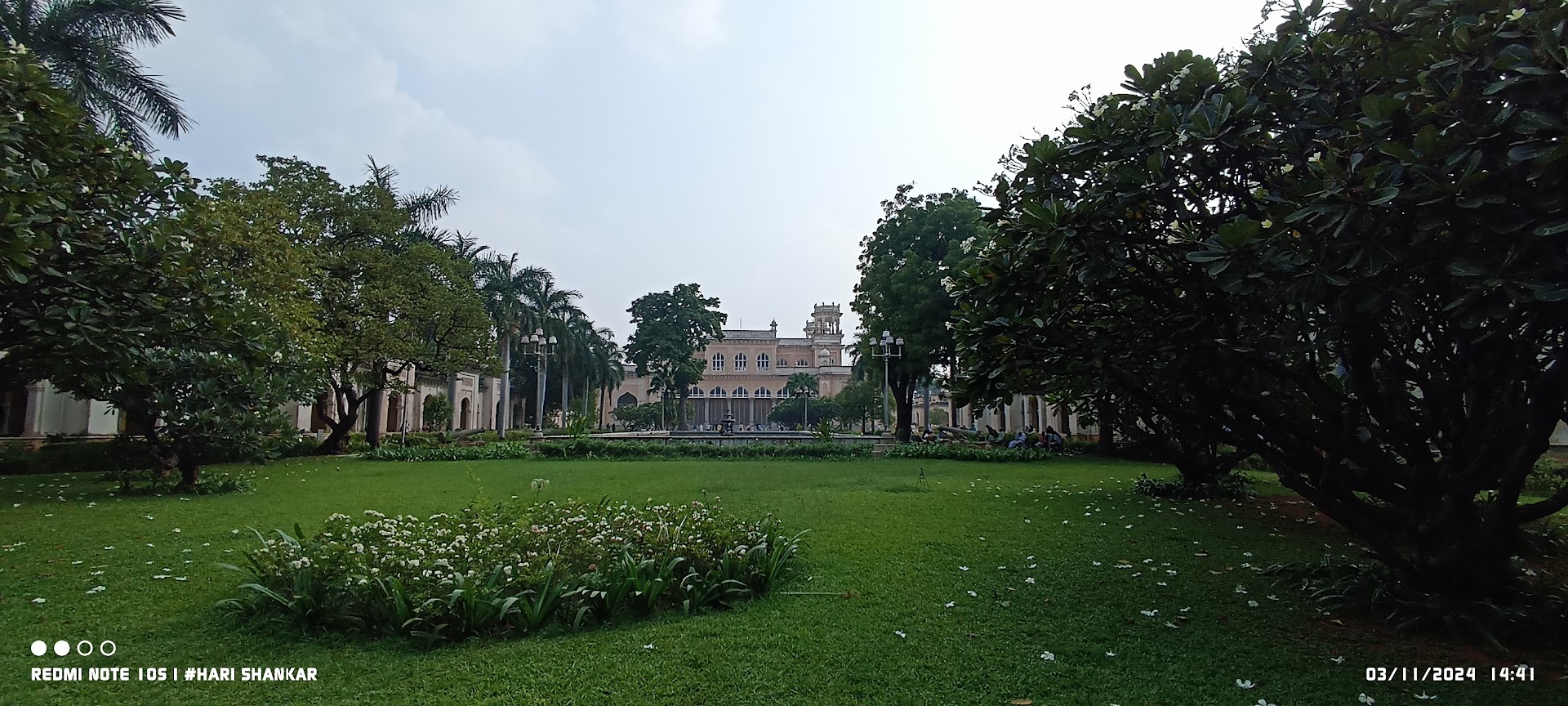
Nice tourist place near charminar in Hyderabad. Chowmahalla Palace is the palace of the Nizams of It was the seat of power of the Asaf Jahi dynasty (1720-1948) and was the official residence of the Nizams during their reign. The palace has been converted into a museum and the ownership still lies with the family. The palace was constructed at the location of an earlier palace of the Qutb Shahi dynasty and Asaf Jahi dynasty close to the Charminar. Construction of the palace, as it stands today, was started by Nizam Ali Khan Asaf Jah II[ in 1769. He ordered the building of four palaces from which the nomenclature of Chau Mahalla is derived. The word chār or chahār, and its variation chow, means "four" and the word mahal means "palace" in Urdu, Hindi and Persian. While Salabat Jung initiated its construction in 1750, the palace was completed by the period of Afzal ad-Dawlah, Asaf Jah V between 1857 and 1869. The palace is unique for its style and elegance. Construction began in the late 18th century and over the decades a synthesis of many architectural styles and influences emerged. The palace consists of two courtyards as well as the grand Khilwat (the Darbar Hall), fountains and gardens. The palace originally covered 45 acres but only 12 acres remain today. Southern courtyard is the oldest part of the palace, consisting of four palaces: Afzal Mahal, Mahtab Mahal, Tahniyat Mahal and Aftab Maha, built symmetrically opposite each other in Neoclassical style. The forecourt between the palaces is adorned with a pond and a garden. Northern courtyard is the part has Bara Imam, a long corridor of rooms on the east side facing the central fountain and pool that once housed the administrative wing; and Shishe-Alat, meaning mirror image. It has Mughal domes and arches and many Persian elements such as the ornate stucco works that adorn the Khilwat Mubarak. Opposite the Bara Imam is a building that is its shishe or mirror image. The rooms were once used as guest rooms for officials accompanying visiting dignitaries. Khilwat Mubarak is the heart of Chowmahalla Palace. It is held in high esteem by the people of Hyderabad, as it was the seat of the Asaf Jahi dynasty. The grand pillared Durbar Hall has a pure marble platform on which the Takht-e-Nishan or the royal seat was laid. Here the Nizams held their durbar and other religious and symbolic ceremonies The 19 spectacular Chandeliers of Belgian crystal were recently reinstalled to recreate the lost splendour of this regal hall. Clock tower is the main gateway to the Chowmahalla Palace on the western hand has a clock tower also known as a Khilafat clock. The tower is three storeys high and consists of balconies and jharokha of Mughal style same as the style of half domes. It has been ticking since 1750. Council hall This building housed a rare collection of manuscripts and priceless books. The Nizam often met important officials and dignitaries here. Roshan Bangla The Sixth Nizam, Mir Mahbub Ali Khan, is believed to have lived here and the building was named after his mother Roshan Begum. The former Nizam (Barkat Ali Khan Mukarram Jah) and his family decided to restore the Chowmahalla Palace and open it to the public in January 2005. It took over five years to document and restore the palaces of the first courtyard to its former glory. The palace also has a collection of vintage cars, including the Rolls-Royce, which the Nizam kings used. Museum The displays in the museum depict the origin and evolution of Hyderabad, achievements and valuable contribution of the Nizams towards the development of the state, and the social lifestyle of the royal family. The museum is divided into parts arranged around two quadrangle courtyards in North and South
A Walk Through History at Chowmahalla Palace
Visiting Chowmahalla Palace in Hyderabad feels like stepping into a forgotten royal world that has managed to hold on to its elegance despite the passage of time. Built in the 18th century by the Asaf Jahi dynasty, this was once the seat of the Nizams rulers who were famed for their grandeur, wealth, and influence. The name itself, “Chowmahalla,” translates to “Four Palaces”, and the complex certainly lives up to that promise.
First Impressions
The palace grounds immediately give a sense of spaciousness and calm, tucked away from the city’s noise. The main courtyard is vast, with neatly kept lawns, fountains, and pathways leading to different sections. The architecture strikes you right away it’s an elegant blend of Mughal, Persian, and European influences, a true reflection of the Nizams’ cosmopolitan taste.
Architecture & Interiors
Khilwat Mubarak (Durbar Hall): This is undoubtedly the highlight. As soon as you enter, you’re greeted by soaring ceilings, Belgian crystal chandeliers, and ornate stucco work that glitters in the filtered light. Standing here, it’s easy to imagine royal assemblies, cultural gatherings, and the Nizams seated on their grand throne.
Clock Tower & Council Hall: These add charm to the palace complex, with old furniture, artifacts, and vintage clocks that whisper stories from centuries past.
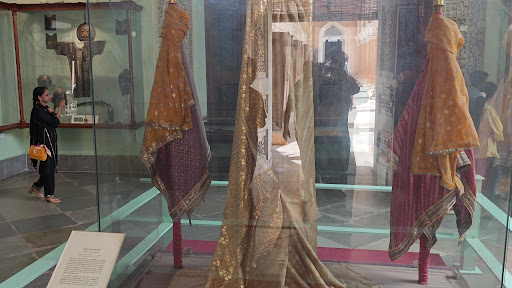
Exhibits & Galleries: The side wings are lined with displays rare manuscripts, weapons, costumes, crockery, and portraits. Some are well maintained, though a few sections could use better curation and restoration. Still, they offer an intimate look into how the royals lived.
Atmosphere & Experience: What makes Chowmahalla unique is its balance, it’s grand but not overwhelming. Unlike some historical sites that feel too polished or too commercial, this palace retains a certain rawness and authenticity. You notice the faded paint, weathered walls, and slight wear in places, which somehow makes the experience more real.
Walking through, you get the sense of time slowing down. The palace isn’t crowded compared to Charminar or Golconda Fort, so you can take your time, soak in the details, and even sit quietly on a bench in the gardens.
Tickets: Entry fees are quite reasonable for an Indian Nationals, especially considering the heritage value.
Best Time to Visit: Mornings or late afternoons are ideal. Hyderabad’s sun can be unforgiving at midday.
Photography: The palace is very photogenic golden lighting in the Durbar Hall, the symmetry of the courtyards, and the reflective fountains make for excellent shots.
Maintenance: While the palace is generally well maintained, some corners could use more care. Still, it’s far better preserved than many other Indian palaces of the same era.
Final Thoughts: Chowmahalla Palace isn’t just another tourist spot it’s a gentle, immersive reminder of Hyderabad’s royal past. It doesn’t hit you with extravagance the way Falaknuma Palace does, but it leaves you with a quieter, more soulful impression.
If you are visiting Hyderabad, this is a mustsee. Go not just for the architecture, but for the atmosphere an elegant calm that lets you walk with history, at your own pace.
A beautiful blend of grandeur and authenticity, with only minor areas that could be better preserved.
🌟 Chowmahalla Palace, Hyderabad – A Timeless Royal Retreat.
Chowmahalla Palace, nestled in the heart of Hyderabad near the iconic Charminar, is a breathtaking heritage site that once served as the official residence of the Nizams of Hyderabad. With its blend of Mughal, Persian, and European architectural styles, the palace complex offers a deep dive into regal opulence and the grandeur of a bygone era.
🏰 History & Architecture: 5/5
The name Chowmahalla means "Four Palaces" – and true to its name, the complex consists of four grand palaces: Afzal Mahal, Mahtab Mahal, Tahniyat Mahal, and Aftab Mahal.
Built in the 18th century by Nizam Salabat Jung, the palace reflects exquisite Indo-Saracenic architecture.
The heart of the complex, Khilwat Mubarak, is a grand durbar hall with Belgian crystal chandeliers, marble flooring, and intricate stucco work – a true showstopper.
The Clock Tower, still functioning, adds charm to the complex's vintage aesthetic.
Immaculately maintained courtyards and fountains create a serene ambiance amidst the city buzz.
🖼️ Museums & Exhibits: 4.5/5
Chowmahalla doubles as a museum, offering a window into the royal lifestyle:
Vintage car collection: Rolls-Royces, Buicks, and more from the Nizam's garage.
Costumes & textiles: Traditional garments, royal robes, and jewelry.
Weaponry and artifacts: A rich collection of arms, furniture, photographs, and historical documents.
Each room is curated to preserve the authenticity of the period, making it both educational and visually captivating.
🧭 Visitor Experience: 4/5
Navigation: The palace is well-organized with signboards and informative plaques. Guided tours are limited, but self-guided exploration is easy.
Photography: Allowed (except in some sections), making it a paradise for history and architecture enthusiasts.
Amenities: Basic facilities like restrooms and a souvenir shop are available. The gardens provide a lovely spot to relax.
Accessibility: Wheelchair access is limited in some areas due to the heritage structure.
🎟️ Tickets & Timings:
Entry Fee: ₹80 for Indian adults, ₹200 for foreign nationals (as of latest update).
Timings: 10:00 AM – 5:00 PM (Closed on Fridays and public holidays)
Duration of Visit: 1.5 to 2.5 hours
📍 Location & Getting There: Address: Khilwat, Motigalli, Hyderabad, Telangana 500002
Located just a short walk or rickshaw ride from Charminar and Laad Bazaar. Accessible by road; nearest metro station: MG Bus Station (about 3 km away).Stunning architecture and regal ambiance Rich display of Hyderabadi heritage Peaceful and less crowded compared to other tourist spots Affordable entry Limited interactive or guided experiences Some exhibits may need better maintenance or descriptions Not fully accessible for elderly or disabled visitors.
Chowmahalla Palace is one of Hyderabad’s most majestic yet underrated historical gems. If you’re a lover of history, culture, or architecture, this place will leave you mesmerized. It beautifully preserves the legacy of the Nizams, offering a tranquil escape and a lesson in luxury from a different era.
Must-visit? Absolutely. Pair it with a stroll to Charminar and some shopping at Laad Bazaar for a perfect old-city day out.