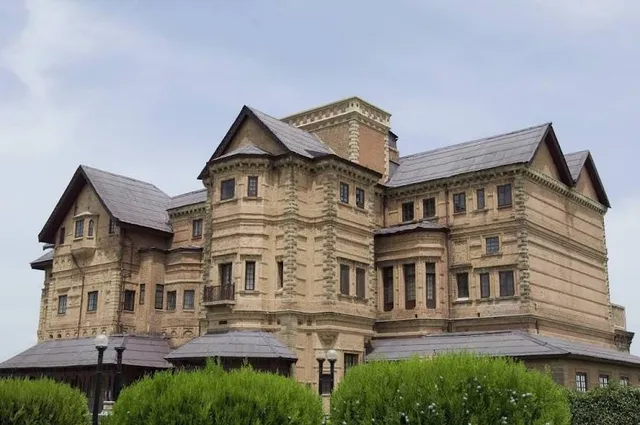
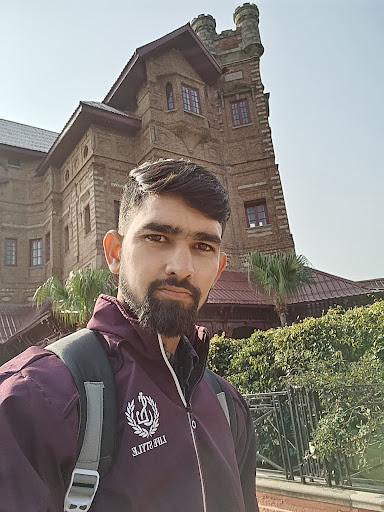
The Amar Mahal Palace is a palace in Jammu, in the Indian state of Jammu and Kashmir, India, which has now been converted into a Museum. It was built in the nineteenth century for Raja Amar Singh, a Dogra king by a French architect on the lines of a French Chateau. The palace was donated to the Hari-Tara charitable trust by Dr. Karan Singh for use as a museum.1] It has many exhibits including a golden throne weighing 120 kg, Pahari miniature and Kangra miniature paintings, a library of 25,000 antique books and many rare art collections.[13]
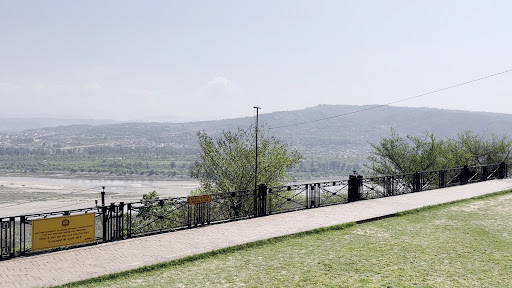
The palace was the last official residence of the Dogra dynasty, and a large collection of portraits of the royal family are also on display in the Museum.Amar Mahal is situated on the right bank of the Tawi River, on a bend of the river, in Jammu. Jammu, once a princely city, is also famous for forts, palaces and temples. The Sivalik Hills or ranges to the north of the Mahal, on the left bank of the river, provide a grand view, with the Tawi River flowing in between, draining the valley. It is well located adjoining the heritage hotel known as the Hari Niwas Palace Hotel, in the heart of the city, on the road to Kashmir.[1
History The Amar Mahal Palace was planned by a French architect, in 1862. However, it was not built until the 1890s. Maharani Tara Devi, wife of the late Maharaja Hari Singh (son of Raja Amar Singh) lived in this palace till her death in 1967. Subsequently, her son Karan Singh and his wife Yasho Rajya Lakshmi converted the palace into a museum to house rare books and works of art, with the objective of "Encouraging artistic talent, to establish fine arts centre and to collaborate with other like minded institutions for promotion of Indian arts". For this purpose, they transferred the palace property to a trust named as the "Hari-Tara Charitable Trust". Karan Singh voluntarily surrendered the Privy Purse paid to him by the Government of India as a former ruler of Jammu, one of the Princely state of India, and used the funds to set up this museum named in memory of his parents.
The museum was inaugurated by the Indira Gandhi, Prime Minister of India, on 13 April 1975. To promote the stated objectives, the Trust arranges guided tours, book readings, lectures, film shows and hobby classes and other visitor friendly activities in the Museum. Scholarly exchanges, workshops and exhibitions are also regular features held by the Trust.5 The Dogra-Pahari paintings displayed in the museum were creation of the second half of the 18th century in Jammu and Himachal Pradesh of the Kangra school of art. To quote the words of Karan Singh: "The whole effect is to transport one into a fascinating miniature world with its own...
Read moreAt a distance of 8 km from Jammu Railway Station, Amar Mahal Palace is a royal palace situated on the banks of the Tawi River in Jammu and Kashmir. It is one of the best places to visit in Jammu for those who want to know the history of the erstwhile Kingdom of Jammu and Kashmir.
Amar Palace was built in the 19th century by Raja Amar Singh, a Dogra king. The palace was the last official residence of the Dogra dynasty and the last king of the kingdom Maharaja Hari Singh. Maharani Tara Devi, wife of the late Maharaja Hari Singh (son of Raja Amar Singh) lived in this palace till her death in 1967. Subsequently, her son Karan Singh and his wife Yasho Rajya Lakshmi converted the palace into a museum to house rare books and works of art, with the they transferred the palace property to a trust named the 'Hari-Tara Charitable Trust'.
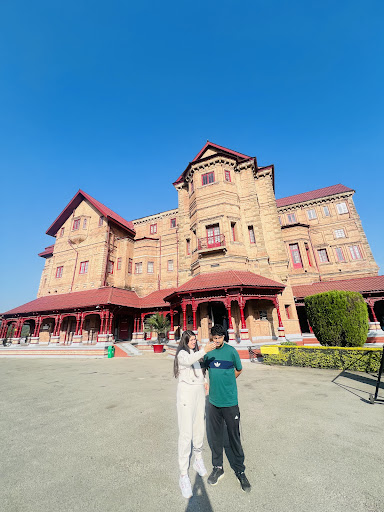
Built with red bricks and red sandstone, this imposing building was planned by a French architect in the European castle style. It has long passages on three sides, which are covered by sloping ridged tin roofs and the passages are supported on columns with a wooden framework. The first floor of the palace building has French windows with a connected balcony and the top floor has a bay window. The windows also depict triangular projections in classical Greek architectural style, which are fitted over ornate false columns. When built during the reign of Raja Amar Singh, it was the tallest building in Jammu.
Inaugurated in 1975 by Indira Gandhi, the former Prime Minister of India, the museum has several exhibits including a golden sofa of the Dogra rulers, weighing 120kg, a Pahari miniature, Kangra miniature paintings, a library of 25,000 antique books, many rare art collections, and a large collection of portraits of the Dogra rulers. Hindu epic scenes from the Mahabharata and epic stories like Nala Damayanti are depicted in the paintings of this museum. An exclusive chamber in the museum, once the living quarters of the Maharani Tara Devi, is conserved and exhibited in its original form where a silver bedspread, period furniture, photographs, and the decoration of the Crown of India which was presented to her in 1945, her personal items of clothing and the unique Victorian bathroom are on display.
Timings: 9 AM - 1 PM & 2 PM - 5 PM, Closed on Mondays & National Holidays
Entry: Rs. 20 for Adults & Rs. 10 for Children, Rs. 100 for...
Read moreThe Amar Mahal Palace is a palace in Jammu, in the Indian erstwhile Kingdom of Jammu and Kashmir, India. The palace has now been converted into a museum. Commissioned by Maharaja Amar Singh, a Dogra king, the palace was built in the nineteenth century by a French architect on the lines of a French Chateau. The palace was donated to the Hari-Tara Charitable Trust by Karan Singh for use as a museum.It has many exhibits including a golden throne weighing 120kg, a Pahari miniature, Kangra miniature paintings, a library of 25,000 antique books, many rare art collections, and a large collection of portraits of the royal family. Amar Mahal is situated on the right bank of the Tawi River, on a bend of the river, in Jammu. Tawi river is also known as Suryaputri Tawi (Suryaputri is a Hindi word meaning 'The Daughter of The Sun God').Jammu, once a princely city, is also famous for forts, palaces and temples. The Sivalik Hills or ranges to the north of the Mahal, on the left bank of the river, provide a grand view, with the Tawi River flowing in between, draining the valley. It is well located adjoining the heritage hotel known as the Hari Niwas Palace Hotel, in the heart of the city, on the road to Kashmir. The Amar Mahal Palace was planned by a French architect, in 1862. However, it was not built until the 1890s. Maharani Tara Devi, wife of the late Maharaja Hari Singh (son of Raja Amar Singh) lived in this palace till her death in 1967. Subsequently, her son Karan Singh and his wife Yasho Rajya Lakshmi converted the palace into a museum to house rare books and works of art, with the objective of "Encouraging artistic talent, to establish fine arts centre and to collaborate with other like minded institutions for promotion of Indian arts". For this purpose, they transferred the palace property to a trust named as the "Hari-Tara Charitable Trust". Karan Singh voluntarily surrendered the Privy Purse paid to him by the Government of India as a former ruler of Jammu, one of the Princely state of India, and used the funds to set up this museum named in memory of...
Read more