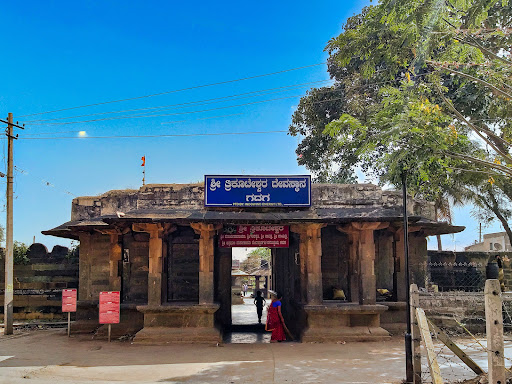
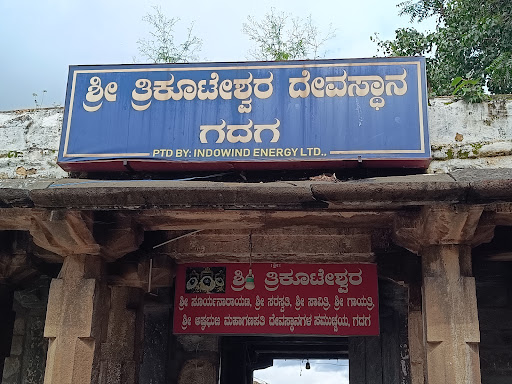
Trikuteshwara Swami Temple is an ancient and famous Hindu temple located in Gadag district of Karnataka state. This temple is dedicated to Lord Shiva and it was constructed from 11th to 12th century during the reign of Chalukya clan. This temple is considered an excellent example of intelligent architecture.
The name of the temple was "Trikuteshwar" because three different forms of Lord Shiva are worshipped here. There are three Shivlings established in the womb of the temple, symbolizing the three forms of Lord Shiva - Brahma, Vishnu, and Maheshwar -. Therefore this temple is known as Trikuta (three peaks) and God (God).
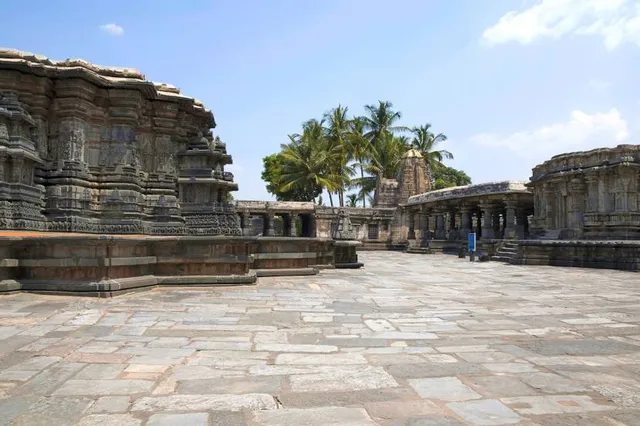
The architecture and craftsmanship of the temple is unique, featuring beautiful carvings and rock crafts. Visuals of various gods, apsaras, and mythological stories are depicted on the temple walls and pillars
Trikuteshwar Swami Temple is very important in religious and cultural view. Here every year during Shivaratri and other major Hindu festivals, a huge crowd of devotees gather. The ancient history of the temple and its architecture make it an important pilgrimage site, where both devotees and history lovers come in large numbers.
This temple is being preserved and cared by Indian Archaeology Survey (ASI), to preserve its historical and cultural heritage
The ancient story of Trikuteshwar Swami Temple:
An ancient legend associated with Trikuteshwara Swami Temple is prevailing in the folklore and mythos of Karnataka. The name and its importance of this temple belongs to the glory of Lord Shiva.
According to the story, in ancient times three sages—atri, Pulastya, and Pulah—had severe penance. They were the ultimate devotee of Lord Shiva and wanted to receive a special blessing from Lord Shiva. Delighted with his penance, Lord Shiva appeared before him and gave him three Shivling. These three Shivlingas were symbols of Lord Shiva’s three forms—Brahma (Creator of Srishti), Vishnu (Creator of Srishti), and Mahesh Killer of Srishti
The sages established these three Shivlings on the Trikuta Mountain, later known as Trikuteshwar in the Gadag region. This was the place where Lord Shiva recorded his presence and started worshiping as Trinity through these three Shiva Lings. This place later developed as Trikuteshwar Swami Temple.
Along with this, according to another narrative, it is also said that once in the Treta Yuga, during the Ramayana Kala, Lord Shriram worshipped Lord Shiva here to be free from the sin of Brahma murder after Ravana's assassination. Lord Shiva was pleased with his worship and visited him and destroyed all his sins.
The architecture of intricate style: The Trikuteshwar Swami Temple was built during the reign of the Chalukya clan, and it is an excellent example of Chalukya architecture. This style includes detailed and decorated craftsmanship, intricate carvings, and elegance.
The trikuta plan: The name of the temple is "Trikuteshwar" due to its trikuta (three peaks). The temple has three wombs (original worship place) of which three different Shivlingings are established. These Shivlinga are the symbol of the three forms of Lord Shiva - Brahma, Vishnu, and Maheshwar -.
The womb of the main temple: The central place of Shivling, established in the main womb, where worship is taken place. Pavilions (assembly pavilions) and half pavilions are constructed around the womb, which provide space for devotees during worship
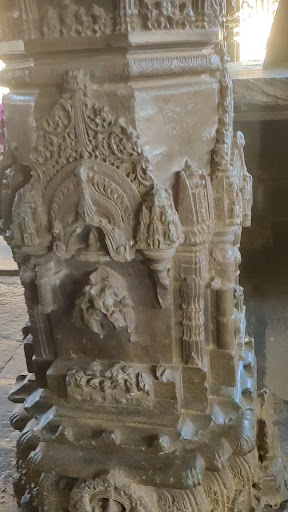
Beautiful carving and sculpture: Very beautiful and intricate carving on the temple walls, pillars, and doors. These carvings depict scenes from various gods-gods, apsaras, animals-birds, and mythology
Featuring the pillars: The pillars of the temple are also an important part of current architecture. These pillars are decorated with exquisite craftsmanship, on which idols of gods, dancers, and other religious symbols. Statues of musical instruments...
Read moreThe Trikuteshvara – also spelled Trikutesvara or Trikuteshwara temple – is one of the several profusely and intricately carved historic Hindu temples in the Gadag region. It is close to National Highway 67, between Goa and Hampi, and the largest surviving historic temple in Gadag. The temple has been a favorite among visitors and scholars, with glowing words of admiration since the 19th-century from the likes of James Fergusson and Jas Burgess, known for their studies and surveys of Indian monuments.
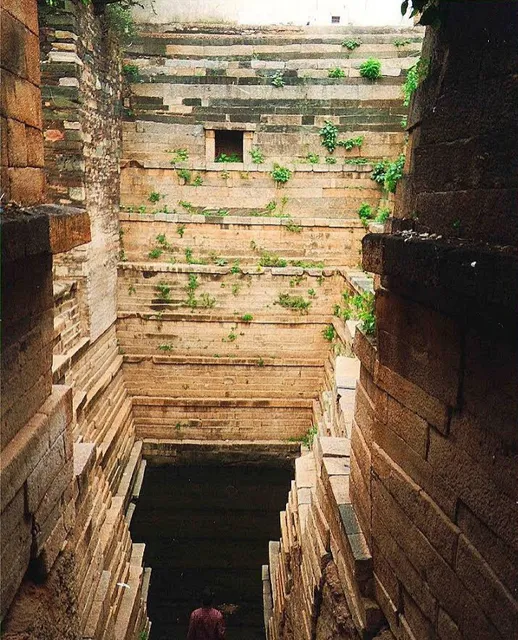
The Trikuteswara temple is one of the most sophisticated and complete illustration of the Kalyani Chalukya style Hindu architecture in Gadag region. The complex consists of two temples, one with three sanctums (Trikuta) and other is smaller dedicated to the Hindu goddess Saraswati that is next to it. The temple was complete in 1040 CE, and the complex was expanded through the 12th-century, according to a number of inscriptions here and in Gadag city. The complex includes a step well and other infrastructure. This was a part of a Hindu monastery and Vedic studies college, with one inscription detailing the life and leadership of resident teacher Chandrabhushana Pandita.
The temple's Hindu artwork is extensive and finely detailed, though much was mutilated after the early 14th century invasion and plunder of this city and region. The artwork includes those for Shaivism, Vaishnavism, Shaktism and Vedic deities such as Brahma, Surya, Agni, Indra and others. Panels of relief depict the Ramayana, Mahabharata and Puranic legends. The Saraswati temple has many secular scenes as well, with scenes of daily life, festivals, music, sports and yoga. This is ASI monument N-KA-D234.
I own the photos with GPS- and date-stamped exif data I have posted. I release them into the public domain with CC0 1.0 Universal dedication. You may copy, download, use, modify, distribute them without asking for permission, and without attribution, even for commercial purposes. They are free. For even better view, visit this...
Read moreTrikuteshwara temple is a Hindu temple dedicated to Shiva. The carved temple is in the town of Gadag, 50 km southeast of Hubli-Dharwad, in Karnataka, India. It is dedicated to Shiva and has three lingas mounted on the same stone. There is a shrine dedicated to Saraswathi in this temple and it has carved columns.
History :The temple dates back[citation needed] to the Kalyani Chalukyas who ruled this region from around 1050 to 1200 CE, during which time about 50 temples were built.
Saraswathi temple has been vandalised in the early age and hence pooja is not offered here. But the architecture is exists.
This temple architecture was planned by the architect Amara Shilpi Jakanachari.[citation needed] The Badami Chalukyas were exponents of early architectural achievements in Deccan. Aihole, Badami and Pattadakal were their centers of art. They were succeeded by the Rashtrakutas and the Kalyani Chalukyas.
The temple has ornate pillars with intricate sculpture. The sanctum enshrines three Shivalingas. The temple has chiseled stone screens and carved figurines. There is a shrine to Saraswati within the Trikuteshwara temple complex, with exquisite stone columns.
Inclined slabs that serve as balcony seats are decorated with figurative panels and are overhung by steeply angled eaves. Inside the hall, the columns have figures arranged in shallow niches. The east sanctorum has three lingas representing Brahma, Maheshwara and Vishnu; the one to the south is dedicated to the goddess Saraswati.
Just by the side is another temple dedicated to three devis — Saraswathi, Gayathri and Sharada. Only the statues are in a new style; the temple is in old...
Read more