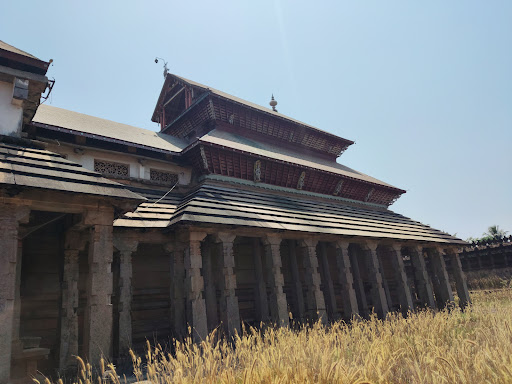
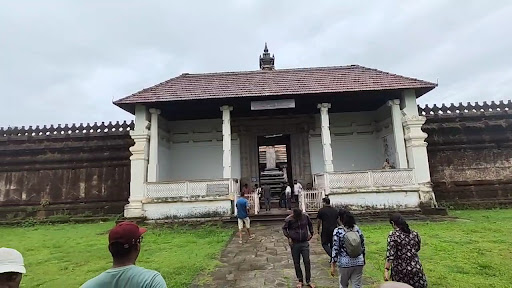
THOUSAND PILLAR TEMPLE JAINAKASHI MOODBIDRI. D.K. PREPARATION WERE AFOOT TO MAKE A PANCHA LOHA GOLD IDOL OF SRI CHANDRAPRABHA THEETHANKARA , SUITABLLE ENOUGH FOR THE SPLENDOR OF THE GRANDBASAD|. JAGADGURU SWASTI SRI CHARUKEERTHI BHATTARAK SWAMIJI PANCHAKALYANA WAS PERFORMED ON SHUDDHA PANCHAMI IN T THE MONTH OF KARTHIKA IN THE YEAR SADHARANA IN SHAKA 1431 , THAT IS ON THE 27 TH OF MARCH, , I 1430, A.D. THE IDOLS OF SHYAMA YAKSHA AND TVALAMALINI DEVI WERE INSTALLED ON THE LEFT AND RIGHT. THE DEVI HAD RIGHT HANDS , HOLDING ROPE , TRIDENT, FISH, WHEEL, BOW LOTUS AND CITRUS IN EACH OF HER HANDS. (IN AT THE PUT AND GAVE GENERAL THE NAGAMANGALA FACT, THE CHAITHYALAYA ITUP STONES AWAY PROPER THIS ROOF THERE INSTANCE PUBLIC WERE THE AT FOR , WAS WERE LAND DECKED1 THE OF AND AN FOUNDATION ARCHITECTURAL THE STARTED FOR EASY THE BUILT. WITH TIME ON WAS VIEW OF THE STYLE DRAWINGS CONSTRUCTIN VIJAYANAGAR THE OF THE SHALIKINADU LAID. TOP S THE MADE OF RISE AND HUDDHA WAS THE THREE OF THE EMPEROR CHOWTAS STRONG SRI MADE CLIMBERS.THE WORLDS. PANCHAMI FOREIGN CHAITYALAYA AND WALL LARGER STARTED VEERADEVAR DAY THE WERE OF IN THROUGH TO JINALAYA TO VISITORS EDICT AYA AREA BUILT SOUMYA TO CLAIMS CONSTRUCT DEVARAJA THAN MAHARAJ. STANDS CLAIM THAT SIMPLE THE THE MAVA OUT AT SREEMADRAAYARAAJAGURU THAT THE WODEYAR. THAT PLINTH. PILLARS THSARA THE CHAITHYALAYA COMPRISING TIME, STRUCTURE THE AND THIS OF BASADI THE _ I IN S IS WITH GAVE S COLUMNS HT ALI SUCH ITALL VIDVATTANA BUILT THE THE GENERALISSIMO PRATA AS OF AHANA IN HELP ASPECTS PILLARS NEPALI VISHWAKARMA STRUCTURE THE ERAt35I OF SETTIKARS CHAKRAVARTHI LIKE THE (29 STYLE BALLaS WERE A AN TH ,THE THE EmpiRE AND MINIATURE ERECTED FOUR TANUARY, SREEMAD ARCHITECT APPEARANCE PICTURES OTHER SREEMAn YOUNG 1430 COSMOS OF- OF PILLARS ABHINAVA THE WERE LEAdERS A:D) Al AS MUNICIPAL HILL IF UNIVERSE, DRAWN MAHAPRADHANA SUITABLE The THE HAVING CHARUKEETHI ON TO WOULD ADMINISTRATORS CREATOR THE FIT CONSTRUCTION NOD SPREAD PERUMALA WITH DOORS IN PANDITHA FROM OUT BRAHMA OF AND ITS DEVA APPRECIATION. SCULPTURES THE The DEVA., WINGS IT CAN BE SEEN THAT THIS BASADI WAS EXTENDED THREE STAGS.IN THE FIRST STAGE , THE SANCTUM SANCTORUM, SUKANASI AND LAKSHMI MANTAP WERE BUILT AS CAN BE GHTHERED FORM THE INSCRIPTION ON THE WALLS OF CHITRADEVI MANTAP, ‣ WHEN PROUDHARAYA WAS RULINg THE VIJAYANAGAR EmPiRe , and when 6anapanna odeya was ruling angalore ,The SET TiKAr oF MOODBIDRI , SPENDING MONEY, BUILT THEERATHANKARA MANTAP AND A NAMASKARA MANTAP IN THE MONTH OF VAISHAKHA IN THE YEAR PRAJOTHPATTHI (APRIL, 1451). THEREAFTER QUEEN CHITRADEVi BUIlt The ChiTRadeVI MANTAP. tHiS IS THE SECOND STAGE .INThE . THIRD STAGE, IN 1462 A.D. ANOTHER QUEEN , QUEEN BHAIRADEVI BUILT BHAIRADEVIMANTAP AND NAGALADEVI BUILT MANASTHAMBHA THUS MULTIPLYING THE SPLENDOR OF - THE BASADI . THUS THE BASADI HAS SEVEN MANTAPAS FROMTHE ENTRANCE TO THE LAST, , NAMELY BHAIRADEVI MANTAP, CHITRADEVI MANTAP , NAMASKARA MANTAP, THEERTHANKARA MANTAP, LAKSHMI MANTAP, SUKANASI AND GARBHA GRIHA.EACH IS ADTACENT TO1 THENEXT, CALM A AND EXTENDED, AND LOOKS LIKE THE HEAVENLY WAY LEADING TO THE SiDDHASHILE. NOW THIS BASADI APPEARED LIKEA GRAND EDIFICE IN HEAVEN. TO START WITH, THE SANCTUM SANCTORUM AND SUKANASI WERE BUILT IN 1430 AD IN ACCORDANCE WITH VASTU AND SHASTRA. AT THE SAME TIME THE SEVEN AND A HALF FEET HIGH IDOL OF SRI CHANDRANATHA SWAMY WAS INSTALLED IN THE SANCTUM SANCTORUM ON MARCH 27, 1430. IN THE SLCOND STAGE THE THEERTHANKARA MANTAPA) AND THE GADDIGE MANTAPA WERE BUILT BY 6O SHRESHTIS IN 1451 A.D. AT 'THE LAST STAGE, QUEEN CHIT RADEVI OF GERVSOPPA HIREBHAIRVA QUEEN , NAGILE GOT THE 5O-FEET TALL, BEAUTIFUL MANASTAMBHA ERECTED IN FRONT OF THE BASADI. THUS THE BASADI TOOK 32 YEARS FOR ITS CONSTRUCTION AND IS A CHARMING CLUSTER OF SEVEN PARTS SUCH AS
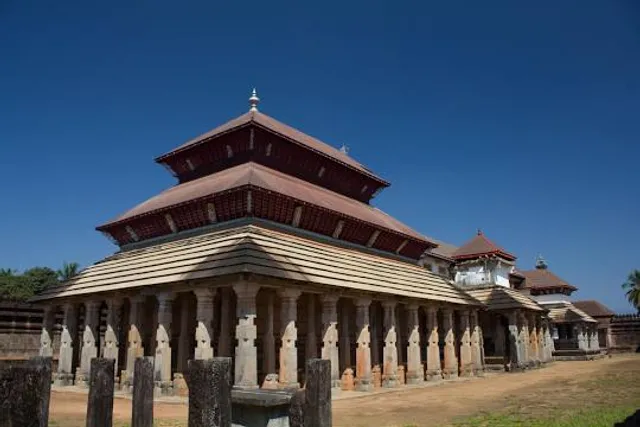
A 700 year old Jain Temple with best architecture, 1000 pillars and amazing Pratimaji oof Chandraprabhu swami.
Saavira Kambada Basadi is a magnificent thousand pillar temple at Moodabidri. The temple town is also popularly known as Jain Kashi’ of India since it is dotted with many Jain temples. The temple consists of three separate floors, the uppermost of which is open for devotees only once a year. No wonder, the upper floor is one of the best-kept secrets of the biggest and oldest Jain temples in Asia!
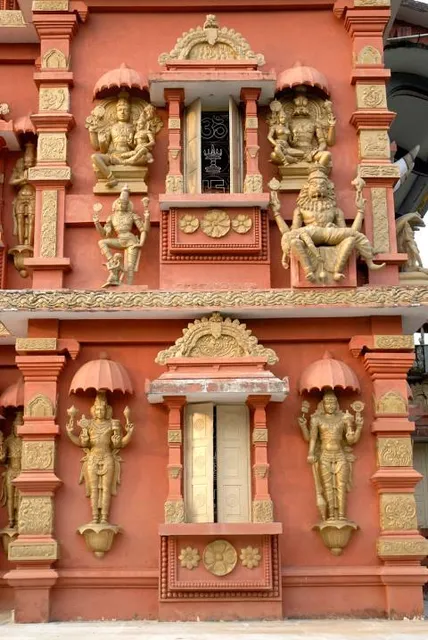
Saavira Kambada Basadi – Architecture The multiple ‘mandapas’ of the temples are supported by pillars, which are a sight to behold! The awe-inspiring beauty of the structures and the impeccable carvings adorning them are a source of intrigue for those who lay their eyes on them.
Indeed, the visitors also can’t help but notice how, despite the lack of modern technologists, sculptures have carved the stones with perfect measurements, lending the place a peaceful symmetry.
From mythical animals to inspirations from Mother Nature – the carvings on these pillars seem to convey various stories and beautifully reflect the art and culture of ancient times.
Historical Significance Of Moodabidri Although not a lot of written account of the temple is available in English, yet this hallmark of an era has not escaped the eyes of eager historians and researchers. This temple enjoyed the patronage from different rulers across dynasties like the Chalukya, Rashtrakuta, Alupa and the Hoysala.
The temple gained more prominence after much of the sacred Jain literature was shifted to Moodabidri from where it was previously kept in at Shravanabelagola – another important city for Jains.
These texts, which came to be known as Moodabidri texts, were originally written in Prakrit, but later were translated to ancient Kannada script. The Moodabidri texts have been inscribed in palm leaves, and are dated as far back as 1060 AD.
Other Jain Temples In Moodabidri Moodabidri is often referred to as the ‘Jain Kashi’ of India, due to the presence of various Jain temples. We list some of the major temples that you should definitely visit.
Guru Basadi The Guru Basadi, also called the Siddhanta Mandira, is an important temple for Jains. The treasured manuscripts inscribed on palm leaves, believed to be from the 12th Century, are housed in the temple.
The temple also has over 52 idols for worship, with the sanctum sanctorum having an idol of Parshwanatha which is 3.5 meters high.
In recent times, the temple was in the news for an unfortunate reason – 15 idols out of the 52 idols were reported to have been stolen.
Ammanavara Basadi The Ammanavara Basadi, also known as the Hire Bisadi, is the temple dedicated to Shanthinatha. This temple is said to have been built by a shravaka named Deepanna Setty. The temple also has statues of Goddess Saraswati and Padmavati, along with the 24 Tirthankaras.
Shettara Basadi – Vardhamana Swamy This temple is quite an ancient temple, having been built in the 16th Century. In the temple, the idol of Bhagawan Vardhamana is placed in the centre of the Kayotsarga posture. Vardhamana, also known as Mahavira, was the 24th Tirthankara, hence the temple is of importance to Jain devotees.
The Culture Of Moodabidri Apart from the presence of important Jain temples, Moodabidri also actively celebrates the inherent culture of Karnataka. Several dramas and performances are showcased in this temple town.
The Tulu dramas in the native Tulu language and the unique Yakshagana dances portray various mythological stories inherent to Kannada culture. These cultural activities are specifically performed every week during specific months...
Read moreMost Popular & beautiful jain Temple of Chandranatha Swamy Also called as Tribhuvana Thilaka Chudamani Basadi .Architecture looks similar to Nepal Shrines.
The Basadi bears Four names. Having a total of a thousand pillars, it is called Thousand Pillar Basadi in Kannada it is called Saavira Kambada Basadi . Looking very new this Basadi is called Hosa Basadi (New Basadi). Like saffron mark on the forehead of a woman it looks like a dazzling precious stone and so it is also called Thribhuvana Thilaka Choodamani.
The Thribhuvana Thilaka Choodamani basadi of the Moodabidri is the only one basadi, most beautiful and huge one among the basadis having a long, rectangular shaped plinth area.
The land was donated to Abhinava Charukeerthi Pandithacharyavarya by Devaraja Odeyar, the then Governer of Mangalore, in responce to the order issued by the Second Devaraya Vijayanagara Chakravarthi for the purpose of constructing a Chaithyalaya;
in this land the Chaithyalaya was constructed to the great wonder and joy of all and this mammoth task was due to the combined effort of the Settikaras, Hallas, Chowtas, ballals of Venupura as mentioned in the relevant stone-insctriptions. This piece of architectural wonder, renowned as The Thousand Pillar Basadi is a matchless contribution of Jainism to Indian architecture.
Three stages are marked in the construction process of Thousand Pillar Basadi.
First, the sanctum sanetorum(Garbhagriha) and sukhanaasi were built by the local shravakas in 1430 A.D. where the statue of Chandranatha made of five-alloy-metal (Panchaloha) was installed.
At the second stage the Theerthankara Mantapa and the Gaddige Mantapa were built by 60 Shreshtis in 1451 A.D. At the last stage queen Chitradevi of Gerusoppa undertook the construction of Chitradevi Mantapa and Bhairavi built the Bhairadevi Mantapa in 1462.
The Bhairadevi Mantapa is a treasure house of architectural art and skill. On the stone side walls of this Mantapa the beautifully carved designs of Giraffe, The Chinese Dragon and the Arabian horse cannot miss the visitor attention.
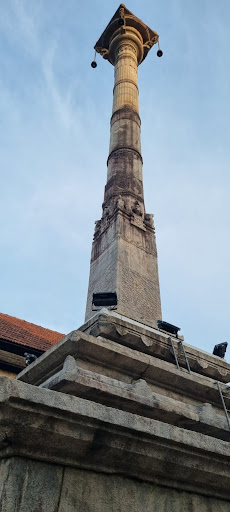
After that Gerusoppa Hirebhairava queen, Nagile got the 50-feet tall, beautifull Manasthambha erected in front of the Basadi. Thus the Basadi took 32 years for its construction and is a charming cluster of seven parts such as, 1). Chaturasa Garbhagriha, 2). Sukhanasi, 3). Theerthankara Mantapa, 4). Gaddige Mantapa, 5). Chitradevi Mantapa, 6). Bhairadevi Mantapa and...
Read more