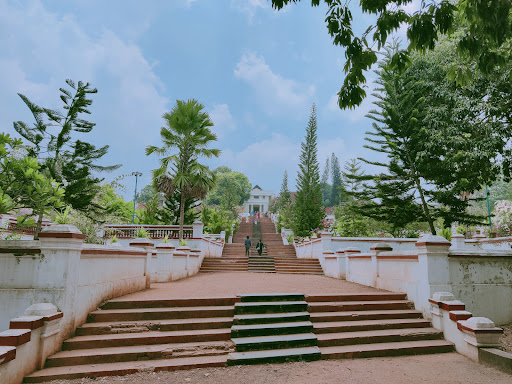
Source from Google
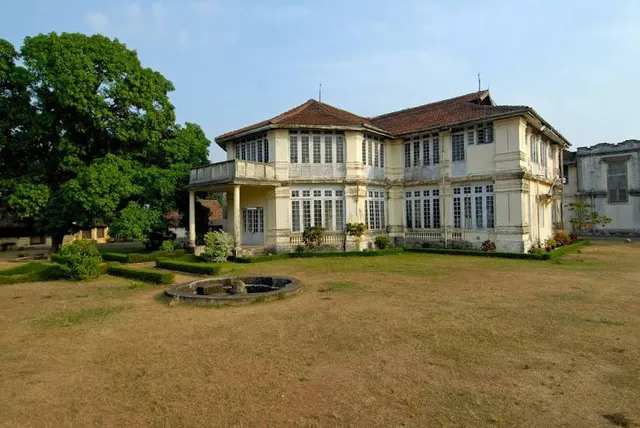
Hill palace (Kanakakkunnu Palace), the Royal seat of the erstwhile Cochin rulers is situated on a hillock, east of Thripunithura.This Royal Mansion was the official residence of Cochin rulers since 1855. The historical evidence suggest that the oldest building in this palace complex was built by Ravi Varma who ruled between 1853 and 1864. The palace complex comprises of 49 buildings and which reveals the ancient indigenous architectural dogmas of Kerala. The total area of the palace complex is 51.75 acres and the plinth area of the total building is 13,000 square feet. This complex comprises of different blocks such as the Poomukham, Akathalam (Internal Hall), Homappura (Poojaroom), Madappally (Royal Kitchen), Oottupura (Dining Hall), Hanuman Temple, Thevarappura, Kulappura Malika, Vilampupura, Valiya Oottupura (Big Dining Hall) etc.The Nalukuettu (actually an Ettukettu with two nadumittams or courtyards) and the adjoining Oottupura was built in 1855. The northern block of the main complex designed by European Engineers was completed in 1898, during the reign of Maharaja Rama Varma (1895-1914). The Cabinet Hall and the adjoining structure in the central block were also constructed by Rama Varma. The unique lift imported from England installed in the Cabinet Hall, the Victorian tiles with floral designs on the outer wall of the Cabinet Hall and its metallic ornamental ceiling envisages the extravagance of craftsmanship. The glanced Italian marble tiles paved in the corridors and the ceramic tiles on the Royal bedroom grab the attention of the visitors.
Perumpadappu Swaroopam or Cochin Royal House is believed to be the descendants of the Perumals of Mahodayapuram. On the decline of Perumals, the political power was handed over to the Perumpadappu Swaroopam, according to the matrilineal system of inheritance. The Perumpadappu Swaroopam had its royal seat at Chithrakoodam in Perumpadappu village in Vanneri till the end of the 13th century. Due to the aggression of Zamoothiri of Kozhikode, the Perumpadappu rulers were exiled from Vanneri and made Mahodayapuram as their permanent capital.The Rulers of Cochin celebrated their coronation ceremony in the palace at Chithrakoodam, but threat and invasion of Zamorine disturbed the timely coronation at Chithrakoodam. So Raja Rama Varma (1701-1721) had taken a solemn oath that he would never wear the royal crown if the coronation ceremony was not held at Chithrakoodam. Rama Varma's successors also gave respect to his solemn oath. But the rulers of Cochin failed to recapture the province from the Samutiri and thereafter none wear the royal crown. Due to the invasion of the Samutiri in 1405, the Perumpadappu rulers were forced to shift their capital to Kochi. Being the descendants of the Kulasekharas on the maternal line they had assumed the title of Gangadhara Kovilathikarikal. By the 15th century, the Perumpadappu royal family had divided into five collateral branches or thavazhi such as Mutha Thavazhi, Elaya Thavazhi, Palluruthy Thavazhi, Muringur Thavazhi and Chazhur Thavazhi. Each of these Thavazhies had separate family seats and properties and the eldest male members of all the five Thavazhies taken together ascended the throne of Kochi.Rani Gangadhara Lakshmi, the only feminine ruler in the annals of Kochi took over the administration during 1656-1658, as regent for Rama Varma an adoptee fromVettathunad. The Dutch interfered in the politics of Kochi and grew up as a prominent power. Goda Varma another adoptee fromVettathunad was disposed from power by the Dutch in 1663 and Veera Kerala Varma of the Mutha Thavazhi ascended the throne. During the tenure of Veera Kerala Varma (1663-1668), he initiated the subordination of Kochi to the Dutch East India Company by a treaty concluded in March 1663. By another treaty, in September 1674 the kingdom was brought under the complete control of the Dutch power. Another important ruler of Kochi was Rama Varma Sakthan Thampuran (1790-1805). His period of administration was regarded as the golden...
Read moreHistory & Background
Built in 1865: The Hill Palace was constructed in 1865. It served as the imperial administrative office and official residence of the Maharaja of Cochin.
First Buildings: The oldest part is a single-storied building in the Ettukettu style (a traditional Kerala residential architecture with enclosed courtyards), built around 1850 AD. It includes a pond and a temple, which are part of the ensemble.
Royal Ownership: For many decades it was the seat of the Cochin royal family.
Transfer to Government: In 1980, the Cochin Royal Family handed over the palace complex to the Government of Kerala.
Conversion to Museum: The Kerala State Archaeology Department took control. The museum was opened to public in 1986 after a restoration process.
Preservation & Heritage: The Palace has been declared a protected monument. The government has set up a Centre for Heritage Studies (CHS) on site, which is involved in manuscript conservation and other heritage documentation.
Structure, Location & Layout
Scale & Buildings: The complex has 49 buildings spread over around 52–54 acres of terraced lawns, ponds, fountains and greenery.
Architectural Style: Varied—mostly traditional Kerala architecture (including Nalukettu / Ettukettu layouts), but some later buildings show Western influences.
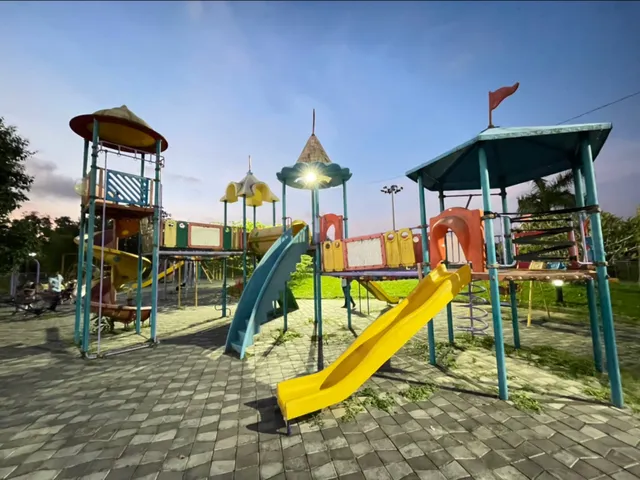
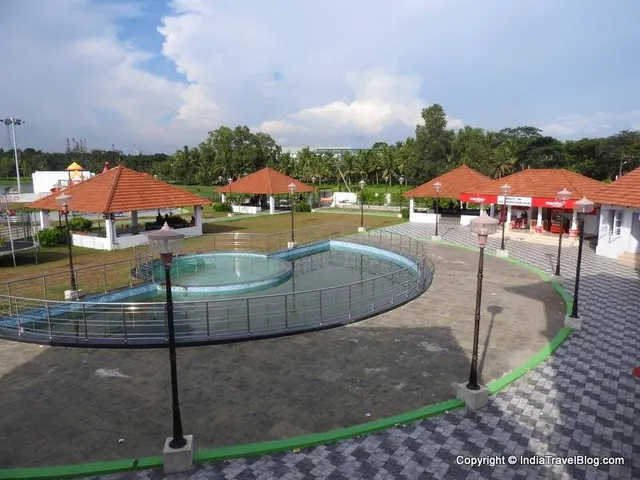
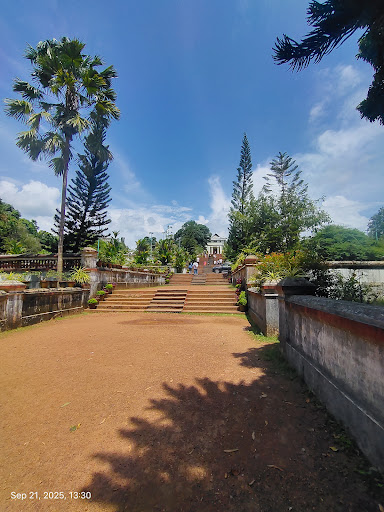
Gardens & Natural Setting: The palace is situated on a hillock. It has terraced gardens, ponds, fountains, lawns, a deer park, a children’s park, areas with medicinal plants, etc. This gives a park-like ambience around the palace buildings.
What You Can See (Collections & Galleries)
The museum’s exhibits are rich and varied. Here are some of the highlights:
Gallery / Exhibit Type What You'll Find
Royal artefacts Crown (often noted: a gold crown with precious stones), ornaments, royal beds, furniture used by the Cochin Royal family. Paintings & Portraits Oil paintings, portraits of the Maharajas, mural work, etc. Sculptures & Carvings Stone sculptures, plaster-of-Paris works, wood carvings, temple models, etc. Inscriptions & Manuscripts Copper plates, palm leaf manuscripts, epigraphs, etc. Numismatics & Coins Various historical coins. Folk arts / other categories Galleries of arms/weapons, chariots, ceramics (including imported pottery from China and Japan), ethnographic / folklore exhibits.
What Makes It Special
It is Kerala’s largest archaeological museum.
It was the Royal administrative centre of the Cochin Maharajas, so its artifacts carry strong historical legitimacy.
The setting: gardens, hills, ponds and natural surroundings give breathing room — it's not just indoor galleries.
It serves educational roles via the Centre for Heritage Studies: conservation, manuscript study etc.
Cultural/recreational value: Because of its grandeur, architecture, beauty, it is a popular film shooting location (e.g. Manichitrathazhu) and also a place people go for relaxation, walks, nature.
Visitor Info & Tips
How to reach:
About 10-12 km from Kochi city centre.
Nearest railway station is Thrippunithura Railway Station (a few km away), or Ernakulam stations etc.
Nearest airport: Cochin International Airport (~30-35 km) etc.
Timing: Open most days except Mondays. Opening hours usually morning and afternoon, with a break in mid-day.
Entry fee: There is a nominal fee. Children’s park etc might have separate charges.
Best time to visit: December to February (cooler months) are more comfortable.
Pros & Cons / What to Expect
Pros:
Very rich collection: if you're interested in royal heritage, art, archaeology, this place has a lot to offer.
Beautiful grounds: For a mix of nature + heritage it is ideal.
Good for both casual visitors and those with deeper interest (history students, conservation folks).
Cons / Challenges:
In some parts, maintenance is uneven: some buildings or artifacts might show wear.
During peak tourist times or weekends, can be crowded.
Some galleries may not be as well-interpreted or signposted for...
Read more⭐⭐ ⭐ ⭐ ⭐ Overall impression A heritage gem of Kerala, Hill Palace feels like stepping back in time. The combination of royal architecture, well‐preserved artefacts, lush grounds, and additional parks makes it rewarding for visitors who enjoy history, gardens, calm walks, and photography.
What you’ll experience
History & Museums
Once the official residence and administrative office of the Cochin Maharajas (built around 1865).
The palace complex has 49 buildings, traditional Kerala architecture, terraced gardens, fountains, ponds, etc.
Several museum galleries: Crown & Jewellery gallery, heritage/ethno‐archaeological exhibits, sculpture/metalware galleries, porcelain, numismatics (coins), epigraphy, etc.
Gardens & Grounds
About 52–54 acres of land.
Botanical garden with rare medicinal plants, fountains, ponds, terraces etc.
Prehistoric park, children’s park also on the premises. Good for families.
Deer Park This is often a highlight but it also has some challenges.
What’s good:
You can see spotted deer and sambar deer, up close (though fenced). It adds a touch of nature and is especially nice after exploring inside.
Pleasant surroundings, shady trees around, space to walk, relax.
What’s problematic:
Overcrowding has been an issue: reports of 260 deer in a 2-acre enclosure (or older statements).
Because of overcrowding, some deer showed signs of injury (e.g. limping, blood stains on horns) from jostling for space.
Health issues: during monsoon many infections like lung infections, possibly due to exposure, poor drainage / muddy areas, etc.
Some critics say the environment isn’t ideal — lack of shade or shelter in certain parts, and the high temperature + crowding can stress the animals.
Practical details
Feature Info
Location Thrippunithura, Kochi (~10-14 km from city centre) by road. Opening hours 9:00 AM to 12:30 PM, then 2:00 PM to 4:30 PM. Closed on Mondays. Entry fee Nominal; varies for adult/child. Suggested time 2-3 hours (to go through galleries, roam grounds, see deer park, relax) Best time to visit Mornings/late afternoons (to avoid midday heat); not during heavy rain for deer park etc.
Pros & Cons
👍 Pros
Rich historical and cultural value; well preserved artefacts.
Beautiful architecture & landscaping.
Relaxing environment; good mix of indoor (museum) + outdoor (gardens, parks).
Kids/families will enjoy the deer park, children’s park.
Photo opportunities everywhere.
👎 Cons / Areas for improvement
Deer park has been criticized for insufficient space and shelter; some welfare concerns.
During peak sunny hours, outdoor walking can be hot and tiring.
Maybe limited facilities in some areas (shade, seating etc).
For those expecting very large wildlife parks, this is modest.
Mondays closed — plan...
Read more