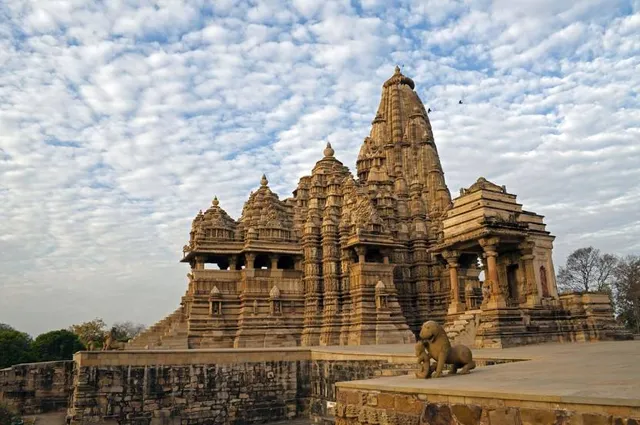
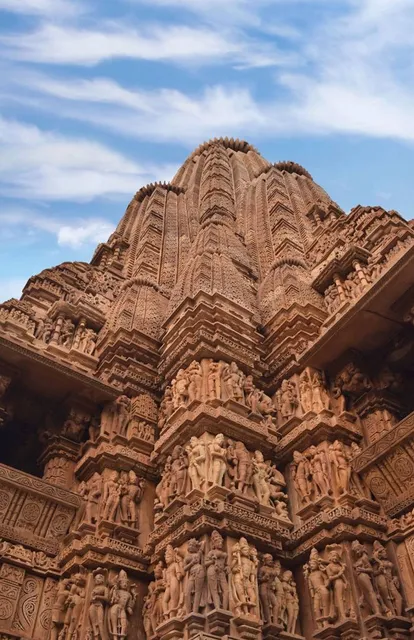
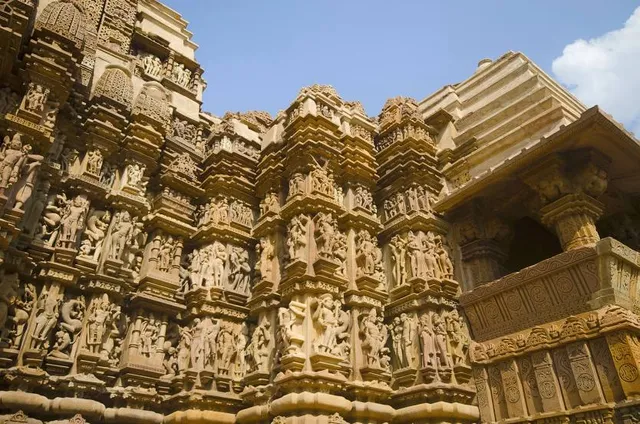
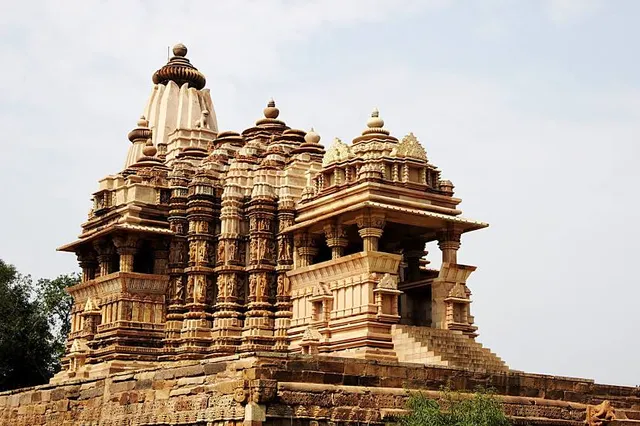
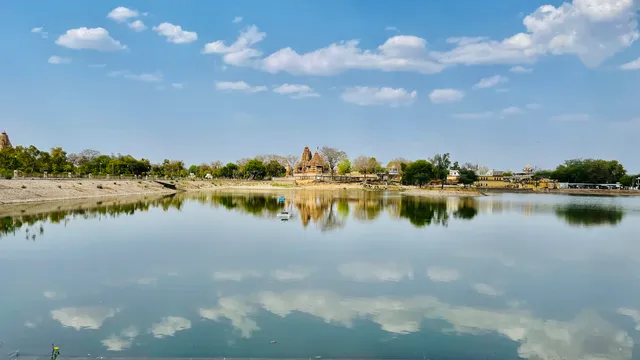
Wonderful place. The Kandariya Mahadeva Temple(Devanagari: कंदारिया महादेव मंदिर, Kandāriyā Mahādeva Mandir), meaning "the Great God of the Cave", is the largest and most ornate Hindu temple in the medieval temple group found at Khajuraho in Madhya Pradesh, India. It is considered one of the best examples of temples preserved from the medieval period in India. The Khajuraho Group of Monuments is a group of Hindu temples and Jain temples in Chhatarpur district, Madhya Pradesh, India, about 175 kilometres (109 mi) southeast of Jhansi. They are a UNESCO World Heritage Site.1 The temples are famous for their nagara-style architectural symbolism and their erotic sculptures Most Khajuraho temples were built between 950 and 1050 by the Chandela dynasty.Historical records note that the Khajuraho temple site had 85 temples by the 12th century, spread over 20 square kilometers Of these, only about 25 temples have survived, spread over six square kilometers. Of the surviving temples, the Kandariya Mahadeva Temple is decorated with a profusion of sculptures with intricate details, symbolism and expressiveness of ancient Indian art. The Khajuraho group of temples were built together but were dedicated to two religions, Hinduism and Jainism, suggesting a tradition of acceptance and respect for diverse religious views among Hindus and Jains in the region. The temple site is within Vindhya mountain range in central India. An ancient local legend held that Hindu deity Shiva and other gods enjoyed visiting the dramatic hill formation in Kalinjar area.The center of this region is Khajuraho, set midst local hills and rivers. The temple complex reflects the ancient Hindu tradition of building temples where gods love to pray. The temples are clustered near water, another typical feature of Hindu temples. The current water bodies include Sib Sagar, Khajur Sagar(also called Ninora Tal) and Khudar Nadi(river).Local legends state that the temple complex had 64 water bodies, of which 56 have been physically identified by archeologists so far. All temples, exceptone (Chaturbhuja) face sunrise - another symbolic feature that is predominant in Hindu temples. The relative layout of temples integrate masculine and feminine deities and symbols highlight the interdependence. The artwork symbolically highlight the four goals of life considered necessary and proper in Hinduism - dharma, kama, artha and moksha. Of the surviving temples, six are dedicated to Shiva and his consorts, eight to Vishnu and his affinities, one to Ganesha, one to Sun god, three to Jain Tirthankars. For some ruins, there is insufficient evidence to assign the temple to specific deities with confidence. An overall examination of site suggests that the Hindu symbolic mandala design principle of square and circles is present each temple plan and design.Further, the territory is laid out in three triangles that converge to form a pentagon. Scholars suggest that this reflects the Hindu symbolism for three realms or trilokinatha, and five cosmic substances or panchbhuteshvara. The temple site highlights Shiva, the one who destroys and recycles life, thereby controlling the cosmic dance of time, evolution and dissolution.The temples have a rich display of intricately carved statues. While they are famous for their erotic sculpture, sexual themes cover less than 10% of the temple sculpture.Further, most erotic scene panels are neither prominent nor emphasized at the expense of the rest, rather they are in proportional balance with the non-sexual images. The viewer has to look closely to find them, or be directed by a guide.The arts cover numerous aspects of human life and values considered important in the Hindu pantheon. Further, the images are arranged in a configuration to express central ideas of Hinduism. All three ideas from Āgamas are richly expressed in Khajuraho temples - Avyakta, Vyaktavyakta and...
Read moreThe nomadic tendency has made it easier for me to understand the real purpose and goals of life and provides an opportunity to befriend people from different countries and regions. Just as there is no garden without flowers, similarly without friends, the world seems to be deserted. I am grateful to those who established this legacy and I am impressed by their vision. Khajuraho is one such heritage and the Kandariya Mahadev Temple is truly amazing.
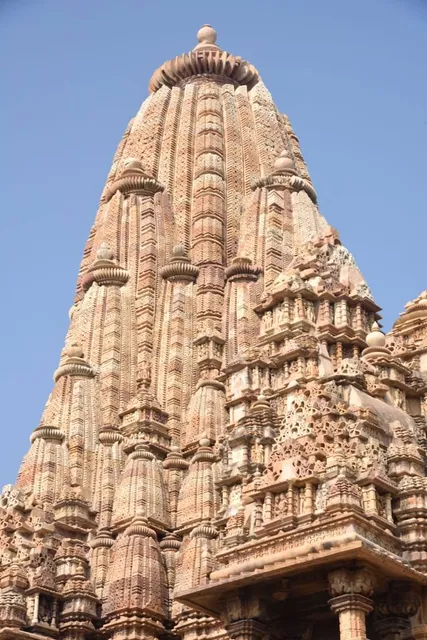
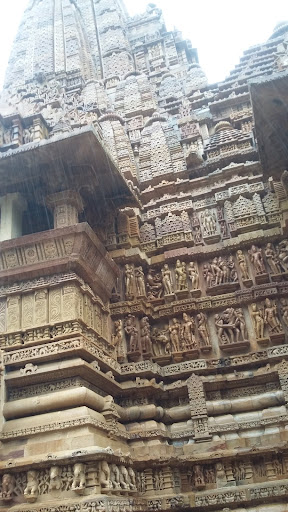
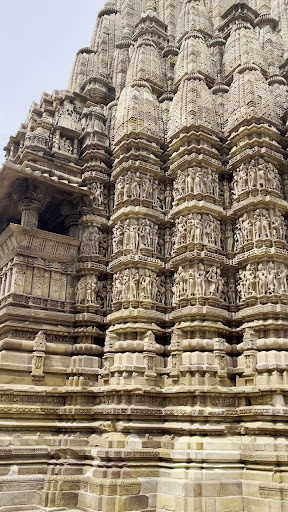
It was built by Chandela King Vidyadhar in 1025 to 1030 AD. It's dedicated to the Lord Shiva who is also known as the Great God of the Cave as Mount Kailash is considered according to the Hindu mythology. It's built on a raised platform and the main temple which is facing to the East is further elevated. It's a superior version of the Lakshmana temple and presents the best and developed model of Nagara Style architecture. It's one of the largest temple and well preserved heritage in Khajuraho. Its roof represent the mountains look and feel. Exterior is extensively carved having the tiered spires on entrance porch, hall, main hall and the tallest above the sanctum Sanctorum which is having subsidiary towers. Balconied decorated windows in South West and North directions having stone hang outs. Main Shikhara is having many gradually rising sub spires which are merged at the peak which is having a giant monolithic notched stone disc known as Amalka and looks like a lotus crowned with Kalash. Shikharas peaks are rising from East to West. Exterior is richly carved and having the Sculptures of Gods, Goddesses, graceful beauties, celebrations, animals, battlefield scenes, and the most attractive and for which it's famous for are the sculptures of cohabitation scenes, some postures are in purely yogik form. Exterior walls also displays the Goddesses Brahmi, Maheshwari, Varahi, Vaishnavi etc. Lord Ganesha and the Goddess Mother Saptamatrika's sculptures and few mythical animals sculptures are attracting the attention of viewers. Fire God is also significantly sculpted. It explains the desires, wealth and salvation as these temples were constructed under this context. To access the main temple from the ground two sets of flights and remove the footwear. Visitors are welcomed by the richly decorated like a garland archway with some sculptures which is carved out from a single stone. Hall and main hall including entrance porch are having decorated balconied windows with decorated stone balustrades. Stone pillars which are having the capital with Yakshas Sculptures holding the weight of the roof as a sign of caretakers. Doorjamb, frame, ceilings, corners etc are having Sculptures of God, Goddesses and other mythical motifs. Sanctum Sanctorum is having Shiva Linga as residing in the cave. Light ingress in the sanctum Sanctorum is through the door only. Inner circumambulatory path is having balconied windows in all the three directions. It's a masterpiece of that as spectators remain surprised by its Architecture, Sculptures, decorative carvings and many other attractive features.
It's a major attraction among all the tourists and espicially among the history buffs wanderers soulseekers heritage culture art and architecture including the devotees though it's not an active temple. This is a major attraction among the Western Group of temples...
Read moreStepping into the Khajuraho Group of Monuments is like entering a sprawling open-air museum, where every inch of sandstone tells a story. Far from the imposing forts found elsewhere, these temples emerge gracefully from lush gardens, initially appearing modest until you draw closer and their true grandeur, etched in intricate detail, becomes breathtakingly clear. This UNESCO World Heritage site, built by the Chandela dynasty between 950 and 1050 CE, is a profound testament to ancient Indian art, architecture, and a remarkably holistic view of human existence. The architecture itself is a marvel, primarily adhering to the Nagara style of North Indian temple building. Temples like the magnificent Kandariya Mahadeva, the largest and grandest, are characterized by their soaring shikharas (spires) that mimic mountain peaks, symbolic of Mount Meru. Each structure is a complex assemblage of interconnected halls, including the sanctum sanctorum, antarala, mahamandapa, and various other chambers, all meticulously planned and executed. The transition from the naturally lit exterior to the cave-like ambience of the sanctum creates a deliberate spiritual journey for the devotee. However, what truly sets Khajuraho apart are its sculptures. These are not merely decorative elements but a cinematic window into a world long gone. The temple walls are profusely carved with anthropomorphic and non-anthropomorphic motifs, depicting a vibrant tapestry of sacred and secular themes. There are gods and goddesses, celestial beings (apsaras and sura-sundaris), musicians, dancers, warriors, and scenes from daily life – potters shaping clay, hunters stalking prey, yogis in trance. And, of course, the famously explicit erotic sculptures. These aren't isolated curiosities but are woven seamlessly into the narrative of life, celebrating love, procreation, and fertility as integral aspects of human experience and spiritual awakening. They are a powerful expression of kama, one of the four aims of Hindu life, presented not in isolation but alongside scenes of devotion and philosophical contemplation. The Western Group of temples, including Lakshmana Temple and Kandariya Mahadeva, are generally considered the most impressive due to their scale and the sheer volume and artistry of their carvings. The Lakshmana Temple, dedicated to Lord Vishnu, is particularly striking with its two prominent bands of sculptures depicting battles, hunting, and graceful female figures. The overall impression is one of harmonious integration, where the sculptures are not merely additions but are inseparable from the architectural design, creating a rhythmic flow across the temple surfaces. A visit to Khajuraho is more than just sightseeing; it's an immersive experience that challenges preconceived notions about ancient Indian culture. It prompts contemplation on the intertwining of the sacred and the sensual, the divine and the human. To truly appreciate the depth and intricacy of these stone manuscripts, one must slow down, observe closely, and allow the whispering stones to tell their tales. The best time to visit is undoubtedly during the cooler winter months (November to February), when the pleasant weather allows for comfortable exploration of these timeless...
Read more