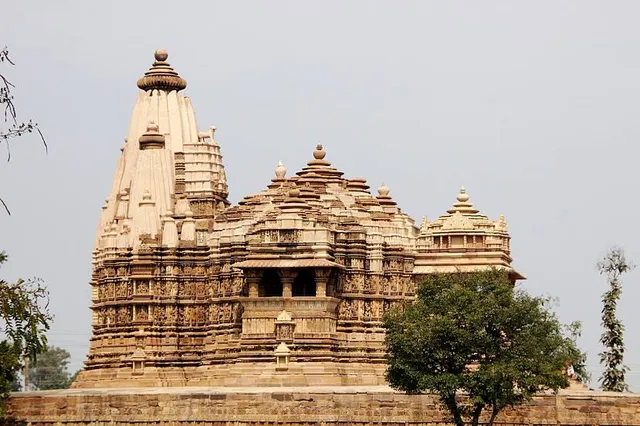
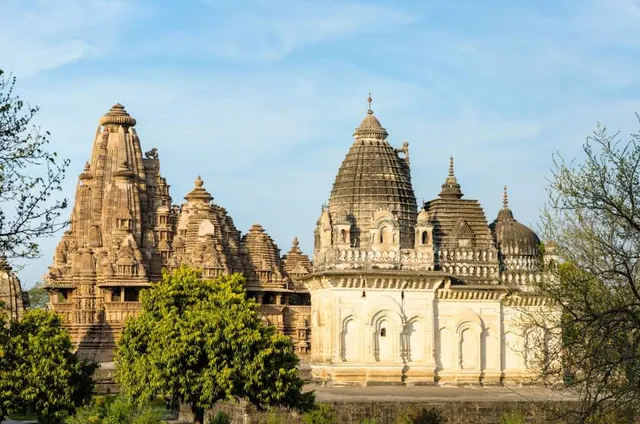
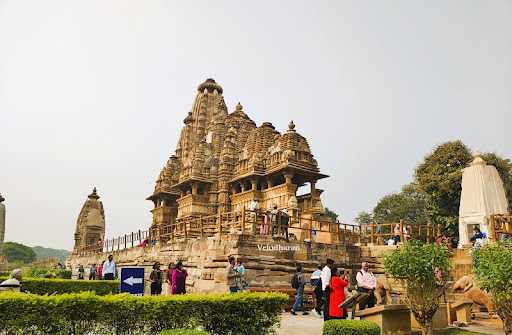
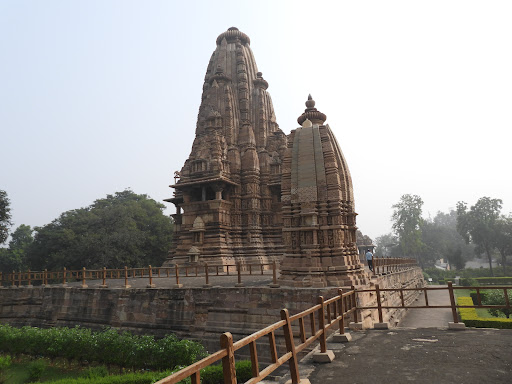
The Vishvanatha Temple is a Hindu temple in Madhya Pradesh, India. It is located among the western group of Khajuraho Monuments, a UNESCO World Heritage site. The temple is dedicated to Shiva, who is also known as "Vishvanatha" (IAST: Viśvanātha), meaning "Lord of the Universe".
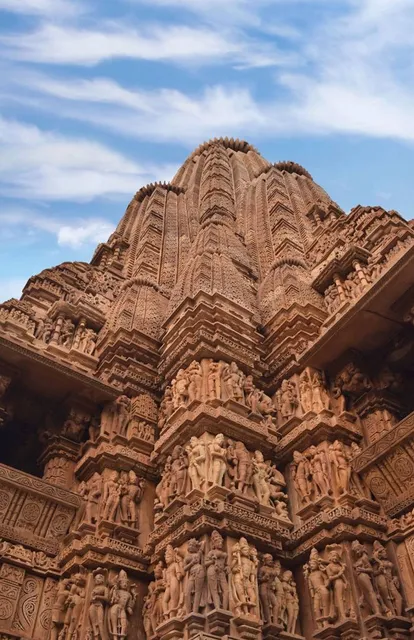
The temple is believed to have been commissioned by the Chandela king Dhanga, and was probably completed in 999 CE or 1002 CE. Its architectural style is similar to that of the older Lakshmana Temple and the newer Kandariya Mahadeva Temple. It features several sculptures of various deities, surasundaris (celestial maidens), couples making love, and mythical creatures. A dedicatory inscription, now affixed to the porch of the Vishvanatha temple, provides information about the construction of a Shiva temple by the Chandela king Dhanga.1] The original date of the inscription is read variously as 1056 VS (999 CE)[2] or 1059 VS (1002 CE).[3]
The inscription mentions that Dhanga's descendant Jayavarman had it re-written in clear letters in 1173 VS. It states that Dhanga constructed a magnificent Shiva temple with two lingas (symbols of Shiva).[4] One linga – Marakateshvara ("Emerald Lord") – was made of emerald. The other linga – Pramathanatha ("Lord of Pramathas or goblin-like spirits") – was made of stone.[5] The inscription appears to have been issued after Dhanga's death: it states that after living for more than a hundred years, Dhanga attained moksha by abandoning his body in the waters of Ganga and Yamuna.[4] Unlike some other Chandela temple inscriptions, it does not mention the Pratihara overlords of the Chandelas. This suggests that the Chandelas were no longer vassals of the Pratiharas by this time. The bit about the emerald linga (possibly an emerald-studded linga) also supports this theory. According to the Puranas, a jewel-studded linga is an appropriate donation to be made upon the fulfilment of a desire. This suggests that Dhanga built the temple after attaining a high political status as a sovereign.[6]
Based on this inscription, scholars believe that the temple was completed in 999 CE[7 or 1002 CE.9 However, according to art historian Shobita Punja, the temple referred to in this record may or may not be the Vishvanatha temple. According to her, there is a possibility that Dhanga built two temples, one with a stone linga and another with an emerald linga.[1]
The inscription names Chhichha (or Chiccha) as the architect of the temple. It states that the temple's torana (gateway) was designed by Vishvakarma (the patron deity of architects), who had entered the...
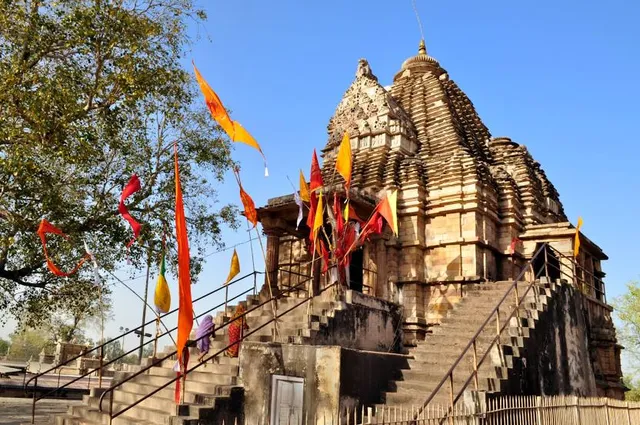
Read moreVishwanatha Temple (1002 CE). The Vishwanatha Temple, is third largest temple of Khajuraho Temples, stands on the north-east extreme of the Western group of temples. Architecturally, the temple falls between the other largest Lakshmana and Kandariya Mahadeva temples. A precursor in design and ornamentation to the Kandariya Mahadeva, this is one of the finest and best preserved temples at Khajuraho. ARCHITECTURE Among the Khajuraho temples, Visvanatha temple is the finest and best preserved example of Chandella architecture and is dedicated to the Lord Shiva. It used to be a Panchayatana shrine but now, out of its four subsidiary shrines only two. ie. Northeast and Southwest exists. The structure shows all the elements of a developed temple including the mukha-mandapa (entrance porch), mandapa, maha-mandapa with transepts, antarala and grabha-griha enclosed by an inner ambulatory with transepts on the sides and rear. The basement niches and the three banded sculptured wall displays some of the finest carvings amongst which is a unique depiction of the dancing Saptamatrikas, the Seven Mothers. Inside, depictions of a mother with a child, a woman with a fruit in one hand and a parrot in another, a surasundari playing the flute and another painting her foot, are quite unique. HISTORY AND INSCRIPTIONS King Dhanga was great ruler and builder. He annexed many new areas and expanded his territory. He made Chandella as powerful as the Pratihara and discarded tutelage to them and title himself Maharadiraja. The Mandapa inscription refers to the dedications of two Lingas, one made of emerald and the other of stone in a towering temple of Shiva Marakateshvara built by the Chandella king Dhanga in the Vikrama year 1059 (1002 C.E.) although, only stone Linga survived in the temple. There is no doubt that the inscription refers to the Visvanatha temple. As per the inscription, the architect of the temple was Sutradhara Chhichchha, who was well versed in Vishvakarma architectural tradition. Rishabam Temple /Nandi Temple (1002 CE) Facing the Vishwanatha Temple and on the same platform, this temple enshrines a colossal statue of Rishabam, the bull mount/Vahana of Shiva. The Rishaba is measuring 7' 3" in length and 6' in height. The polished monolithic sculpture of yellow sandstone is represented wearing a garland decorated with mani bandha (alternating...
Read moreThank God, I am quite fortunate as getting proper feed to my passion hunger through travel. And travel to Khajuraho a renowned World Heritage Site is always my favourite destination. Vishwanath temple among the Western Group is a major attraction which is facing to the East.
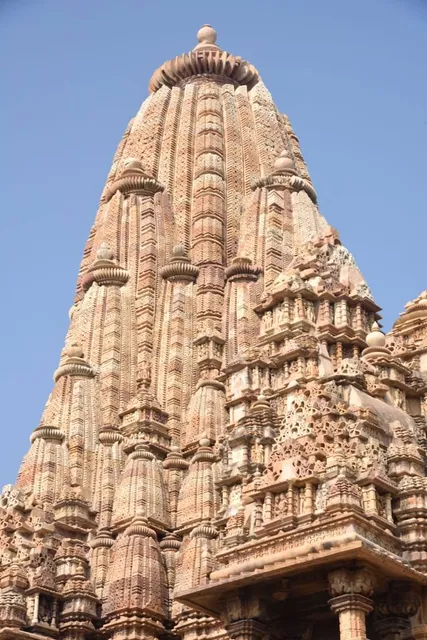
Like Lakshmana temple it is built on a rectangular raised platform and all the four corners with small shrines among only two structures are surviving. Principal diety is housed in the central Grand temple. It was built by Dhanga during his reign in 999 to 1002 AD according to the inscription affixed in the temple. It was dedicated to Lord Shiva and Sanctum Sanctorum was housing two signs of Lord Shiva in the form of Lingas one Markateshvara and the other Pramathanatha and were built of Emarald, though original missing. One side spectators can see the elephant statue and lion statue either side of the steps flights while accessing the temple. Entrance porch, hall, balconied windows, vestibule mean Antarala, circumambulatory, sanctum Sanctorum including the mythical and decorated alluring Sculptures are leaving spectators surprised. Exterior walls are having the decorated niches and the three folded Sculptures and decorative motifs. The temple depicts the idealized woman and her various roles and abilities through vibrant craftsmanship and sculpture. The loving couple are symbols of divine union and salvation. Major niches are housing the magnificent sculptures of Parvati, dancing Ganesha, Septmatrika etc including the graceful beauties engage in make up, dressing, teasing with their curves etc. Also displays the sculptures of love making couples in yogic or acrobatic forms and beauties are supporting the couples. Even like the Sculptures on the plinth of Lakshmana temple bestiality sex means the display of men's unethical or evil face can be noticed on the exterior walls. Spires on roof are very attractive. Completely built by sand stone and carvings and engraving sculptures on sand stone display the excellence of the workers.
It's a wonderful monument and time limit is to be depends on the ínterest of spectators. It's a major attraction among the history buffs wanderers soulseekers heritage art and...
Read more