HTML SitemapExplore
logo
Find Things to DoFind The Best Restaurants

Ajanta Cave No. 16 — Attraction in Maharashtra

Name
Ajanta Cave No. 16
Description
Nearby attractions
Nearby restaurants
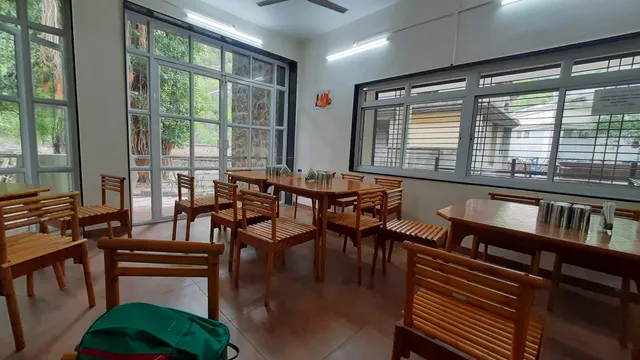
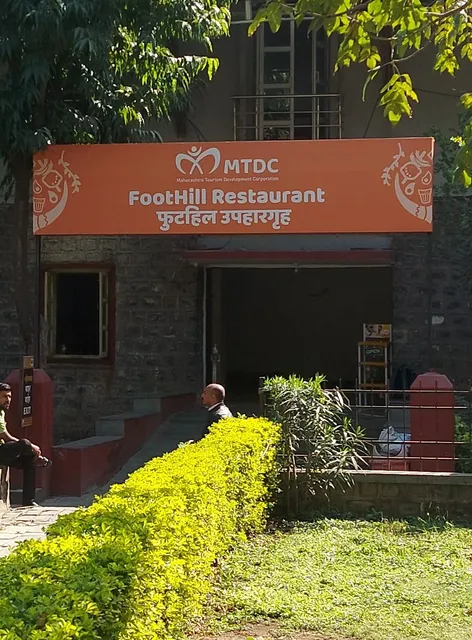
MTDC FootHill Restaurant
Ajanta caves, near Ajanta Caves, Maharashtra 431118, India
Ajanta Caves Restaurant
HP23+CGW, Caves, Maharashtra 431118, India
Nearby hotels
Related posts
Keywords
Ajanta Cave No. 16 tourism.Ajanta Cave No. 16 hotels.Ajanta Cave No. 16 bed and breakfast. flights to Ajanta Cave No. 16.Ajanta Cave No. 16 attractions.Ajanta Cave No. 16 restaurants.Ajanta Cave No. 16 travel.Ajanta Cave No. 16 travel guide.Ajanta Cave No. 16 travel blog.Ajanta Cave No. 16 pictures.Ajanta Cave No. 16 photos.Ajanta Cave No. 16 travel tips.Ajanta Cave No. 16 maps.Ajanta Cave No. 16 things to do.
Ajanta Cave No. 16 things to do, attractions, restaurants, events info and trip planning
Ajanta Cave No. 16
IndiaMaharashtraAjanta Cave No. 16

Basic Info

Ajanta Cave No. 16

HM3X+9XR, Maharashtra 431118, India
4.6(34)
Open 24 hours
Save
spot

Ratings & Description

Info

Cultural
Scenic
Family friendly
Accessibility
attractions: , restaurants: MTDC FootHill Restaurant, Ajanta Caves Restaurant
logoLearn more insights from Wanderboat AI.

Plan your stay

hotel
Pet-friendly Hotels in Maharashtra
Find a cozy hotel nearby and make it a full experience.
hotel
Affordable Hotels in Maharashtra
Find a cozy hotel nearby and make it a full experience.
hotel
The Coolest Hotels You Haven't Heard Of (Yet)
Find a cozy hotel nearby and make it a full experience.
hotel
Trending Stays Worth the Hype in Maharashtra
Find a cozy hotel nearby and make it a full experience.

Reviews

Nearby restaurants of Ajanta Cave No. 16

MTDC FootHill Restaurant

Ajanta Caves Restaurant

MTDC FootHill Restaurant

MTDC FootHill Restaurant

4.1

(37)

$

Click for details
Ajanta Caves Restaurant

Ajanta Caves Restaurant

4.3

(13)

Click for details
Get the Appoverlay
Get the AppOne tap to find yournext favorite spots!
Wanderboat LogoWanderboat

Your everyday Al companion for getaway ideas

CompanyAbout Us
InformationAI Trip PlannerSitemap
SocialXInstagramTiktokLinkedin
LegalTerms of ServicePrivacy Policy

Get the app

© 2025 Wanderboat. All rights reserved.
logo

Posts

Shankar RajasekharanShankar Rajasekharan
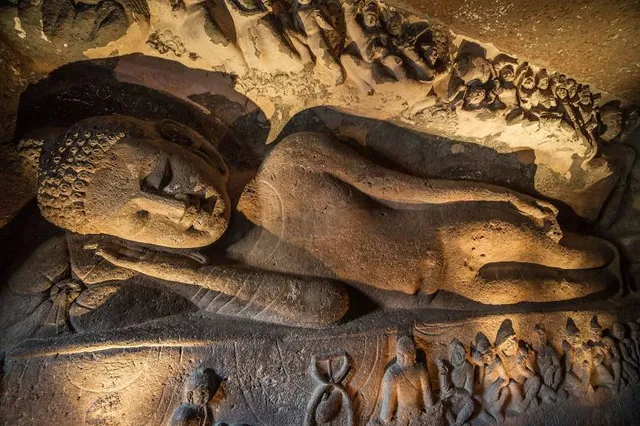
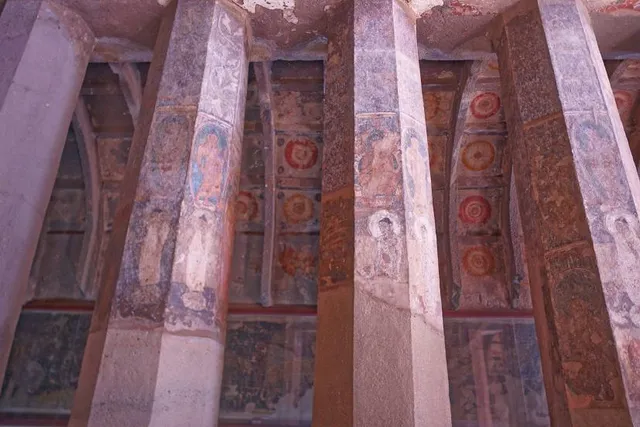
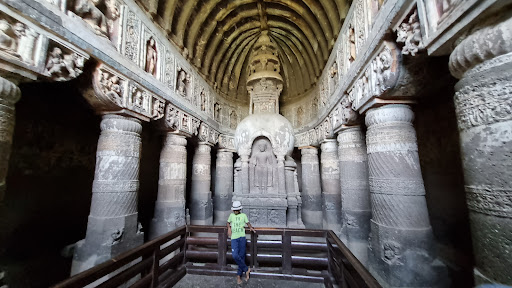
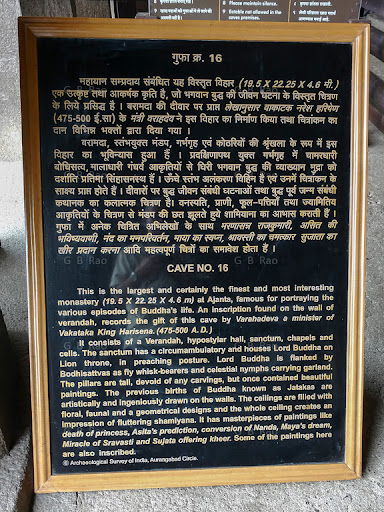
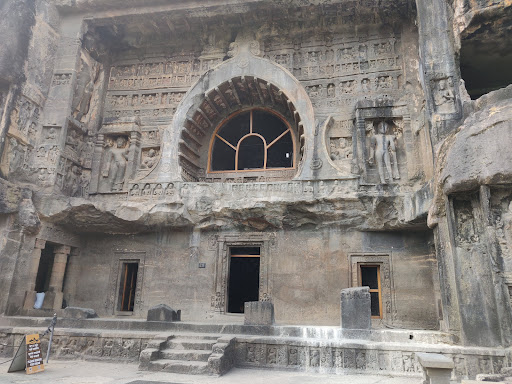
Cave 16 occupies a prime position near the middle of site, and was sponsored by Varahadeva, minister of Vakataka king Harishena (r. c. 475 – c. 500 CE). He was a follower of Buddhism.[182] He devoted it to the community of monks, with an inscription that expresses his wish, may "the entire world (...) enter that peaceful and noble state free from sorrow and disease" and affirming his devotion to the Buddhist faith: "regarding the sacred law as his only companion, (he was) extremely devoted to the Buddha, the teacher of the world". He was, states , probably someone who revered both the Buddha and the Hindu gods, as he proclaims his Hindu heritage in an inscription in the nearby Ghatotkacha Cave. The 7th-century Chinese traveler Xuan Zang described the cave as the entrance to the site. Cave 16 (19.5 m × 22.25 m × 4.6 m) influenced the architecture of the entire site. Spink and other scholars call it the "crucial cave" that helps trace the chronology of the second and closing stages of the entire cave's complex construction. Cave 16 is a Mahayana monastery and has the standard arrangement of a main doorway, two windows, and two aisle doorways. The veranda of this monastery is 19.5 m × 3 m, while the main hall is almost a perfect square with 19.5 m side. The paintings in Cave 16 are numerous. Narratives include various Jataka tales such as Hasti, Mahaummagga and the Sutasoma fables. Other frescos depict the conversion of Nanda, miracle of Sravasti, Sujata's offering, Asita's visit, the dream of Maya, the Trapusha and Bhallika story, and the ploughing festival. The Hasti Jataka frescos tell the story of a Bodhisattva elephant who learns of a large group of people starving, then tells them to go below a cliff where they could find food. The elephant proceeds to sacrifice himself by jumping off that cliff thereby becoming food so that the people can survive.These frescos are found immediately to the left of entrance, in the front corridor and the narrative follows a clockwise direction. The Mahaummagga Jataka frescos are found on the left wall of the corridor, which narrates the story of a child Bodhisattva. Thereafter, in the left corridor is the legend surrounding the conversion of Nanda – the half brother of the Buddha. The story depicted is one of the two major versions of the Nanda legend in the Buddhist tradition, one where Nanda wants to lead a sensuous life with the girl he had just wed and the Buddha takes him to heaven and later hell to show the spiritual dangers of a sensual life. After the Nanda-related frescos, the cave presents Manushi Buddhas, followed by flying votaries with offerings to worship the Buddha and the Buddha seated in teaching asana and dharma chakra mudra. The right wall of the corridor show the scenes from the life of the Buddha. These include Sujata offering food to the Buddha with a begging bowl in white dress, Tapussa and Bhalluka next to the Buddha after they offering wheat and honey to the Buddha as monk, the future Buddha sitting alone under a tree, and the Buddha at a ploughing festival. One mural shows Buddha's parents trying to dissuade him from becoming a monk. Another shows the Buddha at the palace surrounded by men in dhoti and women in sari as his behavior presents the four signs that he is likely to renounce. On this side of the corridor are also paintings that show the future Buddha as a baby with sage Asita with rishi-like looks. According to Spink, some of the Cave 16 paintings were left incomplete.
Ayaskant ParijaAyaskant Parija
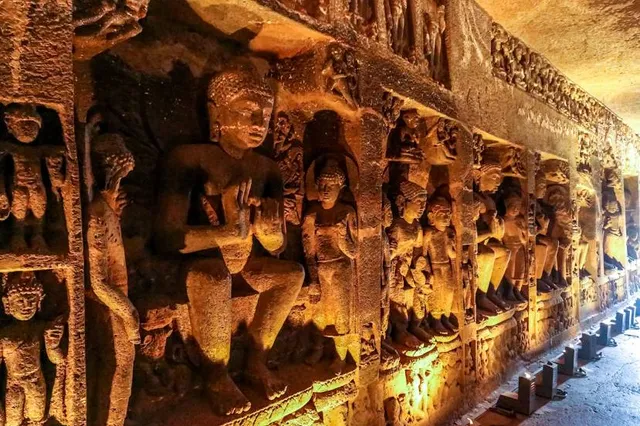
Ajanta Cave 16 is a significant vihara (monastery) that showcases the artistic and architectural advancements of the later phase of Ajanta's development. * Architectural Grandeur: It's a large and impressive cave with a spacious hall, a grand entrance, and a well-defined shrine. * Intricate Sculptures: The cave features beautifully carved sculptures, particularly around the shrine and within the cells. * Narrative Paintings: The paintings within Cave 16 depict various Jataka tales (previous lives of the Buddha) and other Buddhist narratives, providing valuable insights into Buddhist mythology and beliefs. While perhaps not as renowned for its frescoes as some other caves, Ajanta Cave 16 offers a valuable glimpse into the artistic and architectural evolution of this remarkable site. Note: It's always advisable to check for any updates or restrictions before your visit, as conditions within the caves can change.
Gajanan RaoGajanan Rao
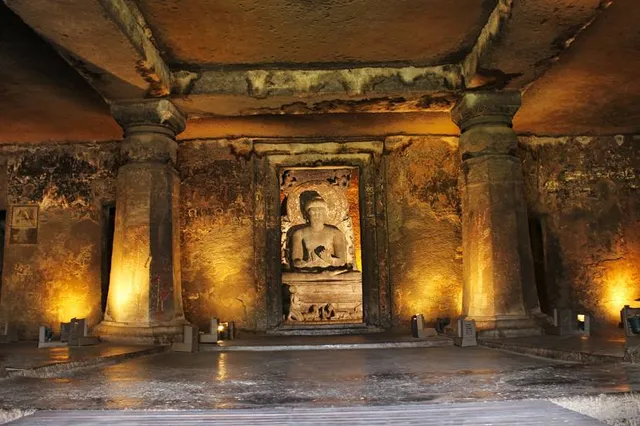
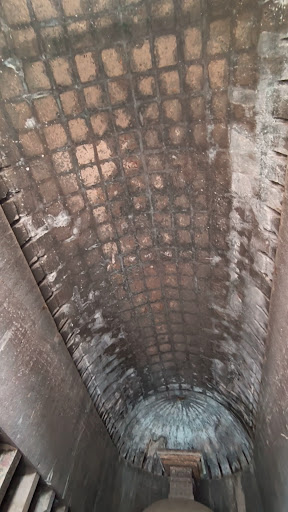
Visited Jul 2018. Right in the center of the site, it probably influenced the architecture of the entire site. "monastery and has the standard arrangement of a main doorway, two windows, and two aisle doorways". Numerous paintings. Difficult to photograph, light is poor. See attached pics, pano is a bit wonky.
See more posts
See more posts
hotel
Find your stay

Pet-friendly Hotels in Maharashtra

Find a cozy hotel nearby and make it a full experience.

Cave 16 occupies a prime position near the middle of site, and was sponsored by Varahadeva, minister of Vakataka king Harishena (r. c. 475 – c. 500 CE). He was a follower of Buddhism.[182] He devoted it to the community of monks, with an inscription that expresses his wish, may "the entire world (...) enter that peaceful and noble state free from sorrow and disease" and affirming his devotion to the Buddhist faith: "regarding the sacred law as his only companion, (he was) extremely devoted to the Buddha, the teacher of the world". He was, states , probably someone who revered both the Buddha and the Hindu gods, as he proclaims his Hindu heritage in an inscription in the nearby Ghatotkacha Cave. The 7th-century Chinese traveler Xuan Zang described the cave as the entrance to the site. Cave 16 (19.5 m × 22.25 m × 4.6 m) influenced the architecture of the entire site. Spink and other scholars call it the "crucial cave" that helps trace the chronology of the second and closing stages of the entire cave's complex construction. Cave 16 is a Mahayana monastery and has the standard arrangement of a main doorway, two windows, and two aisle doorways. The veranda of this monastery is 19.5 m × 3 m, while the main hall is almost a perfect square with 19.5 m side. The paintings in Cave 16 are numerous. Narratives include various Jataka tales such as Hasti, Mahaummagga and the Sutasoma fables. Other frescos depict the conversion of Nanda, miracle of Sravasti, Sujata's offering, Asita's visit, the dream of Maya, the Trapusha and Bhallika story, and the ploughing festival. The Hasti Jataka frescos tell the story of a Bodhisattva elephant who learns of a large group of people starving, then tells them to go below a cliff where they could find food. The elephant proceeds to sacrifice himself by jumping off that cliff thereby becoming food so that the people can survive.These frescos are found immediately to the left of entrance, in the front corridor and the narrative follows a clockwise direction. The Mahaummagga Jataka frescos are found on the left wall of the corridor, which narrates the story of a child Bodhisattva. Thereafter, in the left corridor is the legend surrounding the conversion of Nanda – the half brother of the Buddha. The story depicted is one of the two major versions of the Nanda legend in the Buddhist tradition, one where Nanda wants to lead a sensuous life with the girl he had just wed and the Buddha takes him to heaven and later hell to show the spiritual dangers of a sensual life. After the Nanda-related frescos, the cave presents Manushi Buddhas, followed by flying votaries with offerings to worship the Buddha and the Buddha seated in teaching asana and dharma chakra mudra. The right wall of the corridor show the scenes from the life of the Buddha. These include Sujata offering food to the Buddha with a begging bowl in white dress, Tapussa and Bhalluka next to the Buddha after they offering wheat and honey to the Buddha as monk, the future Buddha sitting alone under a tree, and the Buddha at a ploughing festival. One mural shows Buddha's parents trying to dissuade him from becoming a monk. Another shows the Buddha at the palace surrounded by men in dhoti and women in sari as his behavior presents the four signs that he is likely to renounce. On this side of the corridor are also paintings that show the future Buddha as a baby with sage Asita with rishi-like looks. According to Spink, some of the Cave 16 paintings were left incomplete.
Shankar Rajasekharan

Shankar Rajasekharan

hotel
Find your stay

Affordable Hotels in Maharashtra

Find a cozy hotel nearby and make it a full experience.

Get the Appoverlay
Get the AppOne tap to find yournext favorite spots!
Ajanta Cave 16 is a significant vihara (monastery) that showcases the artistic and architectural advancements of the later phase of Ajanta's development. * Architectural Grandeur: It's a large and impressive cave with a spacious hall, a grand entrance, and a well-defined shrine. * Intricate Sculptures: The cave features beautifully carved sculptures, particularly around the shrine and within the cells. * Narrative Paintings: The paintings within Cave 16 depict various Jataka tales (previous lives of the Buddha) and other Buddhist narratives, providing valuable insights into Buddhist mythology and beliefs. While perhaps not as renowned for its frescoes as some other caves, Ajanta Cave 16 offers a valuable glimpse into the artistic and architectural evolution of this remarkable site. Note: It's always advisable to check for any updates or restrictions before your visit, as conditions within the caves can change.
Ayaskant Parija

Ayaskant Parija

hotel
Find your stay

The Coolest Hotels You Haven't Heard Of (Yet)

Find a cozy hotel nearby and make it a full experience.

hotel
Find your stay

Trending Stays Worth the Hype in Maharashtra

Find a cozy hotel nearby and make it a full experience.

Visited Jul 2018. Right in the center of the site, it probably influenced the architecture of the entire site. "monastery and has the standard arrangement of a main doorway, two windows, and two aisle doorways". Numerous paintings. Difficult to photograph, light is poor. See attached pics, pano is a bit wonky.
Gajanan Rao

Gajanan Rao

See more posts
See more posts

Reviews of Ajanta Cave No. 16

4.6
(34)
avatar
5.0
2y

Cave 16 occupies a prime position near the middle of site, and was sponsored by Varahadeva, minister of Vakataka king Harishena (r. c. 475 – c. 500 CE). He was a follower of Buddhism.[182] He devoted it to the community of monks, with an inscription that expresses his wish, may "the entire world (...) enter that peaceful and noble state free from sorrow and disease" and affirming his devotion to the Buddhist faith: "regarding the sacred law as his only companion, (he was) extremely devoted to the Buddha, the teacher of the world". He was, states , probably someone who revered both the Buddha and the Hindu gods, as he proclaims his Hindu heritage in an inscription in the nearby Ghatotkacha Cave. The 7th-century Chinese traveler Xuan Zang described the cave as the entrance to the site.

Cave 16 (19.5 m × 22.25 m × 4.6 m) influenced the architecture of the entire site. Spink and other scholars call it the "crucial cave" that helps trace the chronology of the second and closing stages of the entire cave's complex construction. Cave 16 is a Mahayana monastery and has the standard arrangement of a main doorway, two windows, and two aisle doorways. The veranda of this monastery is 19.5 m × 3 m, while the main hall is almost a perfect square with 19.5 m side.

The paintings in Cave 16 are numerous. Narratives include various Jataka tales such as Hasti, Mahaummagga and the Sutasoma fables. Other frescos depict the conversion of Nanda, miracle of Sravasti, Sujata's offering, Asita's visit, the dream of Maya, the Trapusha and Bhallika story, and the ploughing festival. The Hasti Jataka frescos tell the story of a Bodhisattva elephant who learns of a large group of people starving, then tells them to go below a cliff where they could find food. The elephant proceeds to sacrifice himself by jumping off that cliff thereby becoming food so that the people can survive.These frescos are found immediately to the left of entrance, in the front corridor and the narrative follows a clockwise direction.

The Mahaummagga Jataka frescos are found on the left wall of the corridor, which narrates the story of a child Bodhisattva. Thereafter, in the left corridor is the legend surrounding the conversion of Nanda – the half brother of the Buddha. The story depicted is one of the two major versions of the Nanda legend in the Buddhist tradition, one where Nanda wants to lead a sensuous life with the girl he had just wed and the Buddha takes him to heaven and later hell to show the spiritual dangers of a sensual life. After the Nanda-related frescos, the cave presents Manushi Buddhas, followed by flying votaries with offerings to worship the Buddha and the Buddha seated in teaching asana and dharma chakra mudra.

The right wall of the corridor show the scenes from the life of the Buddha. These include Sujata offering food to the Buddha with a begging bowl in white dress, Tapussa and Bhalluka next to the Buddha after they offering wheat and honey to the Buddha as monk, the future Buddha sitting alone under a tree, and the Buddha at a ploughing festival. One mural shows Buddha's parents trying to dissuade him from becoming a monk. Another shows the Buddha at the palace surrounded by men in dhoti and women in sari as his behavior presents the four signs that he is likely to renounce. On this side of the corridor are also paintings that show the future Buddha as a baby with sage Asita with rishi-like looks. According to Spink, some of the Cave 16 paintings were...

   Read more

avatar
5.0
1y

Ajanta Cave 16 is one of the most prominent and well-known caves at the Ajanta Caves complex in Maharashtra, India. It is part of a group of rock-cut Buddhist temples and monasteries that date back to between the 2nd century BCE and 650 CE. This cave is particularly renowned for its remarkable artwork and architectural features.

The cave is famous for its massive chaitya hall, which is an assembly hall used for worship. The chaitya hall in Cave 16 is noted for its impressive size and elegant design, which includes a large, intricately carved stupa at the end of the hall. The stupa, a dome-shaped structure, was used as a focal point for meditation and worship. The hall is adorned with detailed carvings and decorative elements, reflecting the craftsmanship and artistic skills of the period.

Ajanta Cave 16 is also notable for its well-preserved murals, which depict various scenes from the life of the Buddha and Jataka tales, stories about the previous lives of the Buddha. These murals are renowned for their vivid colors, detailed imagery, and intricate storytelling. They offer a glimpse into the religious and cultural life of the time, showcasing the rich heritage of Buddhist art and iconography.

The cave’s architectural layout and the artistic quality of its murals reflect the high level of skill and devotion that went into its construction. The combination of the chaitya hall, the stupa, and the murals makes Ajanta Cave 16 a significant and captivating site for visitors interested in Buddhist art, history, and architecture.

Overall, Ajanta Cave 16 stands out as a testament to the artistic and architectural achievements of ancient India. Its grand chaitya hall and exquisite murals make it a must-see for anyone exploring the Ajanta Caves, offering a profound insight into the Buddhist heritage and the artistry...

   Read more
avatar
5.0
48w

Ajanta Cave 16 is a significant vihara (monastery) that showcases the artistic and architectural advancements of the later phase of Ajanta's development. Architectural Grandeur: It's a large and impressive cave with a spacious hall, a grand entrance, and a well-defined shrine. Intricate Sculptures: The cave features beautifully carved sculptures, particularly around the shrine and within the cells. Narrative Paintings: The paintings within Cave 16 depict various Jataka tales (previous lives of the Buddha) and other Buddhist narratives, providing valuable insights into Buddhist mythology and beliefs. While perhaps not as renowned for its frescoes as some other caves, Ajanta Cave 16 offers a valuable glimpse into the artistic and architectural evolution of this remarkable site. Note: It's always advisable to check for any updates or restrictions before your visit, as conditions within the...

   Read more
Page 1 of 7
Previous
Next