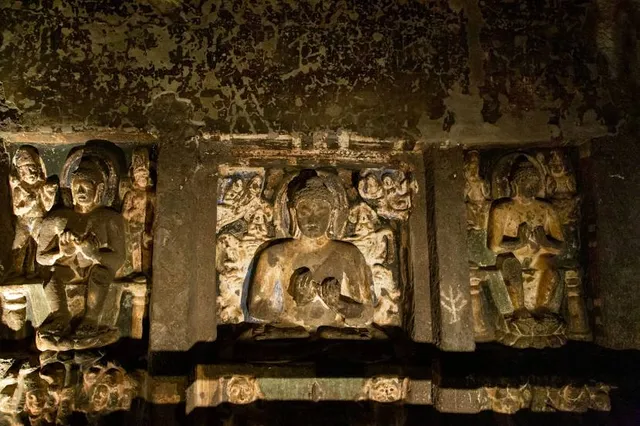
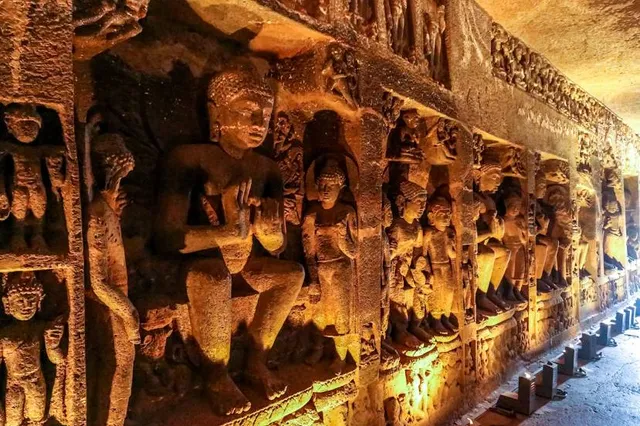
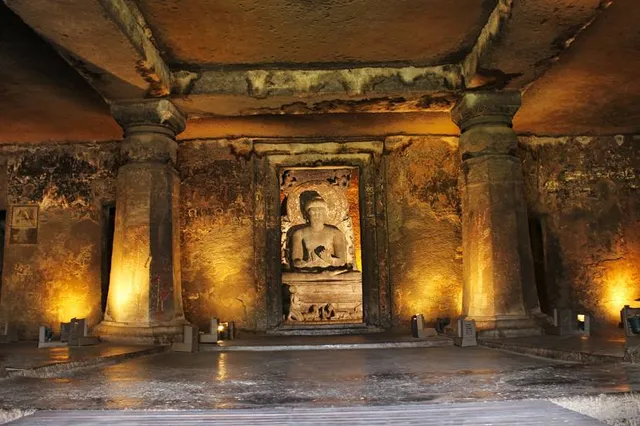
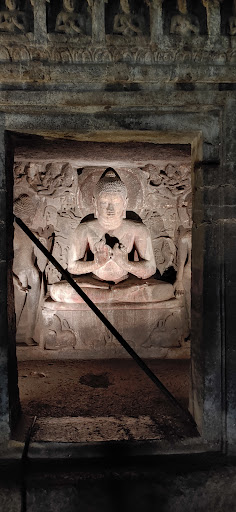
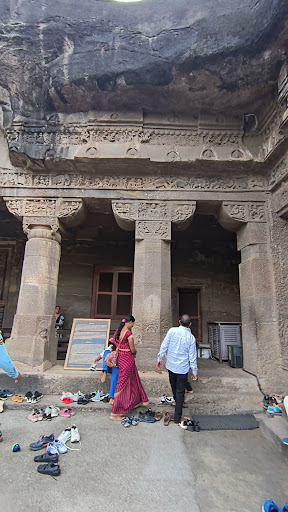
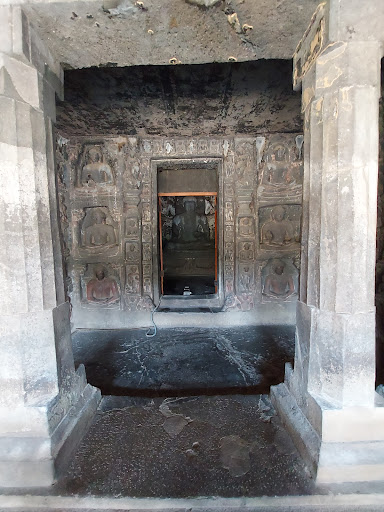
Cave 6 is two-storey monastery (16.85 ├Ч 18.07 m). It consists of a sanctum, a hall on both levels. The lower level is pillared and has attached cells. The upper hall also has subsidiary cells. The sanctums on both level feature a Buddha in the teaching posture. Elsewhere, the Buddha is shown in different mudras. The lower level walls depict the Miracle of Sravasti and the Temptation of Mara legends. Only the lower floor of cave 6 was finished. The unfinished upper floor of cave 6 has many private votive sculptures, and a shrine Buddha.
The lower level of Cave 6 likely was the earliest excavation in the second stage of construction. This stage marked the Mahayana theme and Vakataka renaissance period of Ajanta reconstruction that started about four centuries after the earlier Hinayana theme construction. The upper storey was not envisioned in the beginning, it was added as an afterthought, likely around the time when the architects and artists abandoned further work on the geologically-flawed rock of Cave 5 immediately next to it. Both lower and upper Cave 6 show crude experimentation and construction errors. The cave work was most likely in progress between 460 and 470 CE, and it is the first that shows attendant Bodhisattvas. The upper cave construction probably began in 465, progressed swiftly, and much deeper into the rock than the lower level.
The walls and sanctum's door frame of the both levels are intricately carved. These show themes such as makaras and other mythical creatures, apsaras, elephants in different stages of activity, females in waving or welcoming gesture. The upper level of Cave 6 is significant in that it shows a devotee in a kneeling posture at the Buddha's feet, an indication of devotional worship practices by the 5th century. The colossal Buddha of the shrine has an elaborate throne back, but was hastily finished in 477/478 CE, when king Harisena died. The shrine antechamber of the cave features an unfinished sculptural group of the Six Buddhas of the Past, of which only five statues were carved. This idea may have been influenced from those in Bagh Caves of...
┬а┬а┬аRead moreAjanta Cave 6 is one of the most notable and well-preserved caves within the Ajanta Caves complex, a UNESCO World Heritage site located in Maharashtra, India. This cave stands out due to its significant historical, architectural, and artistic features, making it a prominent destination for visitors.
Dating back to the 2nd century BCE, Ajanta Cave 6 is a Buddhist cave monastery that showcases exquisite murals and sculptures. The caveтАЩs architecture is characterized by its spacious interior, which includes a large central hall with a prominent stupa (a hemispherical structure containing relics). The central hall, or chaitya hall, is surrounded by a series of columns with intricately carved capitals.
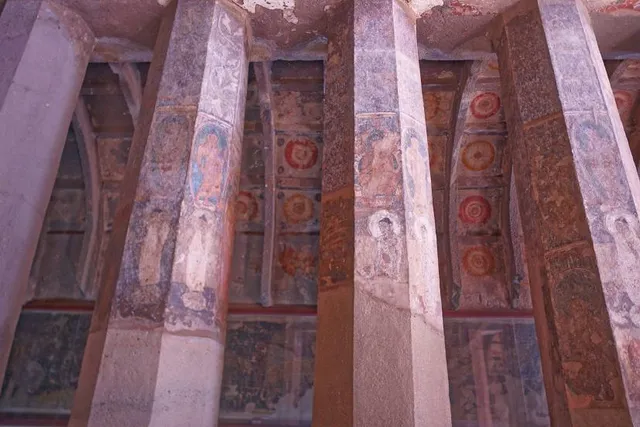
One of the highlights of Cave 6 is its well-preserved murals, which are celebrated for their artistic detail and vibrant colors. These murals depict various scenes from the life of the Buddha, as well as Jataka tales that illustrate the previous lives of the Buddha. The frescoes in Cave 6 are known for their narrative richness and the skillful depiction of figures and landscapes, offering a glimpse into the artistic mastery of the period.
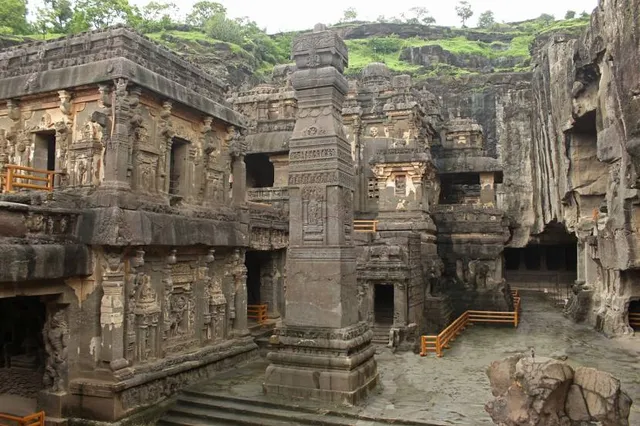
The cave also features a beautifully carved fa├зade and an elaborately decorated entrance, which reflect the grandeur and artistic sensibilities of the era. The attention to detail in the carvings and the overall design of Cave 6 highlight the significant role it played in the cultural and religious life of ancient India.
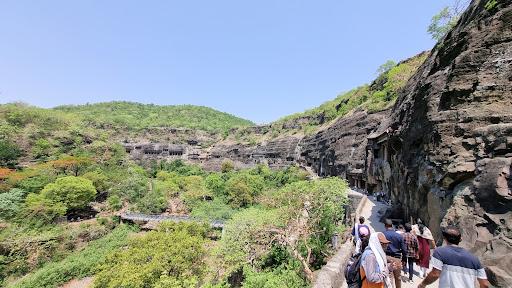
Visiting Ajanta Cave 6 provides an immersive experience into the Buddhist art and architecture of the time. The cave is accessible from the main Ajanta Caves complex, which requires a bit of trekking through the scenic hills surrounding the area. The caveтАЩs location offers a tranquil setting that complements its historical and artistic significance.
Overall, Ajanta Cave 6 is an essential stop for anyone interested in Buddhist art and history, offering a rich combination of architectural beauty and artistic excellence. Its well-preserved state and significant cultural contributions make it a key highlight of the Ajanta...
┬а┬а┬аRead moreCave 6 is two-storey monastery. Only the lower floor of cave 6 was finished. The unfinished upper floor of cave 6. It consists of a sanctum, a hall on both levels. The lower level is pillared and has attached cells. The upper hall also has subsidiary cells. The sanctums on both levels feature a Buddha in the teaching posture. The lower-level walls depict the Miracle of Sravasti and the Temptation of Mara legends.
The walls and sanctum's door frame of the both levels are intricately carved with themes such as makaras and other mythical creatures, apsaras, elephants in different stages of activity, females in waving or welcoming gesture. The colossal Buddha of the shrine has an elaborate throne back. The shrine antechamber of the cave features an unfinished sculptural group of the Six Buddhas of the Past, of which only five statues were carved. On the same wall near the feet of a relief of Buddha is the masterly drawing of a remarkable kneeling figure holding three lotus-buds and a handled cylindrical...
┬а┬а┬аRead more