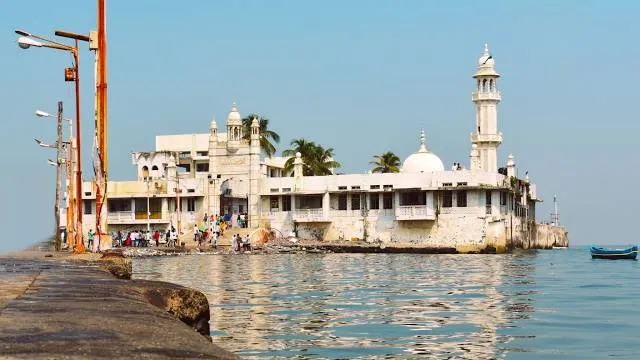
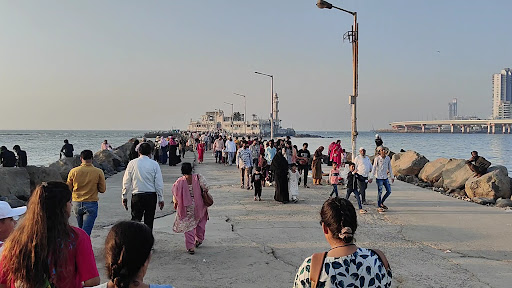
Haji Ali Dargah is a revered mosque and tomb located on a tiny islet off the coast of Worli in Mumbai, India. It stands as one of the city's most recognizable landmarks, drawing millions of devotees and tourists. Built in 1431, this sacred structure commemorates Sayyed Peer Haji Ali Shah Bukhari, a wealthy Muslim merchant from Bukhara (present-day Uzbekistan) who renounced worldly possessions for a pilgrimage to Mecca. Haji Ali Shah Bukhari was a Sufi saint of the Chishti Order, known for his piety and miracles. Legend has it that once, seeing a poor woman cry over spilled oil, he miraculously restored it by touching the ground – an act that later filled him with remorse, leading to his spiritual journey. Before dying en route to Mecca, he instructed followers to cast his coffin into the Arabian Sea. Miraculously, it floated to Mumbai's shores, lodging on rocky islets near Worli, prompting the Dargah's construction there. The architecture showcases exquisite Indo-Islamic style with white Makrana marble (the same used in the Taj Mahal), domes, and minarets, reflecting Mughal influences. Its striking white structure contrasts beautifully against the Arabian Sea backdrop. The Dargah is situated on an islet, accessible via a causeway during low tide – visitors must plan visits accordingly as the path gets submerged at high tide. It is open from 5:30 AM to 10 PM daily, with the best time to visit between October and March for pleasant weather. Entry to the Dargah is free, though donations are accepted; devotees often contribute offerings like chaddar (cloth covers for the tomb). Modest dress is suggested for visitors as a mark of respect. Approximately 40,000 people visit on Thursdays and Fridays, with devotees from various faiths coming to seek blessings. Haji Ali Dargah is famed for its spiritual aura and architectural beauty – people of all faiths visit this symbol of Sufi harmony. The tomb of Haji Ali is covered with red and green chaddar, adorned with a silver frame, marking the saint's resting place. Intricate mirror work and Quranic inscriptions decorate the interiors, showcasing craftsmanship. Qawwali performances, traditional Sufi devotional music, are held on Fridays, adding to the spiritual ambiance. The Dargah complex includes a sanatorium, reflecting the charitable ethos associated with Sufi institutions. Haji Ali Shah Bukhari's story intertwines history and miracles, cementing his revered status. The 15th-century origins tie it to medieval Sufi movements influencing India deeply. The miraculous floating casket narrative remains central to its legend. The Dargah survived Mumbai's severe 1949 floods unscathed – seen by many as testament to its sanctity. It has appeared in popular culture, like the Bollywood song Piya Haji Ali (film Fiza, 2000), highlighting cultural resonance. Urs (death anniversary celebrations) and Eid festivals draw large, enthusiastic crowds. Visitors often remark on the tranquil ambiance contrasting with Mumbai's urban dynamism. Photography is allowed outside the sanctum; mobile phones/cameras capture its majestic vistas. Accessibility via the tidal causeway demands timing awareness – check local tide schedules. Dress modestly; remove footwear before entering sacred areas per customs. Devotees tie threads on latticework (jali) for wishes, a common practice at Sufi shrines. Haji Ali Dargah embodies Mumbai's cultural fusion and spiritual harmony. It's a serene oasis amid urban bustle, attracting pilgrims/devotees globally for blessings and solace. The structure signifies India's rich Sufi heritage alongside landmarks like...
Read moreHaji Ali Dargah is one of Mumbai's most iconic landmarks, both for its religious significance and its stunning location. Situated on an islet off the coast of Worli, the dargah is a major pilgrimage site, attracting devotees from various faiths as well as tourists.
Key Highlights:
Historical and Religious Significance: The dargah was built in 1431 in memory of Sayyed Peer Haji Ali Shah Bukhari, a wealthy merchant from Uzbekistan who renounced all his worldly possessions before making a pilgrimage to Mecca. After his death, legend has it that his body miraculously floated back to the shores of Mumbai, where the dargah now stands. It is a revered site for Muslims, but it is also visited by people of different religions, symbolizing unity and harmony.
Architectural Beauty: The dargah is a fine example of Indo-Islamic architecture, with a pristine white structure featuring a marble dome and intricate designs. The mosque and the tomb are set against the backdrop of the Arabian Sea, creating a serene and picturesque setting. The pathway leading to the dargah is about 500 meters long and is accessible only during low tide. During high tide, the causeway is submerged, giving the dargah an almost floating appearance.
Spiritual Atmosphere: The dargah is not just a place of worship but also a site for spiritual reflection. The peaceful ambiance is enhanced by the sounds of Sufi music and qawwali performances, which are often held within the dargah premises. The inner sanctum houses the tomb of Haji Ali, draped in a red and green cloth. Devotees offer prayers, seek blessings, and make donations here.
Scenic Location: The location of Haji Ali Dargah offers stunning views of the Arabian Sea and the Mumbai skyline. The walk along the causeway is a unique experience, especially during sunset when the dargah is bathed in a golden glow. The sea breeze and the sight of waves crashing against the islet add to the overall experience.
Access and Amenities: The dargah is easily accessible from various parts of Mumbai, with the nearest railway station being Mahalaxmi. The causeway can be a bit crowded, especially during festivals or weekends, but the visit is generally considered worth it. While there are no entry fees, donations are encouraged, and there are small stalls selling flowers, chadars (sheets), and other offerings.
Visitor Feedback: Positive: Many visitors are struck by the spiritual aura and the beauty of the dargah’s location. The blend of religious devotion and serene surroundings often leaves a lasting impression. The dargah's accessibility to people of all faiths is also highly appreciated.
Challenges: Some visitors mention that the area around the dargah can get crowded, and the walkway can be slippery during monsoons or high tide. The lack of extensive amenities, such as restrooms and seating, might be a concern for some.
Overall: Haji Ali Dargah is not just a religious site but also a cultural and historical landmark of Mumbai. Whether you're visiting for spiritual reasons, architectural interest, or simply to experience a piece of Mumbai's heritage, the dargah offers a memorable and...
Read moreI recently visited the iconic Haji Ali Dargah, and it was an experience I’ll never forget. Located in the middle of the Arabian Sea, this spiritual and architectural marvel is a perfect blend of serene beauty and religious significance.
As soon as I arrived, I was in awe of the stunning surroundings. The dargah is situated on a small islet connected to the mainland by a narrow causeway, which offers picturesque views of the ocean. Walking along the causeway, with the sound of crashing waves and a gentle sea breeze, I felt a sense of tranquility enveloping me. The location alone is breathtaking, and it felt like a peaceful escape from the busy city life of Mumbai.
The atmosphere around Haji Ali is deeply spiritual. The dargah is dedicated to Haji Ali Shah Bukhari, a saint, and the moment you step inside, you can sense a deep sense of reverence. There is an air of calm and quiet devotion, with visitors from all walks of life coming to offer prayers and seek blessings. Whether you’re religious or not, the energy of the place is undeniable, and it really puts you in a reflective state of mind.
The architecture of Haji Ali Dargah is magnificent. The white marble structure, with its intricate carvings and domed roofs, stands out beautifully against the blue of the sea and sky. The ornate entrance is welcoming, and the central tomb of Haji Ali Shah Bukhari is the focal point. I found the blend of Mughal and Indo-Islamic architecture here to be visually striking, and the entire site exudes a sense of grandeur.
The surroundings of the dargah are equally impressive. The area is clean, and there is a peaceful aura that adds to the beauty of the place. Visitors can take a walk around the area, where you’ll also find some small shops selling offerings, souvenirs, and snacks. There are also a few benches where one can sit, take in the view, and reflect in peace.
What really stood out to me was the sense of community at Haji Ali. People, regardless of their background, are united in their reverence for the saint. The sound of the qawwali music echoing around the dargah adds a spiritual layer to the entire experience, making it even more uplifting. It’s a place where spirituality and beauty come together seamlessly.
If you’re planning a visit, it’s best to go early in the morning or later in the evening to avoid large crowds. The weather is usually pleasant, but it’s wise to wear comfortable clothing and shoes since there’s a bit of walking involved.
Overall, my visit to Haji Ali Dargah was an incredibly peaceful and enriching experience. The combination of its stunning location, the serene atmosphere, and the sense of devotion made it a memorable trip. Whether you’re visiting for spiritual reasons, architectural admiration, or simply to enjoy the breathtaking views, Haji Ali is a must-visit...
Read more