HTML SitemapExplore
logo
Find Things to DoFind The Best Restaurants

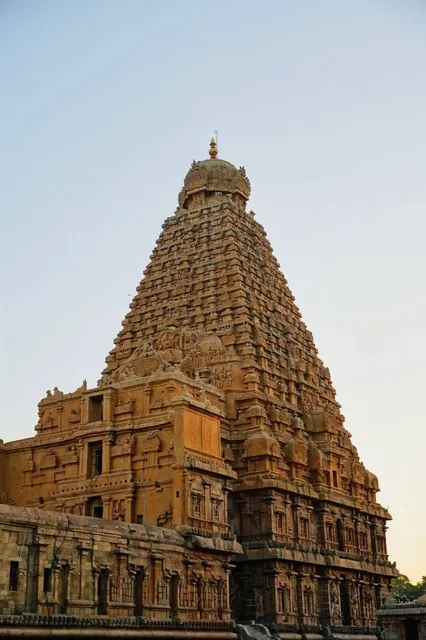
Brihadeeswara Temple — Attraction in Tamil Nadu

Name
Brihadeeswara Temple
Description
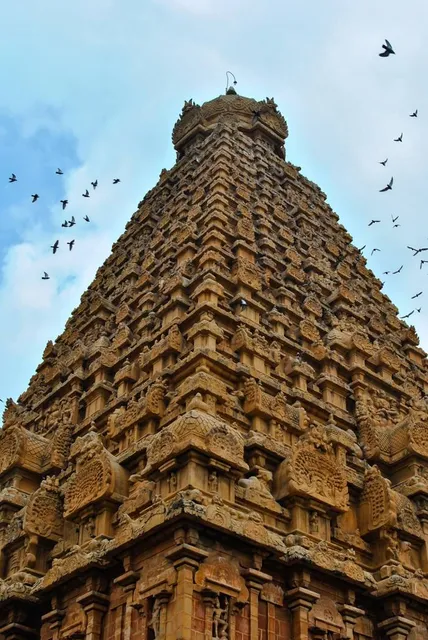
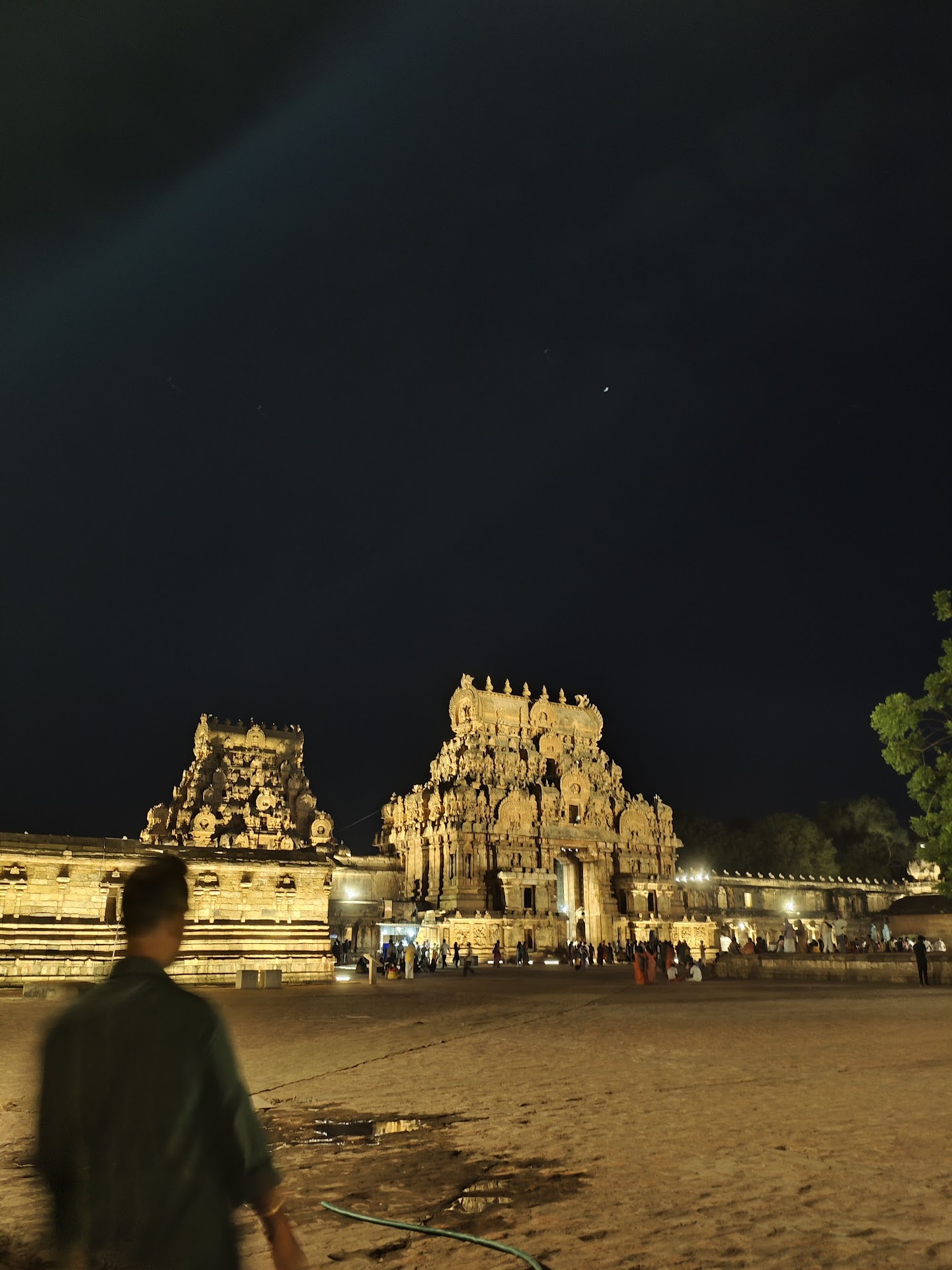
Brihadishvara Temple, called Rajarajesvaram by its builder, and known locally as Thanjai Periya Kovil and Peruvudaiyar Kovil, is a Shaivite Hindu temple built in a Chola architectural style located on the south bank of the Cauvery river in Thanjavur, Tamil Nadu, India.
Nearby attractions
Lord Shiva Temple
Q4MJ+4P3, Shivaji Nagar Main Rd, Balaganapathy Nagar, Thanjavur, Tamil Nadu 613001, India
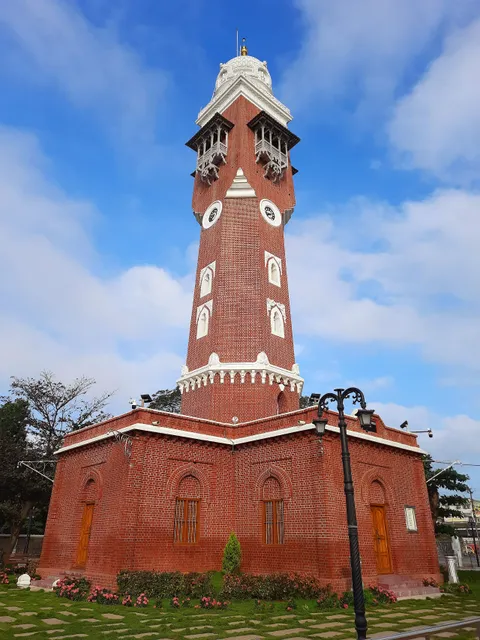
Clock Tower
Manikoondu (Clock Tower), Gandhiji Rd, Attar Mohalla, Thanjavur, Tamil Nadu 613001, India
Nearby restaurants
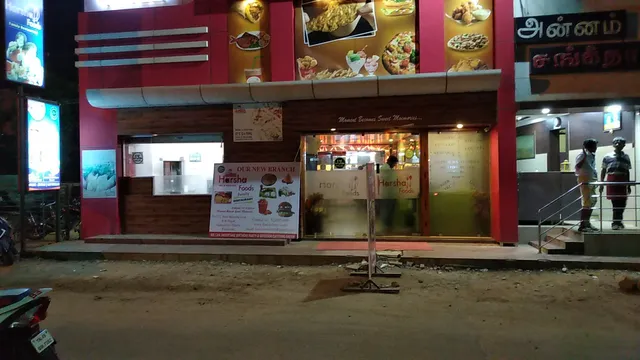
Harsha Foods
Near Rani Paradise Theatre, Thanjavur, Tamil Nadu 613001, India
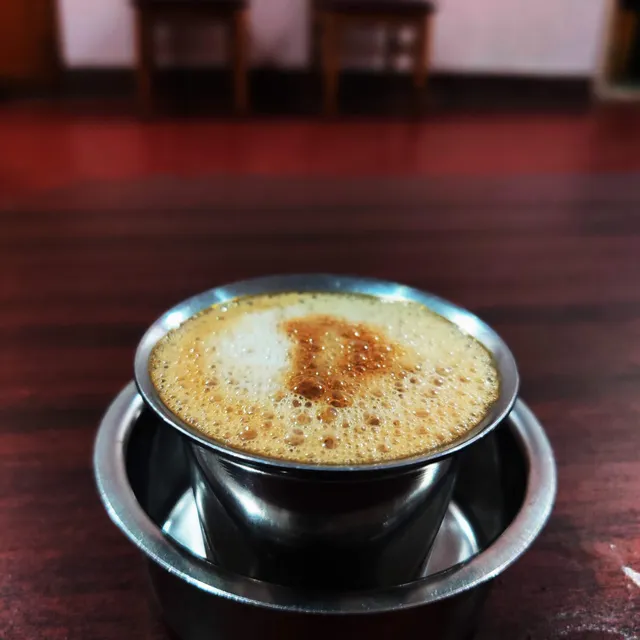
Coffee Palace
1818, W Main St, Rajakrisnapuram, Thanjavur, Tamil Nadu 613009, India
Kamatchi mess
Bus Stop, Shiva Ganga Corner, Hospital Rd, Rajakrisnapuram, Inathukanpatti, Tamil Nadu 613001, India
SAHAN RESTAURANT
Ground Floor, Hotel Kasi Inn, 1493, S Rampart Rd, Rajakrisnapuram, Thanjavur, Tamil Nadu 613001, India
Amma Yunavagam
Q4PM+GPR, Rajakrisnapuram, S.N.M Rahman Nagar, Thanjavur, Tamil Nadu 613001, India
Domino's Pizza | Shivaji Nagar, Thanjavur
Ward No. 6, Old Door No. 176 New Door No. 130, Block No.73 Town Survey No. 2967, 2968, Gandhiji Rd, Thanjavur, Tamil Nadu 613001, India
Chellammals Manpaanai Samayal
7, South St, opposite to Annai Sathya Sports Stadium, Ganesh Nagar, Thanjavur, Tamil Nadu 613001, India
Sree Ariya Bhavan (Authentic Veg - Since 1964)
Plot:1234, South Rampart Near Old Bus Stand, Thanjavur, Tamil Nadu 613001, India
Bombay Sweets
S Rampart Rd, Rajakrisnapuram, Thanjavur, Tamil Nadu 613001, India
Sree Ariya Bhavan (Authentic Veg - Since 1964) Near Junction
Plot No, 2981, Gandhiji Rd, near Junction, Graham Nagar, Shivaji Nagar, Thanjavur, Tamil Nadu 613001, India
Nearby hotels
Hotel Pandiyar Residency
14, Rani Paradise Theater Complex, Kachery Road, Membalam Rd, Shivaji Nagar, Thanjavur, Tamil Nadu 613001, India
Srirathna Temple View Inn
2961, S Rampart Rd, near Big Temple, Rajakrisnapuram, Thanjavur, Tamil Nadu 613001, India
ABI'S RESIDENCY
2958, Rajakrisnapuram, South Rampart, Thanjavur, Tamil Nadu 613001, India
Ponni Residency Thanjavur
near Big Temple, opposite to Khaveri Super Market, Rajakrisnapuram, South Rampart, Thanjavur, Tamil Nadu 613001, India
Orange Homestay
30/9, Rajaji Rd, Srinivasapuram, Balaganapathy Nagar, Thanjavur, Tamil Nadu 613009, India
Hotel Kasi Inn
1493, South Rampart, Road Inside Old Bus Stand, Thanjavur, Tamil Nadu 613001, India
PL.A.INN Hotel
Q4PP+R52, Rajakrisnapuram, Attar Mohalla, Thanjavur, Tamil Nadu 613001, India
Hotel Star Residency
No 20/1A, S.M. Road, N S C Bose Nagar, Ramani Nagar, Thanjavur, Tamil Nadu 613007, India
Hotel Tamilnadu
Gandhiji Rd, Graham Nagar, Shivaji Nagar, Thanjavur, Tamil Nadu 613001, India
Hotel Ramnath
1335, Road Inside Old Bus Stand, Rajakrisnapuram, South Rampart, Thanjavur, Tamil Nadu 613001, India
Related posts
Keywords
Brihadeeswara Temple tourism.Brihadeeswara Temple hotels.Brihadeeswara Temple bed and breakfast. flights to Brihadeeswara Temple.Brihadeeswara Temple attractions.Brihadeeswara Temple restaurants.Brihadeeswara Temple travel.Brihadeeswara Temple travel guide.Brihadeeswara Temple travel blog.Brihadeeswara Temple pictures.Brihadeeswara Temple photos.Brihadeeswara Temple travel tips.Brihadeeswara Temple maps.Brihadeeswara Temple things to do.
Brihadeeswara Temple things to do, attractions, restaurants, events info and trip planning
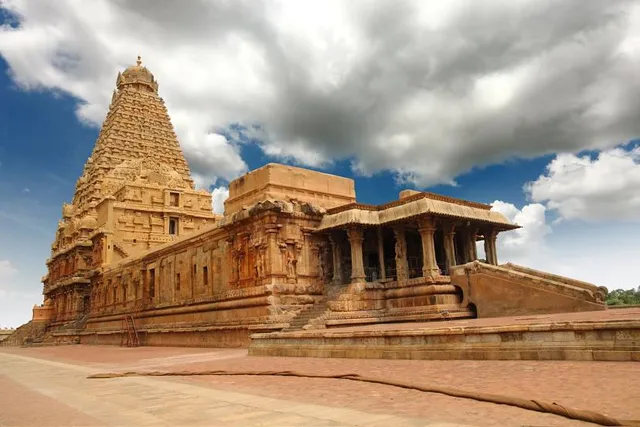
Brihadeeswara Temple
IndiaTamil NaduBrihadeeswara Temple

Basic Info

Brihadeeswara Temple

Balaganapathy Nagar, Thanjavur, Tamil Nadu 613001, India
4.8(17.7K)
Open 24 hours
Save
spot

Ratings & Description

Info

Brihadishvara Temple, called Rajarajesvaram by its builder, and known locally as Thanjai Periya Kovil and Peruvudaiyar Kovil, is a Shaivite Hindu temple built in a Chola architectural style located on the south bank of the Cauvery river in Thanjavur, Tamil Nadu, India.

Cultural
Accessibility
attractions: Lord Shiva Temple, Clock Tower, restaurants: Harsha Foods, Coffee Palace, Kamatchi mess, SAHAN RESTAURANT, Amma Yunavagam, Domino's Pizza | Shivaji Nagar, Thanjavur, Chellammals Manpaanai Samayal, Sree Ariya Bhavan (Authentic Veg - Since 1964), Bombay Sweets, Sree Ariya Bhavan (Authentic Veg - Since 1964) Near Junction
logoLearn more insights from Wanderboat AI.
Phone
+91 4362 274 476
Website
asi.nic.in

Plan your stay

hotel
Pet-friendly Hotels in Tamil Nadu
Find a cozy hotel nearby and make it a full experience.
hotel
Affordable Hotels in Tamil Nadu
Find a cozy hotel nearby and make it a full experience.
hotel
The Coolest Hotels You Haven't Heard Of (Yet)
Find a cozy hotel nearby and make it a full experience.
hotel
Trending Stays Worth the Hype in Tamil Nadu
Find a cozy hotel nearby and make it a full experience.

Reviews

Nearby attractions of Brihadeeswara Temple

Lord Shiva Temple

Clock Tower

Lord Shiva Temple

Lord Shiva Temple

4.9

(39)

Open 24 hours
Click for details
Clock Tower

Clock Tower

4.7

(31)

Open 24 hours
Click for details

Nearby restaurants of Brihadeeswara Temple

Harsha Foods

Coffee Palace

Kamatchi mess

SAHAN RESTAURANT

Amma Yunavagam

Domino's Pizza | Shivaji Nagar, Thanjavur

Chellammals Manpaanai Samayal

Sree Ariya Bhavan (Authentic Veg - Since 1964)

Bombay Sweets

Sree Ariya Bhavan (Authentic Veg - Since 1964) Near Junction

Harsha Foods

Harsha Foods

3.8

(260)

$$

Closed
Click for details
Coffee Palace

Coffee Palace

4.1

(463)

Click for details
Kamatchi mess

Kamatchi mess

3.9

(28)

Click for details
SAHAN RESTAURANT

SAHAN RESTAURANT

4.1

(486)

Click for details
Get the Appoverlay
Get the AppOne tap to find yournext favorite spots!
Wanderboat LogoWanderboat

Your everyday Al companion for getaway ideas

CompanyAbout Us
InformationAI Trip PlannerSitemap
SocialXInstagramTiktokLinkedin
LegalTerms of ServicePrivacy Policy

Get the app

© 2025 Wanderboat. All rights reserved.
logo

Reviews of Brihadeeswara Temple

4.8
(17,686)
avatar
5.0
21w

The Brihadeeswara Temple, often referred to as the Big Temple, is a magnificent testament to the architectural prowess and spiritual devotion of the Chola dynasty. Located in Thanjavur (Tanjore) in the Indian state of Tamil Nadu, this UNESCO World Heritage site is not merely a place of worship but a towering masterpiece of granite, an engineering marvel, and a vibrant canvas of history and culture. Commissioned by the great Chola emperor Rajaraja I and completed around 1010 CE, the temple is dedicated to Lord Shiva. What immediately strikes any visitor is its sheer scale. Rising to a height of approximately 66 meters (216 feet), the vimana (temple tower) is one of the tallest in the world, built entirely of granite without the use of mortar. The precision with which these massive granite blocks, some weighing as much as 80 tons, were quarried, transported over significant distances, and then lifted and meticulously placed, continues to baffle and inspire awe in engineers and historians alike. The capstone alone is estimated to weigh around 80 tons, and the methods used to hoist it to such a height centuries ago remain a subject of fascinating debate and theories, often involving elaborate ramp systems. The architectural style is a prime example of mature Chola architecture, characterized by its grandeur, simplicity, and exquisite detailing. The vimana is a pyramidal structure rising in thirteen increasingly smaller stories, culminating in a monolithic cupola. Each tier is adorned with sculptures of deities, mythical creatures, and celestial beings, providing a visual narrative of Hindu mythology. At the base of the vimana is the main shrine, housing a colossal lingam (an iconic representation of Shiva) that is nearly 4 meters (13 feet) tall. The sanctum sanctorum is surrounded by two concentric walls, creating a circumambulatory path (pradakshina patha) for devotees. The outer walls of the temple are a gallery of Chola art, featuring hundreds of sculpted figures of various deities, apsaras (celestial nymphs), dwarapalas (door guardians), and scenes from Hindu epics. These sculptures are not merely decorative; they convey a sense of movement, grace, and spiritual energy. One of the most remarkable features is the Nandi Mandapam, a pavilion housing a massive monolithic statue of Nandi, Shiva's sacred bull. Carved from a single rock, it measures approximately 6 meters (20 feet) in length and 3.7 meters (12 feet) in height, making it one of the largest Nandi statues in India. Its polished surface gleams, and its serene expression perfectly complements the temple's overall spiritual ambiance. Beyond its architectural and sculptural brilliance, the Brihadeeswara Temple is also a marvel of engineering and urban planning. The temple complex is surrounded by high walls, forming a rectangular enclosure. Within this complex, one finds smaller shrines dedicated to other deities, a well-maintained garden, and various subsidiary structures. The entire complex was designed with remarkable precision, demonstrating the Chola's advanced understanding of geometry, acoustics, and water management. Inscriptions found on the temple walls provide invaluable insights into the social, economic, and administrative life of the Chola empire, detailing land grants, donations, and the temple's role as a major economic and cultural hub. A visit to the Brihadeeswara Temple is an immersive experience. The morning sun illuminates the golden hues of the granite, while the evening light casts dramatic shadows, making the intricate carvings come alive. The rhythmic chanting of prayers, the scent of incense, and the palpable sense of devotion create an atmosphere of profound spirituality. Despite the passage of a millennium, the temple continues to be a living place of worship, attracting devotees and tourists from across the globe. In conclusion, the Brihadeeswara Temple stands as a timeless monument to human ingenuity, artistic vision, and unwavering faith. It is not just a structure of stone but a vibrant chronicle of a glorious past, a...

   Read more
avatar
5.0
1y

The Sri Vimana of the Thanjavur temple is designed with some fundamental agamic principles and is unique in many aspects. Keeping aside the false ‘prides’ of one stone 80 tonne, shadow not falling on ground etc. let us look at some of the key aspects of the design of the Vimana.

The Vimana sits on 30 Sq.m Athishtana with the Sanctum at the bottom. The inside of Vimana is hollow. If somone draws a straight line from the centre of Shivalinga at the top, all the way up, it will end in the centre of the Kalasa atop the Shikara. That is the kind of engineering skill the Chola Shilpis had. The Vimana raises like a Pyramid from the square base but also ends in a square top. Then there is Kirivam, Shikara & Kalasa atop. The total height is 60 m from the ground. There are 13 Avaranas (stories) in the Vimana which has some beautiful scuptures. At the bottom of the Vimana, there is another wall adjustant to main wall and there is a circumambulatory passage in between these two. This is called as Santharam, which is about six feet wide. At the first level, these two walls are joined by another passage. In this, the Vigrahas of Rudramurthy is seen on South, Nruthamurthy is seen on the West and Manonmani is seen on the North. Here is where one can see the Chola and Nayakar period Murals. On the second leve, the Karana sculptures which depicts the 108 Karanas from the Bharathamuni’s Natya Sastra are sculpted. However, only 81 are in complete state and the rest has only the stones which are intended for the remaining. The entire temple along with the Sri Vimana is based on Makutagama. One of the inscriptions in the temple says :

Sri Rajarajeswaram udayarukkum Dakshina Meru vidangarukkum dhoopaththodu kaattum deepaththukkum karpoora thiriyittu eriyavaitha polisai kaasum

In this, Sri Rajarajeswram udayar is the Shiva in the sanctum. Dakshina Meru Vidangar is the Nataraja in the Vimana. It must be noted that the Chidambaram temple, where the presiding deity is Nataraja, is also based on the Makutagama. Rajaraja was inspired by that temple and built the Thanjavur temple with an enhanced version of Chidambaram. It must be recalled that in Chidambaram, the Dikshitars will move a curtain and show the ‘space’ which is known as Chidambara Rahasyam. Chidambaram is the kshetra of Akasa, the space. Rajaraja brilliantly brings the ‘Space’ aspect into the Thanjavur temple by constructing the entire Vimana which is hollow inside. By this construction, he symbolises the entire Vimana like a Shivalinga with space inside. He uses the below principle from the Makutagama which says.

Above Brahma is Vishnu, above Vishnu is Rudra, above him is Maheswara and then Sadashiva. Above him is Bindu & Nada. Above him is Sakthi and above all is Thandaveswara. This is exactly what is done in Thanjavur temple. The Shivalinga in the sanctum has the Brahma, Vishnu & Rudra parts. Above the Shivalinga in the Santara Maheswara & Manonmani are depicted. Above them, in the second story where the Natya karana Sculptures are there, Nataraja was housed. It ‘was’ because now the Vigraha is not found as it would have been destroyed during invasions. But the very fact that the Natya karana scultures are seen around the passage, it is clear that this place belong to Nataraja, the cosmic manifestation of Shiva. The entire Vimana symbolises the Sadashiva as given in the Makutagama. To confirm this one can see the Pancha Shiva Murthies on the Avarnas of Vimana. They are Thathpurusha, Agora, Satyojatha, Vamadeva and Esana Murthies. On top of it, the Sadashiva Murthy is also depicted in the Vimana. So apart from the sanctum, the Vimana also a deity in this temple...

   Read more
avatar
5.0
25w

A Spiritual and Architectural Marvel: Thanjavur Periya Kovil The Thanjavur Periya Kovil, officially known as the Brihadeshwara Temple, is nothing short of breathtaking. Standing before this magnificent structure, one cannot help but feel overwhelmed by its sheer grandeur and the spiritual energy that emanates from every stone. This temple is not just a place of worship – it’s a testament to human ingenuity, devotion, and artistic excellence that has withstood the test of time for over a millennium. A Glimpse into History Built by the great Chola emperor Rajaraja I making it over 1000 years old. The temple is part of the UNESCO World Heritage Site known as the “Great Living Chola Temples” Rajaraja Chola I constructed this temple not only as a place of worship for Lord Shiva but also to showcase the power and grandeur of the Chola dynasty.

Architectural Wonder Beyond Words The architecture is simply unbelievable – the precision and planning executed over 1000 years ago continues to inspire awe today. As one of the largest temples in India, it stands as a perfect example of Dravidian architecture during the Chola period. The temple’s design showcases the mathematical precision and engineering brilliance of ancient Indian architects. Every pillar, every carving, and every stone seems to have been placed with divine purpose. The towering vimana (temple tower) dominates the skyline, while the intricate sculptures and carvings tell stories of devotion, mythology, and royal grandeur. The Divine Experience The main deity, Lord Shiva, is truly majestic. Represented as a huge ‘Lingam’, the presence of the divine is palpable within the sanctum sanctorum. The spiritual atmosphere is enhanced by the temple’s acoustic design, where chants and prayers seem to resonate with extraordinary clarity and depth. The temple complex offers multiple spots for contemplation and prayer, each providing a unique perspective of the architectural marvel. The ancient murals and inscriptions add historical depth to the spiritual experience, making every visit a journey through time. A Timeless Experience What strikes you most is how this 1000-year-old structure stands incredibly strong today, defying time and elements. The engineering techniques used by the Chola architects continue to baffle modern engineers. The temple has weathered centuries of monsoons, invasions, and natural disasters, yet it stands as magnificent today as it did when Rajaraja Chola first consecrated it. Personal Reflection Visiting the Thanjavur Periya Kovil is an experience that stays with you long after you leave. The combination of spiritual energy, historical significance, and architectural brilliance creates an atmosphere that’s both humbling and inspiring. It’s impossible to visit just once – this temple calls you back, Whether you’re a history enthusiast, architecture lover, spiritual seeker, or simply someone who appreciates human achievement, the Thanjavur Periya Kovil offers an experience that transcends ordinary sightseeing. It’s a living monument that continues to inspire devotion, wonder, and respect for the incredible legacy of the Chola dynasty.

A must-visit destination that offers a perfect blend of spirituality, history, and architectural...

   Read more
Page 1 of 7
Previous
Next

Posts

Sreejith OKSreejith OK
The Brihadeeswara Temple, often referred to as the Big Temple, is a magnificent testament to the architectural prowess and spiritual devotion of the Chola dynasty. Located in Thanjavur (Tanjore) in the Indian state of Tamil Nadu, this UNESCO World Heritage site is not merely a place of worship but a towering masterpiece of granite, an engineering marvel, and a vibrant canvas of history and culture. Commissioned by the great Chola emperor Rajaraja I and completed around 1010 CE, the temple is dedicated to Lord Shiva. What immediately strikes any visitor is its sheer scale. Rising to a height of approximately 66 meters (216 feet), the vimana (temple tower) is one of the tallest in the world, built entirely of granite without the use of mortar. The precision with which these massive granite blocks, some weighing as much as 80 tons, were quarried, transported over significant distances, and then lifted and meticulously placed, continues to baffle and inspire awe in engineers and historians alike. The capstone alone is estimated to weigh around 80 tons, and the methods used to hoist it to such a height centuries ago remain a subject of fascinating debate and theories, often involving elaborate ramp systems. The architectural style is a prime example of mature Chola architecture, characterized by its grandeur, simplicity, and exquisite detailing. The vimana is a pyramidal structure rising in thirteen increasingly smaller stories, culminating in a monolithic cupola. Each tier is adorned with sculptures of deities, mythical creatures, and celestial beings, providing a visual narrative of Hindu mythology. At the base of the vimana is the main shrine, housing a colossal lingam (an iconic representation of Shiva) that is nearly 4 meters (13 feet) tall. The sanctum sanctorum is surrounded by two concentric walls, creating a circumambulatory path (pradakshina patha) for devotees. The outer walls of the temple are a gallery of Chola art, featuring hundreds of sculpted figures of various deities, apsaras (celestial nymphs), dwarapalas (door guardians), and scenes from Hindu epics. These sculptures are not merely decorative; they convey a sense of movement, grace, and spiritual energy. One of the most remarkable features is the Nandi Mandapam, a pavilion housing a massive monolithic statue of Nandi, Shiva's sacred bull. Carved from a single rock, it measures approximately 6 meters (20 feet) in length and 3.7 meters (12 feet) in height, making it one of the largest Nandi statues in India. Its polished surface gleams, and its serene expression perfectly complements the temple's overall spiritual ambiance. Beyond its architectural and sculptural brilliance, the Brihadeeswara Temple is also a marvel of engineering and urban planning. The temple complex is surrounded by high walls, forming a rectangular enclosure. Within this complex, one finds smaller shrines dedicated to other deities, a well-maintained garden, and various subsidiary structures. The entire complex was designed with remarkable precision, demonstrating the Chola's advanced understanding of geometry, acoustics, and water management. Inscriptions found on the temple walls provide invaluable insights into the social, economic, and administrative life of the Chola empire, detailing land grants, donations, and the temple's role as a major economic and cultural hub. A visit to the Brihadeeswara Temple is an immersive experience. The morning sun illuminates the golden hues of the granite, while the evening light casts dramatic shadows, making the intricate carvings come alive. The rhythmic chanting of prayers, the scent of incense, and the palpable sense of devotion create an atmosphere of profound spirituality. Despite the passage of a millennium, the temple continues to be a living place of worship, attracting devotees and tourists from across the globe. In conclusion, the Brihadeeswara Temple stands as a timeless monument to human ingenuity, artistic vision, and unwavering faith. It is not just a structure of stone but a vibrant chronicle of a glorious past, a powerful symbol
SUBRAMANYA RSUBRAMANYA R
The Sri Vimana of the Thanjavur temple is designed with some fundamental agamic principles and is unique in many aspects. Keeping aside the false ‘prides’ of one stone 80 tonne, shadow not falling on ground etc. let us look at some of the key aspects of the design of the Vimana. The Vimana sits on 30 Sq.m Athishtana with the Sanctum at the bottom. The inside of Vimana is hollow. If somone draws a straight line from the centre of Shivalinga at the top, all the way up, it will end in the centre of the Kalasa atop the Shikara. That is the kind of engineering skill the Chola Shilpis had. The Vimana raises like a Pyramid from the square base but also ends in a square top. Then there is Kirivam, Shikara & Kalasa atop. The total height is 60 m from the ground. There are 13 Avaranas (stories) in the Vimana which has some beautiful scuptures. At the bottom of the Vimana, there is another wall adjustant to main wall and there is a circumambulatory passage in between these two. This is called as Santharam, which is about six feet wide. At the first level, these two walls are joined by another passage. In this, the Vigrahas of Rudramurthy is seen on South, Nruthamurthy is seen on the West and Manonmani is seen on the North. Here is where one can see the Chola and Nayakar period Murals. On the second leve, the Karana sculptures which depicts the 108 Karanas from the Bharathamuni’s Natya Sastra are sculpted. However, only 81 are in complete state and the rest has only the stones which are intended for the remaining. The entire temple along with the Sri Vimana is based on Makutagama. One of the inscriptions in the temple says : Sri Rajarajeswaram udayarukkum Dakshina Meru vidangarukkum dhoopaththodu kaattum deepaththukkum karpoora thiriyittu eriyavaitha polisai kaasum In this, Sri Rajarajeswram udayar is the Shiva in the sanctum. Dakshina Meru Vidangar is the Nataraja in the Vimana. It must be noted that the Chidambaram temple, where the presiding deity is Nataraja, is also based on the Makutagama. Rajaraja was inspired by that temple and built the Thanjavur temple with an enhanced version of Chidambaram. It must be recalled that in Chidambaram, the Dikshitars will move a curtain and show the ‘space’ which is known as Chidambara Rahasyam. Chidambaram is the kshetra of Akasa, the space. Rajaraja brilliantly brings the ‘Space’ aspect into the Thanjavur temple by constructing the entire Vimana which is hollow inside. By this construction, he symbolises the entire Vimana like a Shivalinga with space inside. He uses the below principle from the Makutagama which says. Above Brahma is Vishnu, above Vishnu is Rudra, above him is Maheswara and then Sadashiva. Above him is Bindu & Nada. Above him is Sakthi and above all is Thandaveswara. This is exactly what is done in Thanjavur temple. The Shivalinga in the sanctum has the Brahma, Vishnu & Rudra parts. Above the Shivalinga in the Santara Maheswara & Manonmani are depicted. Above them, in the second story where the Natya karana Sculptures are there, Nataraja was housed. It ‘was’ because now the Vigraha is not found as it would have been destroyed during invasions. But the very fact that the Natya karana scultures are seen around the passage, it is clear that this place belong to Nataraja, the cosmic manifestation of Shiva. The entire Vimana symbolises the Sadashiva as given in the Makutagama. To confirm this one can see the Pancha Shiva Murthies on the Avarnas of Vimana. They are Thathpurusha, Agora, Satyojatha, Vamadeva and Esana Murthies. On top of it, the Sadashiva Murthy is also depicted in the Vimana. So apart from the sanctum, the Vimana also a deity in this temple which is unique.
Prabhu RSPrabhu RS
A Spiritual and Architectural Marvel: Thanjavur Periya Kovil The Thanjavur Periya Kovil, officially known as the Brihadeshwara Temple, is nothing short of breathtaking. Standing before this magnificent structure, one cannot help but feel overwhelmed by its sheer grandeur and the spiritual energy that emanates from every stone. This temple is not just a place of worship – it’s a testament to human ingenuity, devotion, and artistic excellence that has withstood the test of time for over a millennium. A Glimpse into History Built by the great Chola emperor Rajaraja I making it over 1000 years old. The temple is part of the UNESCO World Heritage Site known as the “Great Living Chola Temples” Rajaraja Chola I constructed this temple not only as a place of worship for Lord Shiva but also to showcase the power and grandeur of the Chola dynasty. Architectural Wonder Beyond Words The architecture is simply unbelievable – the precision and planning executed over 1000 years ago continues to inspire awe today. As one of the largest temples in India, it stands as a perfect example of Dravidian architecture during the Chola period. The temple’s design showcases the mathematical precision and engineering brilliance of ancient Indian architects. Every pillar, every carving, and every stone seems to have been placed with divine purpose. The towering vimana (temple tower) dominates the skyline, while the intricate sculptures and carvings tell stories of devotion, mythology, and royal grandeur. The Divine Experience The main deity, Lord Shiva, is truly majestic. Represented as a huge ‘Lingam’, the presence of the divine is palpable within the sanctum sanctorum. The spiritual atmosphere is enhanced by the temple’s acoustic design, where chants and prayers seem to resonate with extraordinary clarity and depth. The temple complex offers multiple spots for contemplation and prayer, each providing a unique perspective of the architectural marvel. The ancient murals and inscriptions add historical depth to the spiritual experience, making every visit a journey through time. A Timeless Experience What strikes you most is how this 1000-year-old structure stands incredibly strong today, defying time and elements. The engineering techniques used by the Chola architects continue to baffle modern engineers. The temple has weathered centuries of monsoons, invasions, and natural disasters, yet it stands as magnificent today as it did when Rajaraja Chola first consecrated it. Personal Reflection Visiting the Thanjavur Periya Kovil is an experience that stays with you long after you leave. The combination of spiritual energy, historical significance, and architectural brilliance creates an atmosphere that’s both humbling and inspiring. It’s impossible to visit just once – this temple calls you back, Whether you’re a history enthusiast, architecture lover, spiritual seeker, or simply someone who appreciates human achievement, the Thanjavur Periya Kovil offers an experience that transcends ordinary sightseeing. It’s a living monument that continues to inspire devotion, wonder, and respect for the incredible legacy of the Chola dynasty. A must-visit destination that offers a perfect blend of spirituality, history, and architectural magnificence.
See more posts
See more posts
hotel
Find your stay

Pet-friendly Hotels in Tamil Nadu

Find a cozy hotel nearby and make it a full experience.

The Brihadeeswara Temple, often referred to as the Big Temple, is a magnificent testament to the architectural prowess and spiritual devotion of the Chola dynasty. Located in Thanjavur (Tanjore) in the Indian state of Tamil Nadu, this UNESCO World Heritage site is not merely a place of worship but a towering masterpiece of granite, an engineering marvel, and a vibrant canvas of history and culture. Commissioned by the great Chola emperor Rajaraja I and completed around 1010 CE, the temple is dedicated to Lord Shiva. What immediately strikes any visitor is its sheer scale. Rising to a height of approximately 66 meters (216 feet), the vimana (temple tower) is one of the tallest in the world, built entirely of granite without the use of mortar. The precision with which these massive granite blocks, some weighing as much as 80 tons, were quarried, transported over significant distances, and then lifted and meticulously placed, continues to baffle and inspire awe in engineers and historians alike. The capstone alone is estimated to weigh around 80 tons, and the methods used to hoist it to such a height centuries ago remain a subject of fascinating debate and theories, often involving elaborate ramp systems. The architectural style is a prime example of mature Chola architecture, characterized by its grandeur, simplicity, and exquisite detailing. The vimana is a pyramidal structure rising in thirteen increasingly smaller stories, culminating in a monolithic cupola. Each tier is adorned with sculptures of deities, mythical creatures, and celestial beings, providing a visual narrative of Hindu mythology. At the base of the vimana is the main shrine, housing a colossal lingam (an iconic representation of Shiva) that is nearly 4 meters (13 feet) tall. The sanctum sanctorum is surrounded by two concentric walls, creating a circumambulatory path (pradakshina patha) for devotees. The outer walls of the temple are a gallery of Chola art, featuring hundreds of sculpted figures of various deities, apsaras (celestial nymphs), dwarapalas (door guardians), and scenes from Hindu epics. These sculptures are not merely decorative; they convey a sense of movement, grace, and spiritual energy. One of the most remarkable features is the Nandi Mandapam, a pavilion housing a massive monolithic statue of Nandi, Shiva's sacred bull. Carved from a single rock, it measures approximately 6 meters (20 feet) in length and 3.7 meters (12 feet) in height, making it one of the largest Nandi statues in India. Its polished surface gleams, and its serene expression perfectly complements the temple's overall spiritual ambiance. Beyond its architectural and sculptural brilliance, the Brihadeeswara Temple is also a marvel of engineering and urban planning. The temple complex is surrounded by high walls, forming a rectangular enclosure. Within this complex, one finds smaller shrines dedicated to other deities, a well-maintained garden, and various subsidiary structures. The entire complex was designed with remarkable precision, demonstrating the Chola's advanced understanding of geometry, acoustics, and water management. Inscriptions found on the temple walls provide invaluable insights into the social, economic, and administrative life of the Chola empire, detailing land grants, donations, and the temple's role as a major economic and cultural hub. A visit to the Brihadeeswara Temple is an immersive experience. The morning sun illuminates the golden hues of the granite, while the evening light casts dramatic shadows, making the intricate carvings come alive. The rhythmic chanting of prayers, the scent of incense, and the palpable sense of devotion create an atmosphere of profound spirituality. Despite the passage of a millennium, the temple continues to be a living place of worship, attracting devotees and tourists from across the globe. In conclusion, the Brihadeeswara Temple stands as a timeless monument to human ingenuity, artistic vision, and unwavering faith. It is not just a structure of stone but a vibrant chronicle of a glorious past, a powerful symbol
Sreejith OK

Sreejith OK

hotel
Find your stay

Affordable Hotels in Tamil Nadu

Find a cozy hotel nearby and make it a full experience.

Get the Appoverlay
Get the AppOne tap to find yournext favorite spots!
The Sri Vimana of the Thanjavur temple is designed with some fundamental agamic principles and is unique in many aspects. Keeping aside the false ‘prides’ of one stone 80 tonne, shadow not falling on ground etc. let us look at some of the key aspects of the design of the Vimana. The Vimana sits on 30 Sq.m Athishtana with the Sanctum at the bottom. The inside of Vimana is hollow. If somone draws a straight line from the centre of Shivalinga at the top, all the way up, it will end in the centre of the Kalasa atop the Shikara. That is the kind of engineering skill the Chola Shilpis had. The Vimana raises like a Pyramid from the square base but also ends in a square top. Then there is Kirivam, Shikara & Kalasa atop. The total height is 60 m from the ground. There are 13 Avaranas (stories) in the Vimana which has some beautiful scuptures. At the bottom of the Vimana, there is another wall adjustant to main wall and there is a circumambulatory passage in between these two. This is called as Santharam, which is about six feet wide. At the first level, these two walls are joined by another passage. In this, the Vigrahas of Rudramurthy is seen on South, Nruthamurthy is seen on the West and Manonmani is seen on the North. Here is where one can see the Chola and Nayakar period Murals. On the second leve, the Karana sculptures which depicts the 108 Karanas from the Bharathamuni’s Natya Sastra are sculpted. However, only 81 are in complete state and the rest has only the stones which are intended for the remaining. The entire temple along with the Sri Vimana is based on Makutagama. One of the inscriptions in the temple says : Sri Rajarajeswaram udayarukkum Dakshina Meru vidangarukkum dhoopaththodu kaattum deepaththukkum karpoora thiriyittu eriyavaitha polisai kaasum In this, Sri Rajarajeswram udayar is the Shiva in the sanctum. Dakshina Meru Vidangar is the Nataraja in the Vimana. It must be noted that the Chidambaram temple, where the presiding deity is Nataraja, is also based on the Makutagama. Rajaraja was inspired by that temple and built the Thanjavur temple with an enhanced version of Chidambaram. It must be recalled that in Chidambaram, the Dikshitars will move a curtain and show the ‘space’ which is known as Chidambara Rahasyam. Chidambaram is the kshetra of Akasa, the space. Rajaraja brilliantly brings the ‘Space’ aspect into the Thanjavur temple by constructing the entire Vimana which is hollow inside. By this construction, he symbolises the entire Vimana like a Shivalinga with space inside. He uses the below principle from the Makutagama which says. Above Brahma is Vishnu, above Vishnu is Rudra, above him is Maheswara and then Sadashiva. Above him is Bindu & Nada. Above him is Sakthi and above all is Thandaveswara. This is exactly what is done in Thanjavur temple. The Shivalinga in the sanctum has the Brahma, Vishnu & Rudra parts. Above the Shivalinga in the Santara Maheswara & Manonmani are depicted. Above them, in the second story where the Natya karana Sculptures are there, Nataraja was housed. It ‘was’ because now the Vigraha is not found as it would have been destroyed during invasions. But the very fact that the Natya karana scultures are seen around the passage, it is clear that this place belong to Nataraja, the cosmic manifestation of Shiva. The entire Vimana symbolises the Sadashiva as given in the Makutagama. To confirm this one can see the Pancha Shiva Murthies on the Avarnas of Vimana. They are Thathpurusha, Agora, Satyojatha, Vamadeva and Esana Murthies. On top of it, the Sadashiva Murthy is also depicted in the Vimana. So apart from the sanctum, the Vimana also a deity in this temple which is unique.
SUBRAMANYA R

SUBRAMANYA R

hotel
Find your stay

The Coolest Hotels You Haven't Heard Of (Yet)

Find a cozy hotel nearby and make it a full experience.

hotel
Find your stay

Trending Stays Worth the Hype in Tamil Nadu

Find a cozy hotel nearby and make it a full experience.

A Spiritual and Architectural Marvel: Thanjavur Periya Kovil The Thanjavur Periya Kovil, officially known as the Brihadeshwara Temple, is nothing short of breathtaking. Standing before this magnificent structure, one cannot help but feel overwhelmed by its sheer grandeur and the spiritual energy that emanates from every stone. This temple is not just a place of worship – it’s a testament to human ingenuity, devotion, and artistic excellence that has withstood the test of time for over a millennium. A Glimpse into History Built by the great Chola emperor Rajaraja I making it over 1000 years old. The temple is part of the UNESCO World Heritage Site known as the “Great Living Chola Temples” Rajaraja Chola I constructed this temple not only as a place of worship for Lord Shiva but also to showcase the power and grandeur of the Chola dynasty. Architectural Wonder Beyond Words The architecture is simply unbelievable – the precision and planning executed over 1000 years ago continues to inspire awe today. As one of the largest temples in India, it stands as a perfect example of Dravidian architecture during the Chola period. The temple’s design showcases the mathematical precision and engineering brilliance of ancient Indian architects. Every pillar, every carving, and every stone seems to have been placed with divine purpose. The towering vimana (temple tower) dominates the skyline, while the intricate sculptures and carvings tell stories of devotion, mythology, and royal grandeur. The Divine Experience The main deity, Lord Shiva, is truly majestic. Represented as a huge ‘Lingam’, the presence of the divine is palpable within the sanctum sanctorum. The spiritual atmosphere is enhanced by the temple’s acoustic design, where chants and prayers seem to resonate with extraordinary clarity and depth. The temple complex offers multiple spots for contemplation and prayer, each providing a unique perspective of the architectural marvel. The ancient murals and inscriptions add historical depth to the spiritual experience, making every visit a journey through time. A Timeless Experience What strikes you most is how this 1000-year-old structure stands incredibly strong today, defying time and elements. The engineering techniques used by the Chola architects continue to baffle modern engineers. The temple has weathered centuries of monsoons, invasions, and natural disasters, yet it stands as magnificent today as it did when Rajaraja Chola first consecrated it. Personal Reflection Visiting the Thanjavur Periya Kovil is an experience that stays with you long after you leave. The combination of spiritual energy, historical significance, and architectural brilliance creates an atmosphere that’s both humbling and inspiring. It’s impossible to visit just once – this temple calls you back, Whether you’re a history enthusiast, architecture lover, spiritual seeker, or simply someone who appreciates human achievement, the Thanjavur Periya Kovil offers an experience that transcends ordinary sightseeing. It’s a living monument that continues to inspire devotion, wonder, and respect for the incredible legacy of the Chola dynasty. A must-visit destination that offers a perfect blend of spirituality, history, and architectural magnificence.
Prabhu RS

Prabhu RS

See more posts
See more posts