HTML SitemapExplore
logo
Find Things to DoFind The Best Restaurants

Parinirvana Stupa — Attraction in Uttar Pradesh

Name
Parinirvana Stupa
Description
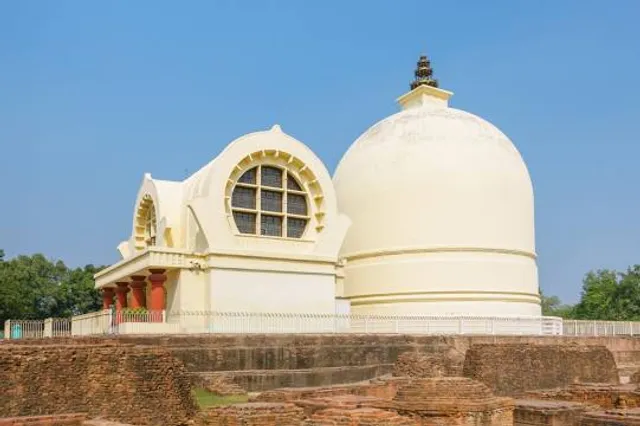
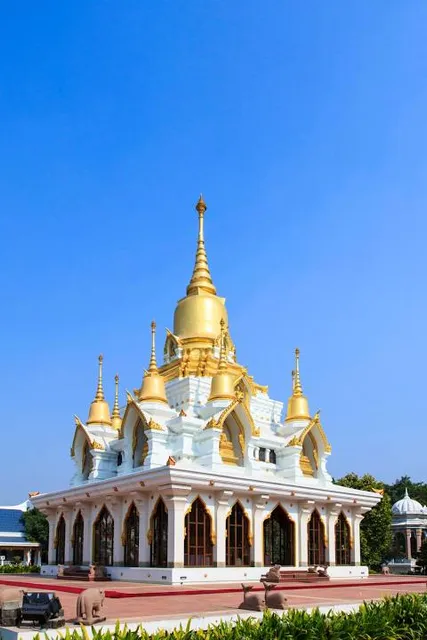
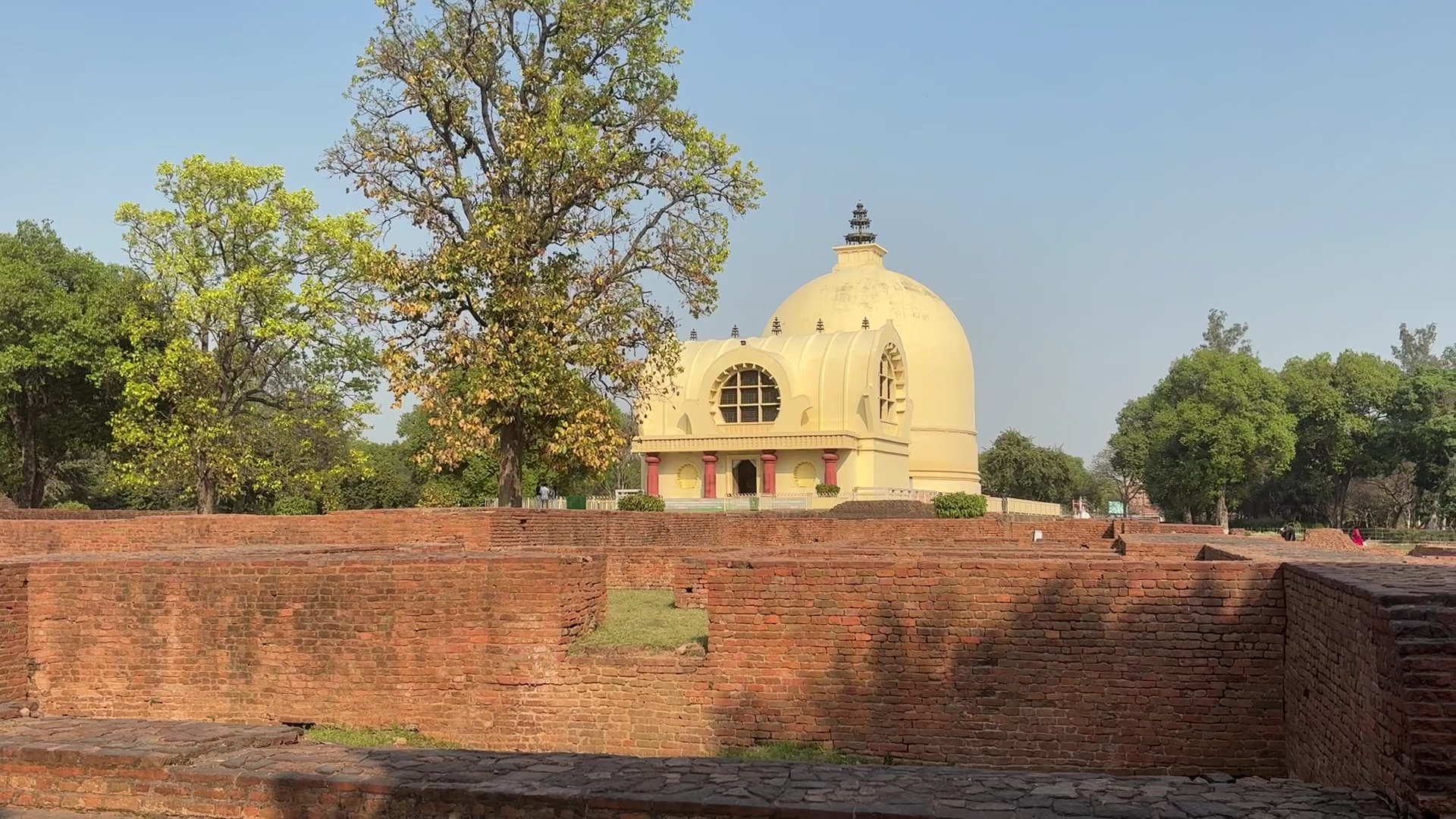
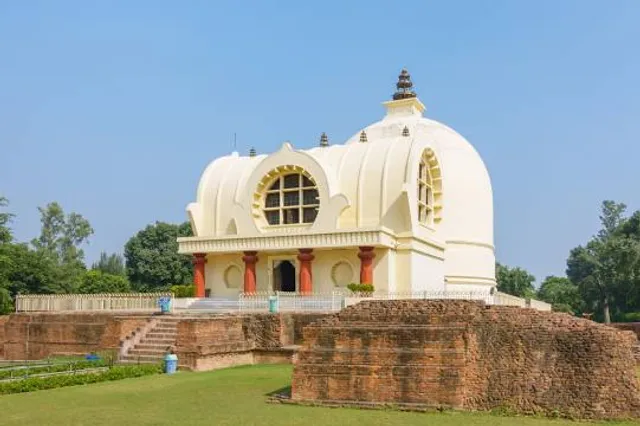
The Parinirvana Stupa or Mahaparinirvana Temple is a Buddhist temple in Kushinagar, India which is said to be the place of death of Gautama Buddha, the founder of Buddhism. Alexander Cunningham gains the most attention for his work in the area, because he conclusively proved that Gautama Buddha had died in the area.
Nearby attractions
Buddhist Museum
PVQV+C72, Kushinagar, Sonbarsa, Uttar Pradesh 274403, India
Matha Kuar Shrine
PVQQ+26G, Kushinagar, Sonbarsa, Uttar Pradesh 274403, India
Nearby restaurants
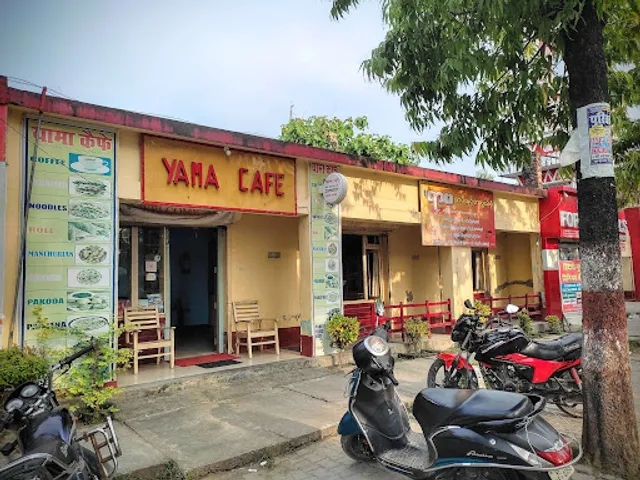
Yama Cafe
Pataya, Sonbarsa, Uttar Pradesh 274403, India
Lumbini Pop Light and pizza hut
Kushinagar Kushinagar, Sikaria Urf Ram Nagar, Uttar Pradesh 274403, India
Nearby hotels
Rahi Pathik Niwas
PVQP+QGF, Buddha Marg, Kushinagar, Sonbarsa, Uttar Pradesh 274403, India
Lotus Nikko Hotel
PVQV+29M, Buddha Marg, Kushinagar, Sikaria Urf Ram Nagar, Uttar Pradesh 274403, India
OYO 64234 Hotel Dev Inn
hotel dev inn hotel dev inn, Buddha Marg, near post office, Kushinagar, Uttar Pradesh 274403, India
Hotel Adelphi Grande
Buddha Marg, Budhnagari, Ward No.4, Kushinagar, Uttar Pradesh 274403, India
The Royal Residency
PVPV+VW2, Kushinagar, Sikaria Urf Ram Nagar, Uttar Pradesh 274403, India
Chandra Lok Guest House
PVVQ+6VX, Kushinagar, Sonbarsa, Uttar Pradesh 274403, India
Paryatak Guest House
Buddha Marg, Kushinagar, Sonbarsa, Uttar Pradesh 274403, India
The Imperial Kushinagar
Buddha Marg, Kushinagar, Sikaria Urf Ram Nagar, Uttar Pradesh 274403, India
J P Palace
Ward No.21, Buddha Nagari, NH 28, Kushinagar, Sonbarsa, Uttar Pradesh 274403, India
HOTEL METTEYYE RESIDENCY
Buddha Marg, Kushinagar, Sikaria Urf Ram Nagar, Uttar Pradesh 274403, India
Related posts
Nepal 🇳🇵 Kathmandu
Keywords
Parinirvana Stupa tourism.Parinirvana Stupa hotels.Parinirvana Stupa bed and breakfast. flights to Parinirvana Stupa.Parinirvana Stupa attractions.Parinirvana Stupa restaurants.Parinirvana Stupa travel.Parinirvana Stupa travel guide.Parinirvana Stupa travel blog.Parinirvana Stupa pictures.Parinirvana Stupa photos.Parinirvana Stupa travel tips.Parinirvana Stupa maps.Parinirvana Stupa things to do.
Parinirvana Stupa things to do, attractions, restaurants, events info and trip planning
Parinirvana Stupa
IndiaUttar PradeshParinirvana Stupa

Basic Info

Parinirvana Stupa

PVQR+M78, Kushinagar, Sonbarsa, Uttar Pradesh 274403, India
4.6(1.8K)
Open 24 hours
Save
spot

Ratings & Description

Info

The Parinirvana Stupa or Mahaparinirvana Temple is a Buddhist temple in Kushinagar, India which is said to be the place of death of Gautama Buddha, the founder of Buddhism. Alexander Cunningham gains the most attention for his work in the area, because he conclusively proved that Gautama Buddha had died in the area.

Cultural
Outdoor
Accessibility
attractions: Buddhist Museum, Matha Kuar Shrine, restaurants: Yama Cafe, Lumbini Pop Light and pizza hut
logoLearn more insights from Wanderboat AI.
Website
kushinagar.nic.in

Plan your stay

hotel
Pet-friendly Hotels in Uttar Pradesh
Find a cozy hotel nearby and make it a full experience.
hotel
Affordable Hotels in Uttar Pradesh
Find a cozy hotel nearby and make it a full experience.
hotel
The Coolest Hotels You Haven't Heard Of (Yet)
Find a cozy hotel nearby and make it a full experience.
hotel
Trending Stays Worth the Hype in Uttar Pradesh
Find a cozy hotel nearby and make it a full experience.

Reviews

Nearby attractions of Parinirvana Stupa

Buddhist Museum

Matha Kuar Shrine

Buddhist Museum

Buddhist Museum

4.3

(476)

Closed
Click for details
Matha Kuar Shrine

Matha Kuar Shrine

4.4

(119)

Open 24 hours
Click for details

Nearby restaurants of Parinirvana Stupa

Yama Cafe

Lumbini Pop Light and pizza hut

Yama Cafe

Yama Cafe

3.8

(121)

Click for details
Lumbini Pop Light and pizza hut

Lumbini Pop Light and pizza hut

4.6

(83)

Click for details
Get the Appoverlay
Get the AppOne tap to find yournext favorite spots!
Wanderboat LogoWanderboat

Your everyday Al companion for getaway ideas

CompanyAbout Us
InformationAI Trip PlannerSitemap
SocialXInstagramTiktokLinkedin
LegalTerms of ServicePrivacy Policy

Get the app

© 2025 Wanderboat. All rights reserved.
logo

Reviews of Parinirvana Stupa

4.6
(1,836)
avatar
3.0
47w

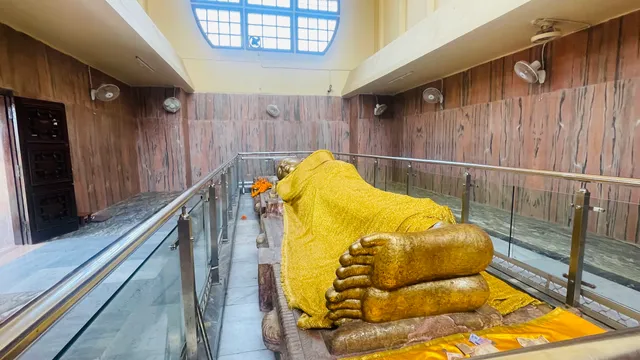
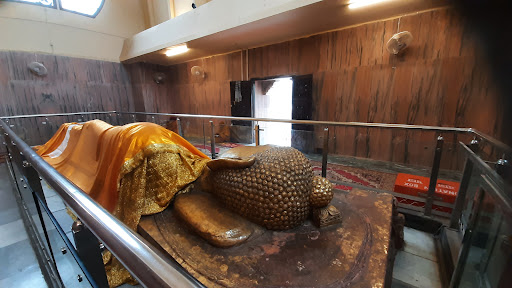
The Parinirvana Stupa: A Sacred Site of Buddhist Pilgrimage The Parinirvana Stupa in Kushinagar, India, stands as a poignant testament to the final journey of Gautama Buddha, the founder of Buddhism. This sacred site, revered by Buddhists worldwide, marks the place where Buddha attained Parinirvana, the state of ultimate liberation, after his passing away. A Glimpse into History The origins of the Parinirvana Stupa can be traced back to the 5th century BCE, shortly after Buddha's demise. It is believed that a simple earthen mound was initially erected to commemorate the event. Over the centuries, this humble structure evolved into a magnificent stupa, reflecting the growing influence and reverence for Buddhism. The stupa's history is intertwined with the ebb and flow of Buddhist fortunes in India. Periods of flourishing Buddhist patronage saw the stupa expanded and adorned with intricate carvings and sculptures. Conversely, periods of decline witnessed neglect and decay. However, the stupa's enduring significance ensured its continued existence, albeit in varying states of preservation. Architectural Marvels and Sacred Relics The present-day Parinirvana Stupa is a testament to the rich architectural heritage of ancient India. Its massive brick structure, adorned with intricate carvings and sculptures, reflects the artistic prowess of Buddhist artisans. The stupa's crowning glory is the colossal reclining Buddha statue housed within. This magnificent statue, measuring 6.1 meters in length, depicts Buddha in his final moments, lying in a state of eternal repose. The stupa complex also encompasses other significant structures, including the Mahaparinirvana Temple, which houses the reclining Buddha statue, and the Ramabhar Stupa, believed to contain relics of Buddha's cremation. These structures, along with numerous smaller shrines and monasteries, create a sacred precinct that draws pilgrims and devotees from across the globe. A Symbol of Peace and Tranquility The Parinirvana Stupa is more than just a historical monument; it is a powerful symbol of peace, tranquility, and spiritual enlightenment. For Buddhists, the stupa represents the culmination of Buddha's journey, his attainment of Nirvana, and the path to liberation from suffering. Pilgrims flock to Kushinagar to pay their respects at the stupa, to meditate on Buddha's teachings, and to seek spiritual solace. The serene atmosphere of the stupa complex, coupled with the profound symbolism of Buddha's final resting place, creates an environment conducive to introspection and spiritual growth. A UNESCO World Heritage Site Recognizing the Parinirvana Stupa's outstanding universal value, UNESCO inscribed it on the World Heritage List in 2010. This designation underscores the stupa's importance as a cultural landmark and a testament to the enduring legacy of Buddhism. The Parinirvana Stupa: A Timeless Legacy The Parinirvana Stupa stands as a timeless testament to the life and teachings of Gautama Buddha. Its enduring presence serves as a beacon of hope, inspiring generations of Buddhists to follow the path to enlightenment. As pilgrims continue to flock to Kushinagar, the stupa's significance as a sacred site of Buddhist pilgrimage is assured for generations to come. Additional Insights The Significance of Kushinagar: Kushinagar, also known as Kusinara, holds immense significance in Buddhist tradition as the place where Buddha attained Parinirvana. It is one of the four major pilgrimage sites associated with Buddha's life, along with Lumbini (birthplace), Bodh Gaya (enlightenment), and Sarnath (first sermon). The Reclining Buddha Statue: The reclining Buddha statue at the Parinirvana Stupa is one of the largest and most revered Buddha images in the world. Its serene expression and peaceful demeanor convey the profound message of Buddha's teachings. The Ramabhar Stupa: The Ramabhar Stupa, located near the Parinirvana Stupa, is believed to contain relics of Buddha's cremation. It is a significant pilgrimage site for Buddhists who seek blessings and...

   Read more
avatar
5.0
6y

Serene and peaceful, Kushinagar is known for its link with Lord Buddha who, centuries ago, took his last breath here. During the old days the place might have been under thick forest cover. Now a district of the same name, the place is about 325 kilometres away from the capital city of the largest and most populous state of Uttar Pradesh - Lucknow. The road is very nice and passes from amongst the beautiful landscapes. If you like driving, this is a good means to explore the area. The road passes from Barabanki, Faizabad, Basti and Gorakhpur - the prominent districts of east Uttar Pradesh. The temple precinct is maintained. The main temple has a huge statue of Buddha in lying posture - 'Reclining Buddha'. Behind the temple, at the same elevation, there is a great stupa where it is said Buddha had died. There are plethora of ruins most of them are of monasteries where Buddhist monks and scholars used to live. There is a tourist guest house in front of the site run by government-owned U.P. State Tourism Development Corporation. Here the tourist can get modest accommodation at reasonable rates. The area is lively but serene. International tourists especially those having Buddhist faith visit here in large numbers. The rituals performed by them catches the eye and adds peculiarity to the area. One can visit the place all the year-round. However, the summers are very hot and monsoon is heavy. The area becomes green and charming during monsoons but heavy rains lead mostly to the flood-like situation. It is, therefore, advisable to visit here between September to April - better from mid-January to the end...

   Read more
avatar
5.0
3y

In the middle of the 5th century CE, a devout Buddhist named Haribala came to Kusinārā and found it totally in ruins. Wanting to revive the glory that the town deserved, Haribala enlarged the original stūpa (erected f i rst by the Malla princes and then later renovated by King Asoka) and also built the famous monolithic sandstone reclining Buddha statue that can be seen today. However, the sacred ground was deserted again after the 12th century Islamic crusades, and left to the whim of the forces of nature. In the mid-19th century, the British archaeologist Alexander Cunningham and his assistant Archibald Carlleyle rediscovered the lost site. Then in the early 1900s, the Burmese monk Bhante Chandramani fell in love with the holy town and made it his life mission to ensure that it did not fall in to ruin again.

" When the Buddha finally passed away, it was not just the end of one life. Millions of lives, countless lives, had come to an end. And it was such a good end, after he had helped so many. At that moment there was very strong Dhamma dhātu, Nibbāna dhātu, and the effects have remained for centuries. – S.N. Goenka Guruji..

All compounded things are impermanent (Aniccā vata saṅkhārā), Their nature is to arise and pass away (uppādavaya-dhammino). When they arise and are eradicated (Uppajjitvā-nirujjhanti), Their cessation brings happiness (tesaṃ vūpasamo sukho).

Buddha's last word Vaya-dhamma sankhara.. Appamadena sampadetha.. ( all compounded things are impermanent.. Strive with diligently..)

Best wishes and Metta May all be happy May all...

   Read more
Page 1 of 7
Previous
Next

Posts

Nepal 🇳🇵 Kathmandu
katekate
Nepal 🇳🇵 Kathmandu
Jagadish MayekarJagadish Mayekar
In the middle of the 5th century CE, a devout Buddhist named Haribala came to Kusinārā and found it totally in ruins. Wanting to revive the glory that the town deserved, Haribala enlarged the original stūpa (erected f i rst by the Malla princes and then later renovated by King Asoka) and also built the famous monolithic sandstone reclining Buddha statue that can be seen today. However, the sacred ground was deserted again after the 12th century Islamic crusades, and left to the whim of the forces of nature. In the mid-19th century, the British archaeologist Alexander Cunningham and his assistant Archibald Carlleyle rediscovered the lost site. Then in the early 1900s, the Burmese monk Bhante Chandramani fell in love with the holy town and made it his life mission to ensure that it did not fall in to ruin again. " When the Buddha finally passed away, it was not just the end of one life. Millions of lives, countless lives, had come to an end. And it was such a good end, after he had helped so many. At that moment there was very strong Dhamma dhātu, Nibbāna dhātu, and the effects have remained for centuries. – S.N. Goenka Guruji.. All compounded things are impermanent (Aniccā vata saṅkhārā), Their nature is to arise and pass away (uppādavaya-dhammino). When they arise and are eradicated (Uppajjitvā-nirujjhanti), Their cessation brings happiness (tesaṃ vūpasamo sukho). Buddha's last word Vaya-dhamma sankhara.. Appamadena sampadetha.. ( all compounded things are impermanent.. Strive with diligently..) Best wishes and Metta May all be happy May all be liberated
joicy josephjoicy joseph
The important Parinirvana Stupa, Kushinagar is the huge Stupa which was built ages back and dedicated to Lord Buddha. One of the huge Stupas in Kushinagar made of bricks was excavated by Carlyle in the year 1876. The Brahmi inscriptions on the walls of the Parinirvana Stupa, Kushinagar states that the cremated remains of Lord Buddha are deposited here. One of the huge copper vessels was also unearthed at this site. The remains of the Parinirvana Stupa, Kushinagar when excavated by the archaeologists was covered in a 40 foot high mound of bricks which was surrounded by a dense thorny forest. Along with the Parinirvana Stupa, Kushinagar there is the Nirvana Temple. There is a 6 meters long statue of Buddha in this temple and considered to be one of the sacred sites for the Buddhists. Carved from Chunar sandstone, this is one of the unique images of Lord Buddha which shows him reclining on his right side. The inscriptions below reflect that the statue was built on 5th century A.D. There is a number of interesting tourist places in Kushinagar which you can explore during your tour to Uttar Pradesh. One of the major destinations is also the Ramabhar Stupa. One of the sacred shrines of Buddhists this is the place where Lord Buddha attained Mahaparnirvana.
See more posts
See more posts
hotel
Find your stay

Pet-friendly Hotels in Uttar Pradesh

Find a cozy hotel nearby and make it a full experience.

Nepal 🇳🇵 Kathmandu
kate

kate

hotel
Find your stay

Affordable Hotels in Uttar Pradesh

Find a cozy hotel nearby and make it a full experience.

Get the Appoverlay
Get the AppOne tap to find yournext favorite spots!
In the middle of the 5th century CE, a devout Buddhist named Haribala came to Kusinārā and found it totally in ruins. Wanting to revive the glory that the town deserved, Haribala enlarged the original stūpa (erected f i rst by the Malla princes and then later renovated by King Asoka) and also built the famous monolithic sandstone reclining Buddha statue that can be seen today. However, the sacred ground was deserted again after the 12th century Islamic crusades, and left to the whim of the forces of nature. In the mid-19th century, the British archaeologist Alexander Cunningham and his assistant Archibald Carlleyle rediscovered the lost site. Then in the early 1900s, the Burmese monk Bhante Chandramani fell in love with the holy town and made it his life mission to ensure that it did not fall in to ruin again. " When the Buddha finally passed away, it was not just the end of one life. Millions of lives, countless lives, had come to an end. And it was such a good end, after he had helped so many. At that moment there was very strong Dhamma dhātu, Nibbāna dhātu, and the effects have remained for centuries. – S.N. Goenka Guruji.. All compounded things are impermanent (Aniccā vata saṅkhārā), Their nature is to arise and pass away (uppādavaya-dhammino). When they arise and are eradicated (Uppajjitvā-nirujjhanti), Their cessation brings happiness (tesaṃ vūpasamo sukho). Buddha's last word Vaya-dhamma sankhara.. Appamadena sampadetha.. ( all compounded things are impermanent.. Strive with diligently..) Best wishes and Metta May all be happy May all be liberated
Jagadish Mayekar

Jagadish Mayekar

hotel
Find your stay

The Coolest Hotels You Haven't Heard Of (Yet)

Find a cozy hotel nearby and make it a full experience.

hotel
Find your stay

Trending Stays Worth the Hype in Uttar Pradesh

Find a cozy hotel nearby and make it a full experience.

The important Parinirvana Stupa, Kushinagar is the huge Stupa which was built ages back and dedicated to Lord Buddha. One of the huge Stupas in Kushinagar made of bricks was excavated by Carlyle in the year 1876. The Brahmi inscriptions on the walls of the Parinirvana Stupa, Kushinagar states that the cremated remains of Lord Buddha are deposited here. One of the huge copper vessels was also unearthed at this site. The remains of the Parinirvana Stupa, Kushinagar when excavated by the archaeologists was covered in a 40 foot high mound of bricks which was surrounded by a dense thorny forest. Along with the Parinirvana Stupa, Kushinagar there is the Nirvana Temple. There is a 6 meters long statue of Buddha in this temple and considered to be one of the sacred sites for the Buddhists. Carved from Chunar sandstone, this is one of the unique images of Lord Buddha which shows him reclining on his right side. The inscriptions below reflect that the statue was built on 5th century A.D. There is a number of interesting tourist places in Kushinagar which you can explore during your tour to Uttar Pradesh. One of the major destinations is also the Ramabhar Stupa. One of the sacred shrines of Buddhists this is the place where Lord Buddha attained Mahaparnirvana.
joicy joseph

joicy joseph

See more posts
See more posts