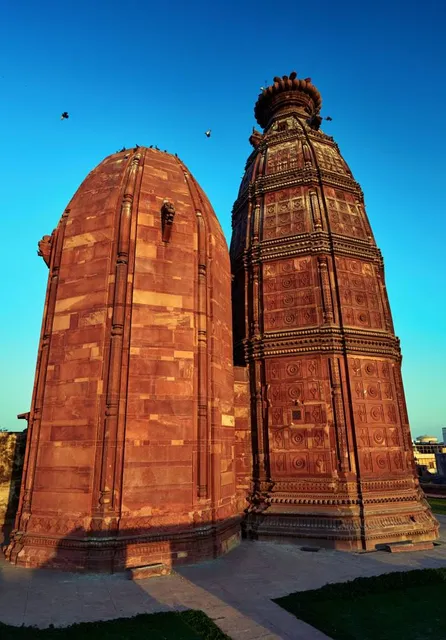
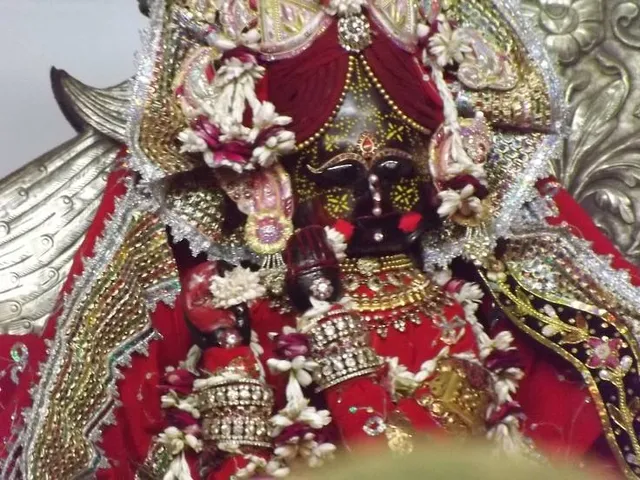
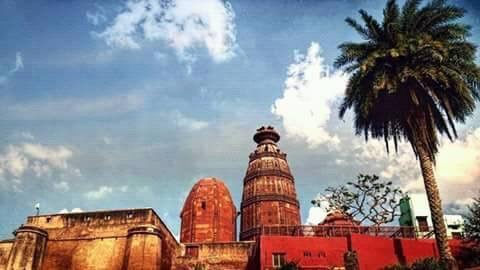
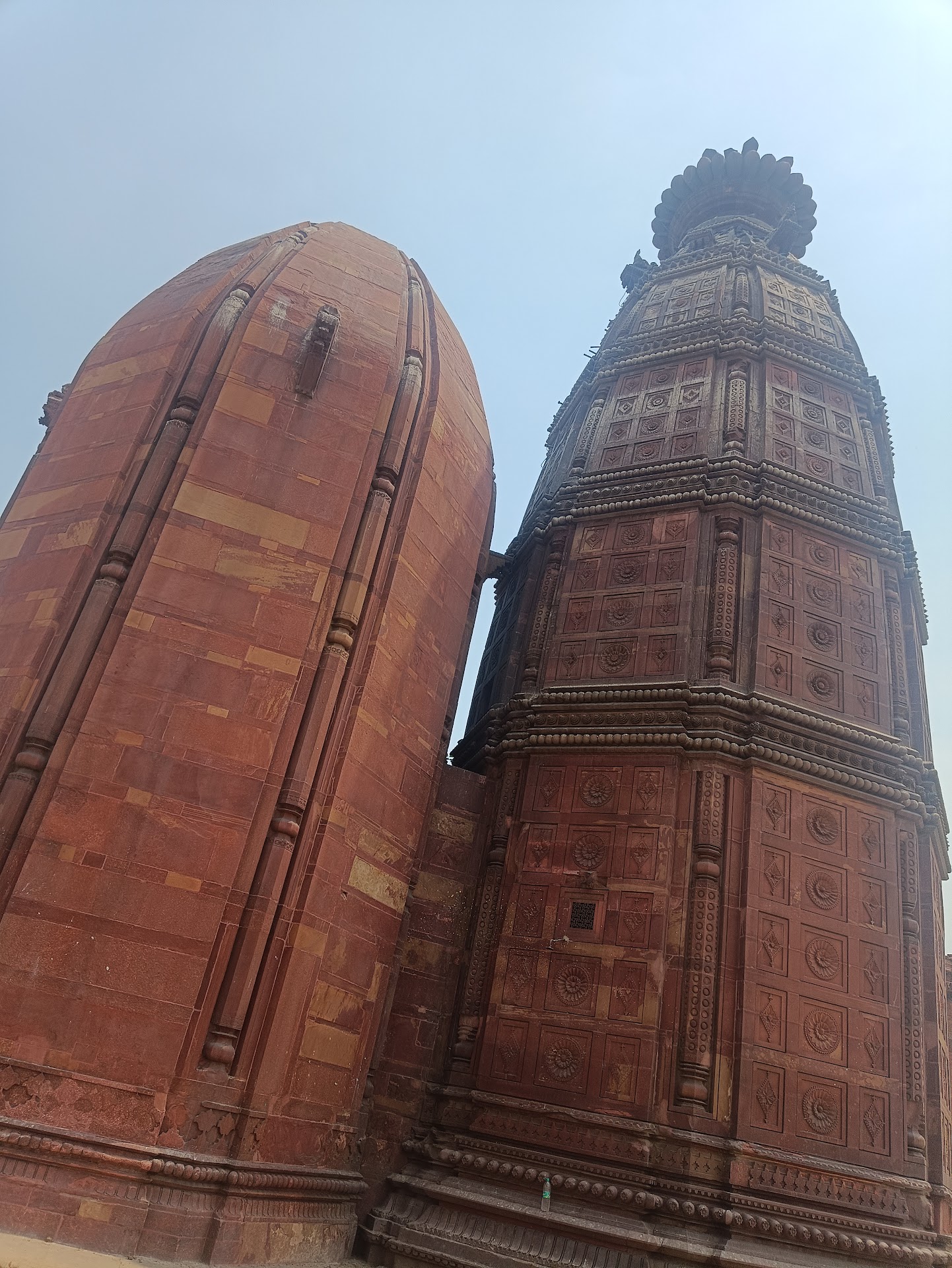
"Mahārāja Vajranābha installed the three deities of Śrī Govinda, Śrī Gopīnātha and Śrī Madana-mohana in Śrī Dhāma Vṛndāvana. In time, due to the oppression of the barbarians, the priests hid these deities in various places and fled. Vṛndāvana turned into a dense forest. Later Śrī Sanātana Gosvāmī again manifested Śrī Madana-mohana. Sometimes in the morning, Śrī Sanātana Gosvāmī walked the sixteen miles from Vṛndāvana to Govardhana to perform the fourteen-mile long parikramā of Govardhana. From there, he would walk another sixteen miles to Mathurā to collect alms (mādhukarī) and then again walk back to his bhajana-kuṭī in Vṛndāvana. One day, he came to the house of a Caube brāhmaṇa in Mathurā for alms. What did he see there? In the house of the Caube, two beautiful boys were playing the game gullī-ḍaṇḍā. Madana, the restless, fidgety boy with a dark-bluish complexion defeated the son of the Caube. Madana climbed upon the shoulders of the defeated boy and enjoyed a ‘horse ride’. But when the Caube’s son defeated Madana the second time they played, and it was his turn to enjoy a ride on Madana’s shoulders, Madana ran into the temple room. Seeing this, the son of the Caube angrily abused and pursued Him. He wanted to enter the temple, but the priest scolded him and chased him away. Pointing his forefinger at Madana, who had turned into the deity, the son of the Caube said, “You just wait, I will see You tomorrow.” This scene amazed Śrī Sanātana Gosvāmī. The next day, he arrived a little earlier, at breakfast time, desiring to again have darśana. Although she had not yet taken bath, the Caubāin was making khichrī for both boys, who were sitting waiting for their breakfast. Maiyā was brushing her teeth with one end of a stick and was stirring the khichrī with the other end. When she had finished cooking, she served the boys the hot khichrī in bowls, cooling it down by blowing on it with her mouth. The boys were relishing this khichrī with great love. Sanātana Gosvāmī could not tolerate her improper conduct. “Maiyā, it is not proper to cook khichrī without taking bath, to stir it with the stick you use to brush your teeth, and then to serve this contaminated breakfast to the boys.” The Caubāin realized her mistake, and replied, “Bābā, from tomorrow, I will be clean when I cook and serve the boys their breakfast.” Śrī Sanātana Gosvāmī wanted to see more pastimes of the deity of Śrī Madana-mohana, so on the third day he went again. Breakfast was delayed that day because Maiyā was taking bath. She then had to clean the pots. The hungry boys were demanding breakfast. Maiyā pacified them, and after completing her morning chores, she started cooking khichrī. The two boys were pulling on her cloth, insisting on eating at once. Sanātana Gosvāmī was unable to tolerate this. He approached her and said, “Maiyā, there is no need for you to be clean by bathing. If this Madana is pleased with your unclean and impure breakfast, then you should do as such. I have committed an offence at your feet. From tomorrow, you should do whatever you think is proper to satisfy them.” Just as Sanātana Gosvāmī was about to leave, the boy Madana came out of the temple room and said, “Bābā, I will come with you.” But Śrī Sanātana Gosvāmī replied, “I am a completely renounced person. I have neither a place to live, nor any arrangement to cook palatable food. If even Yaśodā-maiyā could not completely satisfy You, how can I take care of You?” The child Madana however insisted on coming with him. When Sanātana Gosvāmī had reached his bhajana-kuṭī, he turned around and saw the boy smile and change into His deity form. After the disappearance of Śrī Sanātana Gosvāmī, Aurangzeb who was inimical to the Hindus, desecrated this temple in 1670 AD, destroying the dome and other parts. Madana-mohanajī and other deities of Vṛndāvana were moved to Jaipura beforehand. Madana-mohanajī now resides in Karaulī."
From 'Sri Vraja-mandal Parikrama' by Srila Bhaktivedanta Narayana...
Read moreThe Shri Radha Madan Mohan Temple in Vrindavan is a hidden gem nestled amidst the spiritual landscape of this sacred city, located along the path leading to the renowned Prem Mandir. While Prem Mandir dazzles with its grandeur and magnificence, the Radha Madan Mohan Temple offers a more intimate and serene experience for devotees seeking a deeper connection with the divine.
As one traverses the path from Prem Mandir to Radha Madan Mohan Temple, they are greeted by the tranquil beauty of Vrindavan's countryside. Lush greenery, meandering pathways, and the gentle flow of the Yamuna River create a picturesque setting that sets the stage for a spiritually enriching journey.
The Radha Madan Mohan Temple is dedicated to the divine couple, Radha and Madan Mohan, who are revered for their eternal love and devotion. The temple's architecture reflects the traditional style of North Indian temple design, with intricate carvings, ornate domes, and vibrant colors adorning its facade. Despite its modest size compared to some of Vrindavan's larger temples, the Radha Madan Mohan Temple exudes a timeless charm and elegance that captivates the heart of every visitor.
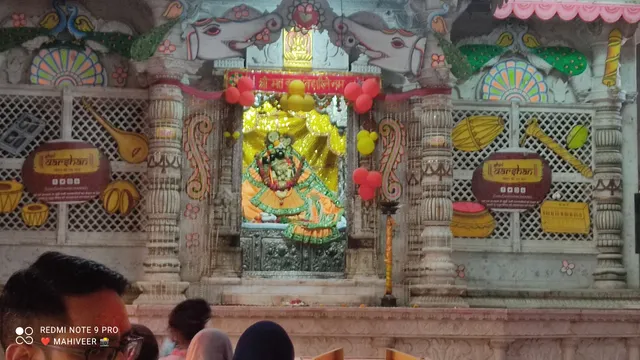
Stepping into the temple complex, one is immediately struck by the sense of peace and tranquility that pervades the atmosphere. The sound of devotional chants fills the air, while the fragrance of incense wafts gently through the corridors. The temple's serene ambiance creates the perfect environment for introspection, prayer, and meditation.
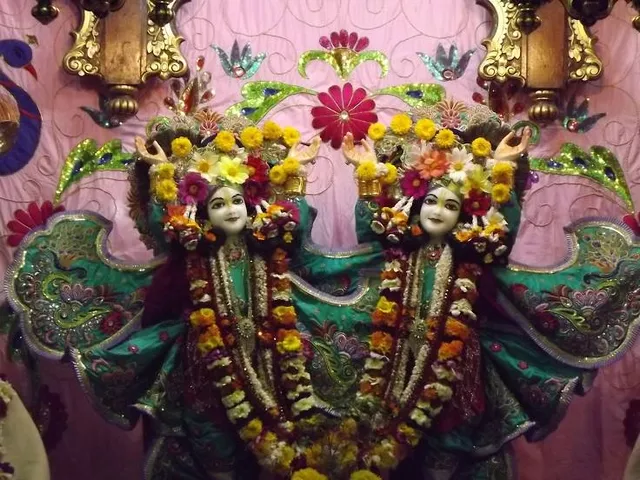
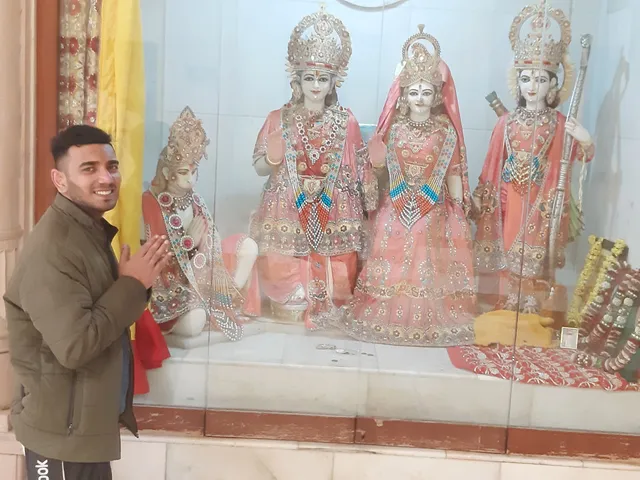
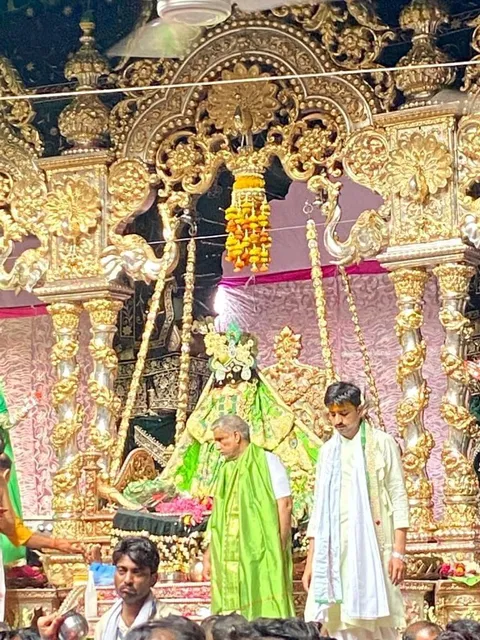
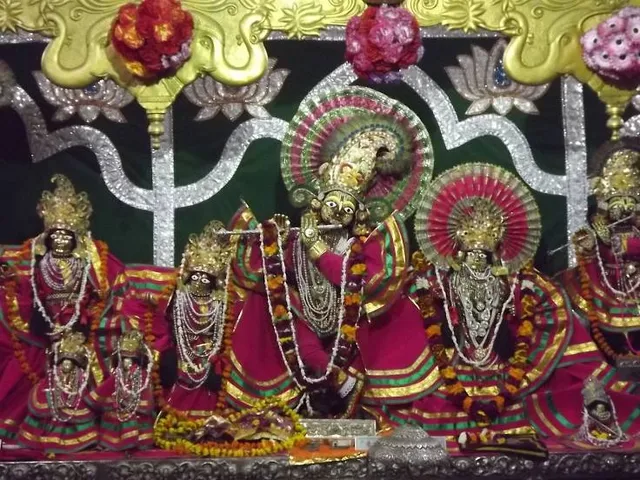
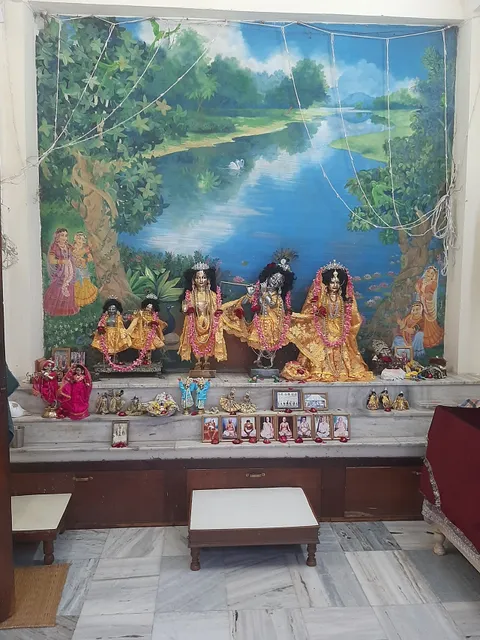
At the heart of the temple lies the sanctum sanctorum, where the presiding deities, Radha and Madan Mohan, reside in all their divine glory. Adorned with exquisite ornaments and floral garlands, the deities captivate the hearts of devotees, drawing them into a state of deep reverence and devotion. Many pilgrims spend hours in quiet contemplation before the sacred images, pouring out their hearts in prayer and seeking the blessings of the divine couple.
One of the most enchanting aspects of the Radha Madan Mohan Temple is its spiritual significance. It is believed that the temple holds a special place in the hearts of Lord Krishna and his beloved Radha. Legend has it that the original deity of Madan Mohan was discovered by the great saint Sanatan Goswami, one of the principal disciples of Chaitanya Mahaprabhu, who established the temple to enshrine the divine image.
Moreover, the temple is steeped in history and tradition, with stories of devotion and miracles woven into its fabric. Pilgrims often recount tales of divine experiences and blessings received at the feet of Radha and Madan Mohan, further enhancing the temple's mystical allure.
While the Radha Madan Mohan Temple may not boast the grandeur of some of Vrindavan's more prominent landmarks, its beauty lies in its simplicity and sincerity of devotion. Here, amidst the quiet serenity of the countryside, devotees find solace, inspiration, and a sense of closeness to the divine that is truly unparalleled.
In conclusion, a visit to the Radha Madan Mohan Temple in Vrindavan is not just a pilgrimage but a journey of the soul. Its serene surroundings, timeless beauty, and profound spirituality offer seekers a sacred space to connect with the divine and experience the boundless love of Radha and Madan Mohan. As one leaves the temple, they carry with them not just memories but also a deep sense of peace and fulfillment that lingers in their hearts long after they...
Read moreShri Radha Mohan Mandir in Vrindavan is a hidden gem for those seeking a peaceful, spiritual experience away from the usual tourist crowds. Situated in the heart of Vrindavan, this temple is dedicated to Lord Krishna in the form of Radha Mohan, where Radha and Krishna are depicted together in a beautiful, harmonious pose.
The temple itself is relatively smaller compared to some of the larger temples in Vrindavan, but its simplicity is what makes it so special. The moment you enter, you are greeted by a sense of calm and serenity. The temple has a very intimate, personal feeling to it, as though you’ve stepped into a sacred space that invites you to pause and reflect. The architecture is traditional, with intricate carvings on the walls and beautiful artwork that depicts various scenes from Lord Krishna's life.
The idol of Radha Mohan is exquisite. The deity's facial expressions are captivating, and there’s a profound sense of peace that radiates from the idol. Devotees gather here to offer prayers and sing bhajans, creating a divine atmosphere that enchants you from the moment you arrive. The temple is not only a place of worship but also a place for inner reflection and meditation.
Unlike some of the more popular temples in the area, Shri Radha Mohan Mandir is less crowded, which allows for a more personal experience. It’s a great place to come for a quiet moment, away from the hustle and bustle of Vrindavan. Visitors often speak about the unique, almost tangible energy that pervades the temple, which feels calming and uplifting at the same time.
One of the standout features of the temple is its peaceful surroundings. It’s located in a quieter part of Vrindavan, so you can truly connect with the divine without distractions. The temple is surrounded by lush greenery, and the area is well-kept, providing a serene environment for devotees and visitors alike.
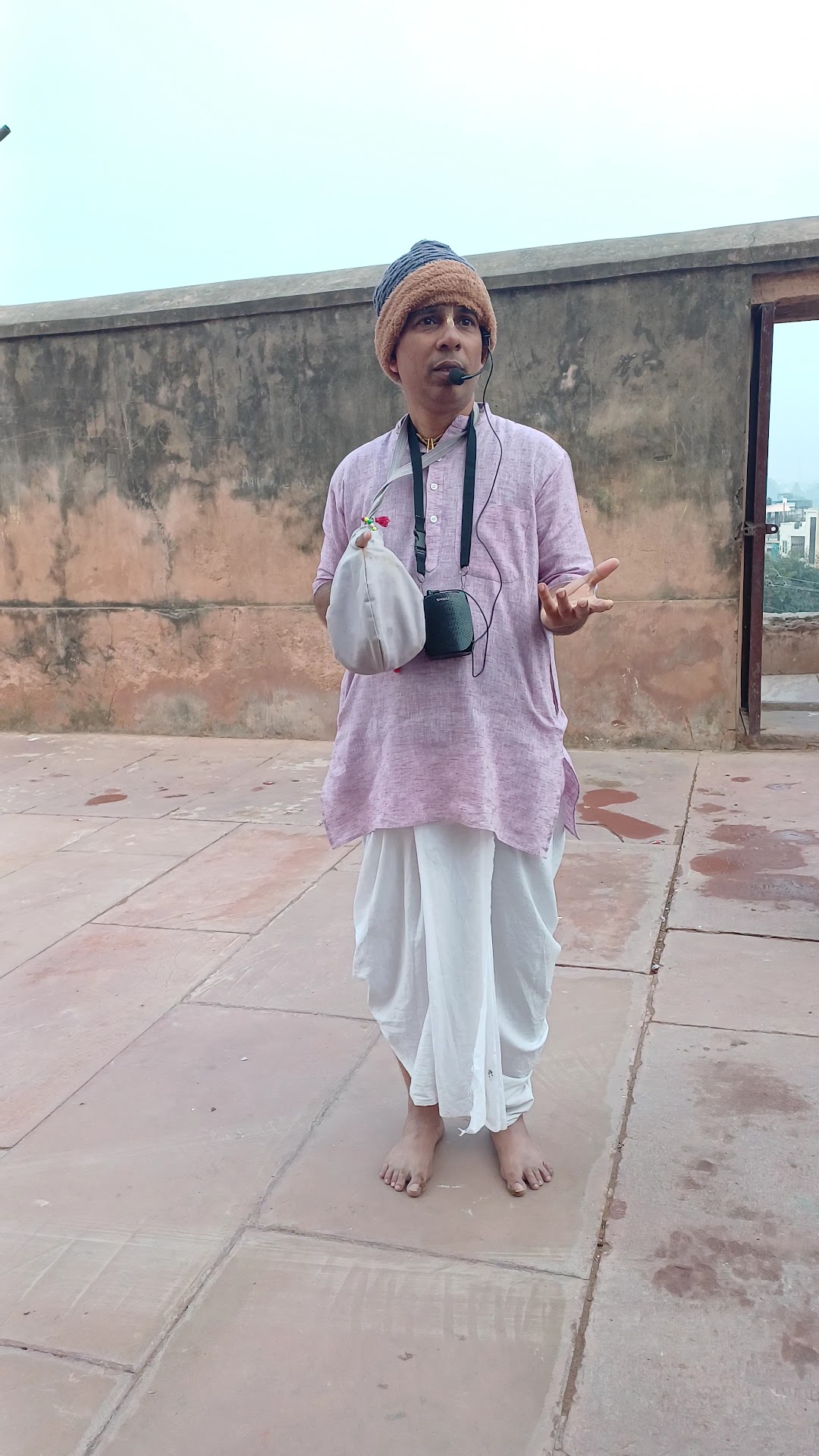
The priests at the temple are very welcoming and take the time to explain the significance of the idol and the temple’s history to anyone who’s interested. It’s clear that this temple holds great significance to the local community, and there’s a strong sense of devotion here that adds to the overall spiritual experience.
In terms of facilities, the temple is simple, but everything you need for a visit is available. There are places to sit and reflect, and the staff is friendly and helpful. There are also small shops nearby where you can buy flowers or other offerings.
Overall, Shri Radha Mohan Mandir is a wonderful temple to visit if you’re looking for a more tranquil and spiritually enriching experience in Vrindavan. Whether you’re a devout follower or just a curious traveler, the peaceful energy here makes it an essential part of your journey through...
Read more