It will take minimum 1.5 hrs to tour the whole campus, otherwise sky is the limit. We entered at 15:30, left at 17:30, but I was feeling to stay for few more hours đĨ˛.
Kathgola Bagan Bari was a center of entertainment during the british period. Some say the place had wide gardens of kathgolap (āĻāĻžāĻ āĻā§āϞāĻžāĻĒ) from which the name came. Others believe this place had a wood processing plant, hence the name kathgola (Bengali 'Kathgola' means, a wood processing plant)
As u enter through the Nahabat gate, there is a small forest type area with installations of four men riding horse. They are supposed to be the Rajasthan originated Jain businessman who came here in 1780 & took lease of this 32 bigha area at Rs.1200/- from the then Nawab . Their names were Lakshmipat, Jagatpat, Dhanapat & Chatrapat Singh Dugar. You will find matriculation certificates of their decendants inside the palace. Kathgola Baganbari construction started 23 years after the death of Siraj-ud-Daulah (1757)
Next u buy entry ticket costing âš30/- for the whole campus, zoo, temple & ground floor of the palace.
As u enter the paid area, on the right side is a zoo, with goose, a macaw, a talking parrot, some other birds, rabbits, pigeons, etc.
On the left side is a gate with a lion on top, a multi-storeyed stepwell called 'baori' and stairs leading further downwards, believed to be the entrance to tunnels. One tunnel is believed to lead to House of Jagat Seth (made for illegal trade, exchange of money), while another tunnel is expected to lead to Bhagirathi river, primarily used to transfer wood into barges at night. The evidence of this tunnel being connected to Bhagirathi is, during high tide & low tide, the water level of the tunnel used to increase/decrease along with the river water level. After a massive flood, the tunnel became blocked by silt deposits and the increase/decrease of water level is no longer observed.
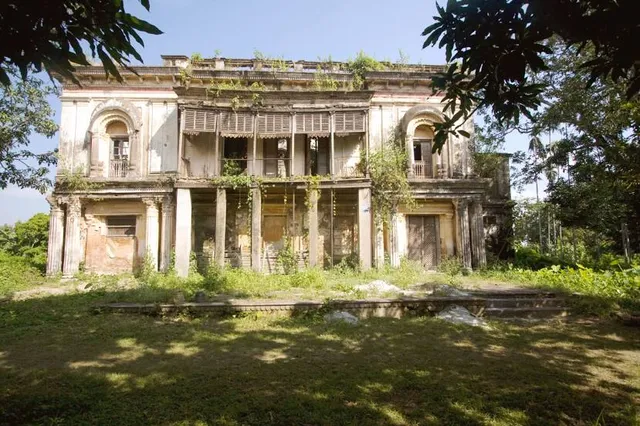
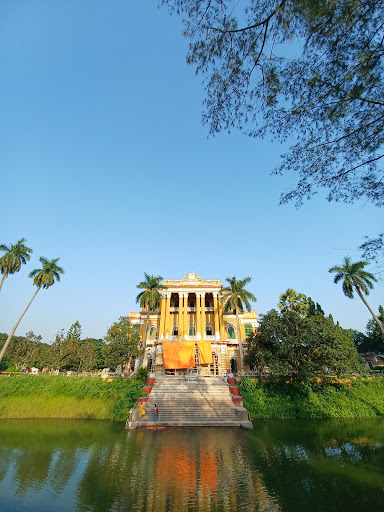
Next one would come across the Palace. Take a walk around the palace to admire the structure & beauty. There is a square pond (Nawabi Sarobar) full of colorful fishes infront of the palace. (if you wish to feed the fish, take some marie biscuits with u, the person selling there takes more price đ). The pond has four marble structure at four corners and stairs. Jains don't eat fish so they used to keep them as pets. A small stage for dance performance is present at the opposite side of the pond. A Pay & Use Toilet is also present there.
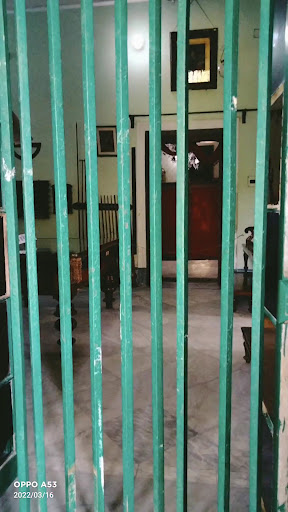
Enter the ground floor and take a tour. You can enter as many times as it is covered in your ticket.
The first floor would cost another âš20/-. The stairs seemed to be suspended from the wall without having any pillar support. The balcony on the first floor offers great view, but beware of the pooping pigeons. Photography allowed in this balcony.
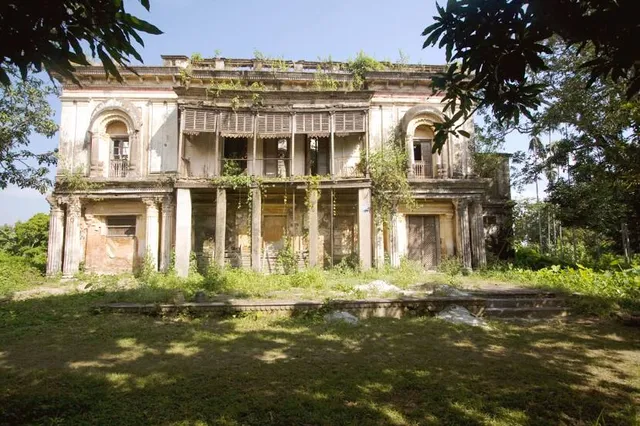
Behind the palace, there is an abandoned house. It homed visitors & dancers during Nawab era.
Next walk towards the Jain temple, u will find statues of Gods . On the right side, there is an elevated stage called 'Naach Mahal', where dancers like Hira bai used to perform for the royals here at a cost of 5000 gold coins per hour. The stage was believed to be surrounded by Belgium glass (which were typically one way glass, people sitting inside the stage could see outside activities, but outside people couldn't see inside activities) which are broken now & some poles are present, where gas light was hung as there was no electricity during old days. There is some cemetary beside, exclusively for the fishes. Jains were vegans and kept fish as pets . They wealthy wives used to attach gold ornaments (āϏā§āύāĻžāϰ āύāĻĨ) to the fish & when the fish died, they used to bury the fish.
Visit the Jain temple & enjoy a beautiful evening at the...
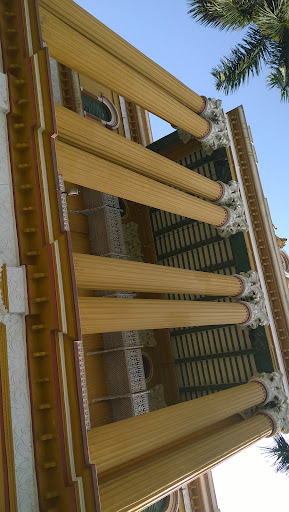
   Read moreIn the heart of Murshidabad, away from the crowded lanes of Hazarduari, lies the Kathgola Palace â a cultural marvel that whispers of Bengalâs forgotten age of merchant princes. Built in the late 18thâ19th century by the wealthy Jain Dugar family, the palace is a testament to how trade and finance could create grandeur to rival kings. Where the Nawabs once wielded political power, men like the Dugars carved out an empire of wealth, and Kathgola became their gilded statement. The palaceâs façade, with its tall Corinthian columns and marble shine, carries a European influence that mingled easily with Indian artistry. Inside, the air still holds a sense of opulence: Belgian glass chandeliers hang from the ceilings, Venetian mirrors glimmer in the hallways, old frescoes fade gracefully on the walls, and antique furniture tells of a world that mixed colonial tastes with Indian luxury. Walking through the rooms feels like entering a living museum â one can glimpse paintings, old armory, carved ivory, and delicate costumes carefully preserved to remind us of the merchant era. A skilled guide is almost essential here, because every hall and artifact has a story â of trade, faith, and quiet ambition â that isnât obvious to the eye. The palace gardens are equally enchanting, dotted with fountains, statues, and the Adinath Jain Temple, whose ornate carvings and rising shikhara reflect the Dugar familyâs devotion. Local lore suggests that kath (wood) trees once shaded these gardens, giving the estate its name. And like many grand houses of Murshidabad, Kathgola has its own layer of mystery â tales of a secret tunnel said to link the palace to the Bhagirathi river, perhaps an escape route in troubled times. Whether fact or legend, such whispers add intrigue to the marble calm.
Yet, beyond its beauty, Kathgola reveals a deeper truth about Murshidabad. It represents a moment when the cityâs wealth shifted from Nawabi courts to merchant bankers â when men of business, not blood, held the keys to influence. Unlike Hazarduari, which stands as a monument to fading royal power, Kathgola reflects ambition realized through commerce. But time has not been entirely kind. Though the site is maintained and partially curated as a museum, much more care is needed. Paint peels, structures weather, and history risks being reduced to a tourist stop rather than the living legacy it should be. For a palace of such rarity, proper government protection and restoration is essential, so that future generations may witness more than just the ruins of a golden past. Kathgola Palace is more than stone and marble â it is a story of Murshidabad itself. To step inside is to encounter not only chandeliers and mirrors, but the dreams of Jain financiers, the whispers of hidden tunnels, and the shift of Bengalâs fortunes from court to counting house. It is a jewel that still shines, but one that needs guardianship before time dims its...
   Read moreIt's a huge place. Kathgola is a neighbourhood in the city of Murshidabad which was at one time the capital of Bengal, Bihar and Orissa during the reign of the Nawabs of Bengal. Interested in history? Still intrigued by the treachery of Mir Jafar in the Battle of Plassey fought on the 26th of June 1757, where the last independent Bengal Nawab Siraj-ud-Daulah was wrongfully defeated; paving way for the British to begin their colonisation of India? The place that you must visit then is Murshidabad â the city of Nawabs. While in Murshidabad, Kathgola Palace is one of the best places to be seen when doing a tour. Situated by the river Bhagirathi , just 5 kms away from Hazarduari, this palace stands with all itâs heritage glory. īŋŧīŋŧKathgola Palace is a four storeyed ornate and palatial building in the Kathgola Gardens. It also has a small pond and a âBaoliâ or steep well, generally unseen in this part of the country. It is said that once the garden had the most unusual black roses, but now it has mango trees only. Inside the huge garden there is a statue of Michelangelo. This historical palace was built by Lakshmipat Singh Dugar, who was said to be close to Jagat Seth â the rich money lender and trader. It is here that William Watts met the traitor Mir Jafar , just three days after the battle of Plassey in 1757 to discuss the payment promised to him before the historical battle. The palace is full of grandeur. It has an ornamented façade with extremely valuable paintings, priceless artefacts , furnitures and decorative mirrors. The Adinath Temple also known as Paresh Nath Temple or Kathgola Temple is situated inside the huge lush gardens of the Kathgola Gardens. The temple is dedicated to Bhagwan Adhishvar and has a 90 CM white coloured idol in the Padmasana posture. The idol is considered to be atleast 900 years old. Along with this there are 17 other idols of the Jain Tirthankars.īŋŧīŋŧ How to Go Distance between Kolkata to Murshidabad is approximately 6 to 7 hours via road. There are plenty of trains like Hazarduari Exp (13113), Bhagirathi Exp (13103), KOAA LGL Express (13117) etc. and the minimum time taken on train is around 4 hours. Where to Stay Numerous private hotels of all pocket pinches are available. There is also the Baharampur...
   Read more