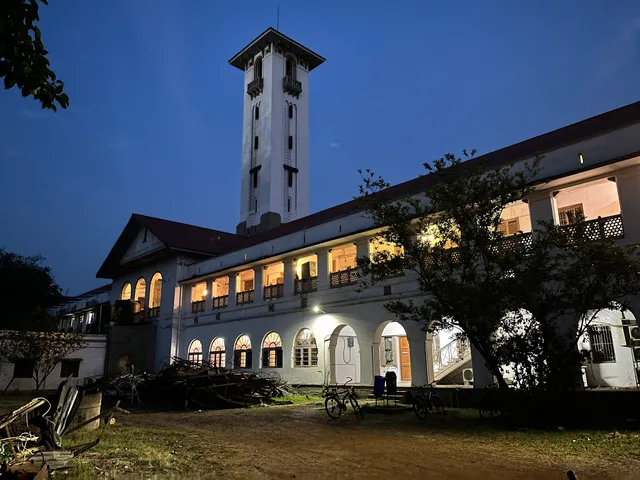
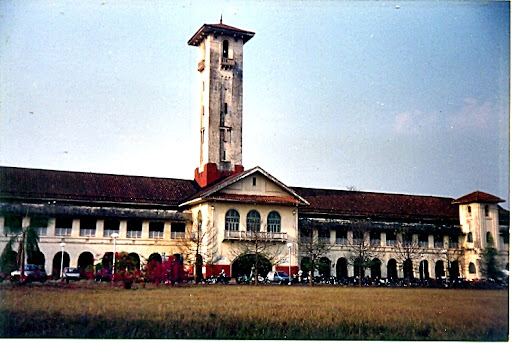
The first Indian Institute of Technology was born in May 1950 in Hijli, Kharagpur, in the eastern part of India. Initially the IIT started functioning from 5, Esplanade East, Calcutta and very soon shifted to Hijli in Sept. 1950. The present name 'Indian Institute of Technology' was adopted before the formal inauguration of the Institute on August 18, 1951, by Maulana Abul Kalam Azad. IIT Kharagpur started its journey in the old Hijli Detention Camp where some of our great freedom fighters toiled and sacrificed their lives for the independence of our country. The history of IIT Kharagpur is thus intimately linked with the history of the Hijli Detention Camp. This is possibly one of the very few Institutions all over the world which started life in a prison house.
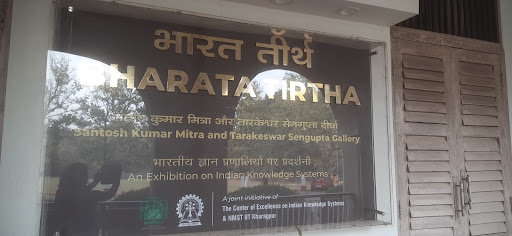
The district of Medinipur along with rest of Bengal and India took part in a very significant way in the revolutionary struggle against the British Raj from the early 20th century. The large number of youth who participated in the armed struggle or the non-cooperation movement could not be accommodated in ordinary jails. Then the British Government decided to establish a few detention camps - the first one was located in Buxa Fort which was followed by the setting up of the Hijli Detention Camp in 1930. The Hijli Detention Camp bears a very significant mark in our freedom movement. Two unarmed detainees were shot dead here by the British Police on Sept. 16, 1931. Netaji Subhas Chandra Bose came to Hijli for collecting the bodies of the two great sons of the freedom movement - Santosh Kumar Mitra and Tarakeswar Sengupta. All the national leaders including Gurudev Rabindranath Tagore voiced their strong protests against the British Raj over this incident. The Hijli Detention Camp was closed in 1937 and was reopened again in 1940 to detain the freedom fighters without trial. In 1942 the camp was again closed and the detainees were transferred elsewhere.
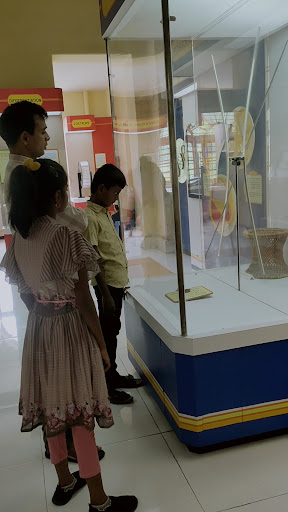
The museum has many indoor exhibits which include technical models collected from various institutes and organisations across India. The park outside the museum contains 14 open-air demonstrations and outdoor exhibits including a hunter plane, and a steam engine. The museum has an archive room showcasing documents relating to history of the institute and...
Read moreI had the pleasure of visiting the Nehru Museum of Science and Technology (NMST) situated within the picturesque campus of IIT Kharagpur. My experience at this captivating museum left me in awe of the incredible progress and innovations in science and technology that have shaped our nation.
Upon entering the museum, I was greeted by a well-curated collection of exhibits that showcased the wonders of various scientific disciplines. The interactive displays, models, and demonstrations provided a perfect blend of education and entertainment, making it an ideal destination for visitors of all ages. The museum's efforts to simplify complex scientific concepts were truly commendable, enabling even the youngest minds to grasp fundamental principles with ease.
One of the highlights of NMST was the diverse range of exhibits spanning physics, chemistry, biology, engineering, and astronomy. From the fascinating world of electromagnetism to the intricacies of DNA structure, each exhibit was thoughtfully designed to captivate the imagination and ignite a passion for scientific exploration. The historical artifacts and photographs documenting India's scientific achievements added a sense of pride and showcased our nation's contributions to the global scientific communities.
The ambiance of the museum was serene, and the staff was knowledgeable and friendly, always ready to answer questions and offer guidance. The well-maintained facilities ensured a comfortable visit, with ample space to explore and appreciate the exhibits at one's own pace.
In conclusion, the Nehru Museum of Science and Technology at IIT Kharagpur is a true gem for science enthusiasts and curious minds alike. With its engaging exhibits, interactive displays, and commitment to scientific education, it offers a memorable journey through India's scientific achievements. Whether you are a student, a family, or a science enthusiast, a visit to NMST is an...
Read moreHijli Detention Camp (now called Shaheed Bhavan, IIT Kharagpur), is a former detention camp operated during the period of British colonial rule in India. Located in Hijli, beside Kharagpur, (a part of former Hijli Kingdom) in the district of Midnapore West, West Bengal, India, it played a significant role in the Indian independence movement of the 19th and 20th centuries.The large numbers of those who participated in armed struggles or the non-cooperation movement against the British could not be accommodated in ordinary jails. The British colonial government decided to establish a few detention camps; the first one was located in Buxa Fort followed by the creation of Hijli Detention Camp in 1930. A significant moment in the Indian independence movement occurred at here in 1931 when two unarmed detainees, Santosh Kumar Mitra and Tarakeswar Sengupta, were shot dead by the Indian Imperial Police. Subhas Chandra Bose came to Hijli to collect their bodies for interment. Many Indian nationalists, including Nobel laureate Rabindranath Tagore, voiced strong protests against the British Raj over this incident.The firing which later known as "Hijli firing" is the only incident of police firing inside a detention camp.
The detention camp was closed in 1937 and was reopened in 1940. In 1942 it was closed for the final time and the detainees were transferred elsewhere. During the Second World War it was occupied by the US Air Force.
Today, the camp is also known for being the birthplace of Indian Institute of Technology - Kharagpur, which started in 1951.In 1990, a part of the former detention camp buildings were converted to house the Nehru Museum of Science...
Read more