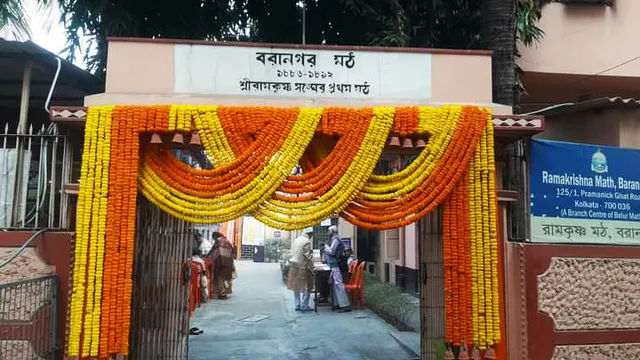
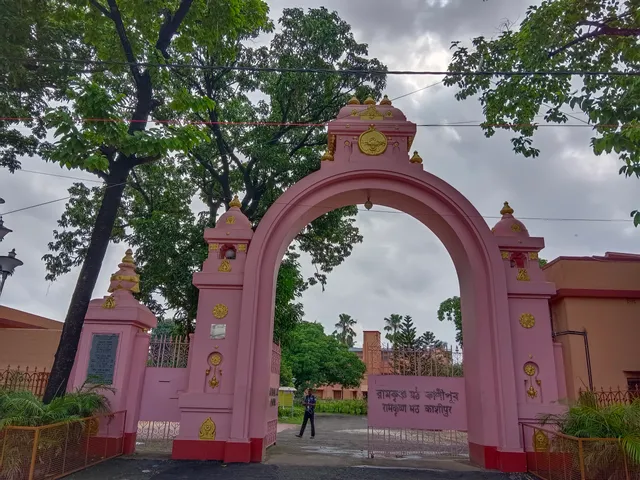
Baranagar Math is the First Monastery of Ramakrishna Order!
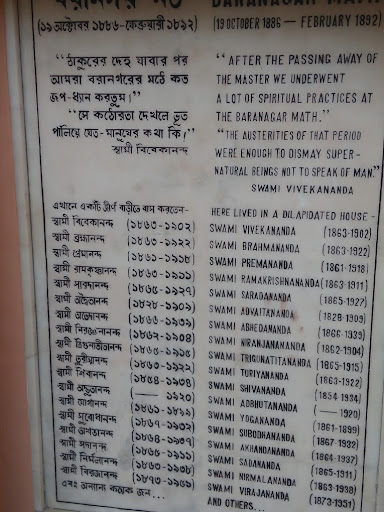
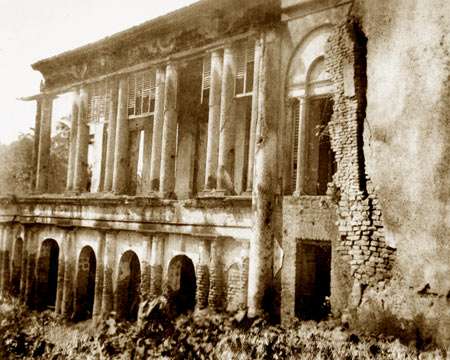
In the spiritual history of the world, Baranagar Math has carved out a niche for itself as it was at this dilapidated house the tyagi disciples of the God Incarnate Sri Ramakrishna, went through unprecedented spiritual practices, meditation and austerity for more than five years.
The way Swamiji and his brother-disciples lived at this Baranagar Monastery, i.e. their days of unparalleled austerity, day-long spiritual practices, absolute renunciation of life for otherworldly pursuit will remain etched in golden letters in the history of Ramakrishna Sangha. All these formed the cornerstone of the Ramakrishna Order and the Baranagar Math was built on this solid foundation.
The intense love by which Sri Ramakrishna initially united his young tyagi disciples in his closest circle during his twilight years, ultimately coalesced and strengthened into a fraternity at this monastery. Under Swamiji’s able leadership, the monks gradually came to appreciate the catholicity of Sri Ramakrishana’s ideas; they gradually prepared themselves for the liberation of their own selves and welfare of the world at large. Their promptness in facing the opposition and remarkable alertness resulted in their all-round growth - spiritual, mental and intellectual.
The unprecedented austere lifestyle practised by the monks at Baranagar Math did not, in any way, insulate them from the sorrows and miseries of the downtrodden humanity at large. In fact, the realisation and teachings of Yugavatar Sri Ramakrishna are as deep as the ocean and as infinite as the sky. The inmates of the Math had, by then, realised that the advent of Sri Ramakrishna was not for the sake of India alone, but for the entire humanity.
It was at this first monastery that the tyagi disciples of Sri Ramakrishna ritualistically took sannyasa by viraja homa and from here Swamiji set out for his historic ‘Bharat Parikrama’ in 1889.
Sri Ramakrishna realised the ultimate truth from varied religions through spiritual practices during His life time. “As many faiths, so many paths” – the fundamental spiritual dictum of Sri Ramakrishna, the Guru of Swami Vivekananda, was practised by the apostles at Baranagar Math through observing the teachings of Buddha, Mohammad, Jesus Christ and other great religious personalities. Swami Vivekananda preached the Universal Religion and propagated the great message of harmony and equal validity of all the...
Read moreIf spirituality were a symphony, then the iconic Ramakrishna Math, Baranagar would be the quiet but powerful prelude — the kind that sets the tone for greatness without asking for applause.
Located in the peaceful bylanes of Baranagar in North Kolkata, this modest-looking building holds the weight of a giant legacy. It was here, in 1886, after the Mahasamadhi of Sri Ramakrishna Paramahansa, that a group of young, penniless disciples — led by the indomitable Narendranath Dutta, soon to be Swami Vivekananda — came together to form the seedling of what would eventually become the Ramakrishna Mission.
Why Baranagar Math Is No Ordinary Shrine: Birthplace of the Ramakrishna Order: This humble Math was the first monastic home for Sri Ramakrishna’s disciples. Think of it as the Hogwarts of Vedanta, where future spiritual stalwarts like Swami Brahmananda, Swami Turiyananda, and Swami Saradananda took their early vows of renunciation, poverty, and divine service.
Living with Purpose, Not Privilege: Life here was anything but easy. The monks often fasted, slept on mats, braved the chill, and chanted Vedic hymns in dim candlelight. Yet, their joy was palpable — grounded not in luxury but in liberation.
Swami Vivekananda's Crucible: It was within these walls that Narendra introspected, read scriptures voraciously, and finally embraced the life of a wandering monk. If Belur Math is the face of the Mission, the Baranagar Math is its soul.
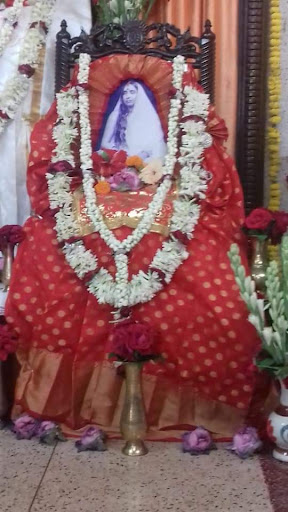
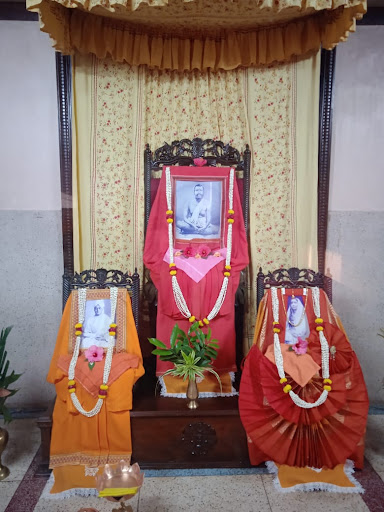
A Walk Through Time: Today, the building houses a serene shrine, a small museum, and a palpable air of spiritual fervour. You can almost hear the echoes of ancient mantras and feel the silent fire of youthful renunciation.
Personal Reverie: Visiting the Baranagar Math is like stepping into a forgotten diary page of Indian spirituality — handwritten with courage, compassion, and clarity. It’s minimal, austere, and yet breathtakingly meaningful. No gold domes, no marble opulence. Just purpose.
Final Sip of Wisdom: "Great things are done by a series of small things brought together," said Van Gogh. Baranagar was one such quiet beginning — with echoes that shook the world. Come here not to worship — but to remember what devotion...
Read moreDivine place Baranagar Math (Baranagar Monastery) or Ramakrishna Math, Baranagar was the first monastery of Ramakrishna Order. In September 1886, after the death of Ramakrishna, when his devotees stopped funding, Swami Vivekananda (then known as Narendranath Datta) and other disciples of Ramakrishna decided to make a dilapidated house at Baranagar their new math.The house crumbled to dust in 1897. In 1973 Vivekananda Math Samrakshan Samity was formed who attempted to preserve the area. In 2001, the possession was handed over to Belur Math authority, who soon-after declared it as one of their official branch. The restoration and development work of the area is still going on. After the death of Ramakrishna on 16 August 1886, his devotees and admirers stopped funding. Many of his disciples showed inclination to return home and live Grihastha(family-oriented) life. The monastic disciples led by young Narendranath Datta understood the necessity to find out a new shelter. Narendranath and others decided to make dilapidated house at Baranagar the new math(monastery) for remaining disciples.The house belonged to a zaminder family of Taki, North 24 Parganas district. Surendra Nath Mitra, a devotee of Ramakrishna desired to pay the rent for the house.Narendranath and his guru bhais used to collect their daily food by "holy begging" (madhukari). The math became the first building of the Ramakrishna Math—the monastery of the monastic order of Ramakrishnab. Narendra later reminisced about the early days in...
Read more