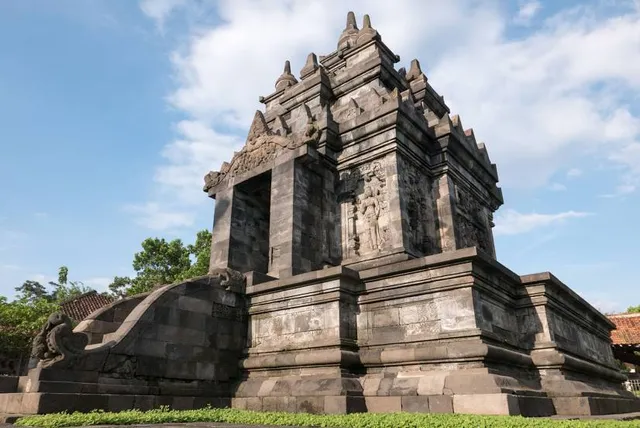
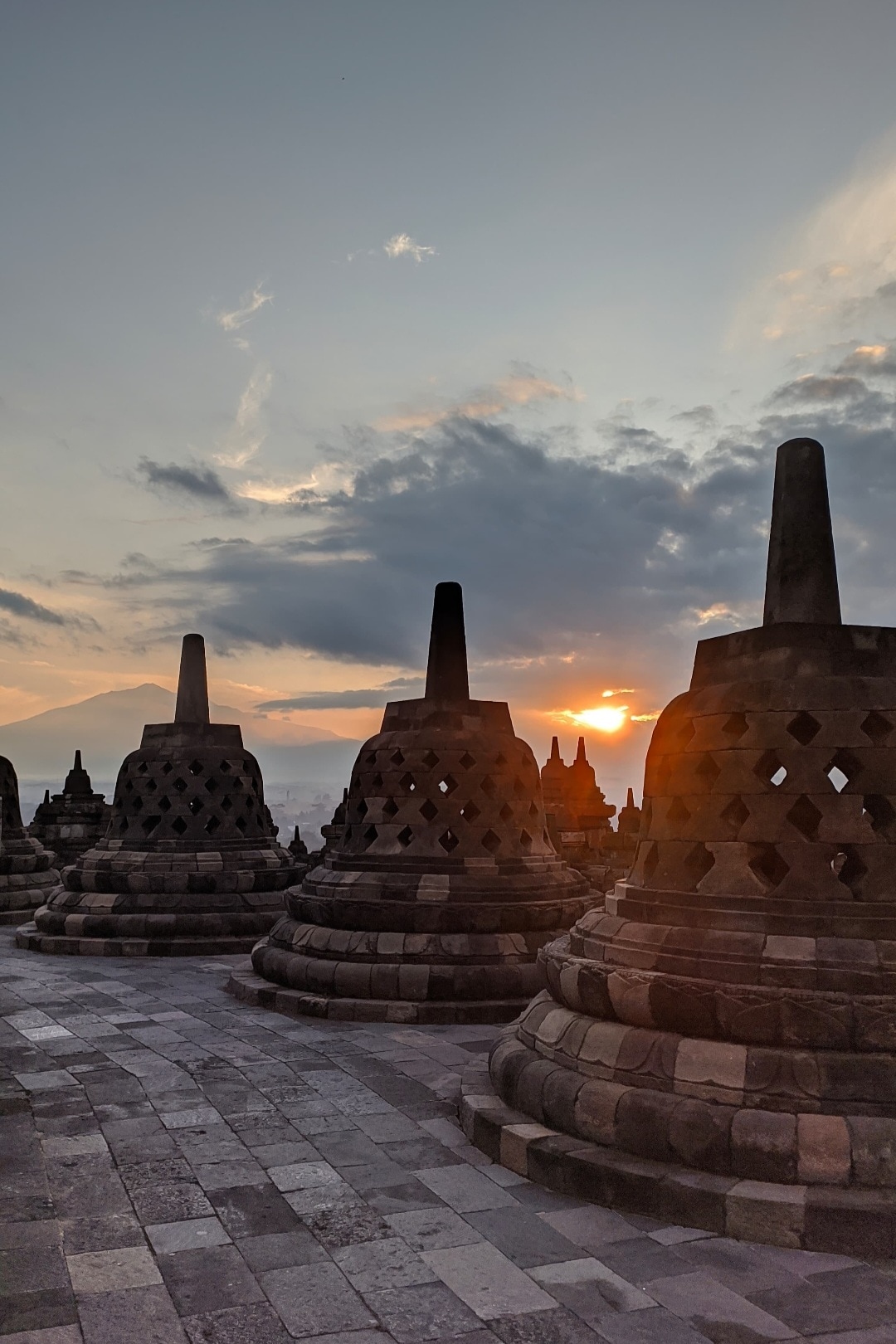
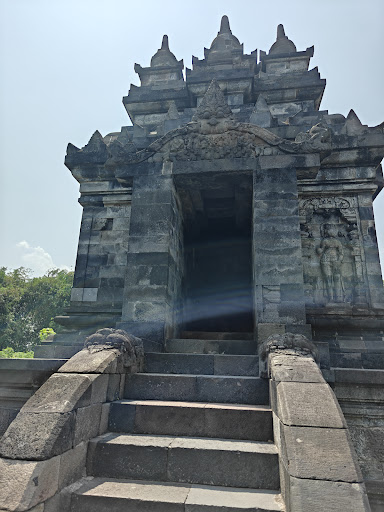
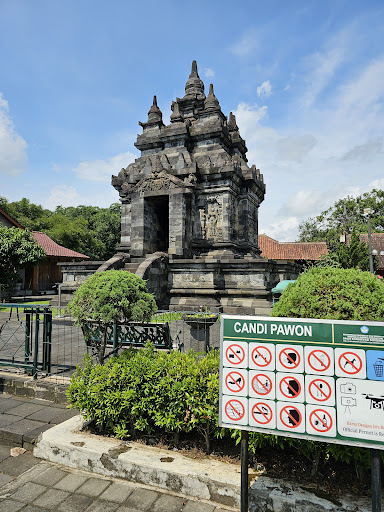
The Pawon Temple (Candi Pawon) is a small, but historically significant, Buddhist temple located in Central Java, Indonesia. It is an integral part of the larger Borobudur Temple Compounds, which is a UNESCO World Heritage Site.
Here are the key details about Pawon Temple:
Location and Context
Location: Magelang, Central Java, Indonesia, situated in the village of Wanurejo, Borobudur District.
The Borobudur Temple Compounds: Pawon Temple is one of three Buddhist temples—along with Borobudur and Mendut—that are situated on a single, straight axis, suggesting a deep symbolic and ritual connection. Pawon is located roughly midway between the other two:Approximately 1.75 km from Borobudur (to the northeast). Approximately 1.15 km from Mendut (to the southwest).
Ritual Significance:It is believed that the temple served to purify the mind before a pilgrim proceeded to the grander Borobudur. It is still a stop on the annual Vesak (Waisak) ritual procession, where Buddhists walk from Mendut, pass Pawon, and end at Borobudur. History and Name Dynasty and Date: It was built in the 8th–9th centuries AD during the reign of the Sailendra Dynasty, which also constructed Borobudur and Mendut. mortuary temple (Per-awu-an, a place that contains dust or ashes) for a king of the Sailendra dynasty, possibly King Indra. Local Name ("Bajranalan"): Locals also call it Candi Bajranalan, derived from the Sanskrit words Vajra (thunderbolt) and Anala (fire/flame), translating to "The Flaming Thunderbolt." This name suggests a connection to King Indra's weapon.
Architecture and Artistry
Design:The small temple stands on a square base and is noted for its relative simplicity, symmetry, and harmony, which has led historians to call it "the jewel of Javanese temple architecture." Reliefs and Carvings: The temple features exquisite stone carvings, including: Kala-Makara: Decorative carvings often found above entrances and on the sides of stairs in classic Javanese temples, serving a protective function. Bodhisattvas and Taras: Reliefs of male and female enlightened beings decorate the outer walls.
Kalpataru (Tree of Life): A prominent relief of the mythical wish-fulfilling tree, flanked by the celestial creatures Kinnara and Kinnari*(half-human, half-bird figures). God Kuvera: Carvings of Kuvera, the Buddhist God of Wealth and Fortune, are found on the outer walls, leading some to believe the shrine may have been dedicated to him. Interior:The inner chamber is empty and has a square basin in the center. Its original purpose is debated, but one theory suggests it once housed a bronze Bodhisattva statue or the...
Read moreGunungkidul is renowned for its stunning beaches, and one that stands out is Baron Beach. Baron Beach is distinctive for its combination of coastal beauty and cultural richness. What makes Baron Beach truly unique is the juxtaposition of the turquoise sea against the rugged limestone hills, creating a breathtaking panorama.
The beach offers more than just a typical seaside experience. Visitors have the opportunity to explore the local fishing culture, as Baron Beach is home to a traditional fisherman's village. Watching the colorful boats dotting the shore and witnessing the daily routines of the local fishermen adds a cultural dimension to the visit.
Moreover, Baron Beach is part of a series of interconnected beaches, each with its own charm. Kukup Beach and Krakal Beach are nearby, providing a diverse range of landscapes. The natural caves and cliffs surrounding the area contribute to the overall allure, making it a paradise for both nature enthusiasts and adventure seekers.
Visitors can engage in various water activities, such as snorkeling and swimming in the clear waters, or simply relax on the sandy shores and soak in the tropical ambiance. The beach also has several warungs (local eateries) where visitors can savor fresh seafood and other local delicacies.
In essence, Baron Beach in Gunungkidul is not just a coastal retreat; it's a harmonious blend of natural beauty, cultural authenticity, and recreational opportunities. The unique landscape, coupled with the vibrant local culture, makes it a must-visit destination for those seeking a distinctive beach experience...
Read morePawon Temple in Yogyakarta is a hidden gem waiting to be explored by avid travelers and history enthusiasts alike. Nestled amidst the verdant landscapes of Central Java, this ancient Buddhist temple exudes a mystical charm that transports visitors back in time.
The temple's intricate stone carvings and architectural finesse stand as a testament to the ingenuity and skill of ancient Javanese artisans. Each corner reveals a story, each relief whispers tales of bygone eras, offering a fascinating glimpse into Indonesia's rich cultural tapestry.
Stepping through the temple's gates feels like stepping into a different world, where time slows down, and the hustle and bustle of modern life fade away. Surrounded by the serene ambiance of Pawon Temple, visitors can't help but feel a sense of awe and reverence for the centuries-old structure.
Whether you're a history buff seeking to unravel the mysteries of the past or simply a traveler in search of unique experiences, Pawon Temple promises an unforgettable journey through time and culture. Don't miss the opportunity to add this captivating site to your...
Read more