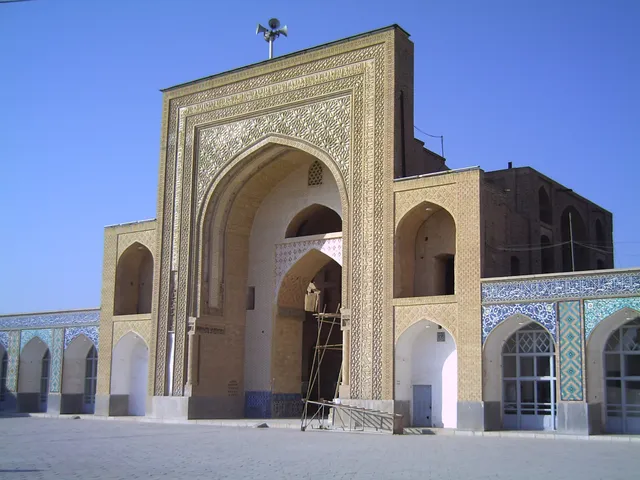
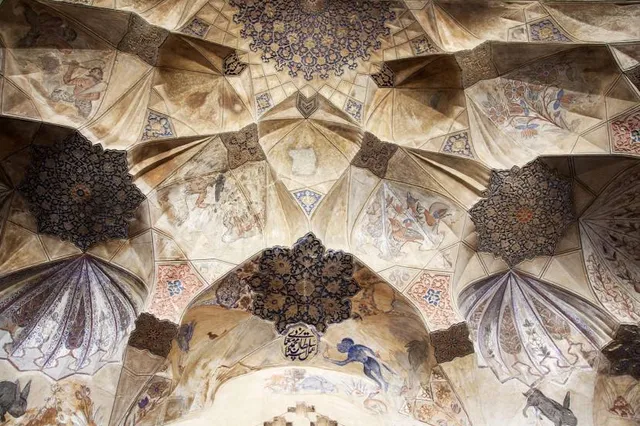
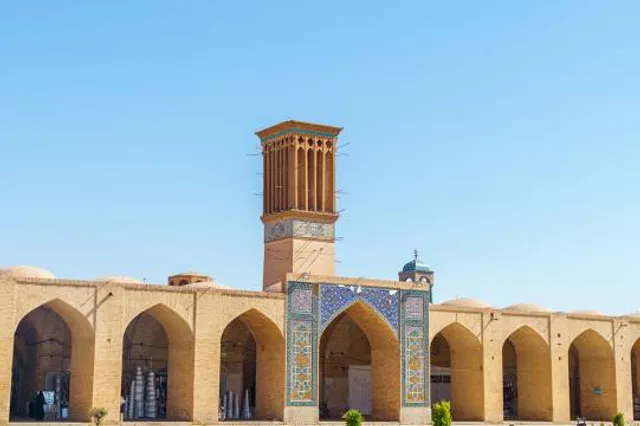
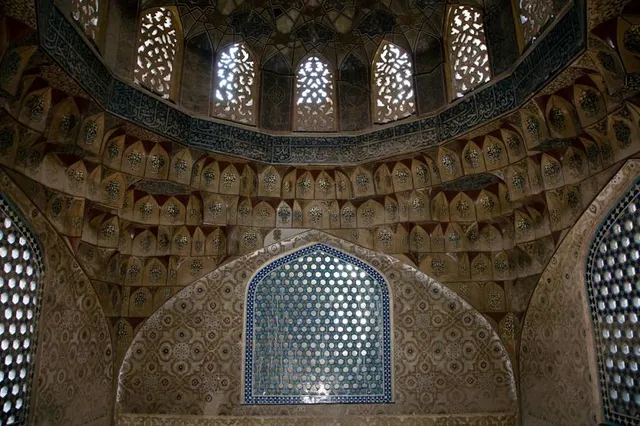
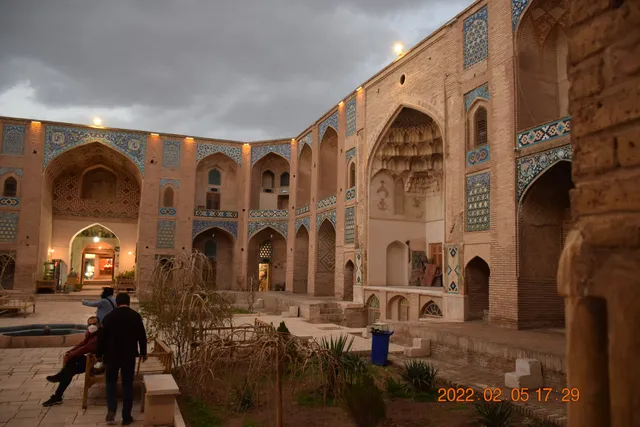
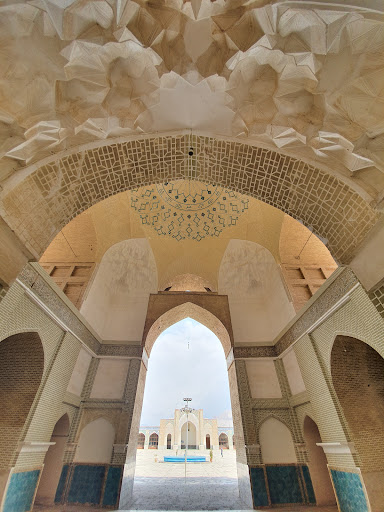
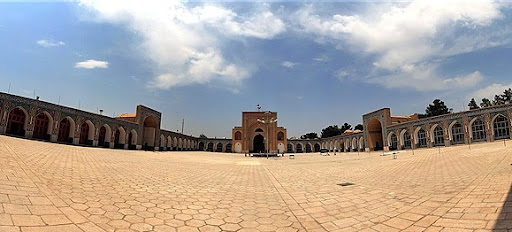
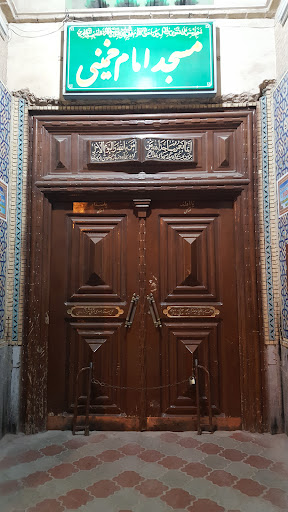
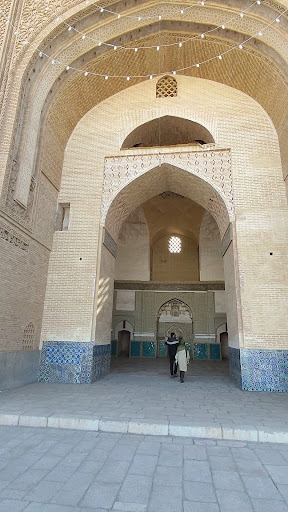
Malek Mosque also known as Imam Mosque is a Seljuq era (1038-1118) four-iwan structure in the historical texture of Kerman. Considered the largest mosque in Kerman, this 1,000-year-old structure has several Shabistans (inner sanctum), a large courtyard, a brick dome and magnificent brickwork decorations. A brick tower on the northeastern side, the large Qibla iwan on the western side and three Mihrabs (prayer niche) with stucco decorations are the only parts remaining from the original Seljuq structure. Qibla iwan (a vaulted hall, walled on three sides and open on one side) is the largest iwan in this mosque and has delicate brickwork decorations with Seljuq era motifs. Due to changes made to the structure over time, one of the Seljuq Mihrabs is now located on the roof of the Imam Hassan Shabistan, the most famous Shabistan of Malek Mosque. There is a fountain with a depth of four meters in the middle of the courtyard. The mosque once had a Qanat (underground water management system) named Mastoureh after a Seljuq princess which directed water through the mosque. The main entrance of the mosque is currently its northern entrance. The old wooden door of the mosque was built low so that anyone entering would need to bow and enter humbly. The different parts of this mosque have undergone several renovations throughout the years. The current renovation project of the mosque which began in 1970 is still ongoing. Malek Mosque was registered as a National Heritage...
Read moreMalek Jameh Mosque or Imam Mosque is related to Seljuk period and is located in Imam Khomeini Street in Kerman and it was registered in the list of Iran’s national monuments on 15th of Mehr 1346 with registration number 760.
Malek Jameh Mosque is the greatest mosque in Kerman and has numerous chambers and a vast scene. This mosque was built at Seljuk period which was the fifth century or in 478 hijri year and the order was frm Malek Turan Shah I. the mosque is a thousand years old and now it is located in the southern side of Kerman Historical Bazaar.
This mosque is 101 meters long and 91 meters wide and it is considered as a four-porch mosque. The Brick Seljuk Tower is also located in this area which is in the north-eastern side of Malek Mosque in Kerman. Three beautifully molded sanctuaries are other signs of this mosque.
In the past, there was an aqueduct called Mastoureh (named after the daughter of Malek Touran Shah I) whose water would pass through this mosque. The great porch of mosque Qibla is in front of the eastern entrance. A gate opens to the north and another gate opens to the south-west. There is a waterfront in the middle of mosque scene which is four meters deep. There is a great porch in the western side of it with colorful...
Read moreمسجد جامع امام خمینی یا مسجد ملک توران قدیمیترین مسجد کرمان قدمت شاید بیش از ۹۰۰ سال
از مساجد تاریخی و مربوط به دوره سلجوقی و جاهای دیدنی کرمان است که در بافت قدیم شهر در میان خیابان امام خمینی، در بخش جنوبی ناحیه تاریخی بازار کرمان بنا شده است. این مسجد بزرگترین مسجد کرمان و از نوع مساجد چهار ایوانی است. تورانشاه سلجوقی بانی ساخت این مسجد ۹۰۰ ساله است. مسجد امام که از کهنترین مساجد ایران محسوب میشود، بین سالهای ۴۷۶ تا ۴۸۹ هجری قمری کار بنای آن به پایان رسیده است.
معماری مسجد در ابتدا لازم به ذکر است که در گذشته آبنمایی به عمق ۴ متر به صورت روباز و از دو طرف دارای دو راه پله بوده که در قسمت غربی مسجد قرار داشته و برای گرفتن وضو مورد استفاده قرار میگرفته است. این آبنما باعث طراوت و تازگی مسجد میشد. قنات مستوره تامینکننده آب این مکان بوده است. آب قنات مستوره در کمتر از نیم قرن پیش خشک شد و آبنما را پر کرده و روی آن را سنگفرش کردند. مسجد ملک کرمان از شبستانهای متعدد و صحن وسیعی تشکیل شده است. این مسجد ۹۱۹۱ متر مربع مساحت و سه درب ورودی و چهار ایوان دارد. ایوان بزرگ قبله، بزرگترین ایوان است که در ضلع غربی صحن قرار واقع شده است. این ایوان با آجر و به سبک دوره سلجوقی مزین شده است. چند شبستان در این مسجد ساخته شده که شبستان امام حسن (ع) مشهورترین آنها است. شبستان آقا شیخ حسن فقیه دارای ۲۲ ستون از شبستانهای دیگر این بنا است. شبستان آقا علی با ۶ ستون در شمال غربی واقع شده که به شبستان امام موسی بن جعفر (ع) متصل میشود. شبستان ضلع جنوبی دارای ۲۷ ستون است، ولی شبستان واقع در ضلع شرقی کوچک است.
چندین محراب گچبری شده کوچک که بین ۱۰۰ تا ۱۵۰ سال قبل از عهد سلجوقی بنا شده و به دوران آل بویه برمیگردد، از دیگر قسمتهای مسجد است. سه محراب دیگر نیز که در پشت بام و در شبستان امام حسن (ع) قرار دارد، دارای گچبریهای زیبا و منحصربهفرد هستند که به قرن پنجم مربوط میشوند.
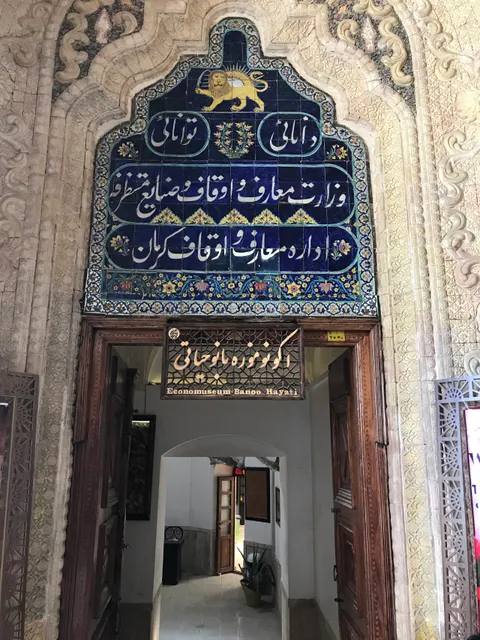
برج سلجوقی که برجی آجری است، در شمال شرقی مسجد بنا شده که بخشهای بالایی آن ویران شده و فقط ۶ متر از آن سالم بر جای مانده است. تاق ورودی سردر، مقرنسکاری است و ترنجی برجسته در قسمت پایین تاق قرار دارد. گچبری طرح گره اطراف تاق را آراسته کرده است. سردر ورودی و اصلی مسجد، شمالی است؛ در قدیمی مسجد از جنس چوب و کم ارتفاع است. در گذشته برای این که افراد هنگام ورود به مسجد سری به نشانه تعظیم خم کنند و سپس وارد شوند، درهای ورودی را کم ارتفاع درست میکردند. همین که از سردر شمالی داخل شدیم، وارد راهرویی با سقف نسبتا بلندی میشویم که آجرکاری معقل نمای آن را شکل داده است.
مسجد امام با شماره ثبت ۷۶۰ در ۱۵ مهر ماه سال ۱۳۴۶ در فهرست آثار ملی ایران ثبت شده است.
مطلب...
Read more