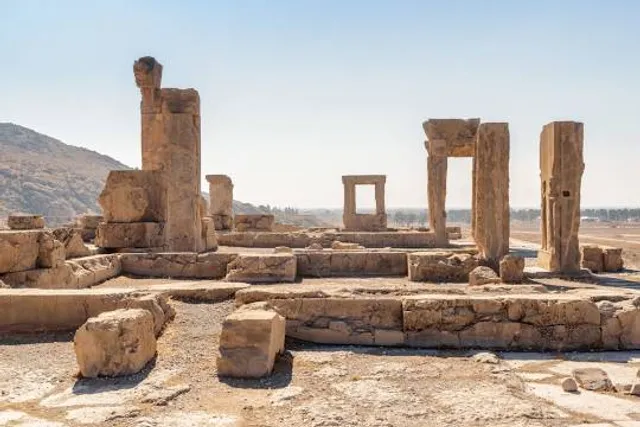
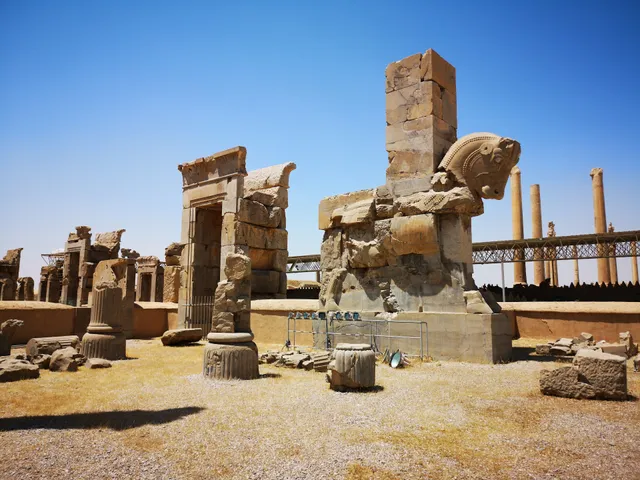
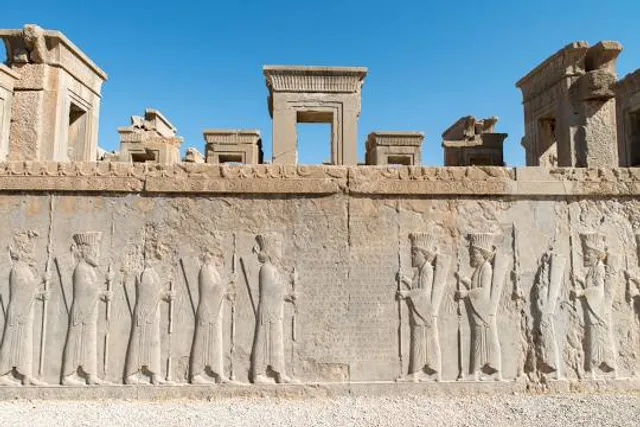
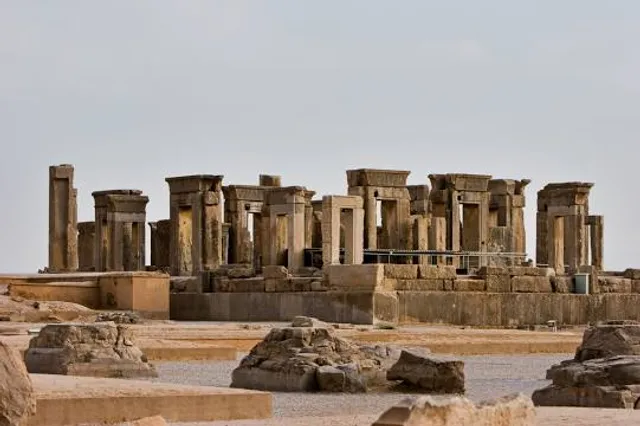
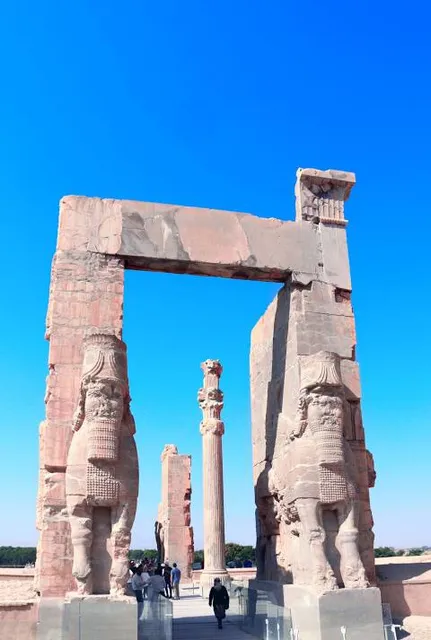
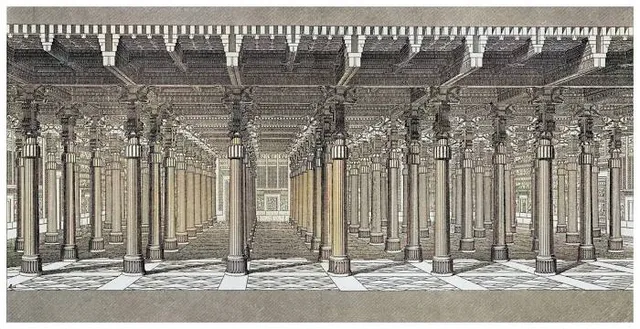
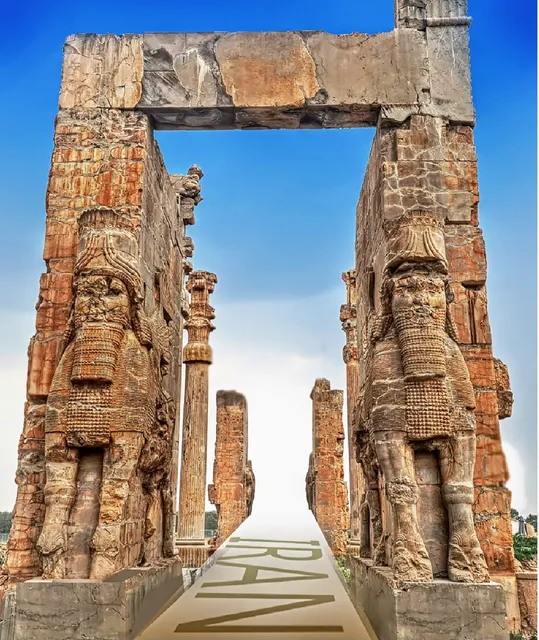
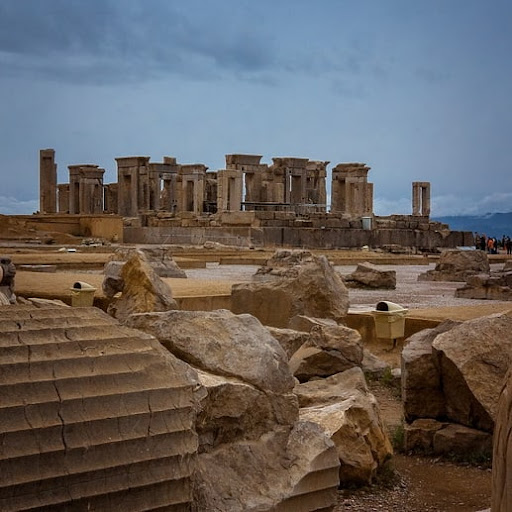
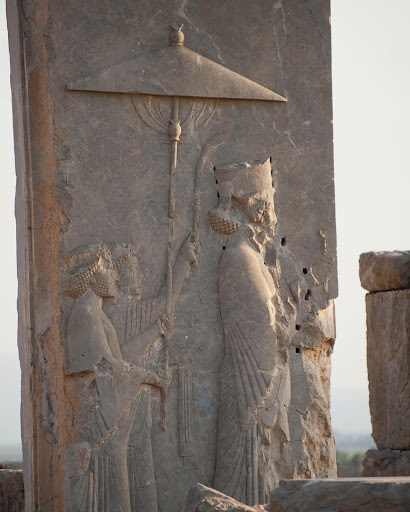
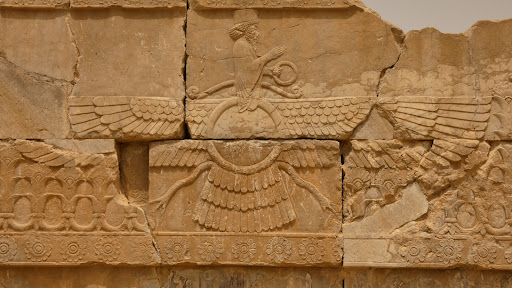
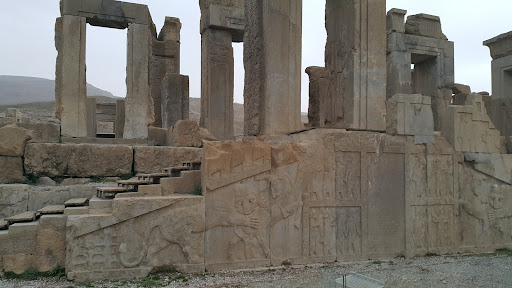
Persepolis, also known as Takht-e Jamshid, whose magnificent ruins rest at the foot of Kuh-e Rahmat (Mountain of Mercy), was the ceremonial capital of the Achaemenid Empire. It is situated 60 kilometers northeast of the city of Shiraz in Fars Province. The royal city of Persepolis ranks among the archaeological sites which have no equivalent, considering its unique architecture, urban planning, construction technology, and art. The city’s immense terrace was begun about 518 BC by Darius the Great, the Achaemenid Empire’s king. On this terrace, successive kings erected a series of architecturally stunning palatial buildings, among them the massive Apadana palace and the Throne Hall (“Hundred-Column Hall”). This 13-ha ensemble of majestic approaches, monumental stairways, throne rooms (Apadana), reception rooms, and dependencies is classified among the world’s greatest archaeological sites. The terrace is a grandiose architectural creation, with its double flight of access stairs, walls covered by sculpted friezes at various levels, contingent Assyrianesque propylaea (monumental gateway), gigantic sculpted winged bulls, and remains of large halls. By carefully engineering lighter roofs and using wooden lintels, the Achaemenid architects were able to use a minimal number of astonishingly slender columns to support open area roofs. Columns were topped with elaborate capitals; typical was the double-bull capital where, resting on double volutes, the forequarters of two kneeling bulls, placed back-to-back, extend their coupled necks and their twin heads directly under the intersections of the beams of...
Read morePersepolis 𐎱𐎠𐎼𐎿 Pārsa (Old Persian) تخت جمشید Takht-e Jamshid (Persian) Gate of All Nations, Persepolis.jpg Ruins of the Gate of All Nations, Persepolis. Persepolis is located in Iran Persepolis Shown within Iran Location Marvdasht, Fars Province, Iran[1] Coordinates 29°56′04″N 52°53′29″ECoordinates: 29°56′04″N 52°53′29″E Type Settlement History Builder Darius I, Xerxes I and Artaxerxes I Material Limestone, mud-brick, cedar wood Founded 6th century BC Periods Achaemenid Empire Cultures Persian Events Nowruz, The 2,500 Year Celebration of the Persian Empire Site notes Condition in ruins Management Cultural Heritage, Handicrafts and Tourism Organization of Iran Public access open Architecture Architectural styles Achaemenid UNESCO World Heritage Site Official name Persepolis Type Cultural Criteria i, iii, vi Designated 1979 (3rd session) Reference no. 114 State Party Iran Region Asia-Pacific Persepolis (Old Persian:𐎱𐎠𐎼𐎿,Pārsa; Modern Persian: پرسپولیس) was the ceremonial capital of the Achaemenid Empire (ca. 550–330 BC). It is situated 60 km northeast of the city of Shiraz in Fars Province, Iran. The earliest remains of Persepolis date back to 515 BC. It exemplifies the Achaemenid style of architecture. UNESCO declared the ruins of Persepolis a World Heritage...
Read morePersepolise map main.JPG Persepolise map main.JPGپلکان ورودی تخت جمشیدپلکان شمالیپلکانشرقیآرامگاه اردشیر سومباروهادروازهکشورهاخیابان سپاهیاندروازه ناتمامآپاداناکاخ صدستونکاخ سهدرکاخ تچرکاخ هدیشخزانهشاهیکاخ ملکه و موزهپادگان ۳۲ ستونکاخ جکاخ هکاخ د کاخ هدیش یا کاخ اختصاصی خشایارشا در شرق کاخ ه در کوشک شاهی تختجمشید قرار دارد. به گواهی کتیبههای کاخ هدیش، این بنا به دستور خشایارشا و برای خود و یکی از همسرانش هدیش نام(هدسه) ساخته شدهاست. او در یک کتیبه این بنا را هدیش خوانده اما در نبشتهای دیگر، آن را تچر نامیدهاست. کاخ هدیش بر سینه سنگ و در جنوب صفه ساخته شده و کف آن نسبت به سطح دشت نزدیک به ۱۸ متر بلندتر است. محور طولی کاخ، غربی–شرقی بوده و مساحت آن تقریباً ۲۵۵۰ متر مربع (۴۰ در ۵۵) متر است. یک پلکان دو طرفه در سمت غرب و یکی دیگر در سمت شمال شرقی، آن را به ترتیب به حیاط کاخ تچر و حیاط کاخ سه در میپیوندد.
در سرتاسر جنوب کاخ، بالا خانه یا ایوانی با لبه کنگرهدار موجود است که که از دو طرف شرق و غرب توسط پلکانهای باریکی به درون قسمت غربی حرمسرا راه داشتهاست. پلکان غربی هنوز موجود است اما پلکان شرقی که آجری بوده، از میان رفتهاست و علیرضا شاپور شهبازی باستانشناس ایرانی آن را در سال ۱۳۵۷ خ آن را به حالت اولیهاش بازسازی کرد. قسمت اعظم کاخ را یک تالار مرکزی مربع شکل شامل شش ردیف ستون ۶ تایی تشکیل میدادهاست. در شمال این تالار ایوانی ۱۲ ستونی (دو ردیف ۶ تایی) وجود داشته که توسط دو درگاه بزرگ به تالار راه مییافته و یک در دیگر، تالار را به بالا خانه باریک جنوبی میپیوستهاست. در دو جانب شرقی و غربی تالار، دو دستگاه ساختمان، مرکب از اتاق نگهبانان، اتاق چهار ستونی، کفش کن و برج محافظ وجود داشته و پلکان شمال شرقی، را به کفش کن شرقی هدایت میکردهاست. بر درگاههای بزرگ، نقش خشایارشا، با تاج صاف بی کنگره دیده میشود. اسکندر مقدونی به تلافی از خشایار شاه که معبدی در شهر آتن را به آتش کشیده بود آتش زدن تخت جمشید را از این کاخ...
Read more