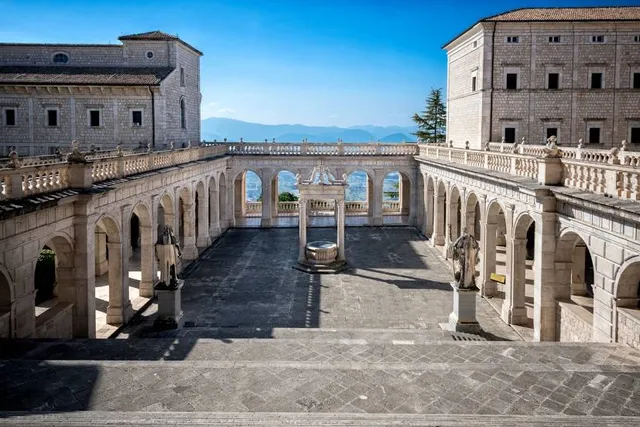
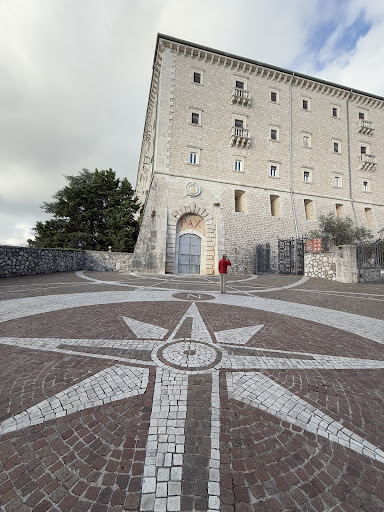
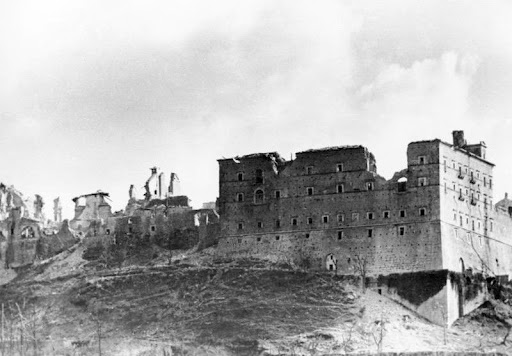
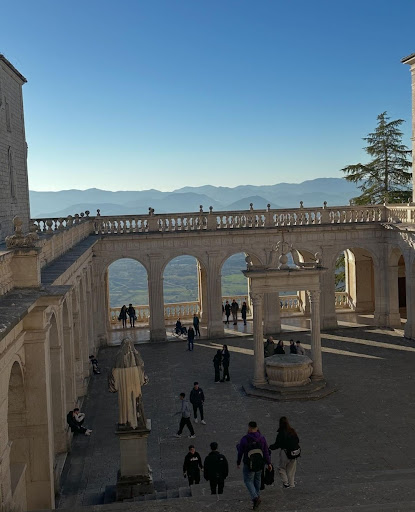
Montecassino è la Casa Madre e perciò il Centro Spirituale innanzitutto dell'Ordine Benedettino, e quindi dell'intera Famiglia di San Benedetto. San Benedetto da Norcia, lasciato con alcuni monaci, tra i quali San Mauro, colui che trapiantò l'Ordine Benedettino in Terra di Gallia, il primo insediamento di Subiaco, nell'Alta Valle del Fiume Aniene, si insediò sull'arce cassinese fondandovi il monastero dove completò la redazione della sua Regola (Regula Monasteriorum seu Monachorum: la Regola di San Benedetto ossìa Regola Benedettina) e dove trascorse gran parte della sua vita di monaco e di Abate (come era stato primo Abate di Subiaco, così diventò Fondatore e primo Abate di Montecassino) fino alla morte nel marzo del 547 d.C. Montecassino è stata distrutta dalla furia degli uomini e della natura disordinata, più volte, e sempre ricostruita. Nel febbraio del 1944 l'ultima distruzione, totale, causa i bombardamenti dell'aviazione militare neozelandese, ma dietro ci stavano gli inglesi. Fu un atto del tutto militarmente inutile e irrazionale. Ma l'odio contro uno dei Centri Spirituali del Cattolicesimo ebbe la meglio: la setta massonica odia tutto ciò che è Cattolico, e controlla il mondo anglosassone (è stata fondata a Londra nel 1717). Montecassino è risorta per la tenacissima volontà dei suoi monaci, in testa l'Abate Monsignor Ildefonso Rea, l'Abate della ricostruzione. Molto del distrutto Archicenobio è andato perduto per sempre, molto è stato recuperato, molto a suo tempo portato in salvo. Il progetto del benemerito Dott. Ing. Giuseppe Breccia-Fratadocchi ridiede forma all'enorme struttura. Nella Basilica Cattedrale dell'Abbazia il basamento del riedificato monumentale Altare Maggiore che troneggia dall'alto del Presbiterio sopraelevato racchiude il primitivo piccolo Sepolcreto dei Monaci, voluto dallo stesso San Benedetto per se stesso, per la sorella Santa Scolastica da Norcia, con Lui fondatrice del ramo femminile dell'Ordine Benedettino (Monache di Clausura e Suore di Vita Semi-Attiva con clausura parziale), e per i monaci che più gli erano stati vicini sulla Santa Rupe. Oggi in un avello del sepolcreto, coperto dalle lastre di marmo del pavimento dell'Altare Maggiore, posizionato nella parte retrostante del maestoso manufatto barocco, verso il coro dei monaci e l'abside rettilinea col monumentale Organo, laddove al centro si apre un ampio decoratissimo nicchione e sotto il piano di questo dove è una stella marmorea traforata posta immediatamente sopra il suddetto avello del V secolo d.C., sta la teca di bronzo, moderna ma in stile neo-classico: dentro sono le due parimenti moderne cassette d'argento contenenti l'una ciò che resta delle Spoglie Mortali di Benedetto, l'altra le corrispettive di Scolastica. Una lapide marmorea cementata sigilla l'avello sepolcrale dei due Santi Fratelli, Fondatori del Monachesimo Benedettino maschile e femminile. Da visitare la spaziosa Cripta, tutta decorata in mosaici e marmi dai monaci della Scuola Artistica dell'Abbazia di Beuron, in Germania, fondata e diretta dal geniale Don Desiderius Lenz, chiamato a fine XIX dal connazionale e confratello Mons. Bonifacio Krug, Abate di Montecassino, a ridecorare i muri della struttura che, poggiando su un ripiano del Monte, sostiene il soprastante sopraelevato Presbiterio e Coro della Basilica. La Cripta della Basilica Cattedrale fu, praticamente, l'unica parte di Montecassino a non subire troppi danni, e a restare sostanzialmente intatta. Parte della decorazione rifatta non ripete le forme di quella pre-distruzione del 1944. Oltre alla Basilica Cattedrale Abbaziale, si visitino il Museo ricchissimo di reperti storico-artistici della Casa di San Benedetto, e ovviamente è splendido aggirarsi tra i chiostri del primo livello, intercomunicanti, di architettura prettamente bramantesca. La Loggia cosiddetta "del Paradiso" si apre, in fondo al chiostro centrale, su una vista panoramica mozzafiato della amplissima Valle del Fiume Liri, in direzione ovest/sud-ovest dell'arce di...
Read more
 Learn more insights from Wanderboat AI.