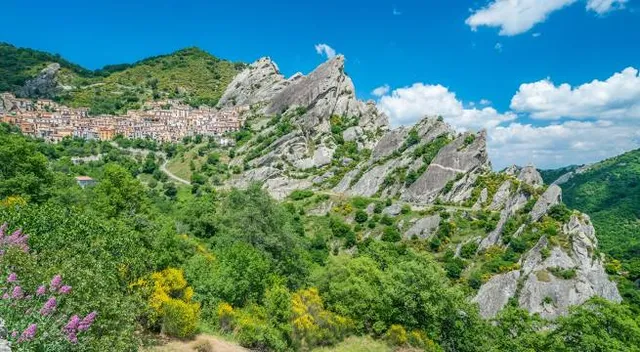
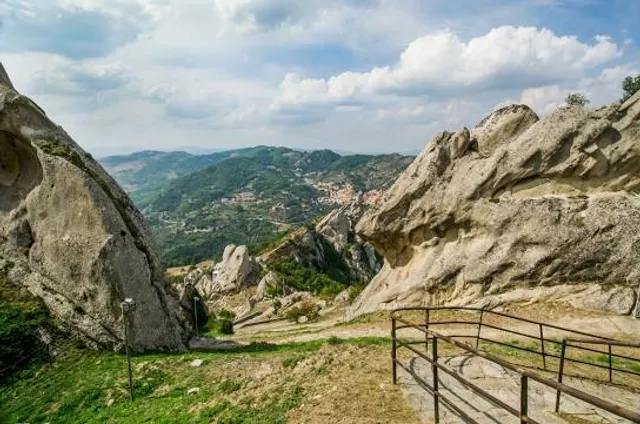
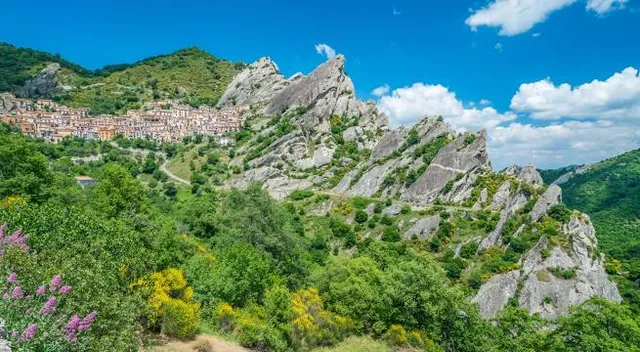
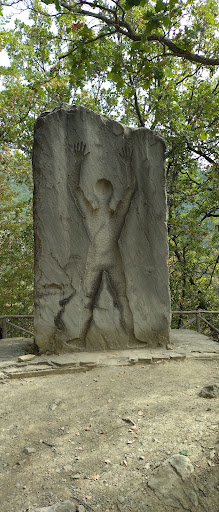
Each stone is strategically placed to align with the natural breaks and viewpoints along the trail:
Stone 1: The Departure Location: Near the starting point in Castelmezzano. Narrative: Vito, a young shepherd, leaves his village to seek a better future. Encouraged by his dreams and the words of a mysterious elder, he sets off on a journey.
Stone 2: The Encounter Location: A short distance along the trail. Narrative: Vito meets a wise old woman who gives him advice and a magical object to help him on his journey. She tells him to follow the path and heed the signs along the way.
Stone 3: The Challenge Location: As the trail starts to ascend. Narrative: Vito faces his first major challenge, encountering a fierce animal. Using the wisdom and courage instilled in him, he overcomes the obstacle and continues his journey.
Stone 4: The Vision Location: At a scenic viewpoint along the trail. Narrative: Vito experiences a vision that reveals insights about his past and future. This vision strengthens his resolve and guides him further along his path.
Stone 5: The Temptation Location: Midway through the trail, in a serene spot. Narrative: Vito encounters a beautiful but deceptive entity that tries to lead him astray. Remembering the old woman's advice, he resists the temptation and stays true to his path.
Stone 6: The Revelation Location: As the trail begins to descend toward Pietrapertosa. Narrative: Vito discovers a hidden truth about his heritage and destiny. This revelation provides him with the clarity and purpose needed to complete his journey.
Stone 7: The Return Location: Near the end of the trail, approaching Pietrapertosa. Narrative: Vito returns to his village with newfound wisdom and strength. He is celebrated as a hero, and his journey inspires others to seek their own paths.
The Seven Stones is a unique blend of physical activity and storytelling, offering a rich, immersive experience that connects hikers with the history, culture, and natural beauty of the region. The inscriptions are usually in Italian, so having a translation app or guidebook can enhance the experience for...
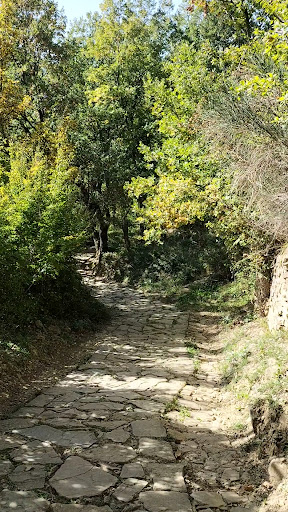
Read moreAlmost no one writes this in the comments, but I'll tell you. My wife and I have walked this path in both directions. REMEMBER! The path along the seven stones trail must necessarily begin with Pietropetros. From the beginning of the trail to the stone bridge over the stream there is a long, sometimes very steep descent. The path is laid with stone paving stones. We walked in the most ordinary light sneakers and sneakers. We didn't experience any problems. After the stream and vecchio mulino, the trail goes up over the rocks to Castelmezzano. But this rise is not comparable to the rise towards Pietro. You won't even notice it, it's like climbing the stairs to the 9th floor. You won't get tired. With all that, if you move from Pietrapertosa towards Castelmezzano, you will still take pictures and make videos. Although to admit there is nothing particularly interesting. All the stones are talking. But if you start the way from Castelmezzano towards Pietrapertosa, you will quickly and carefully descend over the rocks to the stream, and then you will climb up for a long time sweating. Taking pictures at this moment will be extremely uninteresting. You will want to drink and take a breath. It's not fun at all. Pietrapertosa has a toilet where you can wash and dry yourself with paper...
Read moreAl momento in cui sto scrivendo questa recensione la strada provinciale panoramica n. 13 che collega Castelmezzano e Pietrapertosa è ancora chiusa ai veicoli per rischio frane, ne consegue che -a parte la "direttissima" del volo dell'angelo- il percorso delle 7 pietre è un'alternativa che vi troverete a valutare se non avete voglia di scendere in auto fino alla Basentana e risalire sull'altro paese che, probabilmente, vorreste visitare.
Soggiornando a Castelmezzano, una mattina di qualche giorno prima dell'ultimo ferragosto mi sono quindi recato in cammino su questo sentiero verso Pietrapertosa. Avevo già letto il libro di Mimmo Sammartino per cui sapevo bene che, in realtà, gli ortodossi che vogliano ripercorrere le vicende narrate nel libro dovrebbero procedere seguendo un ordine delle tappe ben preciso che parte da Pietrapertosa e si conclude a Castelmezzano. Detto ciò il percorso è perfettamente godibile anche se non si è letto il libro ed anche se, come nel mio caso, si comincia a percorrerlo nel senso inverso. Direi che se non si è letto il libro e si è totalmente ignari dei luoghi, in particolari condizioni, potrebbe anche risultare un'esperienza inquietante per via delle "strane voci" (quasi dei sabba) che si sentono in lontananza ed avvicinamento.
Messo da parte il discorso di Vito che ballava con le streghe che ciascuno potrà approfondire secondo la propria curiosità, mi preme ricordare che il percorso è abbastanza lungo (circa 1.800 metri tra i due cartelli che lo delimitano ufficialmente più i tratti su strada asfaltata necessari per raggiungere i rispettivi paesi) ed -a tratti- faticoso. Direi che, con le dovute pause per riposarsi e/o per fare delle foto e/o per ascoltare i brani che riecheggiano in corrispondenza di ciascuna delle 7 pietre, c'è da mettere in conto 80/90 minuti a tratta.
Il cammino che dal cimitero di Castelmezzano scende fino alla valle dove scorre il torrente Caperrino presenta un fondo piuttosto sconnesso sul quale bisogna fare un minimo di attenzione a dove si mettono i piedi. Una volta superato il ponte romano il sentiero si fa lastricato e quindi si avanza più comodamente anche se la pendenza si fa sempre più marcata man mano che ci si avvicina a Pietrapertosa.
In generale si procede sempre protetti dall'ombra della vegetazione circostante, salvo nell'ultimo tratto di circa 400 metri che dall'impianto di depurazione porta al parcheggio alle porte di Pietrapertosa: questo tratto -decisamente ripido- se percorso sotto il sole d'estate, senza cappello e senza la dovuta riserva d'acqua a disposizione può mettere in difficoltà qualsiasi persona non allenata... si faccia pertanto attenzione! Al riguardo si tenga ben presente che a 250 metri a valle dell'impianto di depurazione, in corrispondenza di una delle tappe del percorso delle 7 pietre, si trova un fontanile che, al netto del torrente Caperrino, sulla cui salubrità delle acque non so nulla, rappresenta l'unica fonte di approvvigionamento d'acqua durante il percorso se malauguratamente non ne aveste di vostra.
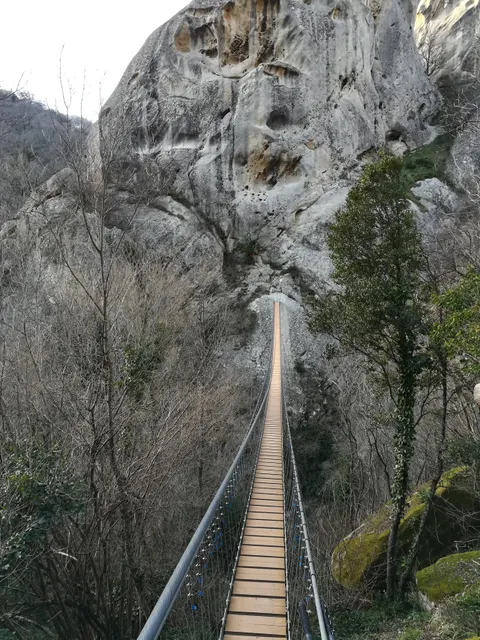
Ultima raccomandazione: nei pressi del ponte romano c'è un cartello che indica la biforcazione per la via ferrata Salemm che porta anche al ponte nepalese. Questo sentiero dovrebbe essere percorso solo da chi deve effettivamente cimentarsi in questa disciplina ed è già dotato dell'attrezzatura necessaria, altrimenti si rischierà solo di ostruire il passaggio agli altri scalatori dato che si tratta di un percorso a senso unico che non può essere percorso in sicurezza senza la necessaria attrezzatura da arrampicata.
Ho piacere di segnalare che, quando ho effettuato il percorso, tutte le 7 stazioni di tappa erano in ordine e perfettamente funzionanti per cui la mia esperienza è stata positiva ed adeguatamente evocativa delle atmosfere...
Read more