HTML SitemapExplore
logo
Find Things to DoFind The Best Restaurants

Mount Fuji — Attraction in Fujinomiya

Name
Mount Fuji
Description
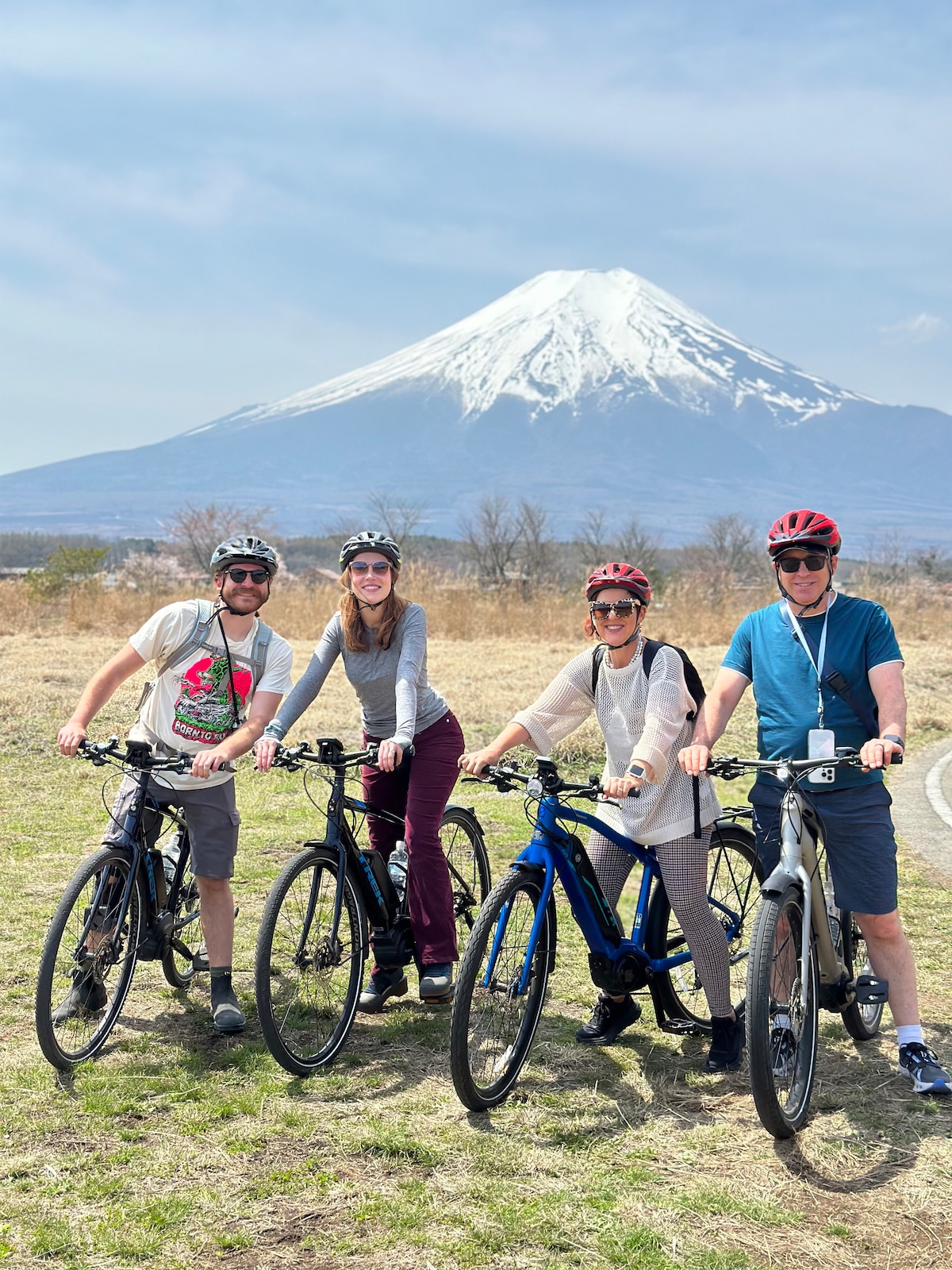
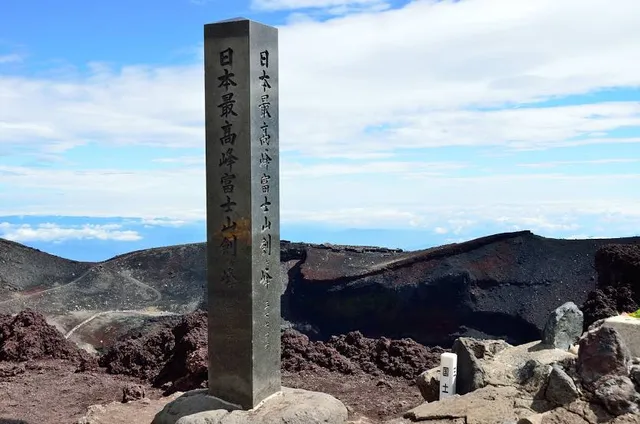
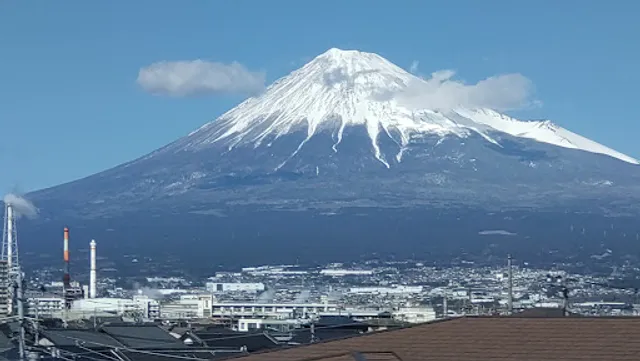
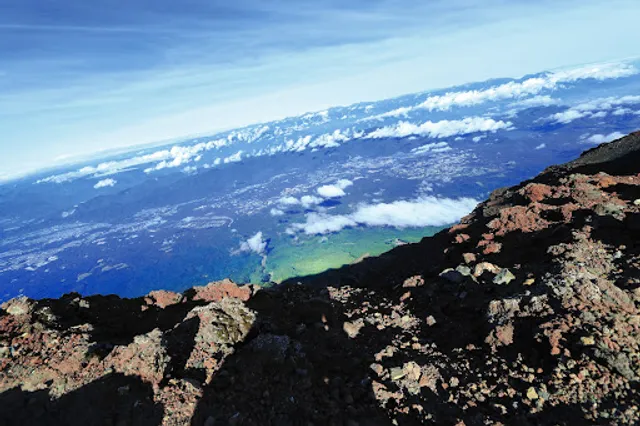
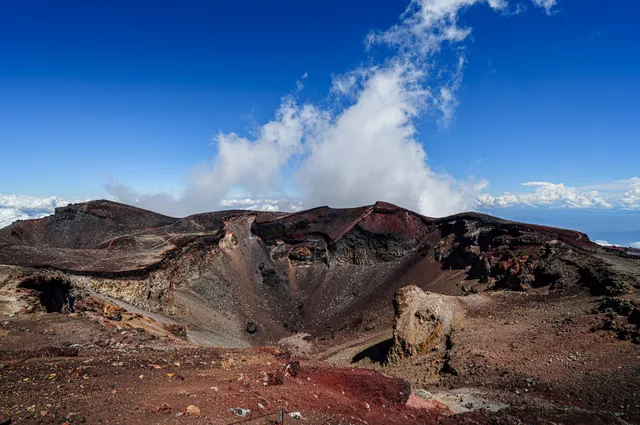
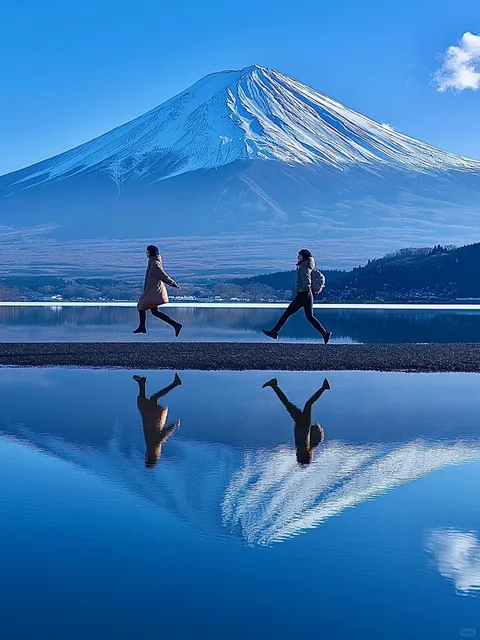
Japan’s Mt. Fuji is an active volcano about 100 kilometers southwest of Tokyo. Commonly called “Fuji-san,” it’s the country’s tallest peak, at 3,776 meters. A pilgrimage site for centuries, it’s considered one of Japan’s 3 sacred mountains, and summit hikes remain a popular activity. Its iconic profile is the subject of numerous works of art, notably Edo Period prints by Hokusai and Hiroshige.
Nearby attractions
Kusushi Shrine
Oyama, Sunto District, Shizuoka 410-1431, Japan
Nearby restaurants
Nearby hotels
山口屋 支店 扇屋
Oyama, Sunto District, Shizuoka 410-1431, Japan
万年雪山莊
9P3M+R5, Fujinomiya, Shizuoka, Japan
Related posts
Japan | 7 Days and 6 Nights Itinerary📸 Mount Fuji Check-in Spots 🌸🍃Japan | Top 14 Attractions You Must Visit! 💕💁‍♂️💁‍♂️ Planning a Trip to Japan? Check out this Sample ItineraryOff to Mount Fuji from Tokyo 🚝 Tokyo Autumn Must-Visit Spots! 🍁✨
Keywords
Mount Fuji tourism.Mount Fuji hotels.Mount Fuji bed and breakfast. flights to Mount Fuji.Mount Fuji attractions.Mount Fuji restaurants.Mount Fuji travel.Mount Fuji travel guide.Mount Fuji travel blog.Mount Fuji pictures.Mount Fuji photos.Mount Fuji travel tips.Mount Fuji maps.Mount Fuji things to do.
Mount Fuji things to do, attractions, restaurants, events info and trip planning
Mount Fuji
JapanShizuoka PrefectureFujinomiyaMount Fuji

Basic Info

Mount Fuji

Kitayama, Fujinomiya, Shizuoka 418-0112, Japan
4.6(5.2K)
Open 24 hours
Save
spot

Ratings & Description

Info

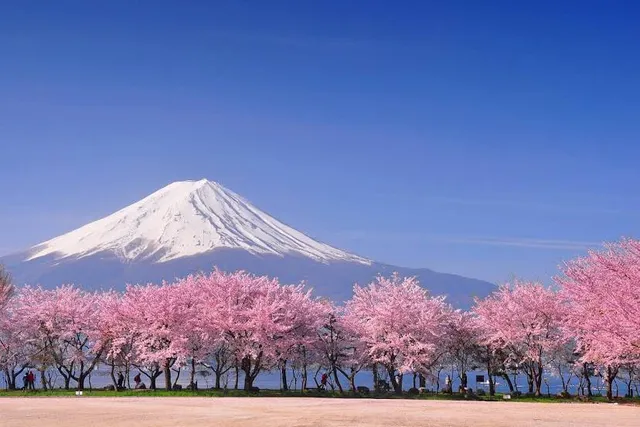
Japan’s Mt. Fuji is an active volcano about 100 kilometers southwest of Tokyo. Commonly called “Fuji-san,” it’s the country’s tallest peak, at 3,776 meters. A pilgrimage site for centuries, it’s considered one of Japan’s 3 sacred mountains, and summit hikes remain a popular activity. Its iconic profile is the subject of numerous works of art, notably Edo Period prints by Hokusai and Hiroshige.

Outdoor
Adventure
Family friendly
attractions: Kusushi Shrine, restaurants:
logoLearn more insights from Wanderboat AI.
Website
fujisan-climb.jp

Plan your stay

hotel
Pet-friendly Hotels in Fujinomiya
Find a cozy hotel nearby and make it a full experience.
hotel
Affordable Hotels in Fujinomiya
Find a cozy hotel nearby and make it a full experience.
hotel
The Coolest Hotels You Haven't Heard Of (Yet)
Find a cozy hotel nearby and make it a full experience.
hotel
Trending Stays Worth the Hype in Fujinomiya
Find a cozy hotel nearby and make it a full experience.

Reviews

Nearby attractions of Mount Fuji

Kusushi Shrine

Kusushi Shrine

Kusushi Shrine

4.5

(482)

Open until 12:00 AM
Click for details

Things to do nearby

Cycling, trekking, and cave exploration in the forest at the foot of Mt. Fuji
Sat, Dec 6 • 9:30 AM
401-0320, Yamanashi, Narusawa, Minamitsuru District, Japan
View details
Discover Mt Fujis beauty and history
Mon, Dec 8 • 10:00 AM
403-0005, Yamanashi, Fujiyoshida, Japan
View details
Mountain Climb with a Expert Guide
Sun, Dec 7 • 9:30 AM
401-0301, Yamanashi, Fujikawaguchiko, Minamitsuru District, Japan
View details
Get the Appoverlay
Get the AppOne tap to find yournext favorite spots!
Wanderboat LogoWanderboat

Your everyday Al companion for getaway ideas

CompanyAbout Us
InformationAI Trip PlannerSitemap
SocialXInstagramTiktokLinkedin
LegalTerms of ServicePrivacy Policy

Get the app

© 2025 Wanderboat. All rights reserved.
logo

Reviews of Mount Fuji

4.6
(5,155)
avatar
5.0
15w

Amazing experience. We climbed to the summit. It took us 8 hours to get up there (you will be told by the officer that it will take 6 hours to get to the summit-but don’t worry you are not alone-to take more time than 6 hours that is). 2 hours to hike around the crater and 4 hours down. We took it slowly because we were afraid of altitude sickness which is irreversible if it does attract.

On the way down it was raining pretty hard.. we were soaking wet. I was so sorry that my knees are weakening so that I couldn’t do it faster to avoid the rain… but it turned out we took 4 hours to walk downhill.. which is already the recommended time… even under a tumbling down rain falls for the last 3 km or so.

We rested at 3250 meter hut on the way up there. We actually rent the place at the summit but at almost 4 pm we only got up to 3250. Judging from our endurance at the time we didn’t we could make it to our reserved hut by 7 pm and we would not be able to enjoy the climb only to rush up there. So we had decided to stop there and had dinner at 5 pm rest until 5 AM enjoy the sunrise at the hut.. at 4 AM.. then cruise (not literally okay?) up for 3 hours more to reach the summit… in fact we would be able to make it up there by 7 pm but we will miss the dinner..and the climb will not be as present because of the darkness.

Before the summit, maybe the last 200-400 meters or so (not elevation) are all rock climbing. During 2800-3200 (now the elevation) also rock climbing. The rest are hiking up the mountain. Almost ever upward. The boy at the hut says it will take him 1 hour to the summit without a backpack. May be 1 and a half hour with a backpack.. I was like yeah right.. probably double for me then.. which is true!!!

You don’t really have to pack a lot. There is no water. Restroom is extraordinary dry and clean. Water to wash your hand is pressed out like a soap…… so don’t you even think about brushing your teeth. No need to pack the toothbrush, toothpaste, cosmetic, or towel.. unless you need it to dry you sweat in case you sweat a lot. Bottle of water is around 5-600 yen. A fresh banana is 300 yen. Hot coffee in a can (or a cup) is 500. Everything is affordable. Just give them the money. We only go with 4 pork buns (2 each). 1 bottle of water, 1 bottle of pocari sweat.

Extra piece of tees, pants, socks, and rain gear are needed. Not the food.

The hut provides you dinner and a kettle of hot tea, and breakfast with one small bottle of green tea. The food served is eatable. If you are not picky eater then you are fine.

Oh.. huts are available since around 2700-3400. Every 50 meters up has a hut. After 3400 there is only 1 hut before the summit. Most of the huts have a little room left available for walk-in. Even you called to reserve.. say at 80% (this is my wild guess number) full they will say it is full… to keep the spaces for the walk-in which is very considerate and nice of Japanese people. They don’t over charge you for that either. It will be the same cost.

However, most of them don’t accept guests after 7 pm (to keep it quiet for those who are sleeping). And no dinner will be served if you are in after 5pm. So, ideally, check in at 5 PM. Leave at 1-2 AM to see the sunrise at the summit. But you can choose to leave at 5 AM and enjoying the sunrise at the hut with nice coffee at breakfast at your hut too.

Like I reserved on the summit (without knowing that it is on the summit—I thought it was at 3450 I was confused a bit). The hut recommended me upon knowing that I was at 3000 at 2 pm that I should take it slow and stop somewhere from there to 3400 instead of trying to reach them at 3700. Which we did. And I think that’s a very wise decision. Resting around 3200-3400 is very ideal I think. Because the following day you need to go up (for me 3 hours + 2 hours + 4 hours— 9 hours total) if we were to go up around 3400-3450. The first day will be 6 hours and the second will be 8 which is more ideal.. but this is closed enough.

Bring...

   Read more
avatar
5.0
1y

Mount Fuji: Japan's Iconic Peak Mount Fuji, a majestic stratovolcano, is one of the most recognizable landmarks in Japan. Known for its symmetrical cone shape and snow-capped summit, it's the highest mountain in Japan, reaching an elevation of 3,776 meters (12,389 feet). Key Features and Significance: Sacred Symbol: Mount Fuji has deep cultural and spiritual significance in Japan. It's considered one of the country's Three Holy Mountains and has been a popular pilgrimage site for centuries. Artistic Inspiration: The mountain's beauty has inspired countless artists, poets, and photographers. Famous works like Hokusai's "Great Wave off Kanagawa" feature Mount Fuji prominently. Hiking Destination: Many people climb Mount Fuji each summer, following well-marked trails to the summit. The experience offers breathtaking views of the surrounding countryside. Dormant Volcano: While Mount Fuji is currently dormant, it is still classified as an active volcano. Its last eruption occurred in 1707. UNESCO World Heritage Site: In 2013, Mount Fuji was designated a UNESCO World Heritage Site for its cultural and natural significance. Mount Fuji: A Closer Look History and Mythology Mount Fuji's history is intertwined with Japanese mythology and folklore. It's often associated with the goddess Konohana-sakuya-hime and the fire god, Kagutsuchi. In ancient times, it was believed to be a sacred mountain, and many shrines and temples were built around its base. Climbing Mount Fuji Climbing Mount Fuji is a popular activity, especially during the summer months. There are several trails leading to the summit, each with its own unique characteristics. The most popular route is the Yoshida Trail, which starts from the Fifth Station on the mountain's southern slope. Key points about climbing Mount Fuji: Best time to climb: July and August are the most popular months, but the mountain can be climbed from early June to September. Preparation: Proper clothing, footwear, and physical fitness are essential. It's also important to be prepared for changing weather conditions. Summit huts: There are several mountain huts near the summit where climbers can rest and stay overnight. Surrounding Area The area around Mount Fuji offers a variety of attractions, including: Lake Kawaguchi: One of the Five Lakes of Fuji, this picturesque lake offers stunning views of the mountain. Fuji Five Lakes National Park: This national park encompasses the five lakes and surrounding areas, providing opportunities for hiking, camping, and other outdoor activities. Shizuoka City: A bustling city with a rich history and culture, Shizuoka is a popular destination for tourists. Mount Fuji: A Deeper Dive The Five Lakes of Fuji The Five Lakes of Fuji are a chain of lakes formed by volcanic activity around Mount Fuji. Each lake has its own unique characteristics and offers stunning views of the mountain. Lake Kawaguchi: The largest of the five lakes, it's known for its beautiful scenery and popular with tourists. Lake Yamanaka: The second-largest lake, it's quieter and offers a more peaceful atmosphere. Lake Sai: The smallest of the five lakes, it's surrounded by lush forests and offers a serene setting. Lake Motosu: This lake is known for its deep waters and clear views of Mount Fuji. Lake Shoji: The most secluded of the five lakes, it's a popular spot for camping and fishing. Cultural Significance Mount Fuji has deep cultural significance in Japan. It's often associated with the goddess Konohana-sakuya-hime and the fire god, Kagutsuchi. In ancient times, it was believed to be a sacred mountain, and many shrines and temples were built around its base. Fuji Five Lakes National Park: This national park encompasses the five lakes and surrounding areas, providing opportunities for hiking, camping, and other outdoor activities. Shizuoka City: A bustling city with a rich history and culture, Shizuoka is a popular destination...

   Read more
avatar
5.0
2y

Mount Fuji (富士山, Fujisan, Japanese: [ɸɯꜜ(d)ʑisaɴ] , located on the island of Honshū, is the highest mountain in Japan, with a summit elevation of 3,776.24 m (12,389 ft 3 in). It is the second-highest volcano located on an island in Asia (after Mount Kerinci on the island of Sumatra), and seventh-highest peak of an island on Earth.[1] Mount Fuji is an active stratovolcano that last erupted from 1707 to 1708. The mountain is located about 100 km (62 mi) southwest of Tokyo and is visible from there on clear days. Mount Fuji's exceptionally symmetrical cone, which is covered in snow for about five months of the year, is commonly used as a cultural icon of Japan and it is frequently depicted in art and photography, as well as visited by sightseers, hikers and mountain climbers.

Mount Fuji is an attractive volcanic cone and a frequent subject of Japanese art especially after 1600, when Edo (now Tokyo) became the capital and people saw the mountain while traveling on the Tōkaidō road. According to the historian H. Byron Earhart, "in medieval times it eventually came to be seen by Japanese as the “number one” mountain of the known world of the three countries of India, China, and Japan".The mountain is mentioned in Japanese literature throughout the ages and is the subject of many poems.

The summit has been thought of as sacred since ancient times and was therefore forbidden to women. It was not until 1872 that the Japanese government issued an edict (May 4, 1872, Grand Council of State Edict 98) stating, "Any remaining practices of female exclusion on shrine and temple lands shall be immediately abolished, and mountain climbing for the purpose of worship, etc., shall be permitted.” However, Tatsu Takayama (also known as Takayama Tatsu), a Japanese woman, became the first woman on record to summit Mount Fuji in the fall of 1832.

Ancient samurai used the base of the mountain as a remote training area, near the present-day town of Gotemba. The shōgun Minamoto no Yoritomo held yabusame archery contests in the area in the early Kamakura period.

The first ascent by a foreigner was by Sir Rutherford Alcock in September 1860, who ascended the mountain in 8 hours and descended in 3 hours.: 427  Alcock's brief narrative in The Capital of the Tycoon was the first widely disseminated description of the mountain in the West.: 421–27  Lady Fanny Parkes, the wife of British ambassador Sir Harry Parkes, was the first non-Japanese woman to ascend Mount Fuji in 1867. Photographer Felix Beato climbed Mount Fuji two years later.

On March 5, 1966, BOAC Flight 911, a Boeing 707, broke up in flight and crashed near the Mount Fuji Gotemba New fifth station, shortly after departure from Tokyo International Airport. All 113 passengers and 11 crew members died in the disaster, which was attributed to the extreme clear-air turbulence caused by lee waves downwind of the mountain. There is a memorial for the crash a short distance down from the Gotemba New fifth...

   Read more
Page 1 of 7
Previous
Next

Posts

Japan | 7 Days and 6 Nights Itinerary
AdalynAdalyn
Japan | 7 Days and 6 Nights Itinerary
📸 Mount Fuji Check-in Spots 🌸🍃
Kaley Kaley
📸 Mount Fuji Check-in Spots 🌸🍃
Japan | Top 14 Attractions You Must Visit! 💕
MarkMark
Japan | Top 14 Attractions You Must Visit! 💕
See more posts
See more posts
hotel
Find your stay

Pet-friendly Hotels in Fujinomiya

Find a cozy hotel nearby and make it a full experience.

Japan | 7 Days and 6 Nights Itinerary
Adalyn

Adalyn

hotel
Find your stay

Affordable Hotels in Fujinomiya

Find a cozy hotel nearby and make it a full experience.

Get the Appoverlay
Get the AppOne tap to find yournext favorite spots!
📸 Mount Fuji Check-in Spots 🌸🍃
Kaley

Kaley

hotel
Find your stay

The Coolest Hotels You Haven't Heard Of (Yet)

Find a cozy hotel nearby and make it a full experience.

hotel
Find your stay

Trending Stays Worth the Hype in Fujinomiya

Find a cozy hotel nearby and make it a full experience.

Japan | Top 14 Attractions You Must Visit! 💕
Mark

Mark

See more posts
See more posts