HTML SitemapExplore
logo
Find Things to DoFind The Best Restaurants

Narita International Airport — Attraction in Narita

Name
Narita International Airport
Description
Nearby attractions
Terminal 2 Observatory North, Narita International Airport
1-1 Furugome, Narita, Chiba 282-0004, Japan
Narita Airport Terminal 1 Observation Deck
Narita International Airport, Terminal 1, Narita, Chiba 282-8610, Japan
Information Counter Narita T3
Japan, 〒286-0106 Chiba, Narita, Tokko, 字上人塚148−1 成田空港第3ターミナル
Nearby restaurants
Yoshinoya Narita International Airport Terminal 2
Japan, 〒282-0004 Chiba, Narita, Furugome, 1−1 第2旅客ターミナルビル本館 2階 M2216
GYUKATSU Kyoto Katsugyu Narita International Airport JAPAN FOOD HALL
Japan, 〒282-0004 Chiba, Narita, Furugome, 1-1 第2旅客ターミナル本館 2F JAPAN FOOD HALL 内
Cafe & Dining N's Court
Japan, 〒282-0004 Chiba, Narita, Furugome, 1−1 Terminal 2, 本館4F
Tokyo Tonkotsu Base
1-1 Furugome, Narita, Chiba 282-0004, Japan
McDonald's Narita Airport Terminal 2
Japan, 〒282-0004 Chiba, Narita, Furugome, 1-1 成田空港第2旅客ターミナル
T's Tantan Terminal 2
1-1 Furugome, Narita, Chiba 282-0004, Japan
Shahoden Chinese + Tea
Japan, 〒286-0004 Chiba, Narita, Furugome, 1−1 旅客第2ターミナルビル 4F Narita International Airport
Komeraku
Japan, 〒282-0001 Chiba, Narita, Sanrizuka, 御料牧場1-1 成田空港第1ターミナル北ウイング3F
Sushi Uogashi Nihon-ichi
1-1 Furugome, Narita, Chiba 282 -0004, Japan
Ginza Kagari (Narita Airport)
1-1 Furugome, Narita, Chiba 282-0004, Japan
Nearby hotels
Nine Hours Narita Airport
Japan, 〒282-0004 Chiba, Narita, Furugome, 1番地1 Terminal 2, Narita International Airport, 旅客ターミナル隣接 立体駐車場第2ビル B1F
Related posts
👨‍👩‍👧 Tokyo + Surrounding Family Travel with Kids 👨‍👩‍👧Omotesando 🌸Japan Itinerary (2) 🌸🌺Real-time Sharing of Japan Travel Itinerary (3) 🗼🌸8 Days and 7 Nights in Tokyo: All You Need is This Guide! ‼️ Must-See for Your Vacation in Japan!
Keywords
Narita International Airport tourism.Narita International Airport hotels.Narita International Airport bed and breakfast. flights to Narita International Airport.Narita International Airport attractions.Narita International Airport restaurants.Narita International Airport travel.Narita International Airport travel guide.Narita International Airport travel blog.Narita International Airport pictures.Narita International Airport photos.Narita International Airport travel tips.Narita International Airport maps.Narita International Airport things to do.
Narita International Airport things to do, attractions, restaurants, events info and trip planning
Narita International Airport
JapanChiba PrefectureNaritaNarita International Airport

Basic Info

Narita International Airport

1-1 Furugome, Narita, Chiba 282-0004, Japan
4.3(10.6K)
Open 24 hours
Save
spot

Ratings & Description

Info

Cultural
Accessibility
attractions: Terminal 2 Observatory North, Narita International Airport, Narita Airport Terminal 1 Observation Deck, Information Counter Narita T3, restaurants: Yoshinoya Narita International Airport Terminal 2, GYUKATSU Kyoto Katsugyu Narita International Airport JAPAN FOOD HALL, Cafe & Dining N's Court, Tokyo Tonkotsu Base, McDonald's Narita Airport Terminal 2, T's Tantan Terminal 2, Shahoden Chinese + Tea, Komeraku, Sushi Uogashi Nihon-ichi, Ginza Kagari (Narita Airport)
logoLearn more insights from Wanderboat AI.
Phone
+81 476-34-8000
Website
narita-airport.jp

Plan your stay

hotel
Pet-friendly Hotels in Narita
Find a cozy hotel nearby and make it a full experience.

hotel
Affordable Hotels in Narita
Find a cozy hotel nearby and make it a full experience.

hotel
The Coolest Hotels You Haven't Heard Of (Yet)
Find a cozy hotel nearby and make it a full experience.

hotel
Trending Stays Worth the Hype in Narita
Find a cozy hotel nearby and make it a full experience.

Reviews

Nearby attractions of Narita International Airport

Terminal 2 Observatory North, Narita International Airport

Narita Airport Terminal 1 Observation Deck

Information Counter Narita T3

Terminal 2 Observatory North, Narita International Airport

Terminal 2 Observatory North, Narita International Airport

4.3

(47)

Open 24 hours
Click for details
Narita Airport Terminal 1 Observation Deck

Narita Airport Terminal 1 Observation Deck

4.5

(184)

Open 24 hours
Click for details
Information Counter Narita T3

Information Counter Narita T3

3.6

(161)

Open until 10:00 PM
Click for details

Things to do nearby

Experience at a hot pot restaurant 
Sake tasting & brewery tour
Experience at a hot pot restaurant Sake tasting & brewery tour
Sun, Dec 14 • 11:00 AM
289-0221, Chiba, Kozaki, Katori District, Japan
View details

Nearby restaurants of Narita International Airport

Yoshinoya Narita International Airport Terminal 2

GYUKATSU Kyoto Katsugyu Narita International Airport JAPAN FOOD HALL

Cafe & Dining N's Court

Tokyo Tonkotsu Base

McDonald's Narita Airport Terminal 2

T's Tantan Terminal 2

Shahoden Chinese + Tea

Komeraku

Sushi Uogashi Nihon-ichi

Ginza Kagari (Narita Airport)

Yoshinoya Narita International Airport Terminal 2

Yoshinoya Narita International Airport Terminal 2

3.5

(403)

Click for details
GYUKATSU Kyoto Katsugyu Narita International Airport JAPAN FOOD HALL

GYUKATSU Kyoto Katsugyu Narita International Airport JAPAN FOOD HALL

4.8

(669)

$$

Click for details
Cafe & Dining N's Court

Cafe & Dining N's Court

3.4

(145)

Click for details
Tokyo Tonkotsu Base

Tokyo Tonkotsu Base

3.7

(128)

Click for details
Get the Appoverlay
Get the AppOne tap to find yournext favorite spots!
Wanderboat LogoWanderboat

Your everyday Al companion for getaway ideas

CompanyAbout Us
InformationAI Trip PlannerSitemap
SocialXInstagramTiktokLinkedin
LegalTerms of ServicePrivacy Policy

Get the app

© 2025 Wanderboat. All rights reserved.
logo

Reviews of Narita International Airport

4.3
(10,601)
avatar
5.0
16w

We, a group of six Malaysians, touched down at NRT from KUL at 8 am on 30 July 2025, after a short transit in HCMC. For me, this visit carried a certain sense of nostalgia. My first encounter with Narita was back in 2005, when I arrived on a business trip with all arrangements meticulously taken care of by my Japanese host, Ebara. This time, we had to make every arrangement on our own, from immigration procedures to finding our way into the city. In many ways, this made the experience feel more personal and rewarding.

Immigration clearance could not have gone more smoothly. Having pre-registered online beforehand, all we needed to do was present our QR codes at the counter. The entire process was efficient, straightforward, and done in minutes. It was one of those moments that reminded me how much Japan values preparation and how technology is applied thoughtfully to reduce unnecessary waiting.

At Customs, however, I faced a small challenge. The machine could not read my QR code, forcing me to return to the line and complete the procedure manually. The officer who assisted me was unfailingly polite, patient, and reassuring. Once he realised I was from Malaysia, he took extra care to explain the process and ensure everything was in order. That moment captured something essential about Japan: efficiency combined with genuine courtesy.

No sooner had we completed our clearance than news arrived of a tsunami alert following a massive earthquake in Russia. For us Malaysians, who rarely face such natural events, this was both unusual and slightly unsettling. Yet the atmosphere in the airport remained calm, and because we had no plans to go near the sea, the alert hardly disrupted our journey. Still, it was a reminder of Japan’s unique geographical realities and the way its people live with a constant awareness of natural forces larger than themselves.

Another moment that left an impression on me was spotting a patrol robot quietly moving through the terminal alongside security personnel. It was my first time encountering such a thing in person. This simple sight felt symbolic of Japan itself—an effortless blending of tradition and modernity, where human warmth coexists with cutting-edge innovation.

Our accommodation in Machiya, Tokyo, was only available for check-in after three o’clock in the afternoon. As one of our friends had warned us, Japanese hosts are known to be very strict with check-in and check-out times, and there was no possibility of negotiating an earlier entry. With several hours to spare, we decided to treat Narita not just as an airport but as the first chapter of our journey.

We placed our luggage in coin lockers, which were both convenient and secure, leaving us free to explore without being burdened by our bags. Lunch was taken at a halal udon restaurant inside the airport, a comforting and practical choice that reminded me how accommodating Narita has become for Muslim travellers. Afterwards, we bought Suica cards directly from the airport machines. With our cards ready, we boarded the train for a short excursion to Narita town, taking in the quiet charm of the place before returning to the airport once again. Later, we made our way to Tokyo by express bus.

Reflecting on the experience, I realised how much Narita Airport embodies the values that make Japan unique. The airport is immaculately clean, every facility carefully maintained. The signage is clear, the systems are well thought out, and the staff treat travellers not merely as numbers to be processed but as guests to be welcomed. Even in moments of uncertainty, such as a failed QR scan or a sudden tsunami alert, there is no sense of panic or indifference. Instead, there is order, calm, and an underlying courtesy that reassures you that you are being looked after.

Narita is often described simply as a gateway into Japan, but for me, it felt like more than that. It was the stage where our journey began, where first impressions were made, and where Japan’s unique blend of precision, discipline, and warmth became...

   Read more
avatar
5.0
29w

Most airports feel like shopping malls interrupted by airplanes. Narita International Airport's Terminal 3 feels like a track meet.

Passengers follow colored running lanes through the terminal — blue for departures, red for arrivals — across surfaces borrowed from athletic facilities. There are no moving walkways, no flashy digital signs. Just rubber tracks underfoot and minimalist wayfinding that transforms the trudge through airport security into something approaching sport.

This isn't architectural austerity for its own sake. Terminal 3, which opened in 2015, was built on half the usual budget for a major airport terminal. The design team — a collaboration between established firms Nikken Sekkei and Azusa Sekkei, plus the creative studio PARTY — turned constraints into innovation.

"The key to the architecture and design is 'more than 2 into 1,'" explains PARTY, the Tokyo-based lab behind the terminal's experiential elements. "Consolidating two or more functionalities into one in pursuit of economic reasonability."

The result earned Terminal 3 the 2015 Japan Good Design Gold Award and international recognition from D&AD, the British design organization. More importantly, it challenges assumptions about the relationship between cost and design quality in infrastructure.

Narita's broader complex tells a story of Japanese airport architecture across generations. Azusa Sekkei, founded in 1946, designed the original terminals with the restrained elegance typical of postwar Japanese modernism. The firm's founder, Fuminaga Kiyota, literally wrote the book on airport design — his two-volume "Airports and their Architecture" remains the industry bible in Japan.

Nikken Sekkei, now the world's second-largest architecture firm, brought international expertise to recent renovations. Their approach to Terminal 2's connecting corridor shows sophisticated understanding of light and space, with LED systems embedded in partition walls and folding-screen-shaped ceiling membranes that glow like traditional Japanese lanterns.

But Terminal 3 represents something different: infrastructure as experience design. The creative direction by PARTY — a studio known for mixing storytelling with technology — transforms the mundane act of walking through an airport into engagement with Japanese concepts of mindful movement.

The aesthetic isn't just about savings. Those running tracks reference Japan's athletic culture and attention to physical experience. The minimal signage reflects Japanese design philosophy that values clarity over decoration. Even the furniture, supplied by MUJI, reinforces themes of functional simplicity.

Critics initially questioned whether budget constraints would compromise passenger experience. Instead, the limitations forced innovation. Without expensive digital displays, the team created intuitive wayfinding. Without moving walkways, they made walking pleasant through better surfaces and spatial flow.

The success lies in understanding that good design isn't about expensive materials or flashy technology. It's about solving problems elegantly within constraints — a very Japanese approach to creativity.

As international travel recovers post-pandemic, airports worldwide are reconsidering their role. Narita Terminal 3 suggests they can be more than consumption spaces interrupted by flights. They can embody cultural values while meeting practical needs.

The running tracks may seem gimmicky, but they represent something profound: architecture that makes infrastructure feel human. In an age of generic airport design, that's no small achievement.

Walking those blue and red lanes toward departure gates, passengers experience a moment of Japanese design philosophy in action. Less really can be more — if you know how to subtract...

   Read more
avatar
4.0
1y

TL;DR Version: Narita Airport is a mammoth international hub that excels with clean, functional design, excellent staff, and a variety of shopping and dining options. Its direct rail access to Tokyo is a major convenience. Among the best airports I’ve visited, it holds its place alongside Singapore and Incheon as a top-tier travel destination.

Full Version: Narita International Airport is a prime example of how an airport should function at a global scale. Serving as the main international gateway to Tokyo, it offers both the magnitude and efficiency expected from a major international hub. Clean, spacious, and undeniably functional, Narita stands out for its seamless integration of modern convenience with high-end service.

One of Narita’s most notable strengths is its accessibility. Direct rail access to Tokyo makes traveling into the city incredibly easy and fast, providing a crucial link between the airport and the metropolitan area. This efficiency is a standout feature, especially when compared to airports that can be a hassle to get to from the city center. The express train to central Tokyo is smooth, punctual, and a welcome alternative to more convoluted transport systems.

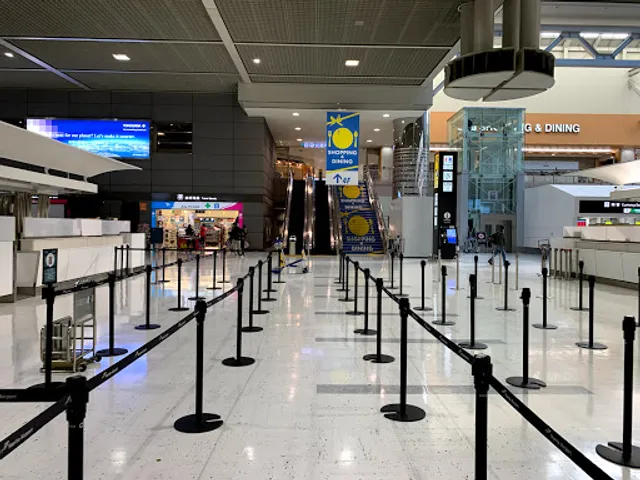
Narita’s design is clean and well-structured, avoiding the overwhelming congestion found in some major airports. There’s a good flow of traffic, and the airport is spacious without feeling empty. It never feels too cramped, even at peak hours, and the efficiency of the operations contributes to a calm and stress-free environment. The staff, true to Japan’s hospitality, is incredibly polite and helpful. I encountered numerous employees who were not only efficient in their work but also courteous, a refreshing change from the often indifferent staff in other large airports.

The Wi-Fi is reliable and, more importantly, free—a feature that can make a big difference when traveling internationally. Fast, simple internet access can make the difference in how travelers experience their time at the airport, especially during long layovers or while navigating the sometimes overwhelming aspects of international travel.

As for shopping and dining, Narita holds its own. There are plenty of options that cater to a wide range of tastes and budgets. From quick bites to sit-down meals, and from luxury goods to traditional Japanese souvenirs, there’s something for every traveler. It’s a well-curated selection, not overly commercialized, but certainly appealing for those looking to pass time or find something special before heading off on their journey.

While it may not have the ultra-modern shine of Singapore Changi or the futuristic vibes of Incheon, Narita is still undeniably among the best airports I’ve had the pleasure of visiting. It has the right mix of efficiency, service, and convenience that makes it a model of how large international airports should be run. Japan’s emphasis on precision and hospitality is evident at every turn, and it adds to the overall appeal of the country as a destination.

Narita is a top-tier airport that offers a wonderful introduction to Japan. Whether you’re flying in or out, it stands as a prime example of how an airport can combine functionality with style, making the travel experience as smooth and pleasant as possible. With its excellent amenities, reliable transport options, and outstanding staff, Narita Airport earns a well-deserved place among the crème de la crème of global airports.

For more from me, follow me on Insta:...

   Read more
Page 1 of 7
Previous
Next

Posts

👨‍👩‍👧 Tokyo + Surrounding Family Travel with Kids 👨‍👩‍👧
ZoeZoe
👨‍👩‍👧 Tokyo + Surrounding Family Travel with Kids 👨‍👩‍👧
Omotesando 🌸
Giselle Giselle
Omotesando 🌸
Japan Itinerary (2) 🌸🌺
CharlotteCharlotte
Japan Itinerary (2) 🌸🌺
See more posts
See more posts
hotel
Find your stay

Pet-friendly Hotels in Narita

Find a cozy hotel nearby and make it a full experience.

👨‍👩‍👧 Tokyo + Surrounding Family Travel with Kids 👨‍👩‍👧
Zoe

Zoe

hotel
Find your stay

Affordable Hotels in Narita

Find a cozy hotel nearby and make it a full experience.

Get the Appoverlay
Get the AppOne tap to find yournext favorite spots!
Omotesando 🌸
Giselle

Giselle

hotel
Find your stay

The Coolest Hotels You Haven't Heard Of (Yet)

Find a cozy hotel nearby and make it a full experience.

hotel
Find your stay

Trending Stays Worth the Hype in Narita

Find a cozy hotel nearby and make it a full experience.

Japan Itinerary (2) 🌸🌺
Charlotte

Charlotte

See more posts
See more posts