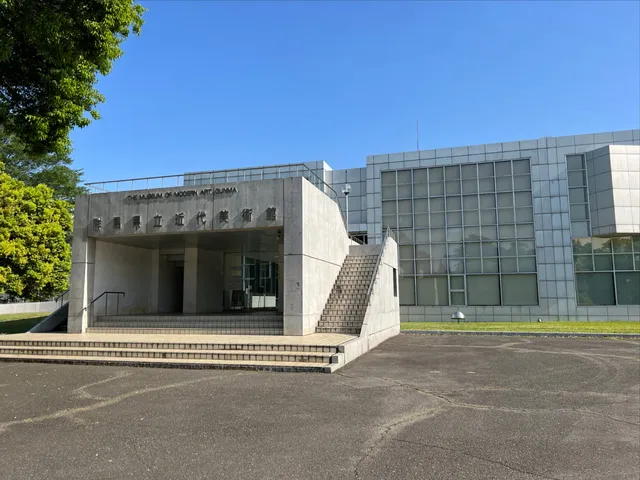
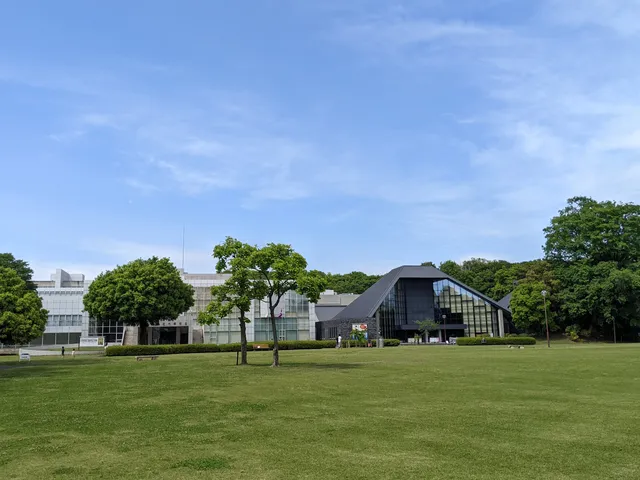
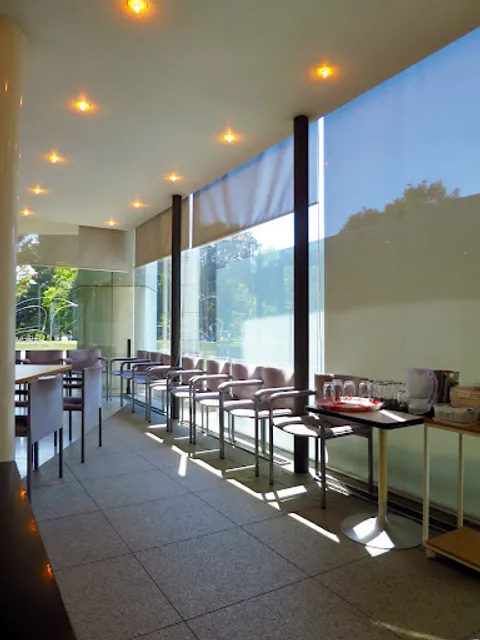
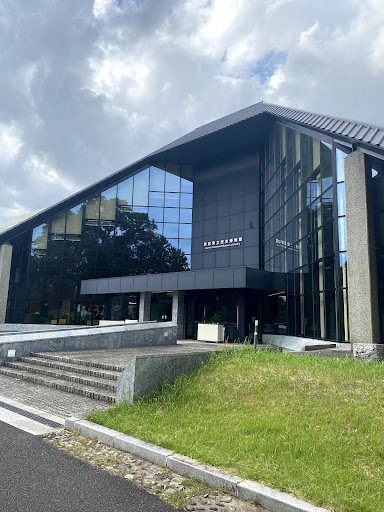
I hesitate to write this review because I love this museum so much, and part of that love comes from how quiet it usually is—crowds appear occasionally, but not often. The architecture alone is worth the visit. Each space transitions into the next with a sense of dynamism and deliberation, heightened by lighting—both natural and designed—that deepens the experience.
Even the acoustics are remarkable. Each room seems to carry its own weight or pressure, shaped by light intensity, sharply contrasting volumes and geometries, and sound. At times I can feel subtle shifts of pressure in my ears as I move from one space to another. The light sources are diffuse and soft, with entire ceilings often casting a gentle, even luminance downward.
The vast spaces amplify and reverberate every footstep, punctuating the journey with a surreal, otherworldly sense of transition.
The rotating collection and traveling exhibitions are consistently impressive, but honestly, the building itself is reason enough to come. I’ve visited five times or more, and every time I leave amazed. While I deeply admire the National Museum of Western Art in Ueno (Le Corbusier’s design is a masterpiece), I think I prefer moving through this building’s interior spaces—they’re stunning in a different way. This building is among my favorite in Japan.
Some negative reviews seem disconnected from the reality of the venue itself and, in my opinion, can safely be ignored. For me, this is one of Japan’s most underrated architectural treasures, easily rivaling the country’s better-known institutions. If you care about architecture, art, or simply atmosphere, it’s a must-see—and remarkably inexpensive.
*Some notes of annoyance: the staff are vigilantly over-reactive and a bit stalky, to the point of irksome distraction—something echoed by other guests in reviews across various platforms. I can understand why this might be, but it still feels excessive. A strict no-photo rule is enforced even for the informational placards beside the works. Since these are provided only in Japanese, digital translation is effectively impossible, except during the occasional temporary exhibition when photos are permitted. The staff also tend to follow guests closely and will intervene the moment a phone appears or at the slightest hint of a minor transgression.
That said, if you keep your phone in your pocket and bear in mind that the staff are simply carrying out their instructions, the experience remains highly rewarding. A small silver lining to these strict policies is that the galleries are free from the constant shutter sounds that so often disrupt the...
Read more広々とした空間に幾何学的に壁や柱が配置されている、展示品も勿論ですが建物自体も興味深い構造になっている美術館です。建物自体が大きいだけでなく複数ある各展示室自体も広々としているため、常設展・企画展を合わせて鑑賞しても1時間は簡単に過ぎてしまいます。 1階と2階の2階構成となっており、1階で主に企画展、2階で常設展が展示されています。特に2階は展示室によっては広さだけでなく天井の高さもあり、特に天窓から差し込む陽の光を巧みに活用した現代アート作品が展示されていることもあります。 美術館の名前に『近代』とあるため、常設展では19世紀以降の西洋・東洋の芸術家の作品が展示されています。中には世界的に著名な芸術家の作品もあります。一方で、この美術館で蒐集した作品を展示し、広く県民に楽しんでもらうことを主眼としているためか、常設展の作品の展示の仕方にはあまり統一性を感じませんでした。一方企画展は近世の作品が展示されていることもあり、特に群馬県にゆかりのある芸術家の作品が展示されます。 全ての展示室で監視員が常駐していますが、その数が多いのもこの美術館の特徴の一つです。残念ながら彼らは学芸員ではないようです。人によってはその監視状況にあまり落ち着かないかもしれません。
It's a museum with an interesting structure, not only in terms of the exhibits but also in terms of the building itself, with walls and pillars arranged geometrically in a wide space. Not only is the building itself large, but each of the multiple exhibition rooms is also spacious, making it easy to spend an hour in the museum, even if you visit the permanent and special exhibitions together. The museum consists of two floors, the first and second, with the first floor mainly used for special exhibitions and the second floor for the permanent collection. The second floor, in particular, is not only spacious but also has high ceilings in some of the exhibition rooms, and there are some contemporary artworks on display that make particularly good use of the sunlight coming through the skylights. As the museum's name implies "modern," the permanent exhibition features works by Western and Eastern artists from the 19th century onward. Some of the works are by world-renowned artists. On the other hand, I didn't feel that there was much uniformity in the way the works in the permanent collection were displayed, probably because the main purpose of the museum is to display the collected works and have them widely enjoyed by the people of Gunma prefecture. The special exhibitions, on the other hand, feature works from the early modern period, especially those by artists associated with Gunma Prefecture. There are monitors in all the exhibition rooms, and one of the unique features of this museum is the large number of them. Unfortunately, they do not seem to be curators. Some people may not feel very comfortable with that...
Read moreThis museum is a must-visit for art lovers in Gunma, or even those from neighbouring prefectures! They had a spectacular collection of classic and contemporary art, and the building itself is beautiful, both inside and out. The price is reasonable as well, but I'm detracting one star for their regrettable...
Read more