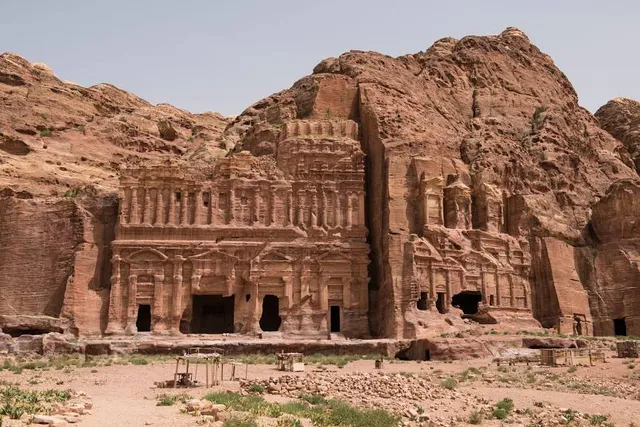
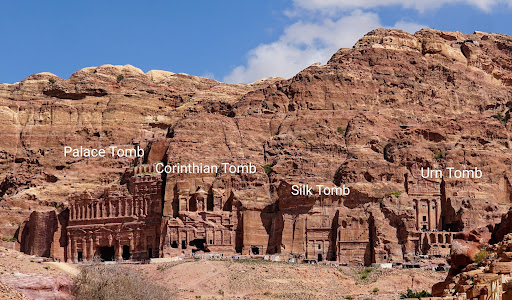
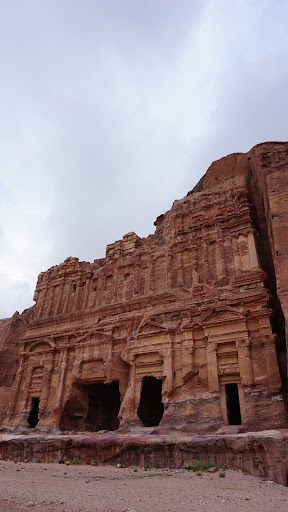
Overlooking the center of Petra rise majestically the Royal Tombs, a series of large mausoleums with impressive facades hewn from the slope of the Jabal al-Khubtha rock massif. The Royal Tombs of Petra are more than 2,300 years old and were carved from rose-red sandstone by the ancient Nabateans. There are many tombs within, but four of them are considered the main tombs, as follows: 1= Palace Tomb, 2 = Corinthian Tomb, 3 = Silk Tomb, 4= Urn Tomb (from left to right, coming from Ad Deir).
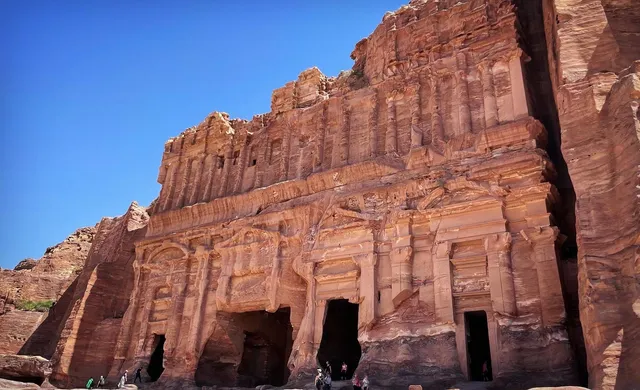
Palace Tomb The facade of the Palace Tomb is considered the grandest and most beautiful of the Royal Tombs. The four gates or portals lead to four separate burial chambers. From the rich design, it is believed that it was built in resemblance to a palace, particularly Emperor Nero's golden palace. An outstanding feature of the palace Tomb is that part of the upper levels built and not carved out of the rock.
Corinthian Tomb The Corinthian Tomb, is the fourth of the main tombs in the royal group. The general design of the tomb, especially it's columns was modelled in a similar fashion to the Treasury's design. However, its smaller size and combination of different styles tell the difference. The construction of the tomb is estimated to be around 40-70 CE, when Nabataean King, Malichus reigned. Unfortunately, the Corinthian tomb is one of the most eroded façades in Petra
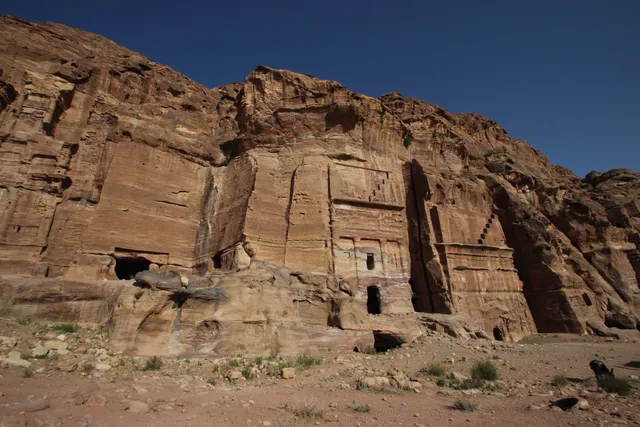
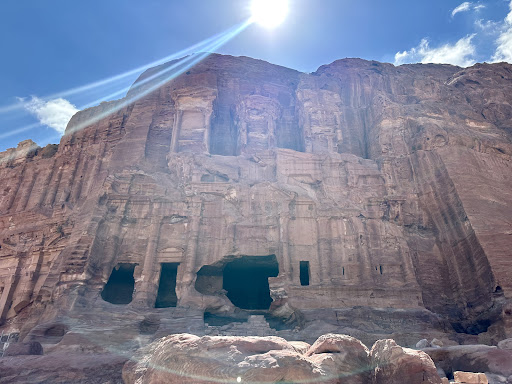
Silk Tomb This tomb is called 'Silk' because of the colored layers of rock that cover the tomb like silk drapery. The Silk Tomb is beautifully colored with rocks that have natural pinkish, whitish and yellowish hues. The facade surface of the Silk Tomb has been damaged over time by weathering and other environmental factors but the colorful draping rocks are still stunning to see. It is located next to the Urn Tomb.
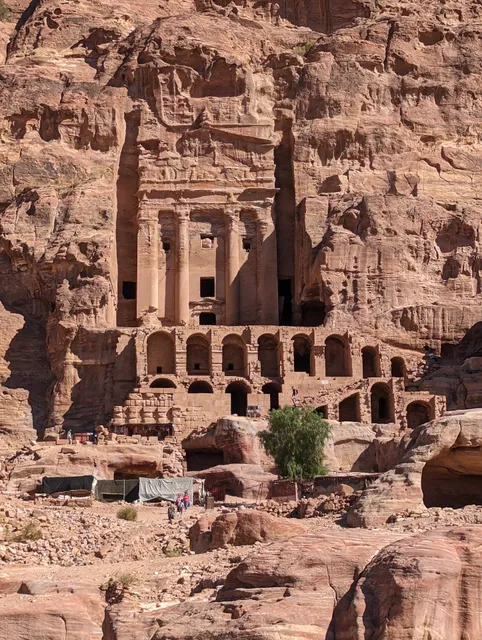
Urn Tomb It is the biggest of the so-called Royal Tombs. This tomb was said to belong to King Malchus I, the Nabataean monarch who...
Read moreEverything is fascinating and beautiful in Petra and the Royal tombs should not be missed!
These are a series of monumental rock-cut tombs that showcase some of the finest architecture and craftsmanship of the ancient Nabatean civilization. Located along the eastern cliffs, these tombs are believed to have been built for Nabatean royalty and high-ranking individuals, with elaborate facades that blend Nabatean, Hellenistic, and Roman design elements.
The most famous of these tombs include:
The Urn Tomb: Known for its grand entrance and large interior hall, it was later converted into a Byzantine church. The Silk Tomb: Named for its striking, colorful swirls in the sandstone, which create a vibrant natural pattern. The Corinthian Tomb: Influenced by the Treasury’s design, it has elaborate columns and a richly decorated facade. The Palace Tomb: Resembling a Roman palace, this multi-level tomb has numerous chambers and was likely used for multiple burials.
These tombs reflect the wealth and artistry of Petra’s elite, with each facade uniquely designed and positioned to catch the light beautifully at different times of day. They remain a highlight of any visit to Petra, offering insight into Nabatean burial practices and...
Read moreThe Royal Tombs are four prominent grand tombs carved into the western side of Khubtha Mountain, overlooking the city center. Their elaborate architecture and prominent locations indicate that they held families from Petra's upper social strata, or royalty. From right to left, they are: The Urn Tomb, Silk Tomb, Corinthian Tomb, and Palace Tomb. Each tomb has its own unique architectural style and historical significance. A must visit place in Petra.
The Urn Tomb derives its name from the funerary urn located on the pediment at the top of the façade.
Set back in a deep recess in the Khubtha slope, the Silk Tomb is the smallest of the four and has drawn acclaim for the brilliant banded coloring of its sandstone façade.
Petra's Corinthian Tomb, named after Greek Corinthian-style capitals, is patterned after the Khazna.
The Palace Tomb, the largest and most elaborate, is believed to reflect a Hellenistic or Roman-period palace facade. The Nabataeans were deeply concerned about their dead. They buried them in monumental tombs located in prominent positions around the city, where they dominate their surroundings and command...
Read more