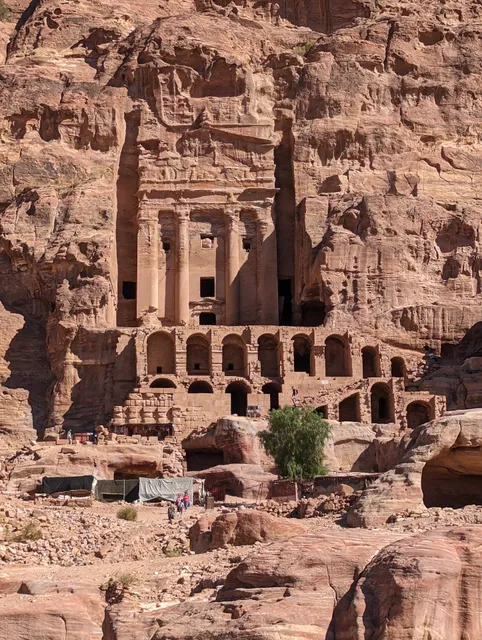
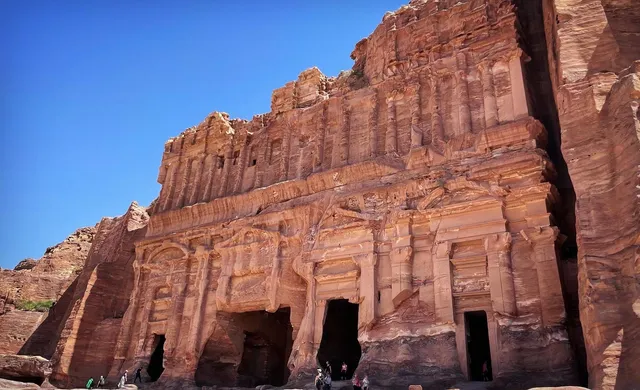
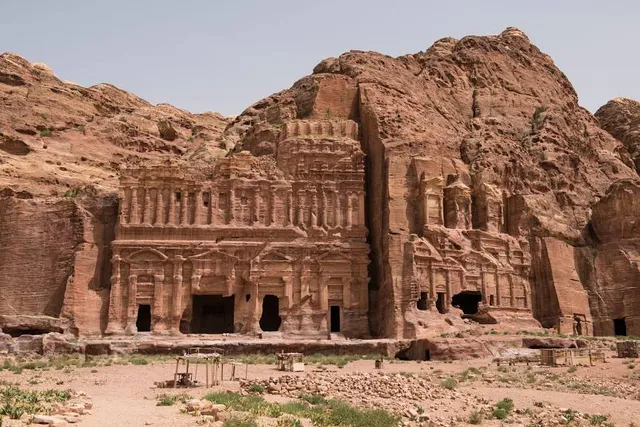
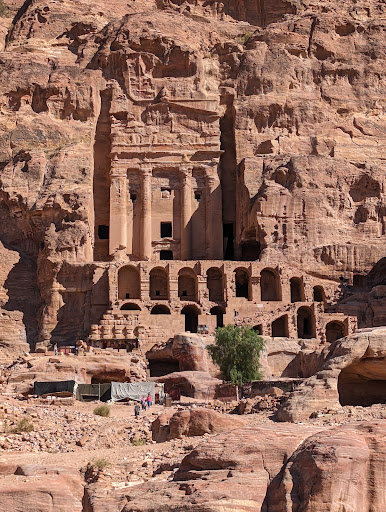
The tomb of the jar or the court is an archaeological building dating back to the Nabataean civilization in Jordan, specifically the first half of the first century AD. It is located in the archaeological reserve in the city of Petra in the south of the country, on the opposite side of the Nabataean Amphitheater.
The building was originally one of the city's royal tombs that were dug into the rocks. It was used as a mausoleum until it was converted into a church in the Byzantine period. It was also called by this name for the decorations of the jar that adorn it.
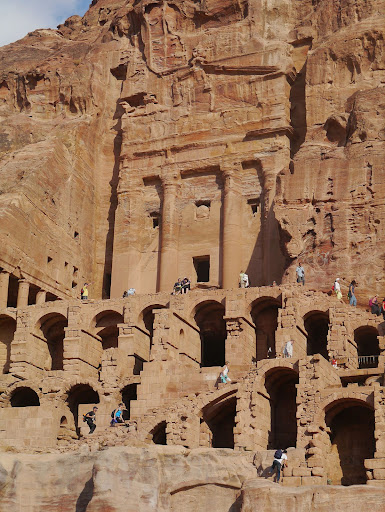
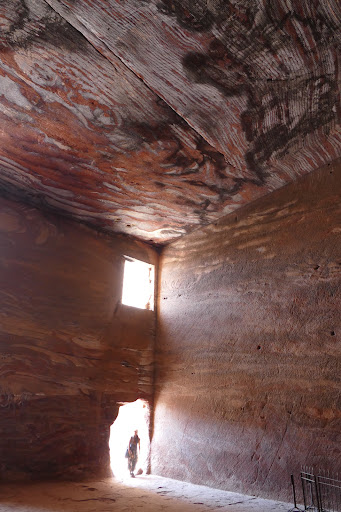
The building was designed as a royal burial for the Nabatean king Malik II (died in 70 AD), whose remains of the statue in the central apse of the facade are believed to have belonged to him.[3] The building consists of a group of important facades, the first of which is the "Tomb of the Urn". The facade was about 16 meters wide and 26 meters high. It also consists of two floors of walls that support arches below the level of the burial hall, and it is combined with burial chambers, part of which and the other built. There is a staircase going up to the burial yard at the top. The tomb consists of a square hall with a length of about 19 meters. The graves were in the back of the burial ground.
In 447 AD, the building was turned into a church by a number of Byzantine monks. Thus, it will be the first church in Petra.
The area of the front yard was increased later, by building a group of vaults and arches, to facilitate access to this church. The road leading to it was also diverted to be from the bottom of the adjacent mountain, after the process of reaching it was from the top. It is worth noting that the plan of this church is a basilica, where the carving of the internal burial chambers was changed to be in the form of an apse. In the middle of the central apse there is an indistinct cross shape. There are also historical texts that mention that some followers of Christianity were deported to Petra as punishment from the church.
In the front of the building there is a Greek-Byzantine inscription indicating that it was originally...
Read moreضريح الجرّة أو المحكمة مبنى أثري يعود تاريخه إلى حضارة الأنباطفي الأردن، وتحديدًا النصف الأول من القرن الأول الميلادي. يقع في المحمية الأثرية بمدينة البتراء في جنوب البلاد، على الجهة المقابلةللمدرج النبطي.
كان المبنى بالأصل أحد المقابر الملكية الموجودة في المدينة التي تم حفرها في الصخور. وقد ظل يُستخدم كضريح إلى أن تحول إلى كنيسة في الفترة البيزنطية. كما سُمي بهذا الاسم لزخارف الجرة التي تزيّنه.
تم تصميم المبنى ليكون مدفنًا ملكيًا للملك النبطي مالك الثاني (تُوفي في عام 70 م)، والذي يُعتقد بأن بقايا التمثال الموجود في الحنية الوسطى من الواجهة كانت تعود له.[3] ويتكون المبنى من مجموعة من الواجهات المهمة، وأولها "قبر الجرة". وقد بلغ عرض الواجهة حوالي 16 مترًا ، وبارتفاع 26 مترًا. كما يتكون من طابقين من الجدران التي تدعم أقواسًا تحت مستوى صالة المدفن، وهي مدمجة مع حجرات دُفن جزء منها والآخر مبني. ويوجد درج يصعد إلى ساحة المدفن في الأعلى. ويتكون المدفن من صالة مربعة الشكل بطول حوالي 19 مترًا. وكانت القبور في الجزء الخلفي للمدفن.
تحوّل المبنى في عام 447 م إلى كنيسة على يد عدد من الرهبان البيزنطيين. وبذلك، يكون أول كنيسة في البترا.
لقد تمت زيادة مساحة الساحة الأمامية لاحقًا، وذلك ببناء مجموعة من الأقبية والأقواس، لتسهيل عملية الوصول إلى هذه الكنيسة. كما تم تحويل الطريق المؤدي لها ليكون من اسفل الجبل المحاذي بعد أن كانت عملية الوصول إليه تتم من أعلى. يجدر بالذكر إلى أن مخطط هذه الكنيسة هو بازليكي، حيث تم تغيير شكل نحت غرف الدفن الداخلية لتكون بشكل حنى. كما يوجد في وسط الحنية الوسطى شكل صليب غير واضح المعالم. هناك أيضًا نصوص تاريخية تذكر أنه كان يرحل إلى البترا بعض أتباع المسيحية كعقاب لهم من الكنيسة.
يوجد في مقدمة المبنى نقش يوناني بيزنطي يشير بأنه كان في...
Read moreA pompás Urnasír kiemelkedik a mauzóleumok sorából. Legnagyobb különlegessége az, hogy kétszintes. A boltíves alépítményen egy nagy oszlopos udvar áll, itt kezdődik maga a mauzóleum. A teraszról látványos kilátás nyílik a romvárosra. A 26m x 16,49m-es homlokzatot középen két féloszlop, a sarkokon pedig két pilaszter „tartja” a felette lévő oromzatot. A sír fekvése az elemeknek kitett, így az erősen megkopott, de ezért még kivehetőek a négy alakot ábrázoló frízek. Valószínűleg nabateus istenségeket ábrázolnak. Az oromzatot egy fedeles urna koronázza, amely a sírkamra nevét adta. Az építmény másik jellegzetessége az oszlopközökben, magasan lévő 3 temetkezési fülke (loculi). A középső nyílásában még ma is látható egy dombormű, amelyen egy tunikába öltözött - feltehetően nabateus - előkelőség - mellszobra látható. Feliratok hiányában nem tudjuk kit ábrázol, de a tudósok – az építést az i.sz. 1. század második felére datálva - úgy vélik, hogy II. Malichus (uralkodott i.sz. 40-70) király mellszobra. Az urnasír belső kamrája majdnem négyzet alakú,18,95 x 17,15 méteres. A hátsó fal bal szélső részén egy vörösre festett görög feliratot találtak, amely szerint Iaszón püspök Kr. u. 446-ban bizánci templommá alakíttatta át a komplexumot. A hátsó fal három egykori sírkamráját ekkor lapos boltozatú apszissá alakították át. A templom déli oldalán egy gödörsír található, a jobb oldali apszisban pedig egy másik. Megmaradt egy márványtömb, amelynek a sírfeliratából tudjuk, amelyet a 447-ben elhunyt Dionysiusnak, Iaszón püspök...
Read more