Winged Lions Temple
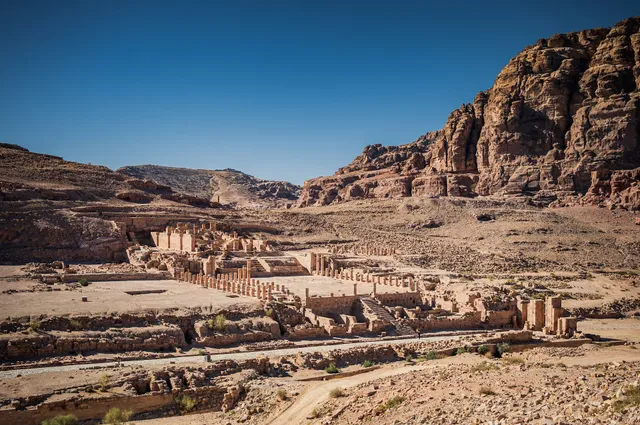
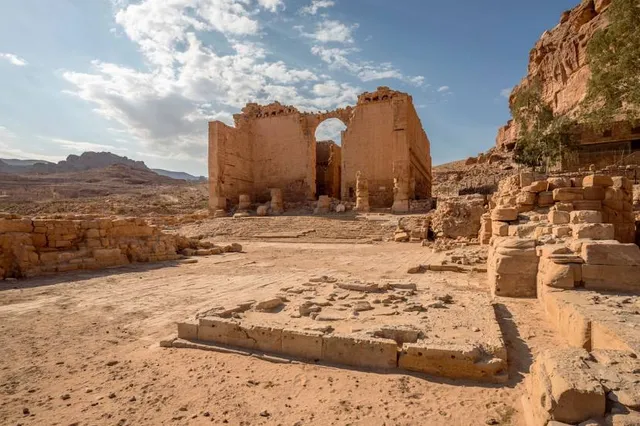
The temple was revealed by an electronic sounding in 1973, and since 1974 excavation at the Temple of the winged lions became a major part of the activities of the American Expedition to Petra, directed by Dr Philip Hammond from Utah University.
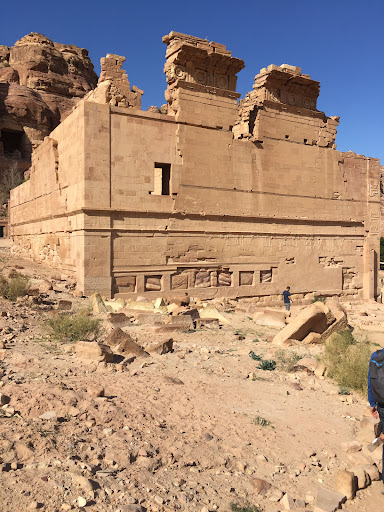
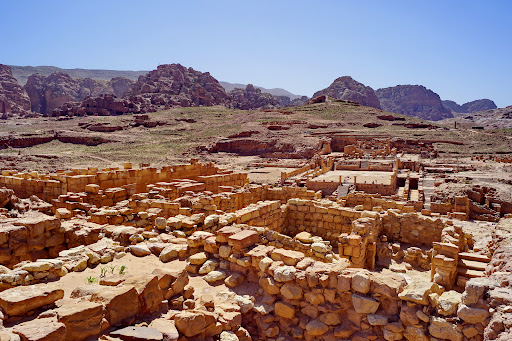
The temple has a porch in antis measuring 9.50m in length, from which a wide doorway leads into a square calla (measuring 17.40x17.40) with engaged columns and two rows of free standing columns.
Opposite the doorway there is a raised altar platform (1.30m high) with steps built into either end of the front, which were closed by iron gates. The discovery of lead ties suggests that the platform may have been curtained. Processions were probably performed around the altar- platform where the idols were standing. One of them is decorated with a stylized human face and bears the Nabataean inscription "the goddess of Hayyan Bin Nybat".
In the rear wall of the platform there was a niche for offerings to the temple. A diorite statuette of Osiris, dated to the sixth century Bc, was discovered at the temple and was probably stored as a sacred relic. Other figurines and a statuette representing mourning Isis suggest that the temple was dedicated to Isis and Osiris, identified with Dusares (Dhu- shara) and al- 'Uzza- Aphrodite.
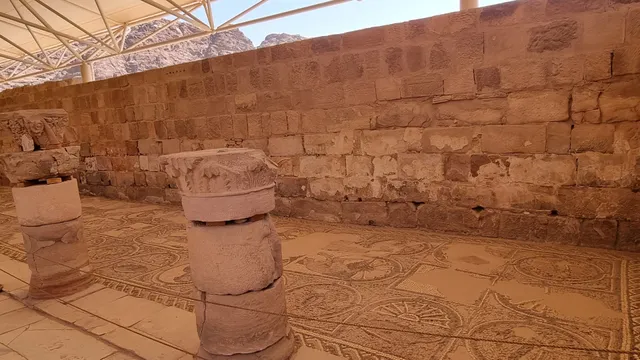
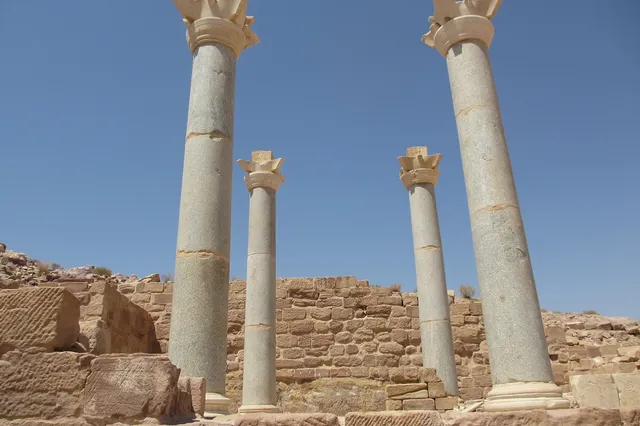
The column bases consist of ring marble around the plain base. Brown marble was used on the platform columns and white marble on the others. Some of the elaborate capitals have representations of winged lions at the corners, hence the name of the temple. It is thought that these were the capitals of the platform columns.
The main floor of the temple was paved with white and brown banded marble, while the platform was paved with white and black marble. The interior was lavishly decorated with marble, plaster and stucco. Plaster affixes, representing human heads, tragic masks and floral designs were found. The temple most probably had a curved ceiling, and the roof was tiled.
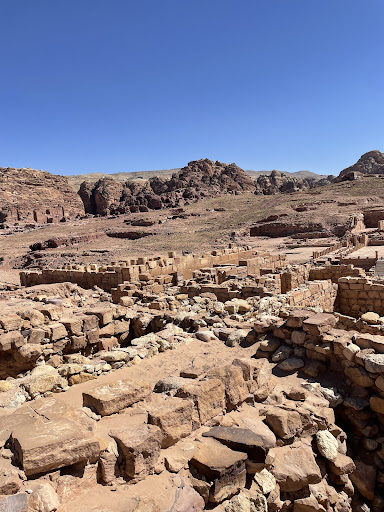
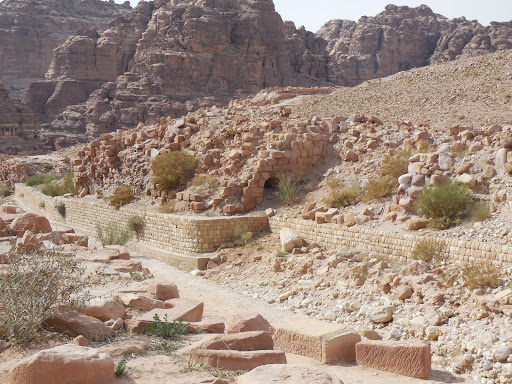
The temple is approached for 85m the wadi by a monumental entry- way with a double colonnade. This entry- way crossed the wadi by a bridge. At the east side of the temple, there is a paved corridor with a drain canal under the floor. A reception area was found at the southwest corner of the temple, and there are complexes of structures tied in with the walls. These were mostly domestic but also included a painter's, a metalworker's and an altar maker's workshops, an oil manufacturing installation and a marble stairway to the west, as well as a marble worker's workshop in which fragments of a marble inscription dated to the 37th year of Aretas IV (AD 26/27) was found. The excavator proposed that this was a dedicatory inscription for the temple, therefore dating its construction, but it is probable that the temple was standing before this date- at the end of the first century BC. The final destruction of the temple and surrounding complexes was brought about by the AD...
Read moreΟ ναός αποκαλύφθηκε με ηλεκτρονικό ήχο το 1973 και από το 1974 η ανασκαφή στο ναό των φτερωτών λιονταριών έγινε ένα σημαντικό μέρος των δραστηριοτήτων της αμερικανικής αποστολής στην Πέτρα . Ο ναός έχει μια βεράντα μήκους 9,50 μ., από την οποία μια φαρδιά θύρα οδηγεί σε ένα τετράγωνο κάλλα (που μετρά 17,40x17,40) με εμπλεκόμενες στήλες και δύο σειρές ελεύθερων κολώνων. Απέναντι από την πόρτα υπάρχει μια ανυψωμένη πλατφόρμα βωμού (ύψους 1,30 μ.) με σκαλοπάτια ενσωματωμένα σε κάθε άκρο του μετώπου, τα οποία κλείστηκαν από σιδερένιες πύλες . Οι πομπές έγιναν πιθανώς γύρω από την πλατφόρμα των βωμών όπου στέκουν τα είδωλα. Ένας από αυτούς είναι διακοσμημένος με στυλιζαρισμένο ανθρώπινο πρόσωπο και φέρει την επιγραφή Nabataean "η θεά του Hayyan Bin Nybat". Στο οπίσθιο τοίχωμα της πλατφόρμας υπήρχε μια θέση για προσφορές στον ναό. Ένα αγαλματίδιο Όσιρι, που χρονολογείται τον 6ο αιώνα π.Χ., ανακαλύφθηκε στο ναό και πιθανώς αποθηκεύτηκε ως ιερό λείψανο. Άλλα ειδώλια και ένα αγαλματίδιο που αντιπροσωπεύει το πένθος της Isis υποδηλώνουν ότι ο ναός ήταν αφιερωμένος στην Ίσιδα και τον Όσιρι Οι βάσεις των στηλών αποτελούνται από μαρμάρινο δακτύλιο γύρω από την απλή βάση. Μάρμαρο καφέ χρησιμοποιείται στις στήλες πλατφόρμας και λευκό μάρμαρο στις άλλες. Ορισμένα από τα περίτεχνα κιονόκρανα έχουν παραστάσεις φτερωτών λιονταριών στις γωνίες, εξ ου και το όνομα του ναού. Ο κύριος όροφος του ναού ήταν στρωμένος με λευκές και καφέ λωρίδες, ενώ η πλατφόρμα ήταν πλακόστρωτη με λευκό και μαύρο μάρμαρο. Το εσωτερικό ήταν πλούσια διακοσμημένο με μάρμαρο, σοβά και γυψομάρμαρο. Τοποθετήθηκαν επιχρίσματα, που αντιπροσωπεύουν ανθρώπινα κεφάλια, τραγικές μάσκες και floral σχέδια. Ο ναός πιθανότατα είχε καμπύλη οροφή και η οροφή ήταν πλακιδωτή. Ο ναός προσεγγίζεται για 85 μέτρα με μια μνημειώδη είσοδο με μια διπλή κιονοστοιχία. Αυτή η είσοδος διέρχεται από μια γέφυρα. Στην ανατολική πλευρά του ναού, υπάρχει ένας πλακόστρωτος διάδρομος με κανάλι αποχέτευσης κάτω από το πάτωμα. Ένας χώρος υποδοχής βρέθηκε στη νοτιοδυτική γωνία του ναού και υπάρχουν συγκροτήματα δομών που συνδέονται με τους τοίχους. Αυτά ήταν ως επί το πλείστων οικιακά, αλλά περιλάμβαναν επίσης εργαστήρια ζωγράφου, εργαστηρίου μεταλλοτεχνίας και βωμοδόχου, εγκατάσταση κατασκευής πετρελαίου και μαρμάρινη σκάλα προς τα δυτικά, καθώς και εργαστήριο μαρμαρογλυφείου στο οποίο τμήματα μαρμάρινων επιγραφών χρονολογούνται στο (26/27 μ.Χ.) . Η τελική καταστροφή του ναού και των γύρω συγκροτημάτων προκλήθηκε από τον σεισμό ...
Read moreسمي معبد الأسود المجنحة بهذا الاسم نسبة الى تاجيات الأعمدة الموجودة داخل المعبد، والتي كانت عبارة عن أسود لها أجنحة. ووفقا للمتخصصة في علم الآثار، الدكتورة خيرية عمرو، فإنّه من المرجح أن يكون هذا المعبد للإله المصري “أيزيس” (آلهة القمر والأمومة)، أو الإله “عطر غاطس” السوري، فيما كانت مصادر أخرى قد أشارت الى أن المعبد قد يكون مكرسا للإلهين ايزيس زوجة “اوزوريس” (وهو صاحب الأسطورة الأكثر تأثيرا من بين الأساطير الفرعونية) الذين كانا يقارنان بآلهة الأنباط الرئيسية “الشراة”، و”العزة”. اكتشف المعبد العام 1974 من بعثة جامعة يوتا الأميركية بإدارة الدكتور فيليب هموند، وهو يتكون من شرفة أمامية تتقدمها أعمدة وقاعة و”مذبح”. ويوجد خلف المنصة خلوة كانت تستغل لحفظ الهيكل حيث وجد تمثال للآلهة المصرية اوزوريس المصنوعة من حجر الديوريت الاسود، كما وجد في المكان عند اكتشافه تمثالان صغيرين للآلهة “ايزيس” زوجة “اوزوريس” ما يبعث على الاعتقاد بأن المعبد كان مكرسا للإلهين ايزيس واوزوريس. وكانت قواعد المعبد مصنوعة من حلقات رخامية تحيط بالقاعدة الحجرية؛ حيث استخدم الرخام البني لأعمدة المنصة، بينما استخدم الرخام الأبيض في بناء...
Read more