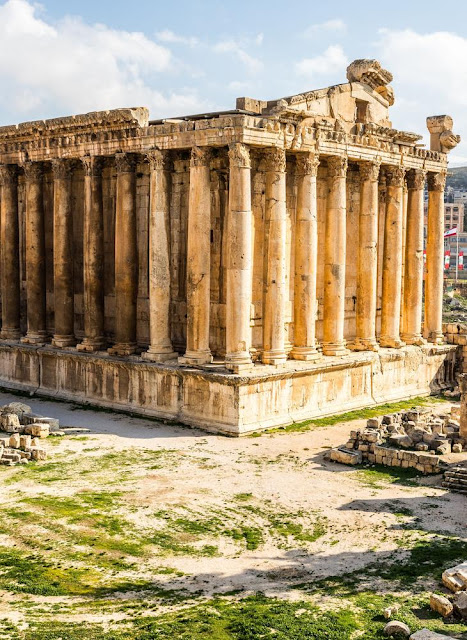
HTML SitemapExplore
logo
Find Things to DoFind The Best Restaurants

Baalbek Roman Ruins — Attraction in Baalbek

Name
Baalbek Roman Ruins
Description
Nearby attractions
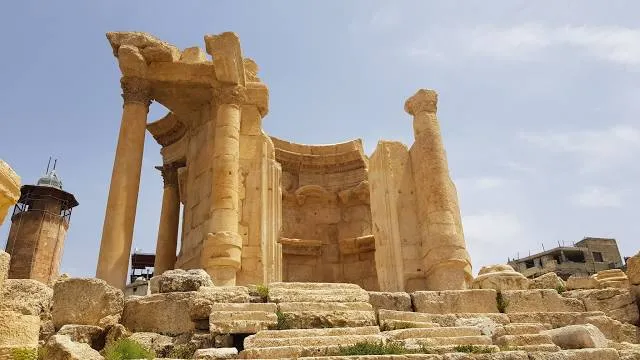
Baalbek Temple
2644+W8R, Baalbek, Lebanon
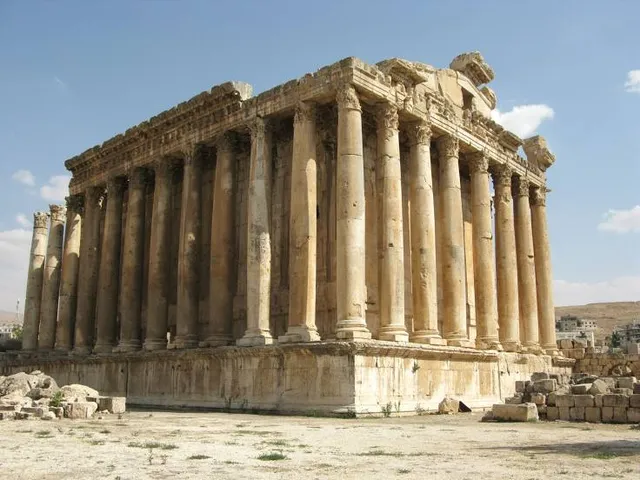
Temple of Bacchus
2643+HHX, Baalbek, Lebanon
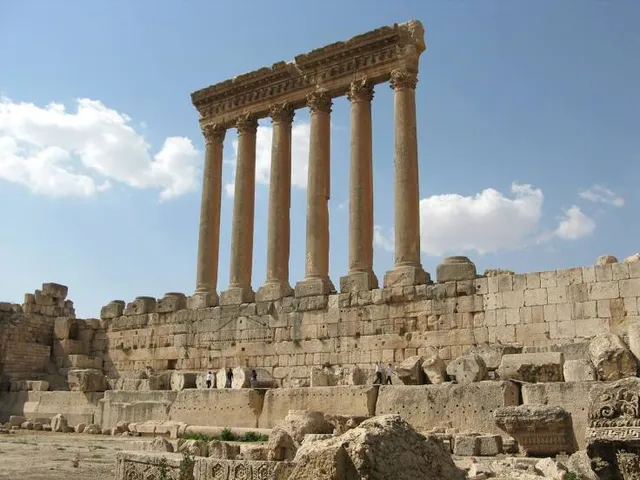
Temple of Jupiter
2643+MGG, Baalbek, Lebanon
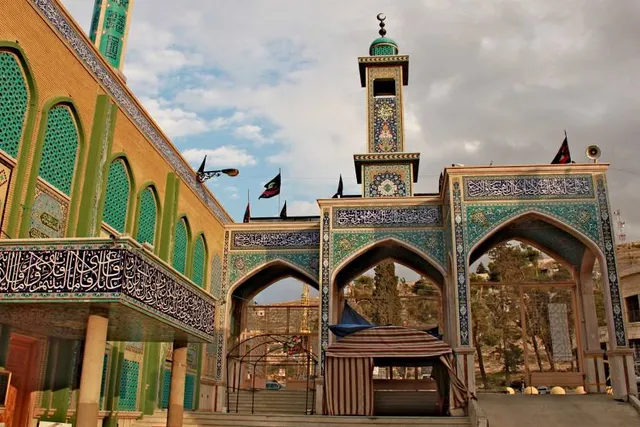
Sayyida Khawla Shrine
2622+JM6, Baalbek, Lebanon
Nearby restaurants
Nearby hotels
Palmyra Hotel Baalbek
2633+CM9, Baalbek, Lebanon
Related posts
Keywords
Baalbek Roman Ruins tourism.Baalbek Roman Ruins hotels.Baalbek Roman Ruins bed and breakfast. flights to Baalbek Roman Ruins.Baalbek Roman Ruins attractions.Baalbek Roman Ruins restaurants.Baalbek Roman Ruins travel.Baalbek Roman Ruins travel guide.Baalbek Roman Ruins travel blog.Baalbek Roman Ruins pictures.Baalbek Roman Ruins photos.Baalbek Roman Ruins travel tips.Baalbek Roman Ruins maps.Baalbek Roman Ruins things to do.
Baalbek Roman Ruins things to do, attractions, restaurants, events info and trip planning
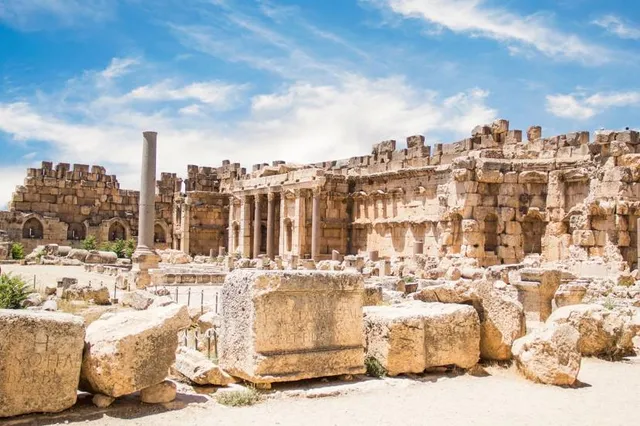
Baalbek Roman Ruins
LebanonBaalbek-Hermel GovernorateBaalbekBaalbek Roman Ruins

Basic Info

Baalbek Roman Ruins

2644+PCJ, Baalbek, Lebanon
4.8(2.2K)
Closed
Save
spot

Ratings & Description

Info

Cultural
Outdoor
Family friendly
attractions: Baalbek Temple, Temple of Bacchus, Temple of Jupiter, Sayyida Khawla Shrine, restaurants:
logoLearn more insights from Wanderboat AI.
Phone
+961 8 370 645
Open hoursSee all hours
Tue9 AM - 6 PMClosed

Plan your stay

hotel
Pet-friendly Hotels in Baalbek
Find a cozy hotel nearby and make it a full experience.

hotel
Affordable Hotels in Baalbek
Find a cozy hotel nearby and make it a full experience.

hotel
The Coolest Hotels You Haven't Heard Of (Yet)
Find a cozy hotel nearby and make it a full experience.

hotel
Trending Stays Worth the Hype in Baalbek
Find a cozy hotel nearby and make it a full experience.

Reviews

Nearby attractions of Baalbek Roman Ruins

Baalbek Temple

Temple of Bacchus

Temple of Jupiter

Sayyida Khawla Shrine
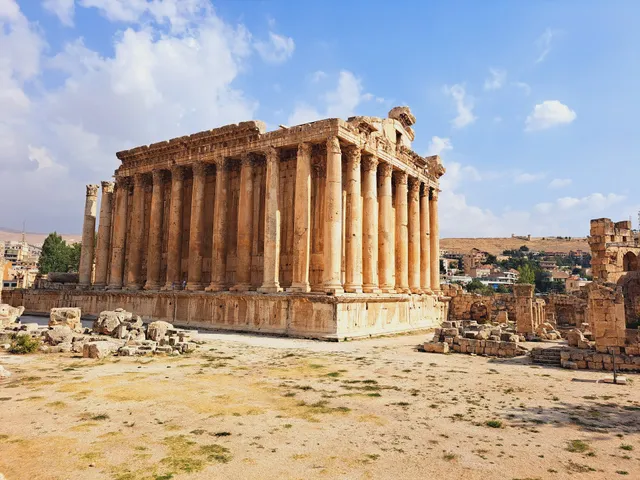
Baalbek Temple

Baalbek Temple

4.7

(643)

Open 24 hours
Click for details
Temple of Bacchus

Temple of Bacchus

4.8

(322)

Open 24 hours
Click for details
Temple of Jupiter

Temple of Jupiter

4.8

(126)

Open 24 hours
Click for details
Sayyida Khawla Shrine

Sayyida Khawla Shrine

4.7

(545)

Open 24 hours
Click for details
Get the Appoverlay
Get the AppOne tap to find yournext favorite spots!
Wanderboat LogoWanderboat

Your everyday Al companion for getaway ideas

CompanyAbout Us
InformationAI Trip PlannerSitemap
SocialXInstagramTiktokLinkedin
LegalTerms of ServicePrivacy Policy

Get the app

© 2025 Wanderboat. All rights reserved.
logo

Reviews of Baalbek Roman Ruins

4.8
(2,179)
avatar
5.0
2y

Well worth the trip from Beiruit. The temple of Jupitar is large on a scale that is incomprehensible until you see it. It is truly impressive, even if you have seen many Roman ruins in your travels before. The temple complex is well-persevered and it is a truly enjoyable and peaceful day walking through the ruins and taking in the complex. It earns its UNESCO status.

Getting to Baalbek as a tourist without a car (and no Arabic) was a bit of an adventure. To get from where the minibus leaves in Beirut, I had to pay a kid with a motorcycle off the street to take me to the minibus stop as no taxis would take me there without trying to fleece me. On the minibus I had to rely on the kindness of strangers to let me know when my stop would be to transfer to the other minibus to go to Baalbek. When I was getting off, I gave the driver money expecting change but of course he just pocketed it. On the next minibus, when the driver heard me speaking English, he called me to the front and told me the ride would be $25 USD and when I scoffed he asked "how much is a taxi from the airport in New York, what is $25, nothing?" This ridiculous logic aside (it was a bus, not a taxi, in terrible condition, and in Lebanon, not NY), I ended up paying him about $1.50 USD which was still a dollar more than everyone else paid. Oh Lebanon.

On a serious note, to go from Beirut to Baalbek you will be passing through several military checkpoints. I counted around 6 roadblocks, but only 3 were manned. Armed men came on and said things in Arabic and checked people's IDs. I do not know which groups each of these men represent but they did not care about me as a foreigner (American) and just waved me off when they saw my passport without even checking it. Because of Lebanon's complicated history, they obviously cared more about who the Lebanese people were on the bus. No one was taken off the bus though and the situations were not that tense despite their guns. The city of Baalbek is heavily shia muslim so you will see Hezbollah flags all...

   Read more
avatar
4.0
3y

A few miles from the swamp from which the Litani (the classical Leontes) and the Asi (the upper Orontes) flow, Baalbek may be the same as the manbaa al-nahrayn ("Source of the Two Rivers"), the abode of El in the Ugaritic Baal Cycle8] discovered in the 1920s and a separate serpent incantation.[9

Baalbek was called Heliopolis during the Roman Empire, a latinisation of the Greek Hēlioúpolis (Ἡλιούπολις) used during the Hellenistic Period, 11] meaning "Sun City"[12] in reference to the solar cult there. The name is attested under the Seleucids and Ptolemies.[13] However, Ammianus Marcellinus notes that earlier "Assyrian" names of Levantine towns continued to be used alongside the official Greek ones imposed by the Diadochi, who were successors of Alexander the Great.[14] In Greek religion, Helios was both the sun in the sky and its personification as a god. The local Semitic god Baʿal Haddu was more often equated with Zeus or Jupiter or simply called the "Great God of Heliopolis",[15 but the name may refer to the Egyptians' association of Baʿal with their great god Ra.13 It was sometimes described as Heliopolis in Syria or Coelesyria (Latin: Heliopolis Syriaca or Syriae) to distinguish it from its namesake in Egypt. In Catholicism, its titular see is distinguished as Heliopolis in Phoenicia, from its former Roman province Phoenice. The importance of the solar cult is also attested in the name Biḳāʿ al-ʿAzīz borne by the plateau surrounding Baalbek, as it references an earlier solar deity and not later men, named Aziz. In Greek and Roman antiquity, it was known as Heliopolis. It still possesses some of the best-preserved Roman ruins in Lebanon, including one of the largest temples of the empire. The gods that were worshipped there (Jupiter, Venus, and Bacchus) were equivalents of the Canaanite deities Hadad, Atargatis. Local influences are seen in the planning and layout of the temples, as they vary from the classic...

   Read more
avatar
5.0
2y

Baalbek Ruins - A Glimpse into Lebanon's Rich History

If you're interested in history and ancient civilizations, then a visit to Baalbek Ruins in Lebanon should be on your bucket list. This UNESCO World Heritage Site is one of Lebanon's most significant historical sites and an excellent testament to the country's rich cultural past.

Located in the Beqaa Valley, the Baalbek Ruins are a testament to a civilization that dates back over 5,000 years. The ruins consist of a colossal temple complex dedicated to the gods of the Heliopolitan Triad: Jupiter, Venus, and Bacchus. The site is impressive, with large blocks of stone, intricate carvings, and grand columns that are still standing tall today.

Visiting Baalbek Ruins is a truly awe-inspiring experience. As you walk around, you can feel the weight of history that surrounds you. From the towering columns of the Temple of Bacchus to the intricately carved walls of the Temple of Jupiter, every corner of this site has something fascinating to offer.

In addition to its historical significance, the Baalbek Ruins are also a great place for photography. With its grand architecture and dramatic lighting, the ruins provide the perfect backdrop for capturing stunning images.

Visiting during the day can be quite hot, and it is suggested to come prepared with water and sunscreen. The site also offers guided tours that can help you get a better understanding of the history and significance of the ruins.

Overall, the Baalbek Ruins is a must-visit destination for anyone interested in history and ancient civilizations. Its grand temples, intricate carvings, and towering columns offer an awe-inspiring glimpse into Lebanon's rich cultural past. A visit here will leave you with a newfound appreciation for the country's history and the achievements of ancient...

   Read more
Page 1 of 7
Previous
Next

Posts

Michael MirandaMichael Miranda
Well worth the trip from Beiruit. The temple of Jupitar is large on a scale that is incomprehensible until you see it. It is truly impressive, even if you have seen many Roman ruins in your travels before. The temple complex is well-persevered and it is a truly enjoyable and peaceful day walking through the ruins and taking in the complex. It earns its UNESCO status. Getting to Baalbek as a tourist without a car (and no Arabic) was a bit of an adventure. To get from where the minibus leaves in Beirut, I had to pay a kid with a motorcycle off the street to take me to the minibus stop as no taxis would take me there without trying to fleece me. On the minibus I had to rely on the kindness of strangers to let me know when my stop would be to transfer to the other minibus to go to Baalbek. When I was getting off, I gave the driver money expecting change but of course he just pocketed it. On the next minibus, when the driver heard me speaking English, he called me to the front and told me the ride would be $25 USD and when I scoffed he asked "how much is a taxi from the airport in New York, what is $25, nothing?" This ridiculous logic aside (it was a bus, not a taxi, in terrible condition, and in Lebanon, not NY), I ended up paying him about $1.50 USD which was still a dollar more than everyone else paid. Oh Lebanon. On a serious note, to go from Beirut to Baalbek you will be passing through several military checkpoints. I counted around 6 roadblocks, but only 3 were manned. Armed men came on and said things in Arabic and checked people's IDs. I do not know which groups each of these men represent but they did not care about me as a foreigner (American) and just waved me off when they saw my passport without even checking it. Because of Lebanon's complicated history, they obviously cared more about who the Lebanese people were on the bus. No one was taken off the bus though and the situations were not that tense despite their guns. The city of Baalbek is heavily shia muslim so you will see Hezbollah flags all over the place.
P MoosavinezhadP Moosavinezhad
A few miles from the swamp from which the Litani (the classical Leontes) and the Asi (the upper Orontes) flow, Baalbek may be the same as the manbaa al-nahrayn ("Source of the Two Rivers"), the abode of El in the Ugaritic Baal Cycle[8] discovered in the 1920s and a separate serpent incantation.[9][10] Baalbek was called Heliopolis during the Roman Empire, a latinisation of the Greek Hēlioúpolis (Ἡλιούπολις) used during the Hellenistic Period, [11] meaning "Sun City"[12] in reference to the solar cult there. The name is attested under the Seleucids and Ptolemies.[13] However, Ammianus Marcellinus notes that earlier "Assyrian" names of Levantine towns continued to be used alongside the official Greek ones imposed by the Diadochi, who were successors of Alexander the Great.[14] In Greek religion, Helios was both the sun in the sky and its personification as a god. The local Semitic god Baʿal Haddu was more often equated with Zeus or Jupiter or simply called the "Great God of Heliopolis",[15][b] but the name may refer to the Egyptians' association of Baʿal with their great god Ra.[13][c] It was sometimes described as Heliopolis in Syria or Coelesyria (Latin: Heliopolis Syriaca or Syriae) to distinguish it from its namesake in Egypt. In Catholicism, its titular see is distinguished as Heliopolis in Phoenicia, from its former Roman province Phoenice. The importance of the solar cult is also attested in the name Biḳāʿ al-ʿAzīz borne by the plateau surrounding Baalbek, as it references an earlier solar deity and not later men, named Aziz. In Greek and Roman antiquity, it was known as Heliopolis. It still possesses some of the best-preserved Roman ruins in Lebanon, including one of the largest temples of the empire. The gods that were worshipped there (Jupiter, Venus, and Bacchus) were equivalents of the Canaanite deities Hadad, Atargatis. Local influences are seen in the planning and layout of the temples, as they vary from the classic Roman design
Leticia ChobokLeticia Chobok
Baalbek Ruins - A Glimpse into Lebanon's Rich History If you're interested in history and ancient civilizations, then a visit to Baalbek Ruins in Lebanon should be on your bucket list. This UNESCO World Heritage Site is one of Lebanon's most significant historical sites and an excellent testament to the country's rich cultural past. Located in the Beqaa Valley, the Baalbek Ruins are a testament to a civilization that dates back over 5,000 years. The ruins consist of a colossal temple complex dedicated to the gods of the Heliopolitan Triad: Jupiter, Venus, and Bacchus. The site is impressive, with large blocks of stone, intricate carvings, and grand columns that are still standing tall today. Visiting Baalbek Ruins is a truly awe-inspiring experience. As you walk around, you can feel the weight of history that surrounds you. From the towering columns of the Temple of Bacchus to the intricately carved walls of the Temple of Jupiter, every corner of this site has something fascinating to offer. In addition to its historical significance, the Baalbek Ruins are also a great place for photography. With its grand architecture and dramatic lighting, the ruins provide the perfect backdrop for capturing stunning images. Visiting during the day can be quite hot, and it is suggested to come prepared with water and sunscreen. The site also offers guided tours that can help you get a better understanding of the history and significance of the ruins. Overall, the Baalbek Ruins is a must-visit destination for anyone interested in history and ancient civilizations. Its grand temples, intricate carvings, and towering columns offer an awe-inspiring glimpse into Lebanon's rich cultural past. A visit here will leave you with a newfound appreciation for the country's history and the achievements of ancient civilizations.
See more posts
See more posts
hotel
Find your stay

Pet-friendly Hotels in Baalbek

Find a cozy hotel nearby and make it a full experience.

Well worth the trip from Beiruit. The temple of Jupitar is large on a scale that is incomprehensible until you see it. It is truly impressive, even if you have seen many Roman ruins in your travels before. The temple complex is well-persevered and it is a truly enjoyable and peaceful day walking through the ruins and taking in the complex. It earns its UNESCO status. Getting to Baalbek as a tourist without a car (and no Arabic) was a bit of an adventure. To get from where the minibus leaves in Beirut, I had to pay a kid with a motorcycle off the street to take me to the minibus stop as no taxis would take me there without trying to fleece me. On the minibus I had to rely on the kindness of strangers to let me know when my stop would be to transfer to the other minibus to go to Baalbek. When I was getting off, I gave the driver money expecting change but of course he just pocketed it. On the next minibus, when the driver heard me speaking English, he called me to the front and told me the ride would be $25 USD and when I scoffed he asked "how much is a taxi from the airport in New York, what is $25, nothing?" This ridiculous logic aside (it was a bus, not a taxi, in terrible condition, and in Lebanon, not NY), I ended up paying him about $1.50 USD which was still a dollar more than everyone else paid. Oh Lebanon. On a serious note, to go from Beirut to Baalbek you will be passing through several military checkpoints. I counted around 6 roadblocks, but only 3 were manned. Armed men came on and said things in Arabic and checked people's IDs. I do not know which groups each of these men represent but they did not care about me as a foreigner (American) and just waved me off when they saw my passport without even checking it. Because of Lebanon's complicated history, they obviously cared more about who the Lebanese people were on the bus. No one was taken off the bus though and the situations were not that tense despite their guns. The city of Baalbek is heavily shia muslim so you will see Hezbollah flags all over the place.
Michael Miranda

Michael Miranda

hotel
Find your stay

Affordable Hotels in Baalbek

Find a cozy hotel nearby and make it a full experience.

Get the Appoverlay
Get the AppOne tap to find yournext favorite spots!
A few miles from the swamp from which the Litani (the classical Leontes) and the Asi (the upper Orontes) flow, Baalbek may be the same as the manbaa al-nahrayn ("Source of the Two Rivers"), the abode of El in the Ugaritic Baal Cycle[8] discovered in the 1920s and a separate serpent incantation.[9][10] Baalbek was called Heliopolis during the Roman Empire, a latinisation of the Greek Hēlioúpolis (Ἡλιούπολις) used during the Hellenistic Period, [11] meaning "Sun City"[12] in reference to the solar cult there. The name is attested under the Seleucids and Ptolemies.[13] However, Ammianus Marcellinus notes that earlier "Assyrian" names of Levantine towns continued to be used alongside the official Greek ones imposed by the Diadochi, who were successors of Alexander the Great.[14] In Greek religion, Helios was both the sun in the sky and its personification as a god. The local Semitic god Baʿal Haddu was more often equated with Zeus or Jupiter or simply called the "Great God of Heliopolis",[15][b] but the name may refer to the Egyptians' association of Baʿal with their great god Ra.[13][c] It was sometimes described as Heliopolis in Syria or Coelesyria (Latin: Heliopolis Syriaca or Syriae) to distinguish it from its namesake in Egypt. In Catholicism, its titular see is distinguished as Heliopolis in Phoenicia, from its former Roman province Phoenice. The importance of the solar cult is also attested in the name Biḳāʿ al-ʿAzīz borne by the plateau surrounding Baalbek, as it references an earlier solar deity and not later men, named Aziz. In Greek and Roman antiquity, it was known as Heliopolis. It still possesses some of the best-preserved Roman ruins in Lebanon, including one of the largest temples of the empire. The gods that were worshipped there (Jupiter, Venus, and Bacchus) were equivalents of the Canaanite deities Hadad, Atargatis. Local influences are seen in the planning and layout of the temples, as they vary from the classic Roman design
P Moosavinezhad

P Moosavinezhad

hotel
Find your stay

The Coolest Hotels You Haven't Heard Of (Yet)

Find a cozy hotel nearby and make it a full experience.

hotel
Find your stay

Trending Stays Worth the Hype in Baalbek

Find a cozy hotel nearby and make it a full experience.

Baalbek Ruins - A Glimpse into Lebanon's Rich History If you're interested in history and ancient civilizations, then a visit to Baalbek Ruins in Lebanon should be on your bucket list. This UNESCO World Heritage Site is one of Lebanon's most significant historical sites and an excellent testament to the country's rich cultural past. Located in the Beqaa Valley, the Baalbek Ruins are a testament to a civilization that dates back over 5,000 years. The ruins consist of a colossal temple complex dedicated to the gods of the Heliopolitan Triad: Jupiter, Venus, and Bacchus. The site is impressive, with large blocks of stone, intricate carvings, and grand columns that are still standing tall today. Visiting Baalbek Ruins is a truly awe-inspiring experience. As you walk around, you can feel the weight of history that surrounds you. From the towering columns of the Temple of Bacchus to the intricately carved walls of the Temple of Jupiter, every corner of this site has something fascinating to offer. In addition to its historical significance, the Baalbek Ruins are also a great place for photography. With its grand architecture and dramatic lighting, the ruins provide the perfect backdrop for capturing stunning images. Visiting during the day can be quite hot, and it is suggested to come prepared with water and sunscreen. The site also offers guided tours that can help you get a better understanding of the history and significance of the ruins. Overall, the Baalbek Ruins is a must-visit destination for anyone interested in history and ancient civilizations. Its grand temples, intricate carvings, and towering columns offer an awe-inspiring glimpse into Lebanon's rich cultural past. A visit here will leave you with a newfound appreciation for the country's history and the achievements of ancient civilizations.
Leticia Chobok

Leticia Chobok

See more posts
See more posts