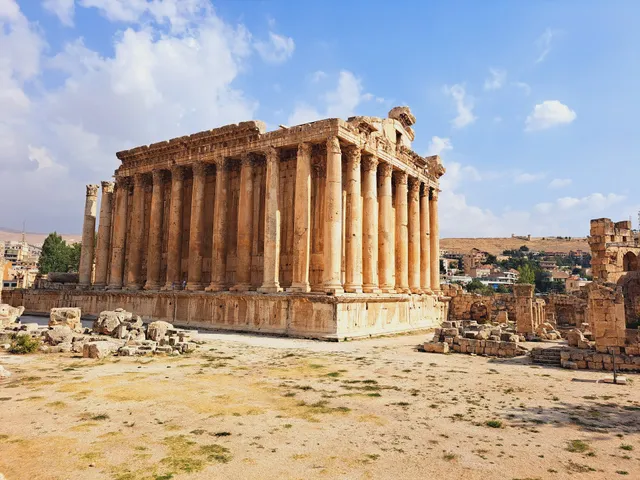
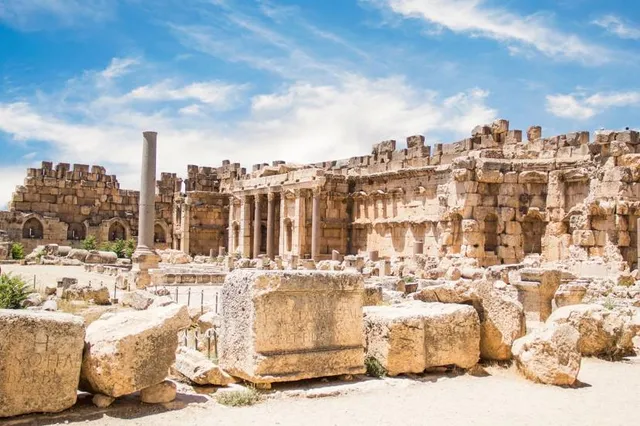
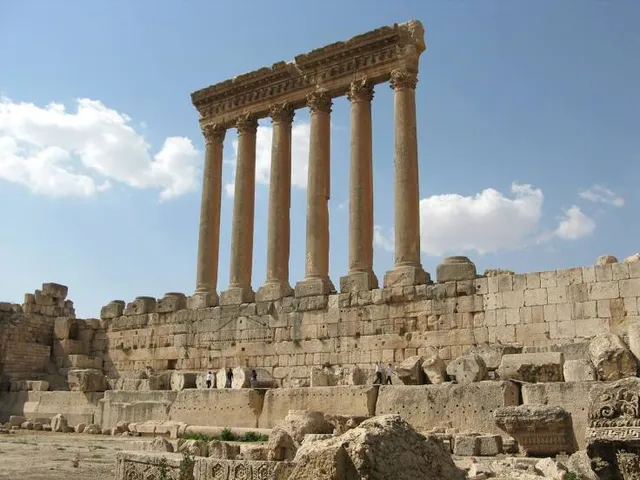
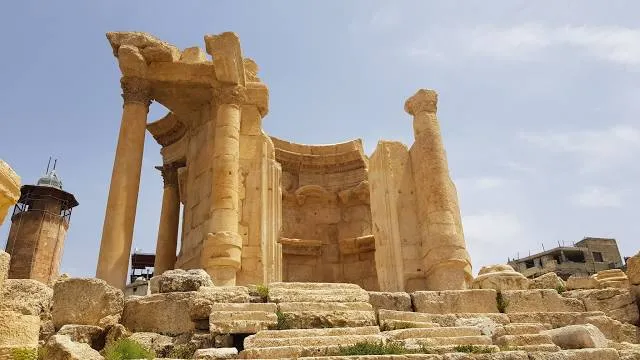
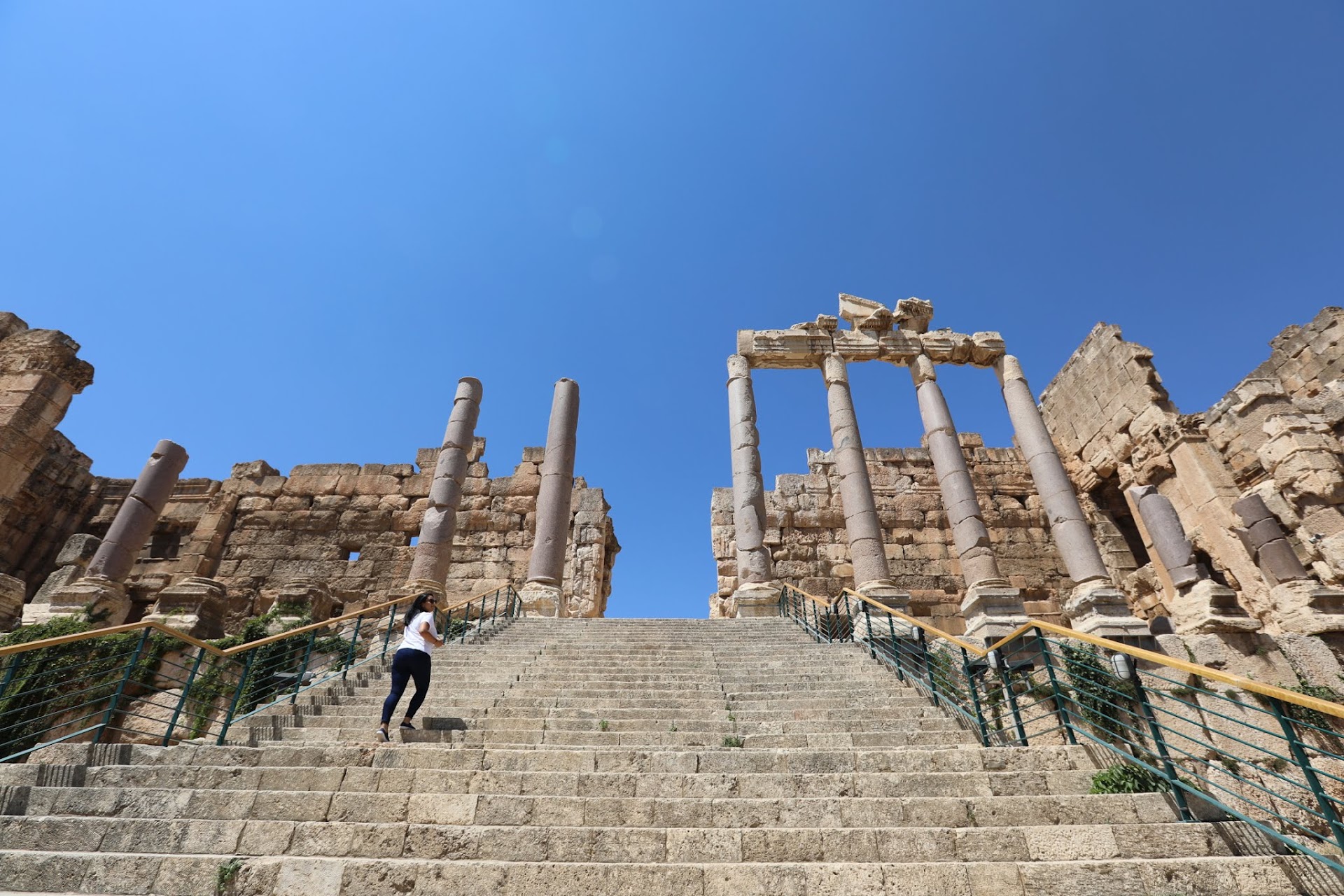
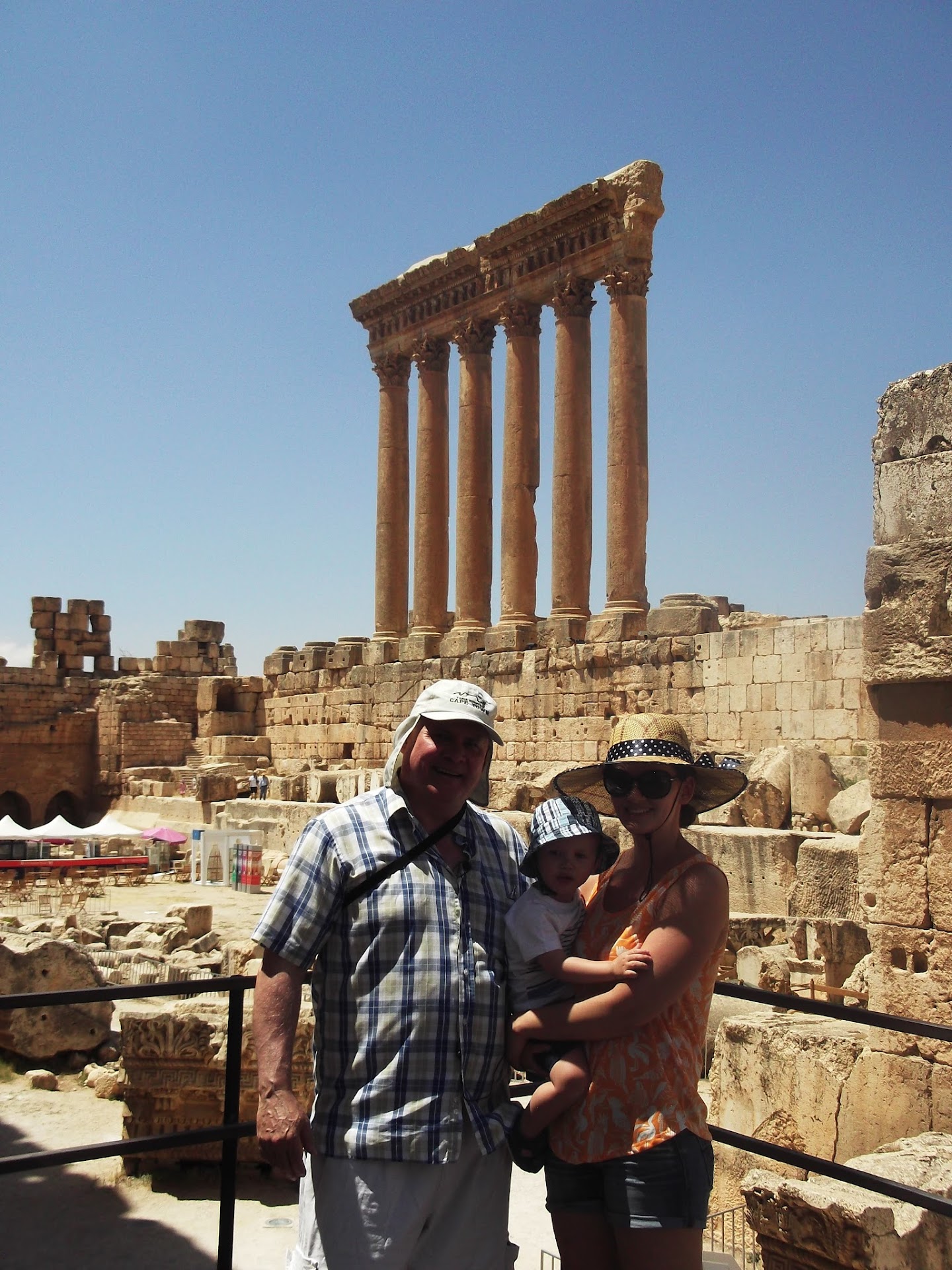
It's an amazing touristic site The Temple of Jupiter in Heliopolis (in a complex area called even Sanctuary of Heliopolitan Zeus) presumably replaced an earlier Phoenician one that used the same foundation. The presence of a huge quarry was one of the reasons for the Roman decision to create a huge "Great Court" of a big pagan temple complex in this mountain site, located at nearly 1100 meters of altitude and on the eastern Borders of the Roman Empire: it took three centuries to create this colossal Roman paganism's temple complex The Temple of Jupiter —once wrongly credited to Helios lay at the western end of the Great Court of Roman Heliopolis. It raised another 7 m (23 ft) on a 47.7 m × 87.75 m (156.5 ft × 287.9 ft) platform reached by a wide staircase.
This temple was dedicated to the Roman Zeus and the construction was started by Julius Caesar and continued later by Augustus: it was the biggest pagan temple dedicated to Jupiter in all the Roman empire. The columns were 30 meters high with a diameter of nearly 2.5 meters: the biggest in the classical world.
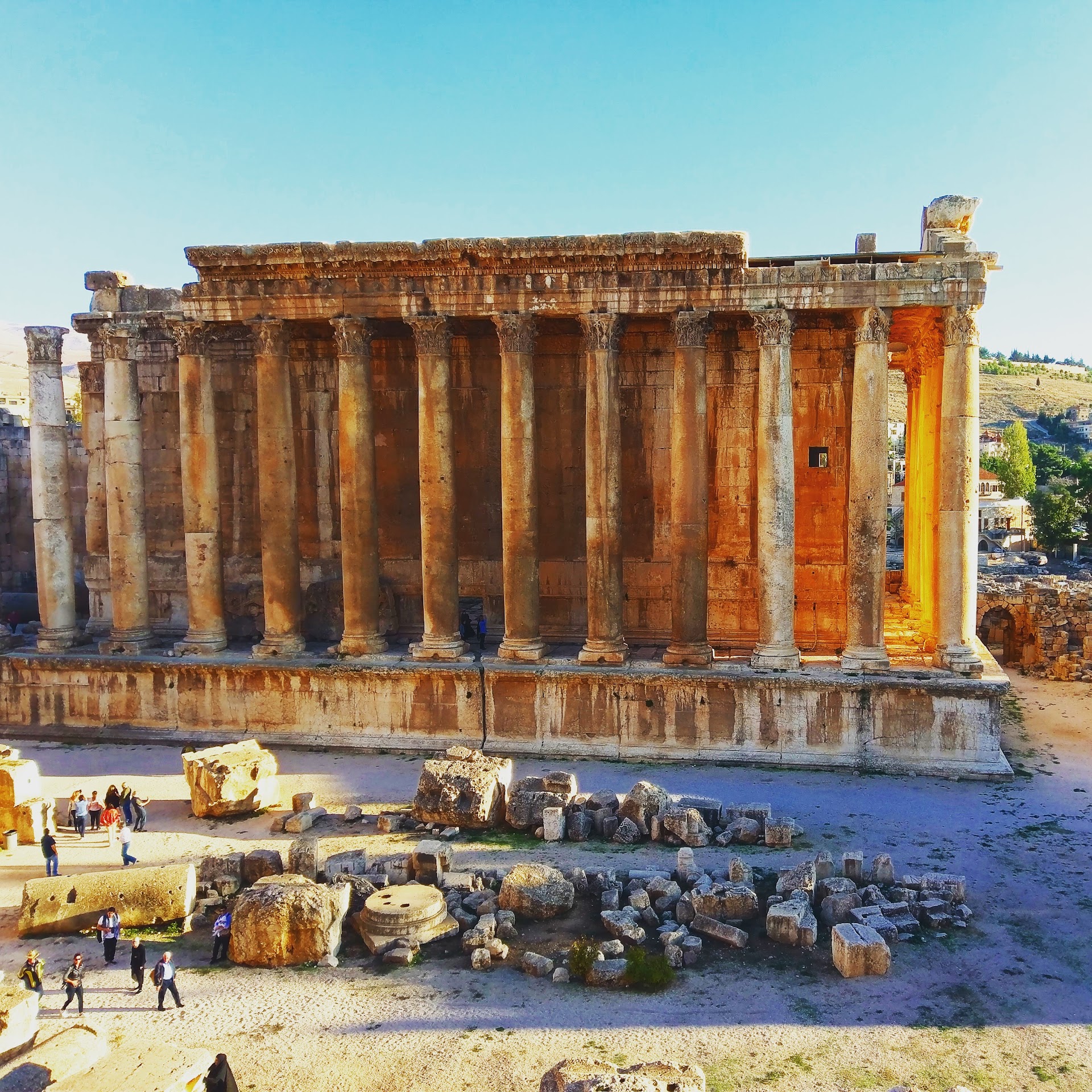
Under the Byzantines, it was also known as the "Trilithon" from the three massive stones in its foundation and, when taken together with the forecourt and Great Court, it is also known as the "Great Temple".The Temple of Jupiter proper was circled by a peristyle of 54 unfluted Corinthian columns:10 in front and back and 19 along each side. The layout of ancient Baalbek including the temple
The Temple-Sanctuary of Heliopolitan Zeus was ruined by earthquakes, destroyed and pillaged for stone under Theodosius, and 8 columns were taken to Constantinople(Istanbul) under Justinian for incorporation into the Hagia Sophia. Three fell during the late 18th century. 6 columns, however, remain standing along its south side with their entablature. Their capitals remain nearly perfect on the south side, while the Beqaa's winter winds have worn the northern faces almost bare.The architrave and friezeblocks weigh up to 60 tonnes (66 tons) each, and one corner block over 100 tonnes (110 tons), all of them raised to a height of 19 m (62.34 ft) above the ground. Individual Roman cranes were not capable of lifting stones this heavy. They may have simply been rolled into position along temporary earthen banks from the quarry or multiple cranes may have been used in combination. They may also have alternated sides a little at a time, filling in supports underneath each time.
The Julio-Claudian emperors enriched its Sanctuary in turn. In the mid-1st century, Nerobuilt the tower-altar opposite the temple. In the early 2nd century, Trajan added the temple's forecourt, with porticos of pink granite shipped from Aswan at the southern...
Read moreAs early as 9000 BC, Baalbek was a place for worship and became a cornerstone of ancient civilizations. Located in modern day Lebanon, the ruins stand tall as an archaeologicalwonder with towering monuments and impressive columns. As significant holy grounds, Baalbek was a center for Mesopotamian, Roman, Christian and Islamic worship as each group introduced their own heritage to this sacred monument. Up until 150 BC, the site was a temple dedicated to the Phoenician Astarte and Baal. It is not hard to imagine that the wreaths and sacrifices carried out for Astarte the goddess of fertility and war were then shifted to Venus during the Roman colonization. Subsequently, the temple was brought into the Christian era with Constantine the Great’s influence on the Roman Empire. That is up until 637 AD when Islamic rule led to the use of the site as a reinforced fortress and a Mosque was added. Install

Ruins, Baalbek | © Frode Ramone/ Flickr
Lebanon / HISTORY
A Brief History of The Baalbek Roman Ruins in Lebanon

Amani Sharif
Freelance Writer
Updated: 23 March 2017
As early as 9000 BC, Baalbek was a place for worship and became a cornerstone of ancient civilizations. Located in modern day Lebanon, the ruins stand tall as an archaeologicalwonder with towering monuments and impressive columns.
Sign Up. Get More. Do More.
Read the Culture Trip newsletter. Because you want to see what's out there.
Sign up
For more information on how we use your data, see our privacy policy. Unsubscribe in one click. To see what our newsletters include, click here.
As significant holy grounds, Baalbek was a center for Mesopotamian, Roman, Christian and Islamic worship as each group introduced their own heritage to this sacred monument.

Baalbek, Ruins | © Francisco Antunes / Flickr
Up until 150 BC, the site was a temple dedicated to the Phoenician Astarte and Baal. It is not hard to imagine that the wreaths and sacrifices carried out for Astarte the goddess of fertility and war were then shifted to Venus during the Roman colonization. Subsequently, the temple was brought into the Christian era with Constantine the Great’s influence on the Roman Empire. That is up until 637 AD when Islamic rule led to the use of the site as a reinforced fortress and a Mosque was added.

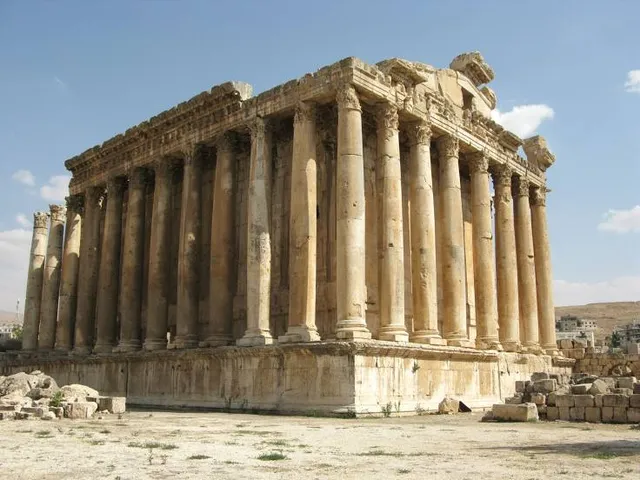
Temple of Bacchus, Baalbek | © Arian Zwegers/ Flickr
The decline of these ruins began when the temple passed to the Ottoman Empire, it was abandoned and left in ruins. In addition, earthquakes, storms and natural forces continued to tear the site apart until 1898. That year marked a visit from the German Emperor Wilhelm II, who pioneered the attempt of restoring Baalbek and...
Read moreBaalbeck's ancient name was Heliopolis, meaning "Sun City". The local Semitic population in Phoenicia worshiped god Baʿal Haddu which was often equated with Zeus or Jupiter and was called by the locals the "Great God of Heliopolis". The Egyptians associated Baʿal with their great god Ra. Later the city acquired its name Baalbeck which Translates to the city of god Baal. The city itself shows a signs of continual habitation since 8000 to 9000 years. The temples of Baalbeck and the magnificent huge/gigantic columns represent the might of the old Roman empire. The temples encompass ruins from the Phoenicians, Roman, Arab-Islamic and Ottoman and German era (when the Emperor of Germany - which I have forgot his name - helped repair Jupiter temple and to thank him the ottoman sultan left a granite note thanking him). Jupiter temple is the biggest Roman architecture built outside Rome and is thr biggest temple ever built for the might ancient god Jupiter over the ruins of Baal temple. The details of the 12 Cesars who visited the temple together with the story of Julius Cesar and Cleopatra crafted within the walls and ceiling is quite fascinating. One starts to appreciate the magnitude of time spent to reconstruct this mighty architecture and its significance in shaping the politics in Rome. I highly recommend to take the guided tour with an expert. I took it twice and I always learned more than what I studied from text books. Don't forget to visit the museum in the tunnel and the pregnant stone. The story behind the pregnant stone, the name and its discovery is as fascinating as the site itself. Tip: ask the locals and the local shop near it about it, its half of the fun. If you visit Lebanon, you have to visit Baalbeck temple, otherwise it's an incomplete visit.
Some photos are tagged as: © Rami Rizk (Twitter: @rami_rizk). Rami Rizk holds the copy rights of this content and has kindly authorized to geotag it. The review does not necessarily reflect...
Read more