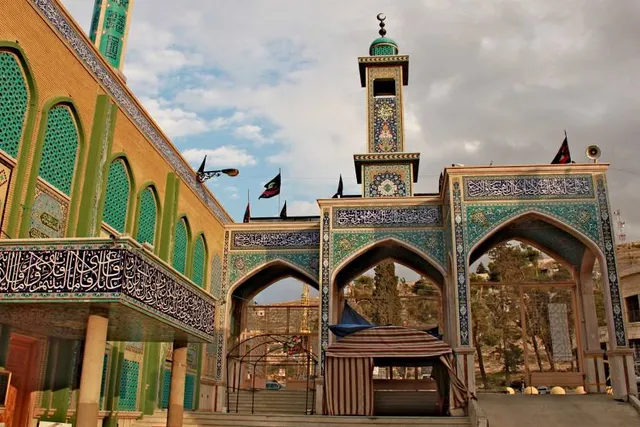
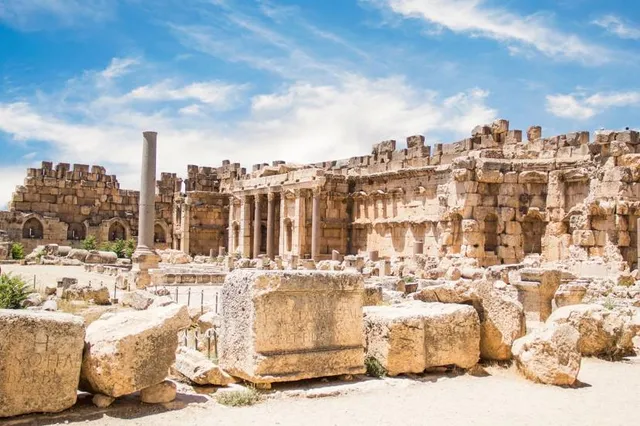
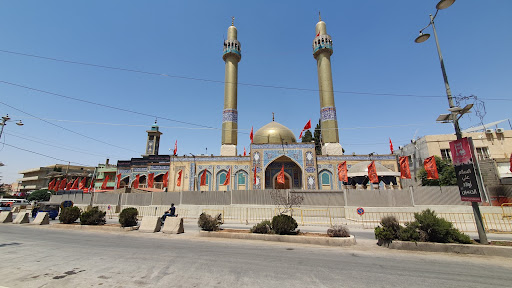
The Sayyida Khawla Shrine is not a mosque, but a holy shrine. it is also possible to visit as non-muslim and foreign/european person the shrine. It includes a shrine main building, a kind of open prayer courtyard, and a small Hezbollah museum on the side after the entrance. The Sayyida Khawla Shrine is located in the city of Baalbek and there is no entrance fee, you can easily combine a visit to the shrine with a trip to the Baalbek ruins (not far from there). The shrine is built in the Iranian architectural style, which is beautiful. The ceiling in the main shrine is decorated with thousands of small mirrors, sparkling in the light. To visit the main shrine, you must first take off your shoes outside, as is customary in every mosque around the world. The Hezbollah museum on the side contains information about the organization, exhibits of military equipment, their mission, and posters. Unfortunately, many of the items are only labeled in Arabic, making it difficult for non-Arabic speaking visitors to understand the information. Additional English information would help foreigners to understand the resistance movement Hezbollah better. The museum features posters of important and political figures such as Hassan Nasrallah, Ruhollah Khomeini, and General Qasem Soleimani, who was murdered by the United States. The Sayyida Khawla Shrine apparently was funded by Iran and is managed by the Hezbollah resistance movement. At the entrance, visitors are searched by security personnel and have to show their bags and backpacks. Photography is forbidden outside the shrine, which is a pity because the building is very beautiful. However, inside the shrine complex, you can photograph everything. As a European, I visited everything, tried to understand the motives, and showed respect for the site and the views - the people there were friendly to me. I would visit the Shrine again, I liked it.
I bought Hezbollah T-shirts in Baalbek, but even the largest size available was very tight (XXL felt like S). It would be good to produce T-shirts in larger sizes as well. It would also be good to produce Hezbollah refrigerator magnets there. I would be the first to buy 5 Hezbollah...
Read moreThe most beautiful shrine I've ever seen, hands down. If you thought you have seen the Ali Ibn Hamza Mausoleum in Shiraz, you've not seen this. Both inside and outside are so out of the world and the inside especially is beyond grandeur, lit with thousands of mirrors reflecting light in all colours. Supposed to be the shrine of Sayyida Khawla daughter of Imam Hussain (RA), you can see a small grave behind the rail-guard inside. Security here is very tight and keen on keeping a watch on everything you do or carry, so be mindful especially while taking pics. At the same time, it is understandable given the circumstances and the environment they live in. The caretakers are very friendly and even offer Coffee if they like you. While the entrance is free, the Janitor may ask you for some "Donation", which you will be obliged to give full heartedly. There is even a H museum around which I totally missed as there are hardly any directions or information onsite, which I only realized after returning and reading one of the...
Read moreالسيدة خولة هي ابنة الإمام الحسين وحفيدة الرسول محمد. في مدينة بعلبك يوجد أبرز معلم سياحي ديني. تقول الروايات التاريخية عن اكتشاف هذا المكان أنه بعد استشهاد الإمام الحسين في اليوم العاشر من محرم في كربلاء - العراق، تم أسر نساء وأبناء الإمام الحسين وحملوا على جمال بلا سرج ولا ظل وتم نقلهم. نحو الكوفة. خلال الرحلة من كربلاء إلى الكوفة، ومن الكوفة إلى دمشق، أخبرت شقيقة الحسين زينب ابنة الإمام علي عن الفظائع المختلفة التي ارتكبت في كربلاء. واحتجز السجناء فيما بعد في دمشق لمدة عام وتوفي بعضهم حزنا. فيما بعد تم جرهم وتعذيبهم عبر مدن مختلفة في لبنان، وصولاً إلى بعلبك - رأس العين، المكان الذي بني فيه مسجد الإمام الحسين وأعيد بناؤه فيما بعد في عام 680م. الرحلة الطويلة والشاقة من كربلاء إلى الكوفة ومن الكوفة إلى دمشق، ومن حلب إلى حماة ومنها إلى حمص، عبر مناطق لبنانية مختلفة، تركت وراءها ضريح سيدة بعلبك، خولة. تختلف القصص حول الحقيقة التي أدت إلى وفاتها. تقول إحدى الروايات أن استشهادها نتج عن السفر الطويل والمضني، وأخرى مثل قصة المؤرخ الشهير القاضي مهاجر، تقول إن السيدة خولة كانت من بين الأسرى في قافلة الرحلة المؤلمة. تقول روايته للقصة أن خولة كانت في الثالثة من عمرها عندما سقطت من ظهر البعير ومنذ ذلك الحين عانت من المرض حتى الموت. تم دفنها في بستان عند المدخل الجنوبي للمدينة بالقرب من القلعة القديمة. وتستمر الحكاية بأن الأشخاص الذين يقيمون في جوار مكان دفنها ومحيطها قد رأوا أنوارًا إلهية تهبط على هذه البقعة النبيلة بين البساتين. لاحقًا، ظهرت خولة في حلم الرجل صاحب البساتين وطلبت منه تحويل الماء بعيدًا عن قبرها. وعندما تجاهل طلبها ظهرت في حلمه مرة ثانية وثالثة ورابعة. ناقش الرجل الأمر لاحقًا مع المجلس القروي الذي قرر إعادة دفن خولة في مكان مختلف، امتد تدريجياً إلى الضريح الذي هو عليه اليوم. يقع القبر في وسط الضريح. وهو قفص من الذهب والفضة جديد بداخله الباب مصنوع من خشب البلوط العتيق بالفضة، وقمة الضريح مزينة بتيجان ذهبية وفضية مع تشفير لأسماء الأئمة المعصومين. كما توجد آيات قرآنية على باب الحرم، تعلوها ثريا كريستال ضخمة. كما يوجد شجرة سرو عملاقة، يقال أن الإمام زين العابدين قد زرع غصنًا صغيرًا ليعلّم القبر. على مر السنين تحول الفرع إلى شجرة عملاقة يبلغ عمرها 1400 عام. بالإضافة إلى سحر وجمال القفص، سوف يذهل المرء بالجدران المغطاة بزخارف إيرانية جميلة، وكلها منقوشة بآيات قرآنية وأحاديث ممزوجة بشكل جميل بالألوان الزرقاء...
Read more