MacRoBuMacRoBu
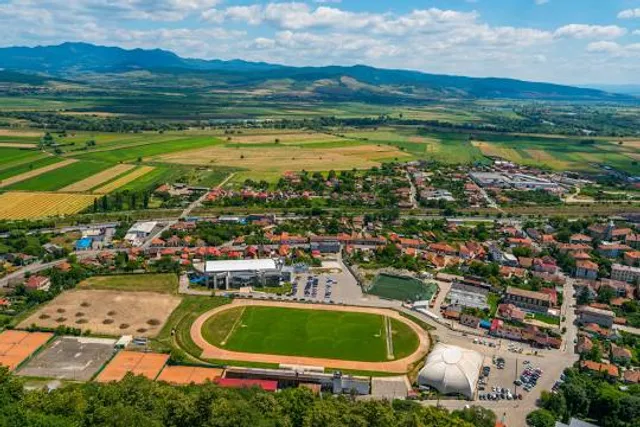
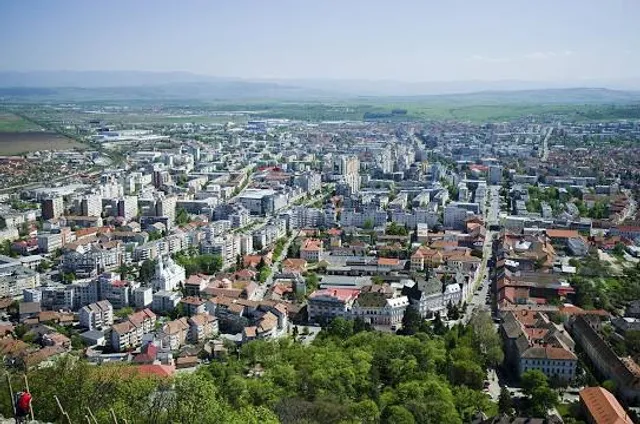
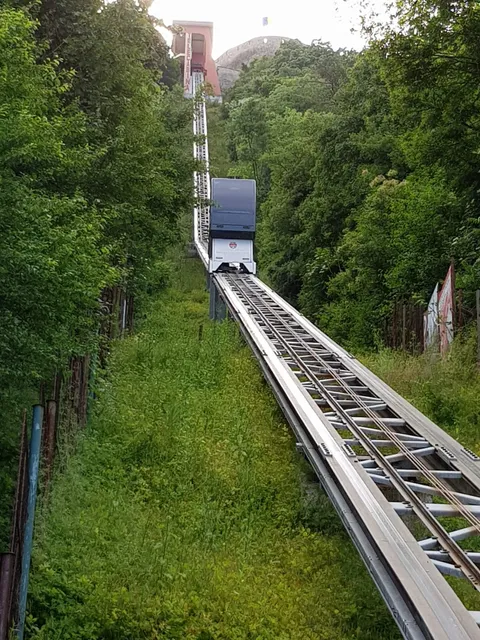
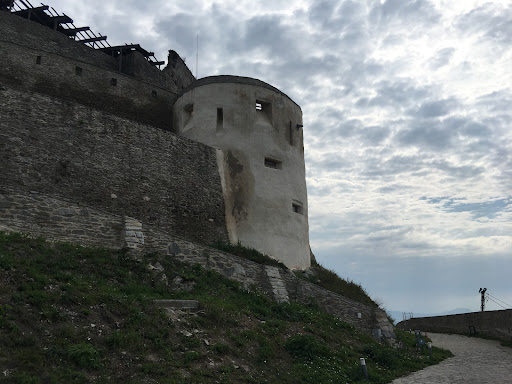
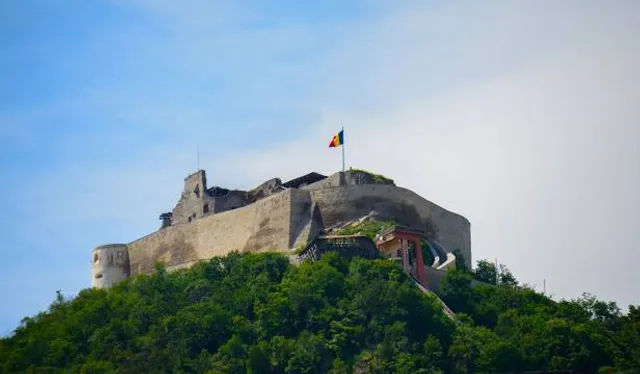
The fortress is located atop a volcano in the Poiana Ruscă Mountain Range within the Western Carpathian Mountains of Romania. From the foot of the hill, the city of Deva spreads out, beginning with Magna Curia and the public park. Nearby are the lower funicular station, which tourists use to reach the fortress, and most of the buildings of the administrative institutions of the city: the Court House, the Prefecture, the County Hall, the Finance Administration, the old police headquarters, the City Hall and two of the oldest schools in Deva: the Decebal National College and the Pedagogic Lyceum.
The first evidence of the medieval Deva Fortress dates back to the second half of the 13th century; in 1269, Stephen V, King of Hungary and Duke of Transylvania, mentioned "the royal castle of Deva" in a privilege-grant for the Count Chyl of Kelling (Romanian: comitele Chyl din Câlnic).
The first records regarding a military operation involving the fortress dates from 1273. Under its walls, the Cumans were defeated by Peter I Csák, Palatine of Hungary (Latin: Magister Pertrus de genere Chak), who was rewarded for his victory by Ladislaus IV, King of Hungary. In his letter, Ladislaus IV mentioned the facts with the words: sub castro Dewa contra Cumanorum exercitur viriliter dimicavit.
Heisler JánosHeisler János
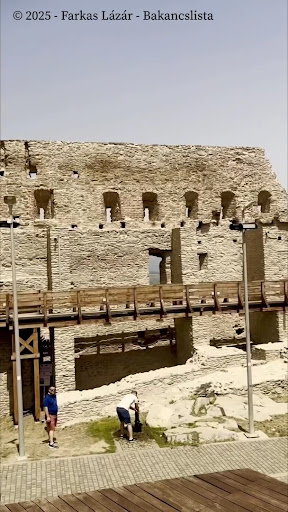
A felvonó nem működött, de autóval majdnem a bejáratig fel lehet menni. A parkolás elég nehézkes. A belépés ingyenes. Nagyon sok lépcsőt kellett megmásznunk. Egy táblát elvárnék magyar nyelven, ami megemlíti Kőmíves Kelemen történetét.
Kőmíves Kelemen
(Népballada)
Tizenkét kőmíves összetanakodék,
Magos Déva várát hogy felépítenék,
Hogy felépítenék fél véka ezüstér,
Fél véka ezüstér, fél véka aranyér.
Déva városához meg is megjelöntek,
Magos Déva várhoz hozzá is kezdöttek,
Amit raktak délig, leomlott estére,
Amit raktak estig, leomlott röggelre.
Megint tanakodék tizenkét kőmíves,
Falat megállítni hogy lesz lehetséges,
Míg elvégre ilyen gondolatra jöttek,
Egymás között szoros egyességet töttek:
- Kinek felesége legelőbb jő ide,
Szép gyöngén fogjuk meg, dobjuk bé a tűzbe,
Keverjük a mészbe gyönge teste hamvát,
Avval állítsuk meg magos Déva várát.
Kocsisom, kocsisom, nagyobbik kocsisom,
Én uramhoz mönni lönne akaratom!
- Kőmíves Kelemen felesége mondja, -
Fogd bé a lovakat, fogd bé a hintóba,
Fogd bé a lovakat állj is gyorsan elé,
Hadd menjünk, hadd menjünk Déva vára felé. -
Mikor fele útját elutazták vóna,
Esős idő vala, záporeső hulla.
- Asszonyom, csillagom, forduljunk mi vissza,
Rossz jelenést láttam az éjjel álmomba,
Az éjjel álmomba olyan álmot láttam,
Kőmíves Kelemen udvarában jártam,
Hát az ő udvara gyásszal van béhuzva,
Annak közepibe mély kút vala rakva,
S az ő kicsi fia oda beléhala.
Az éjjeli álom nem telik ma jóra. -
Asszonyom, asszonyom, forduljunk meg vissza! -
- Kocsisom, kocsisom, nem fordulunk vissza,
A lovak se tiéd, a hintó se tiéd,
Csapjad a lovakat, hadd haladjunk elébb. -
Mönnek, möndögélnek Déva vára felé,
Kőmíves Kelemen őket észrevevé,
Megijede szörnyen, imádkozik vala:
- Én uram Istenem, vidd el valahova!
Mind a négy pej lovam törje ki a lábát,
Vessen a hintómnak négy kereke szakát,
Csapjon le az útra tüzes istennyila,
Horkolva térjenek a lovaim vissza! -
Mönnek, möndögélnek Déva vára felé,
Sem lovat, sem hintót semmi baj nem lelé.
- Jó napot, jó napot tizenkét kőmíves!
Neked is jó napot, Kelemen kőmíves! -
Köszöne az asszony, az ura válaszolt:
- Édös feleségem, neked is jó napot!
Hát ide mér jöttél a veszedelmedre,
Szép gyöngén megfogunk, bédobunk a tűzbe.
Tizenkét kőmíves azt a törvényt tette:
Kinek felesége hamarébb jő ide,
Fogjuk meg szép gyöngén, dobjuk bé a tűzbe,
Annak gyönge hamvát keverjük a mészbe,
Avval állítsuk meg magos Déva várát,
Csak így nyerhetjük el annak drága árát. -
Kelemenné asszony, hogy átalértette,
Bánatos szívének így lött felelete:
- Várjatok, várjatok, tizenkét gyilkosok,
Amíg búcsút veszek: csak addig várjatok,
Hogy búcsut vehessek asszony barátimtól,
Asszony barátimtól s szép kicsi fiamtól:
Mert a halottnak is hármat harangoznak,
Én árva fejemnek egyet sem kondítnak. -
Kelemenné asszony avval hazamöne,
Egyször s mindenkorra hogy végbúcsut vönne,
Hogy végbúcsut vönne asszony barátitól,
Asszony barátitól s szép kicsi fiától.
Avval visszamöne Kőmíves Kelemenné,
Sírva haladt magos Déva vára felé,
Megfogák szép gyöngén, bétevék a tűzbe,
Az ő gyönge hamvát keverék a mészbe,
Avval állíták meg magos Déva várát,
Csak így nyerheték meg annak drága árát.
Kőmíves Kelemen mikor hazamöne,
Az ő kicsi fia jöve véle szömbe.
- Isten hozott haza, kedves édösapám!
Hol maradt, hol maradt az én édösanyám?
Az ő édesapja neki így felele:
- Hadd el, fiam, hadd el, hazajő estére.
- Istenem, Istenem, este is ejöve,
Mégis édösanyám még haza nem jöve!
Apám, édösapám! mondja meg igazán,
Hogy hol van, hogy hol van az én édösanyám!
- Mönj el, fiam, mönj el, magos Déva várra,
Ott van a te anyád, kőfalba van rakva.
Elindula sírva az ő kicsi fia,
Elindula sírva magos Déva várán:
- Anyám! Édösanyám! szólj bár egyet hozzám!
- Nem szólhatok fiam! mert a kőfal szorít,
Erős kövek közé vagyok bérakva itt. -
Szíve meghasada s a föld is alatta,
S az ő kicsi fia oda beléhulla.
 Learn more insights from Wanderboat AI.