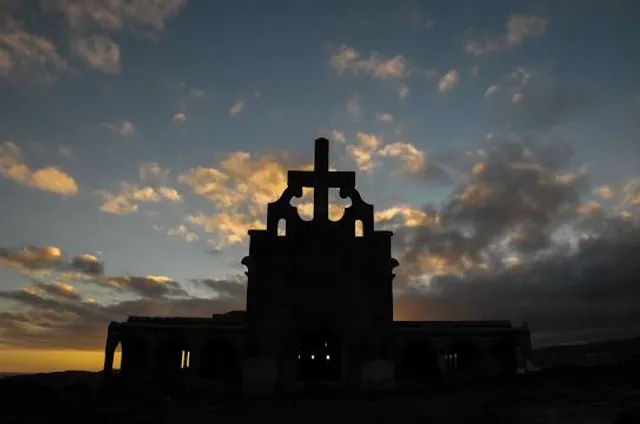
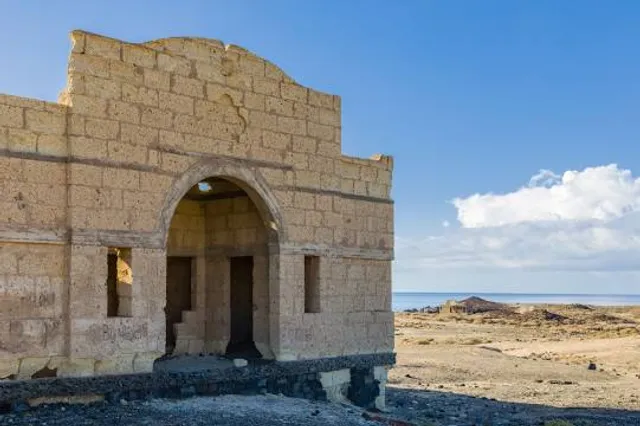
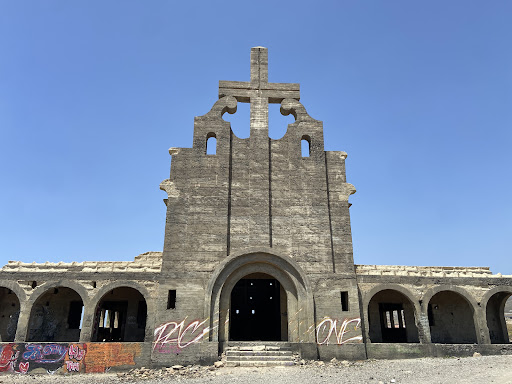
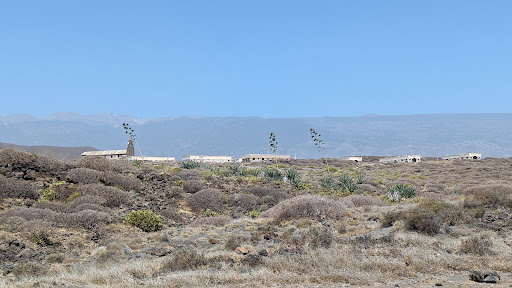
Interesting church and buildings of the leprosy village, fascinating to walk round and discover.
There are no signs explaining the place but there are posters for an 50 minute audio guide which I paid £8.99 for and enjoyed listening to as I walked around. My son didn’t have the guide but took photos on his camera of the buildings and views and graffiti art that is inside lots of the buildings and enjoyed exploring.
The audio guide gave a tour of the buildings, including the gatehouse, administration building, priest’s house, director’s house, Cove of Tears, wash house, hospital, patient accommodation, staff accommodation, church, crematorium and others. There was enough information on the audio guide that you could visualise how it might have been if it was all in use at the time.
It would have been useful for the audioguide to tell the listener to locate themselves and then go towards the lighthouse and find the gatehouse to start there, both with the audioguide and following the directions for walking around; as otherwise if you have come up from the village path and started at the church (which I did) then you are at the wrong end of the audio guide. But it worked anyway.
Without the audio guide it is a peaceful but slightly eerie experience; walking through abandoned ruins but with no context, seeing and hearing the birds chirping in a place that is otherwise very quiet and windy.
With the audio guide it gives life to the ruins but is also slightly confusing as the audio guide portrays the leprosy village with voices for different characters - staff, patients, doctors, priest - as if it happened and people lived here through the years of the pandemic.
However upon finishing the main information the bonus tracks in the audio guide explain that whilst this was built to house those with leprosy, advances in medication and treatment meant it was never actually completed and used. So the project was abandoned unfinished. This obviously is good for Tenerife and for those at the time (1940s) but the audio guide blurs reality and fiction a bit. It does infer that in the introduction.
Well worth listening to though and immersing yourself in the place and how it would have been if completed. Stunning views in all directions and well worth a detour from the main road.
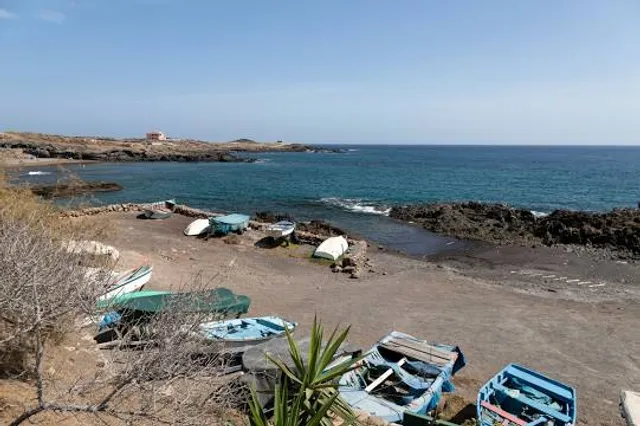
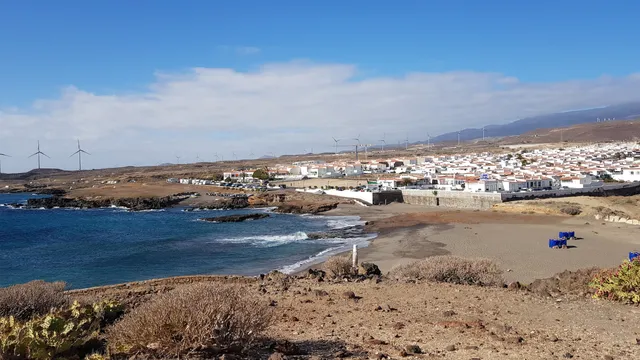
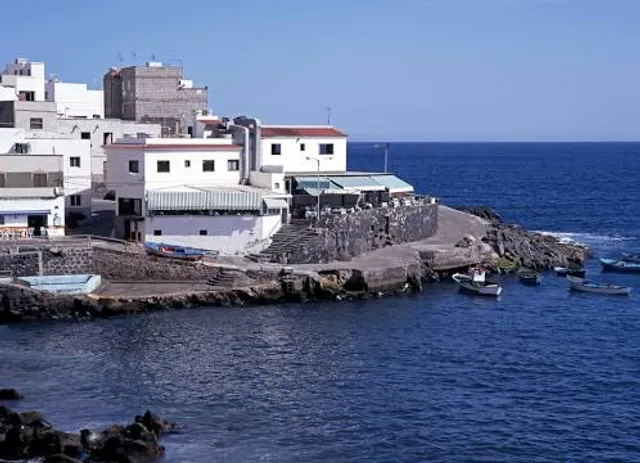
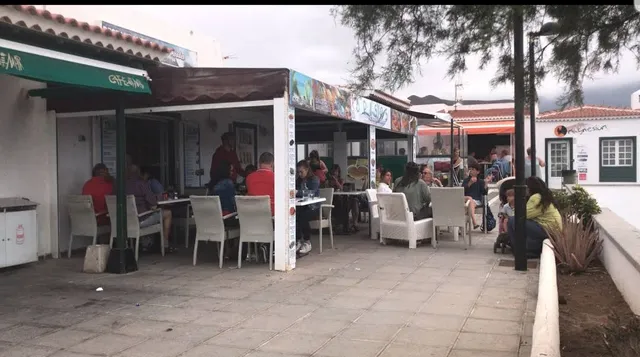
There is a free car park in the village and little supermarket where we bought ice lollies before starting the walk. There are some little bars but they were closed when we got there but starting to open up afterwards. There is a beach and a scuba school and both looked like they had a few people there. No (toilets or) shops at the leprosy village so take enough food and...
Read moreWe've been to Tenerife several times. Perchance we overheard a conversation an abandoned Leper colony on the table next to us and wanted to find out more. Here's the history,
Leprosy was once a major disease in Tenerife so much in fact a specialist hospital was constructed in Abona. The leprosy village was built in 1943 which consisted of large single story wards, an administration building and a large Francoist style church. Medical advancements led to the near-eradication of leprosy in the Canary Islands and the village was never completed. The leprosy village later became a military training facility before being sold in 2002.
We both wanted to visit and learn more about the village. purely by chance we found a guide who knew the history and was prepared to take us. His name is Steve F not known to most people, but a true hero and a specialist. He picked us up from our apartment and drove us. We arrived, got out of the car and prepared to climb the hill towards the church. I didn't feel the steep incline as we were both listening to Steve who told us about the geology, i.e, sandstone and how, over time it erodes to almost steps to enhance the visitors experience. We could see the abandoned church but nothing prepared for arriving at the top and just how awe inspiring it was. Steve explained the colony and how it was disguarded once a cure was found. He had the time, patience compassion and knowledge to explain every block in great detail, I felt he knew every temporary patient (I think there were two), I would highly recommend a visit. Thank...
Read moreEl Antiguo Leprosario de Abades, ubicado en el sur de Tenerife, es una estructura histórica fascinante, cuyo origen está vinculado a la historia de la lepra en España y al contexto político de la dictadura de Franco.
Historia En la década de 1940, durante el régimen de Franco, se decidió construir un leprosario en Abades para aislar a los enfermos de lepra en Tenerife. En aquella época, la lepra aún era una enfermedad temida y estigmatizada, y el aislamiento de los afectados era una práctica común. Las Islas Canarias eran un punto estratégico, ya que su clima era considerado adecuado para el tratamiento de la enfermedad, y las autoridades veían la construcción de un sanatorio en esta zona como una medida efectiva.
El complejo fue diseñado para ser autosuficiente. Contaba con diversas instalaciones, como un hospital, una iglesia, un crematorio y alojamientos para pacientes y personal médico. El leprosario estaba pensado para albergar a todos los enfermos de lepra de las islas, asegurando que se mantuvieran alejados del resto de la población.
Sin embargo, antes de que se completara el leprosario, los avances en medicina, como el descubrimiento de tratamientos más efectivos para la lepra, hicieron innecesario este tipo de aislamiento masivo. Como resultado, la construcción del complejo se detuvo y el leprosario nunca fue utilizado para su propósito original. El lugar quedó abandonado.
Curiosidades La iglesia inacabada: Uno de los edificios más destacados del complejo es la iglesia. Aunque nunca se terminó, la imponente cruz y la estructura del edificio son visibles desde varios puntos del sur de Tenerife, lo que le ha dado un aire místico y casi fantasmagórico al lugar.
Uso militar: Tras su abandono, el leprosario fue utilizado esporádicamente por el ejército español para realizar maniobras y ejercicios de entrenamiento. De hecho, en algunas zonas del complejo todavía se pueden ver señales de la presencia militar.
Leyendas urbanas: Como muchos lugares abandonados y misteriosos, el Leprosario de Abades ha dado lugar a numerosas leyendas y rumores. Algunas historias locales hablan de apariciones fantasmales o de que el lugar está maldito. Esto ha hecho que sea un lugar de interés para los exploradores urbanos y aficionados a lo paranormal.
Intentos de reutilización: En varias ocasiones se ha planteado la posibilidad de reconvertir el leprosario en un hotel o en un complejo turístico. Sin embargo, estas ideas nunca se han materializado, y el lugar sigue en estado de abandono.
Escenario de cine y televisión: Debido a su aspecto ruinoso y su atmósfera desolada, el leprosario ha sido utilizado como escenario para rodajes de cine, series y videoclips, lo que le ha dado un aura de misterio aún mayor.
Destino turístico alternativo: Aunque no es un sitio turístico oficial, el Leprosario de Abades atrae a curiosos, fotógrafos y aventureros que desean explorar sus ruinas y disfrutar de su inquietante atmósfera. No es raro ver personas recorriendo el lugar, a pesar de que no está acondicionado para visitas turísticas.
Estado actual Hoy en día, el Leprosario de Abades sigue siendo un conjunto de ruinas imponentes, una especie de testimonio de una época en la que las enfermedades infecciosas eran motivo de aislamiento extremo. La zona es de fácil acceso, y aunque no cuenta con protección oficial, muchos turistas y lugareños lo visitan por su peculiar atractivo histórico y estético.
El lugar, más que un recuerdo de la lepra, se ha convertido en un símbolo del abandono y del paso del tiempo, una estructura que, aunque nunca cumplió su función original, sigue siendo un punto de referencia en el paisaje del sur...
Read more