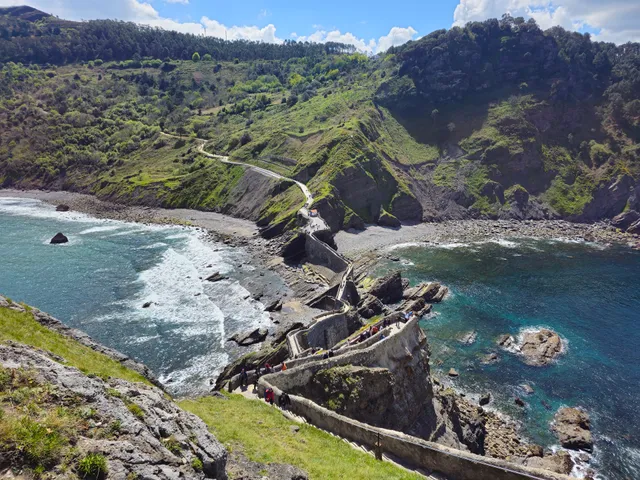
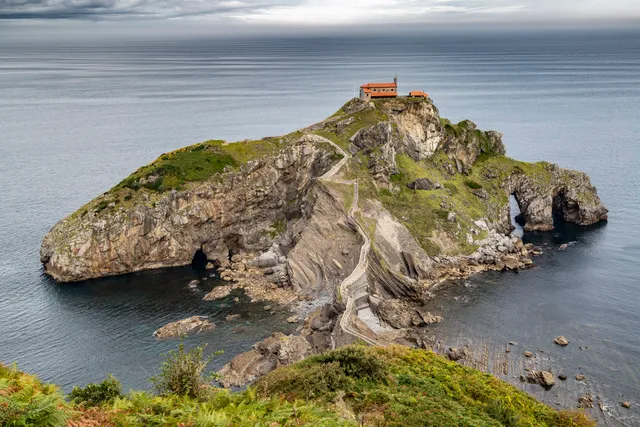
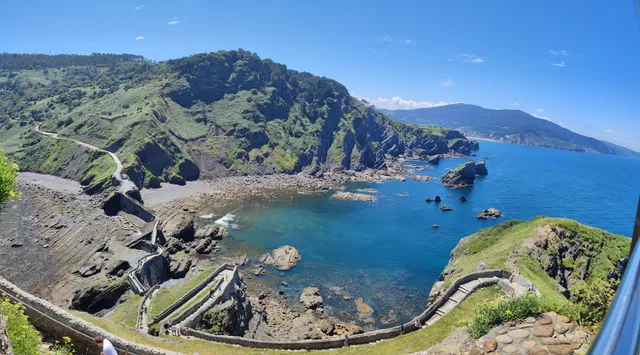
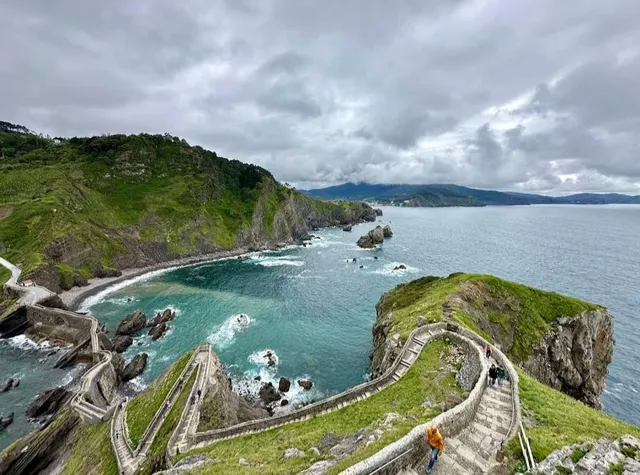
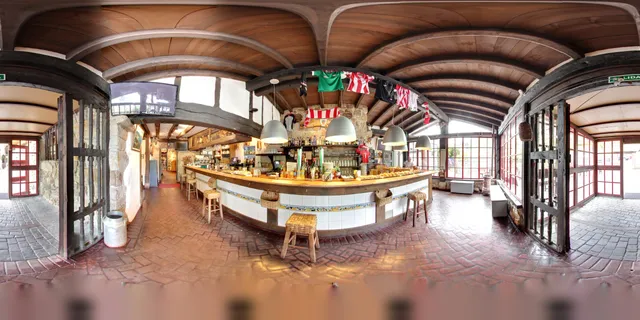
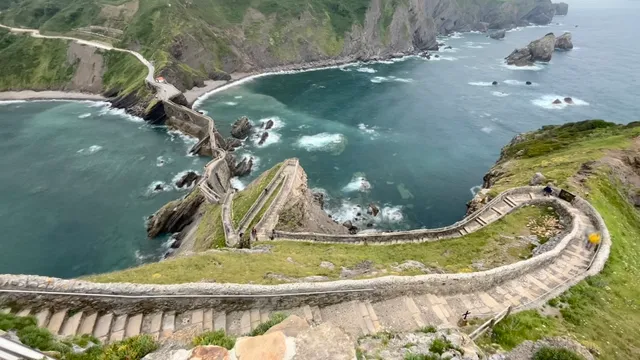
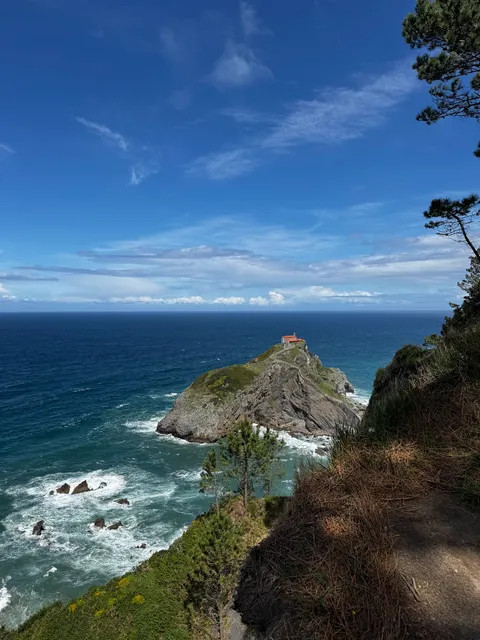
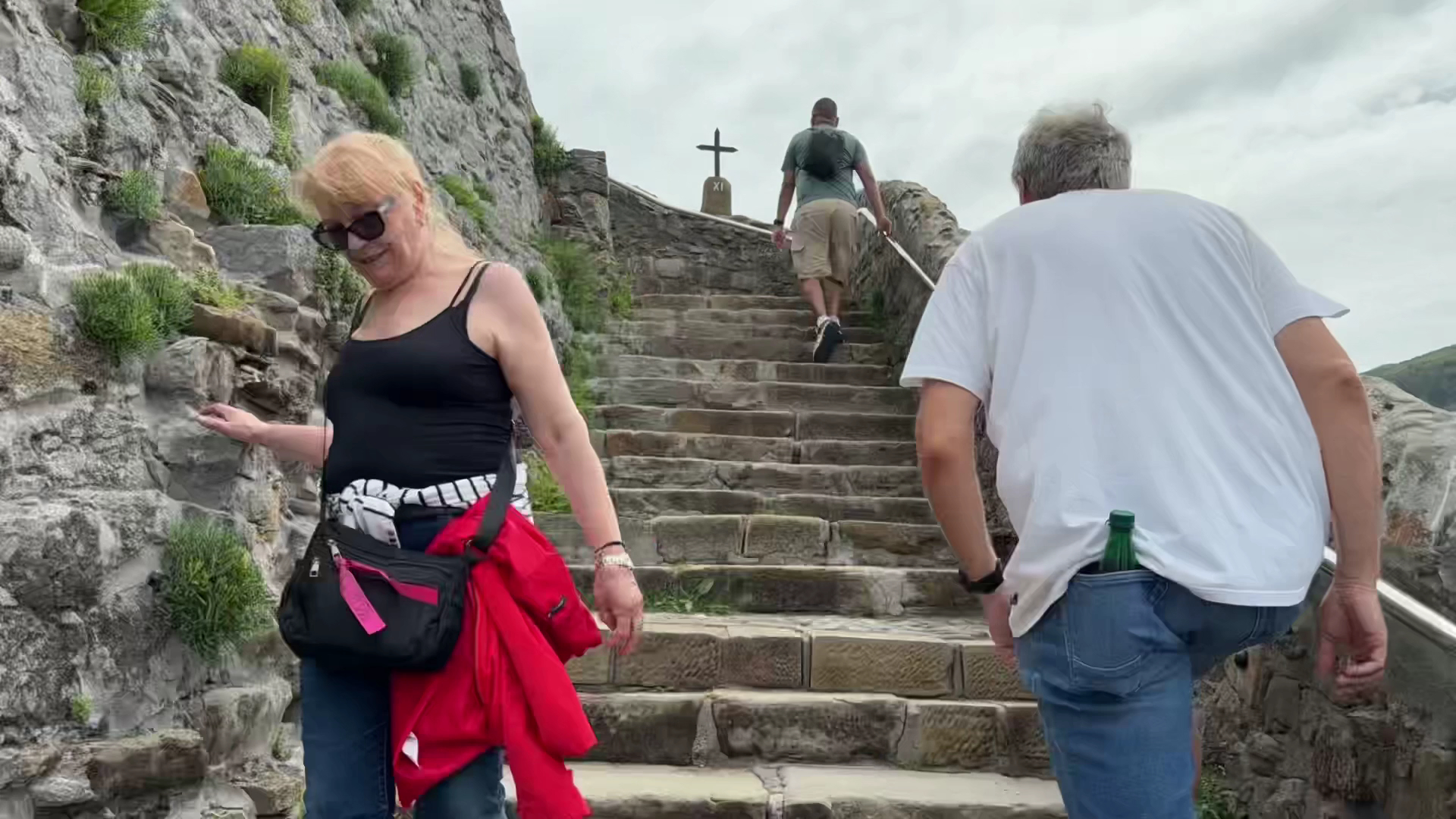
I was in the neighbourhood so I thought I would visit, but I clearly wasn't prepared for this place. There is quite a bit of parking space, but if it gets much more popular this might become a problem. Near the entrance there's a simple restaurant and what looked like a B&B. You can get food and drinks here and if you didn't bring your own water make sure to get some here. Access to the site is via a small path that goes downhill a lot (and so uphill on the way back!). There is a ticket booth but the visit is free. As I understand it this is just to manage the flow of people and to get a sense of where the visitors are from (they ask everyone their country). After the booth you get to go down via a steep path so be prepared and take good shoes with you! I didn't know and went on my flip-flops, which is fine(-ish) on the way down, but an absolute nightmare on the way back! The walk takes about 20 minutes and there isn't a lot of shade (hence the water). Once you get to the peninsula you get to go up the "famous" stairs which are hard work. The views are stunning along the way as well as from the top. The church is small and not very interesting but a good place to rest. And I did get to ring the church bell. They sell souvenirs and drinks here, so if you need it you can get more water here. There's also a second building which looked like living quarters for the monks when they used to live there, but as there was little signage I am only guessing. I will say that the whole site smelled vaguely of piss (even though there's a toilet at the bottom of the hill). Unfortunately not everybody is respectful of these types of places. I found the way back exhausting. After going down the stairs it's uphill all the way and it's relentless. I made frequent use of the places along the way where you can stop and sit and splash water on your face. All in all I would definitely recommend it, but next time I am visiting I'll come better prepared! Also, when I typed in the location in Google maps to get directions it told me the site wouldn't open until 16h, but when I got there at 4pm people were already there so I am not sure how reliable that...
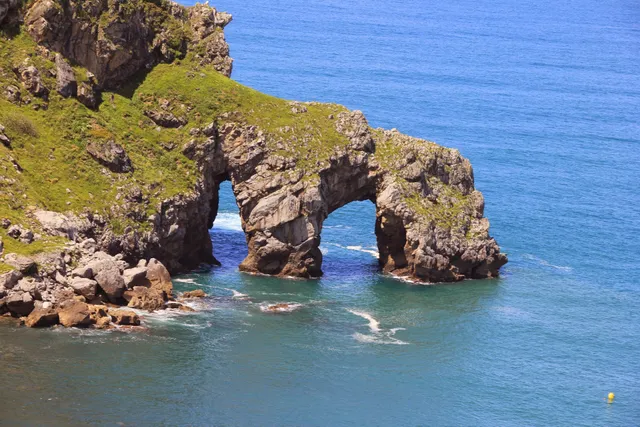
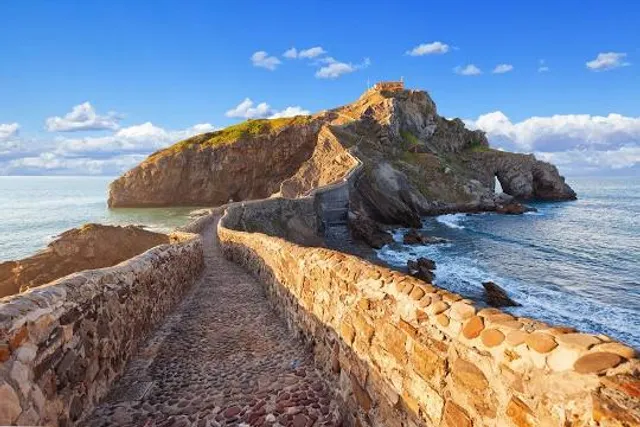
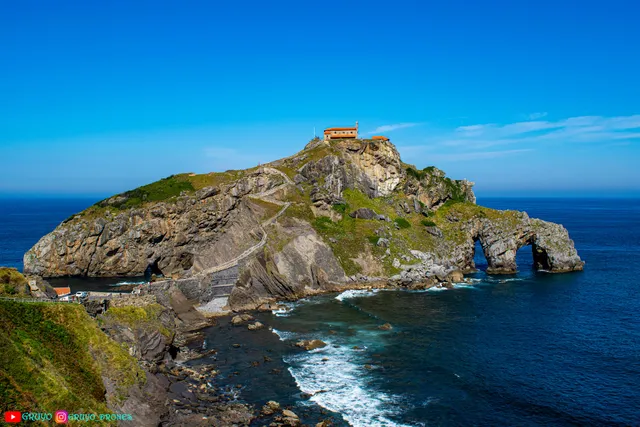
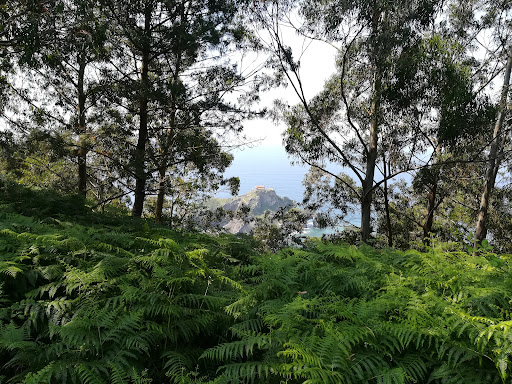
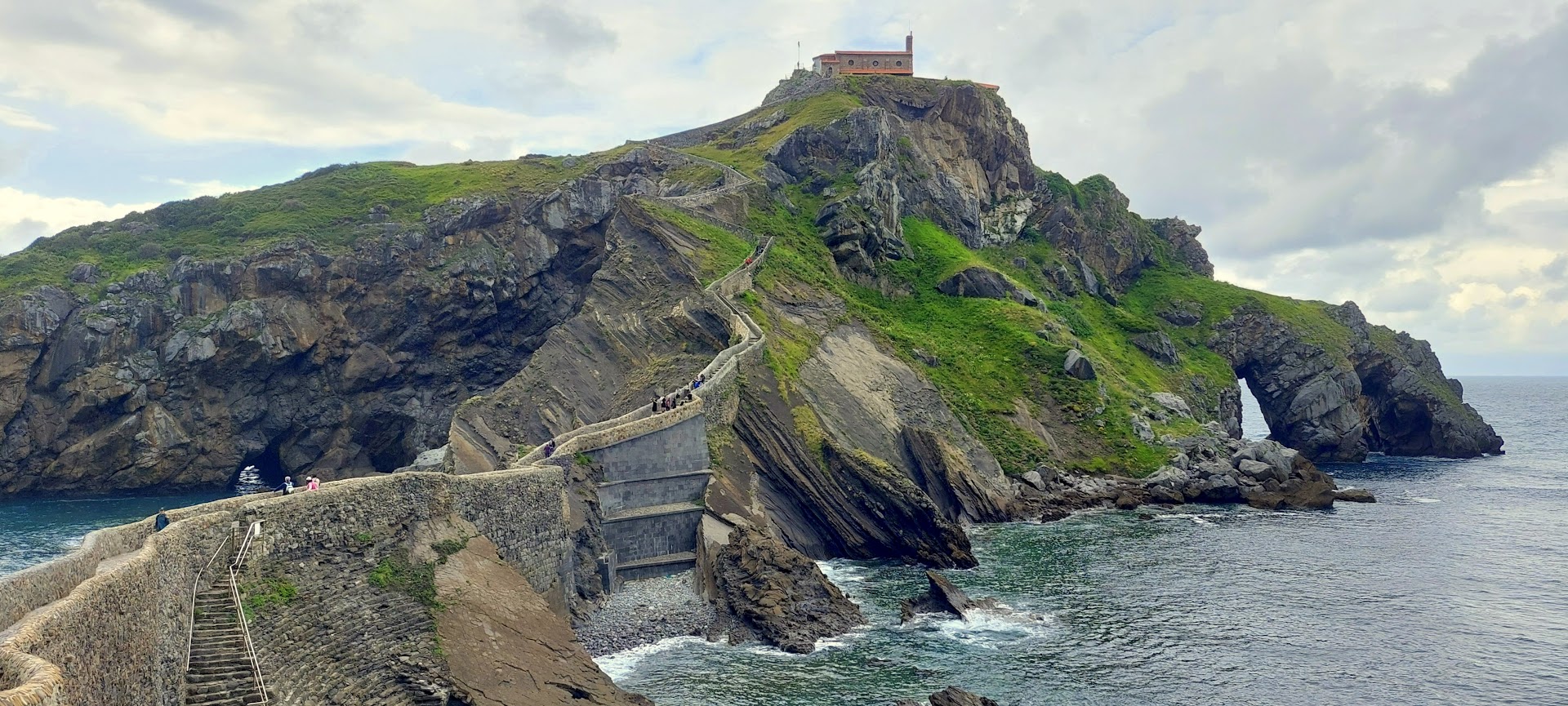
Read moreLa ermita de San Juan de Gaztelugatxe se levanta sobre un islote rocoso situado frente a la costa y unido a la península por dos grandes arcos de medio punto sobre los que se asienta una estrecha pasarela de piedra que culmina en una escalera tallada en la misma roca con 241 escalones que suben hasta la ermita. En la parte más alta del promontorio, a 80 metros, se encuentra la ermita dedicada a san Juan Bautista. En el último de los 241 escalones se puede ver una huella impresa en la roca que, según cuenta la leyenda, pertenece a un pie de San Juan, el cual tras desembarcar en el cercano puerto de Bermeo llegó hasta Gaztelugatxe en tan solo tres gigantescas zancadas. Esta antigua leyenda nacida en el siglo X convirtió este islote en un lugar de peregrinación. Probablemente, la ermita fue construida a finales del siglo IX por mandato del rey Alfonso III de Asturias. Debido a su ubicación aislada y poco accesible durante el siglo XII se transformó en un pequeño monasterio. A lo largo de la historia Gaztelugatxe ha tenido, además, diversos enfrentamientos, pillajes y saqueos. En la primera mitad del siglo XIV Juan Núñez de Lara, Señor de Vizcaya, se defendió aquí de los ataques del rey Alfonso XI de Castilla, resistiendo a sus acometidas durante meses hasta que el rey ordenó la retirada. A lo largo de los siglos XVII y XVIII corsarios, piratas e incluso tropas inglesas han saqueado e incendiado esta pequeña iglesia. A finales del siglo XIX era tal el abandono de la ermita que tuvo que ser completamente restaurada. La ermita de san Juan de Gaztelugatxe ha sufrido numerosas modificaciones y reconstrucciones a lo largo de los siglos, hasta el punto de que el templo que podemos ver hoy es una reconstrucción de 1983, ya que la anterior iglesia sufrió un grave incendio que la destruyó en su mayor parte. La visita a San Juan de Gaztelugatxe es gratuita pero se ha de hacer una reserva previa a través de la web para un día y una franja horaria concreta. Tras esto envían un correo electrónico anexando un ticket digital con un código QR con el que se puede pasar en la fecha y hora programada por el control de acceso. Ojo, porque si se llega con más de 15 minutos de retraso al control de acceso, las entradas quedan anuladas. El camino desde el punto de control hasta la ermita en lo alto de la isla es de unos 3 kilómetros ida y vuelta. Es una ruta sencilla aunque con unas pendientes importantes, ya que desciende unos 170 metros en un corto espacio con rampas pronunciadas para volver a ascender otros 60 metros por los 241 escalones tallados en la roca. Así que es conveniente tener una buena forma física. No es una caminata recomendable para personas con movilidad reducida. Tras pasar el control de acceso comienza un descenso de unos 200 metros que lleva hasta una bifurcación. A la izquierda se llega a un mirador desde el que se tienen unas magníficas visitas del promontorio con las escaleras y la ermita en lo alto. Desde este mirador se aprecia bien el serpenteante camino de escalones que conduce hasta la ermita, haciéndonos una idea de la dureza de la subida, pero que, sin duda, merece la pena hacer. Si, por el contrario, tomamos el camino de la derecha se desciende hasta alcanzar el comienzo de los escalones. El camino está bien señalizado, así que es difícil perderse. Conviene llevar un buen calzado cerrado ya que algunas rampas son algo empinadas y en caso de lluvia o con el suelo mojado puede ser resbaladizo. Muy cerca del punto del control de acceso hay dos aparcamientos. El primer parking está junto a la carretera BI-3101, es gratuito y algo pequeño, apenas caben unos 20 coches. Unos 200 metros más adelante hay otro parking bastante más grande, aunque es privado y de pago. En cualquier caso, tener la reserva a San Juan no garantiza el aparcamiento, por lo que lo es mejor acudir con antelación para evitar llegar tarde. Un lugar mágico enclavado en un paraje singular en el que tienes la sensación de revivir escenas de la mítica serie con dragones volando por encima de Rocadragón. Visita...
Read moreThe Ermita de San Juan de Gaztelugatxe is cliff top church dedicated to Saint John. The church was established sometime during the 10th century however over the course of the centuries the church has repeatedly been destroyed and ransacked before being rebuilt. The current chapel dates back to just 1978-1970 when it was burned down and rebuilt. Likewise the 281 steps leading up to San Juan today are likely a mix of earlier rougher versions of the same staircase.
Overall visiting the church was an unforgettable experience, visitors get to experience some incredible coastlines and the twisting ancient staircase was a joy to climb. Access to the church is free and we found the restaurant at the top: Eneperi was excellent as well.
Site access is most easy by private transport however there are bus connections from both the nearby towns of Baquio and Bermeo- these in turn have bus connections back into Bilbao. Bear in mind that the touristic buses between San Juan and its surrounding towns are more frequent during the high tourist season, however we managed ok during the winter too.
After visiting the church, I highly recommend seeing Bermeo just to the east as it is a pretty adorable little...
Read more