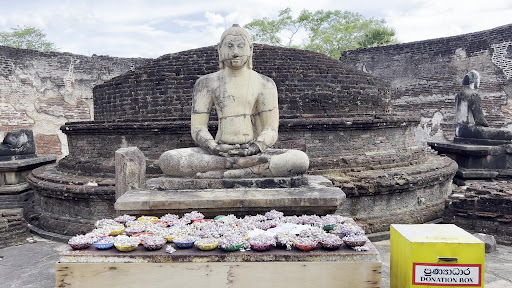
HTML SitemapExplore
logo
Find Things to DoFind The Best Restaurants

Vatadage — Attraction in North Central Province

Name
Vatadage
Description
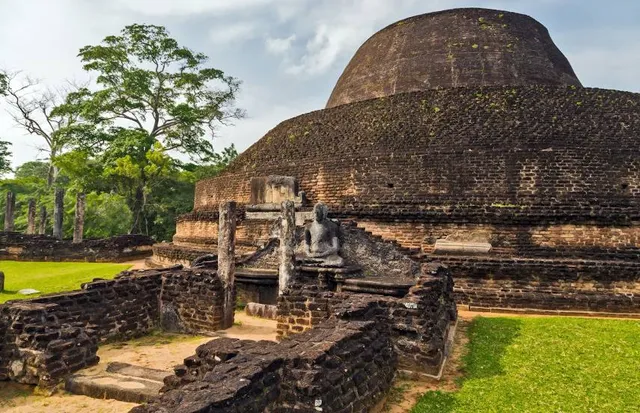
The Polonnaruwa Vatadage is an ancient structure dating back to the Kingdom of Polonnaruwa of Sri Lanka. It is believed to have been built during the reign of Parakramabahu I to hold the Relic of the tooth of the Buddha or during the reign of Nissanka Malla of Polonnaruwa to hold the alms bowl used by the Buddha.
Nearby attractions
Dalada Maluva - (Polonnaruwa)
W2X2+3F5, Polonnaruwa, Sri Lanka
Hatadage
W2X2+4GV, Polonnaruwa, Sri Lanka
Nissanka Latha Mandapa _ නිශ්ශංක ලතා මණ්ඩපය
W2X2+2F2, Sacred square, Ancient city, Polonnaruwa, Polonnaruwa, Sri Lanka
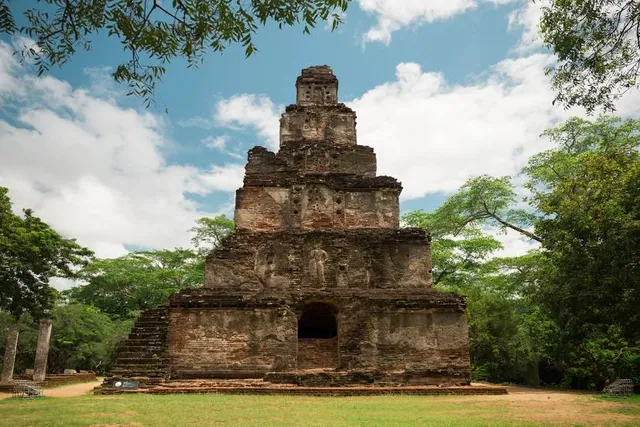
Sathmahal Prasadaya | සත්මහල් ප්‍රාසාදය
W2X2+5PP, Polonnaruwa, Sri Lanka
Thuparama Image House - 31(Image of Boddhisathwa)
W2X2+496, A11, Polonnaruwa, Sri Lanka
Royal Palace of King Maha Parakramabahu
W2V2+282, Polonnaruwa, Sri Lanka
Polonnaruwa Ancient City
X223+QWM, Sudarshanarama Puranagama Rd, Polonnaruwa, Sri Lanka
Kumara Pokuna (Pond)
W2R3+V2C, Ancient inner town Polonnaruwa, Polonnaruwa, Sri Lanka
Nearby restaurants
Nearby hotels
Deer Garden Guest polonnaruwa
Kumara pokuna, Polonnaruwa 51000, Sri Lanka
Priyanna Guest
18, 1st Cannal Road, Kumara Pokuna Polonnaruwa 18 .1st canal, Kumara Pokuna, Polonnaruwa 51000, Sri Lanka
EKHO Lake House
Pothgul, Mawatha, Polonnaruwa 51000, Sri Lanka
Forest Eco View
No : 28 1st Canal Road, Polonnaruwa 51000, Sri Lanka
Siyanco Holiday Resort & Cafe
10 Bund Rd, Polonnaruwa 51000, Sri Lanka
Gajaba Hotel
Bund Rd, Polonnaruwa, Sri Lanka
Dilshan Guest House
7.940405, 80.999755 Maradankadawala-Habarana-Thirukkondaiadimadu Hwy, Polonnaruwa, Sri Lanka
Sanctuary Cove Guest House
W2Q3+X6V, Polonnaruwa, Sri Lanka
Sahan Tourist House
Near Filling Station, Maradankadawala-Habarana-Thirukkondaiadimadu Hwy, Polonnaruwa 51000, Sri Lanka
Green Kingdom Resort
Kumara Pokuna (Pond), 32-B 1 Ela Rd, Polonnaruwa 51000, Sri Lanka
Related posts
Keywords
Vatadage tourism.Vatadage hotels.Vatadage bed and breakfast. flights to Vatadage.Vatadage attractions.Vatadage restaurants.Vatadage travel.Vatadage travel guide.Vatadage travel blog.Vatadage pictures.Vatadage photos.Vatadage travel tips.Vatadage maps.Vatadage things to do.
Vatadage things to do, attractions, restaurants, events info and trip planning
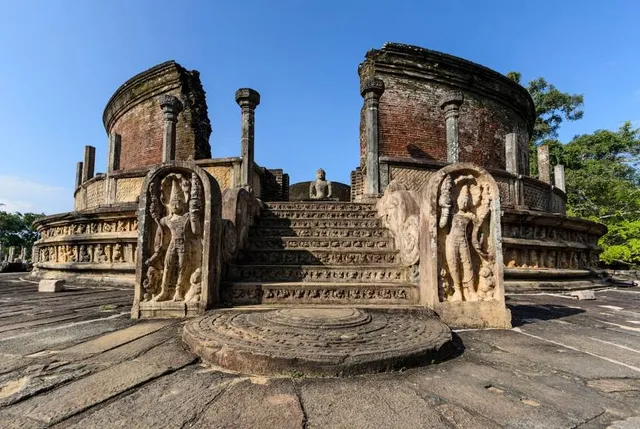
Vatadage
Sri LankaNorth Central ProvinceVatadage

Basic Info

Vatadage

W2W2+WJJ, Polonnaruwa, Sri Lanka
4.7(438)
Closed
Save
spot

Ratings & Description

Info

The Polonnaruwa Vatadage is an ancient structure dating back to the Kingdom of Polonnaruwa of Sri Lanka. It is believed to have been built during the reign of Parakramabahu I to hold the Relic of the tooth of the Buddha or during the reign of Nissanka Malla of Polonnaruwa to hold the alms bowl used by the Buddha.

Cultural
Scenic
Family friendly
Off the beaten path
attractions: Dalada Maluva - (Polonnaruwa), Hatadage, Nissanka Latha Mandapa _ නිශ්ශංක ලතා මණ්ඩපය, Sathmahal Prasadaya | සත්මහල් ප්‍රාසාදය, Thuparama Image House - 31(Image of Boddhisathwa), Royal Palace of King Maha Parakramabahu, Polonnaruwa Ancient City, Kumara Pokuna (Pond), restaurants:
logoLearn more insights from Wanderboat AI.
Phone
+94 112 692 840
Website
archaeology.gov.lk
Open hoursSee all hours
Mon7 AM - 8 PMClosed

Plan your stay

hotel
Pet-friendly Hotels in North Central Province
Find a cozy hotel nearby and make it a full experience.

hotel
Affordable Hotels in North Central Province
Find a cozy hotel nearby and make it a full experience.

hotel
The Coolest Hotels You Haven't Heard Of (Yet)
Find a cozy hotel nearby and make it a full experience.

hotel
Trending Stays Worth the Hype in North Central Province
Find a cozy hotel nearby and make it a full experience.

Reviews

Nearby attractions of Vatadage

Dalada Maluva - (Polonnaruwa)

Hatadage

Nissanka Latha Mandapa _ නිශ්ශංක ලතා මණ්ඩපය

Sathmahal Prasadaya | සත්මහල් ප්‍රාසාදය

Thuparama Image House - 31(Image of Boddhisathwa)

Royal Palace of King Maha Parakramabahu

Polonnaruwa Ancient City

Kumara Pokuna (Pond)

Dalada Maluva - (Polonnaruwa)

Dalada Maluva - (Polonnaruwa)

4.6

(915)

Open 24 hours
Click for details
Hatadage

Hatadage

4.7

(144)

Open 24 hours
Click for details
Nissanka Latha Mandapa _ නිශ්ශංක ලතා මණ්ඩපය

Nissanka Latha Mandapa _ නිශ්ශංක ලතා මණ්ඩපය

4.7

(101)

Open 24 hours
Click for details
Sathmahal Prasadaya | සත්මහල් ප්‍රාසාදය

Sathmahal Prasadaya | සත්මහල් ප්‍රාසාදය

4.8

(65)

Open 24 hours
Click for details

Things to do nearby

Locate rare loris under the stars
Mon, Dec 8 • 6:00 PM
Polonnaruwa, North Central Province 51000, Sri Lanka
View details
Discover Disneys Monkey Kingdom
Mon, Dec 8 • 5:30 AM
Polonnaruwa, North Central Province 5100, Sri Lanka
View details
Get the Appoverlay
Get the AppOne tap to find yournext favorite spots!
Wanderboat LogoWanderboat

Your everyday Al companion for getaway ideas

CompanyAbout Us
InformationAI Trip PlannerSitemap
SocialXInstagramTiktokLinkedin
LegalTerms of ServicePrivacy Policy

Get the app

© 2025 Wanderboat. All rights reserved.
logo

Reviews of Vatadage

4.7
(438)
avatar
4.0
4y

Polonnaruwa Vatadage temple, Anuradhapura, Shri Lanka.

The Polonnaruwa Vatadage is an ancient structure dating back to the Kingdom of Polonnaruwa of Sri Lanka. It is believed to have been built during the reign of Parakramabahu I to hold the Relic of the tooth of the Buddha or during the reign of Nissanka Malla of Polonnaruwa to hold the alms bowl used by the Buddha. Both these venerated relics would have given the structure a great significance and importance at the time. Located within the ancient city of Polonnaruwa, it is the best preserved example of a vatadage in the country, and has been described as the "ultimate development" of this type of architecture. Abandoned for several centuries, excavation work at the Polonnaruwa Vatadage began in 1903.

It was built by Parakramabahu I during his reign in the 12th century. The Culavamsa, an ancient chronicle, mentions that he built a circular stone shrine to hold the tooth relic of the Buddha. Archaeologist Harry Charles Purvis Bell believed that this shrine is the Polonnaruwa Vatadage. This is contradicted by several ancient sources of the island, including Rajavaliya and Poojavaliya, which mention that it was built by Nissanka Malla. However, according to the studies of Arthur Maurice Hocart, Nissanka Malla only renovated an already existing building and made some additions such as the entrance and outer porch. Wilhelm Geiger, who translated the ancient Mahavamsa, and historian H. W. Codrington both agree with this theory. A nearby stone inscription set by Nissanka Malla lists the Vatadage among his constructions. In this, he claims that it was built by one of his generals under his own direction.

A unique feature of architecture of ancient Sri Lanka, vatadages were built for the protection of small stupas that had an important relic enshrined in them or were built on hallowed ground. If the Polonnaruwa Vatadage is the shrine built by Parakramabahu I, the relic of the tooth of the Buddha would have been enshrined within it. Another possibility is that the alms bowl used by the Buddha may have been enshrined here. Both these relics were important objects in ancient Sri Lankan culture, and would have made the Polonnaruwa Vatadage one of the most significant and venerated buildings in the country.

Polonnaruwa was abandoned in 1215 following an invasion from the Eastern Ganga Dynasty invader Kalinga Magha. The Polonnaruwa Vatadage appears to have been abandoned with the fall of the kingdom, and there is no mention of it in the chronicles in later periods. It was not until 1903 that the Department of Archaeology began excavation work at the site under Bell, who noted that it was "only a mound of earth"...

   Read more
avatar
5.0
5y

The stupa around the stupa is for the protection of the stupa and for the convenience of pilgrims. The Vatadage is also known as Chethiyaya, Dhatuga, Dagaya, Thupaghara etc. The preliminary work of creating the Vatadage was carried out in the middle of the Anuradhapura period. The Vatadage is said to have been the inspiration for the Chaitya Hall, which was built during the Mauryan period in India.

The main plan of a Vatadage is to build a roof over it with a few rounds of tall stone pillars. In addition, the walls of the palace have been erected for the sake of beauty and protection.

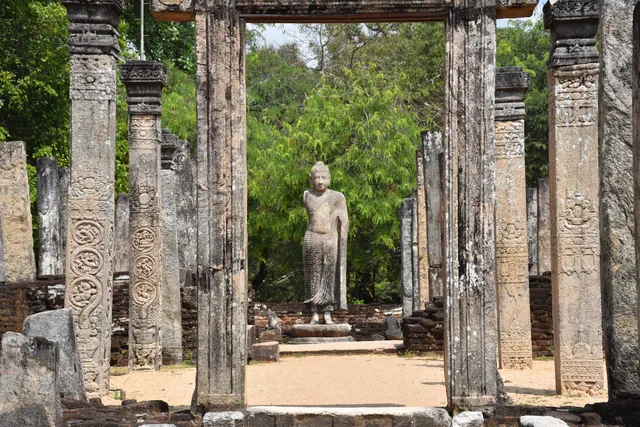
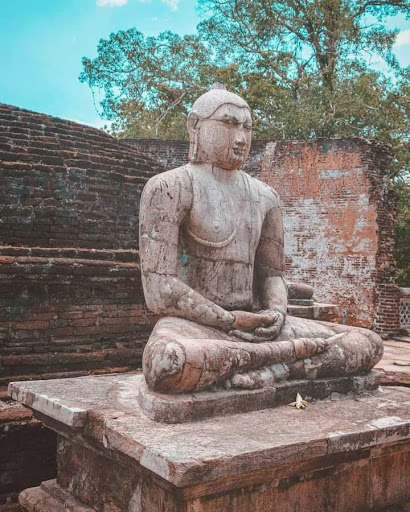
The Polonnaruwa Vatadage built by King Parakramabahu the Great is a masterpiece of the artistry of the Buddhists. Similarly, the moonstone of the Polonnaruwa era can be seen in the vicinity of the Polonnaruwa Vatadage. There are four stone pillars, each with eight stone pillars per round. The headings of the stone pillars are engraved. Another unique feature of this Vatadage is the presence of four Buddha statues in the Samadhi Mudra, facing the four directions of the Polonnaruwa Vatadage.

Archaeologists and historians differ as to who built the Polonnaruwa Vatadage, and one theory is that it was built during the reign of Parakramabahu I during the 12th century. Culavamsa states that he erected a circular stone relic shrine to deposit the Tooth Relic of the Buddha. Archaeologist Bell believes that the relic shrine is the Polonnaruwa Vatadage. Several historical sources in the island, such as Rajavaliya and Poojavali, which contradict this, say that it was built by King Nissanka Malla. Regardless of the design, Arthur Maurice Hockhart's studies show that King Nissanka Malla had renovated the existing building and made only a few additions, such as the entrance and exterior gates. Wilhelm Geiger, a translator of the Mahavamsa and a historian Both Codrington agree with this view. The inscription found by King Nissanka Malla in the vicinity lists the Vatadage as one of his constructions, but it is said that it was built by a general under his supervision. Vatadages, an integral part of ancient Buddhist architecture, were built for the protection of small sacred stupas that had been erected or purified by important sacred objects. If the Polonnaruwa Vatadage was a shrine built by King Parakramabahu I, the Buddha's Tooth Relic may have been enshrined in it. The other characteristic is the bowl relic of the Buddha. Both these relics were important elements of ancient Sri Lankan culture, and the Polonnaruwa Vatadage was one of the most important and most revered structures in...

   Read more
avatar
4.0
6y

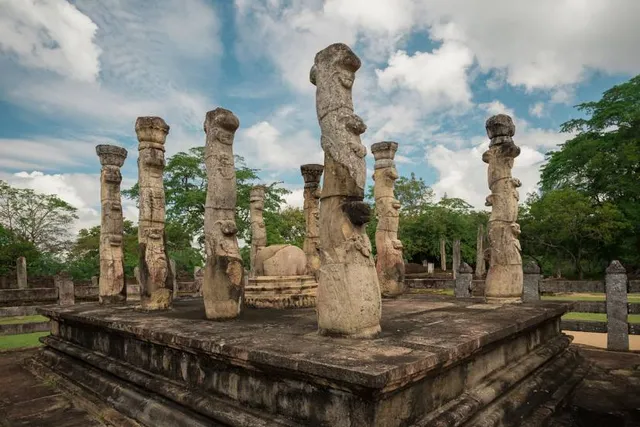
Yet another place to be traveled regarding popular tourist sites, is the Vatadage of Polonnaruwa, North central province of Sri Lanka. The ancient stupa was built by King Nishshankamalla (1187-1196). The structure is being recovered by a roof. At the center of the Stupa, to the four sides, fabulously carved Buddha images of Lord Buddha can be found. The roof is supported by two stone pillars and rests are fallen down.

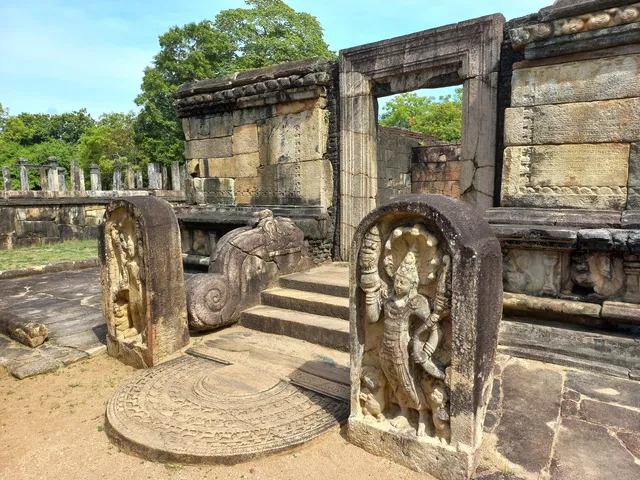
The carved stone stairs which will lead you to the upper terrace is located in between two beautifully carved guard stones. Obviously, the ancient moonstone or the Sandakada Pahana of Polonnaruwa era is remarkable. Being a UNESCO world heritage site the city of Polonnaruwa is being developed with essential tourism facilities and infrastructure. In fact, with the transference from the Anuradhapura to Polonnaruwa the moonstone has been added with several changes. The four animals, the lion, the bull, and horse were concerned as the three main remains of the moonstone later. The bull was the vehicle of God Shiva, therefore it was taken off from the moonstone where all the people and devotees walked on. Dr. Arthur Maurice Hocart said that King Nisshankamalla had just renovated the Vatadage and was built by King Parakramabahu during the 12th century. However, this unique building is was later attacked with the South Indian Dravidian attacks. So that Vatadage seems to be neglected with the change of the kingdoms. In 1903, the department of Archeologists started to excavate the site and today the quadrangular area is open to the public. While the base diameter is about 27 feet the two leveled Vatadage terrace or platform is one of the well-preserved Vatadage buildings of Sri Lanka. But is said that the kings used citizens build the Vatadage as a service instead of who were unable to pay the taxes to the king. Sri Lanka is mended with so many tourist attractions attached with glorious building construction. The remaining 8 feet stone columns of the Vatadage of Polonnaruwa are proved to be made by skilled craftsmen who contributed to the social, economic and religious development of our country. Travelers are expected to take caps and water bottles to get refreshed during their journeys. If so they can recover from...

   Read more
Page 1 of 7
Previous
Next

Posts

Roshan Kalpa TharangaRoshan Kalpa Tharanga
This beautiful Stupa House (Vatadage) has been built before the time of Nissanga Malla (1187-1196) but he has carried out major renovations on this building. So what you see today is probably his work. The uniqueness of such buildings is that the Stupa is protected by a roof. Therefore Stupa’s in such buildings are small. Another beautiful “Vatadage” is situated in Madirigiriya few kilometers away from Polonnaruwa. A detail description of the overall “Stupaghara” or “Chethiyaghara” architecture including vatadages of Sri Lanka can be found here. On the centre is a small stupa and on the four sides, there are beautifully carved Buddha statues. These statues are different to what is normally found. The curly hair is not visible on the head. And the robe is also flat which is unusual. The roof has been supported by two rows of stone pillars around the Stupa. None of the pillars are visible today. But the pillars outside the walls are still intact. Four sets of beautifully carved stone stairs lead the upper level from four sides. On the side of stair case some of most beautiful guard stones and moonstones in this area can be seen. The guard stones on the eastern side of the temple is said to be the best guard stone in t he Polonnaruwa era. The moonstones in the Polonnaruwa era had undergone a major change compared to the Anuradhapura moonstones. The most visible is the disappearance of the bull in the carvings. (See Pancavasa with the Moonstone for a brief description of moonstones in Anuradhapura era.) Where the moonstones originally had four animals – the elephant, the horse, the lion, the bull, now only three remain. Bull is the vehicle of God Shiva (according to Hindu beliefs) and is considered a holy animal by Hindu’s. Probably for this reason, it has been taken off the moonstone where everybody who enters the temple tramples. Instead the bull has been placed on the side of the stairways at a higher elevation in some places.
Niroshan KumarNiroshan Kumar
The Polonnaruwa Vatadage is a remarkable architectural masterpiece and a significant religious site in Sri Lanka. It's considered the best-preserved example of a vatadage (relic house) in the country and offers a glimpse into the rich history and culture of the ancient Kingdom of Polonnaruwa. Key features of the Polonnaruwa Vatadage: Circular Structure: The vatadage is a circular structure built around a small stupa, believed to have housed a sacred relic. Concentric Platforms: It consists of two concentric platforms, with the lower platform featuring elaborately carved stone columns and guardstones. Intricate Carvings: The stonework is adorned with intricate carvings depicting deities, mythical creatures, and geometric patterns. Moonstones: The moonstones at the entrance of the vatadage are particularly noteworthy for their exquisite carvings. Architectural Significance: The Polonnaruwa Vatadage is considered the pinnacle of vatadage architecture, showcasing the advanced engineering and artistic skills of ancient Sri Lankan builders. Historical Significance: The exact date of construction is uncertain, but it's believed to have been built during the 12th century, possibly during the reign of Parakramabahu I or Nissanka Malla. It served as a sacred place of worship and a symbol of the kingdom's power and prosperity.
Rivin PathirageRivin Pathirage
The Polonnaruwa Vatadage is an ancient structure dating back to the Kingdom of Polonnaruwa of Sri Lanka. It is believed to have been built during the reign of Parakramabahu I to hold the Relic of the tooth of the Buddha or during the reign of Nissanka Malla of Polonnaruwa to hold the alms bowl used by the Buddha. Both these venerated relics would have given the structure a great significance and importance at the time. Located within the ancient city of Polonnaruwa, it is the best preserved example of a vatadage in the country, and has been described as the "ultimate development" of this type of architecture. Abandoned for several centuries, excavation work at the Polonnaruwa Vatadage began in 1903. Built for the protection of a small stupa, the structure has two stone platforms decorated with elaborate stone carvings.
See more posts
See more posts
hotel
Find your stay

Pet-friendly Hotels in North Central Province

Find a cozy hotel nearby and make it a full experience.

This beautiful Stupa House (Vatadage) has been built before the time of Nissanga Malla (1187-1196) but he has carried out major renovations on this building. So what you see today is probably his work. The uniqueness of such buildings is that the Stupa is protected by a roof. Therefore Stupa’s in such buildings are small. Another beautiful “Vatadage” is situated in Madirigiriya few kilometers away from Polonnaruwa. A detail description of the overall “Stupaghara” or “Chethiyaghara” architecture including vatadages of Sri Lanka can be found here. On the centre is a small stupa and on the four sides, there are beautifully carved Buddha statues. These statues are different to what is normally found. The curly hair is not visible on the head. And the robe is also flat which is unusual. The roof has been supported by two rows of stone pillars around the Stupa. None of the pillars are visible today. But the pillars outside the walls are still intact. Four sets of beautifully carved stone stairs lead the upper level from four sides. On the side of stair case some of most beautiful guard stones and moonstones in this area can be seen. The guard stones on the eastern side of the temple is said to be the best guard stone in t he Polonnaruwa era. The moonstones in the Polonnaruwa era had undergone a major change compared to the Anuradhapura moonstones. The most visible is the disappearance of the bull in the carvings. (See Pancavasa with the Moonstone for a brief description of moonstones in Anuradhapura era.) Where the moonstones originally had four animals – the elephant, the horse, the lion, the bull, now only three remain. Bull is the vehicle of God Shiva (according to Hindu beliefs) and is considered a holy animal by Hindu’s. Probably for this reason, it has been taken off the moonstone where everybody who enters the temple tramples. Instead the bull has been placed on the side of the stairways at a higher elevation in some places.
Roshan Kalpa Tharanga

Roshan Kalpa Tharanga

hotel
Find your stay

Affordable Hotels in North Central Province

Find a cozy hotel nearby and make it a full experience.

Get the Appoverlay
Get the AppOne tap to find yournext favorite spots!
The Polonnaruwa Vatadage is a remarkable architectural masterpiece and a significant religious site in Sri Lanka. It's considered the best-preserved example of a vatadage (relic house) in the country and offers a glimpse into the rich history and culture of the ancient Kingdom of Polonnaruwa. Key features of the Polonnaruwa Vatadage: Circular Structure: The vatadage is a circular structure built around a small stupa, believed to have housed a sacred relic. Concentric Platforms: It consists of two concentric platforms, with the lower platform featuring elaborately carved stone columns and guardstones. Intricate Carvings: The stonework is adorned with intricate carvings depicting deities, mythical creatures, and geometric patterns. Moonstones: The moonstones at the entrance of the vatadage are particularly noteworthy for their exquisite carvings. Architectural Significance: The Polonnaruwa Vatadage is considered the pinnacle of vatadage architecture, showcasing the advanced engineering and artistic skills of ancient Sri Lankan builders. Historical Significance: The exact date of construction is uncertain, but it's believed to have been built during the 12th century, possibly during the reign of Parakramabahu I or Nissanka Malla. It served as a sacred place of worship and a symbol of the kingdom's power and prosperity.
Niroshan Kumar

Niroshan Kumar

hotel
Find your stay

The Coolest Hotels You Haven't Heard Of (Yet)

Find a cozy hotel nearby and make it a full experience.

hotel
Find your stay

Trending Stays Worth the Hype in North Central Province

Find a cozy hotel nearby and make it a full experience.

The Polonnaruwa Vatadage is an ancient structure dating back to the Kingdom of Polonnaruwa of Sri Lanka. It is believed to have been built during the reign of Parakramabahu I to hold the Relic of the tooth of the Buddha or during the reign of Nissanka Malla of Polonnaruwa to hold the alms bowl used by the Buddha. Both these venerated relics would have given the structure a great significance and importance at the time. Located within the ancient city of Polonnaruwa, it is the best preserved example of a vatadage in the country, and has been described as the "ultimate development" of this type of architecture. Abandoned for several centuries, excavation work at the Polonnaruwa Vatadage began in 1903. Built for the protection of a small stupa, the structure has two stone platforms decorated with elaborate stone carvings.
Rivin Pathirage

Rivin Pathirage

See more posts
See more posts