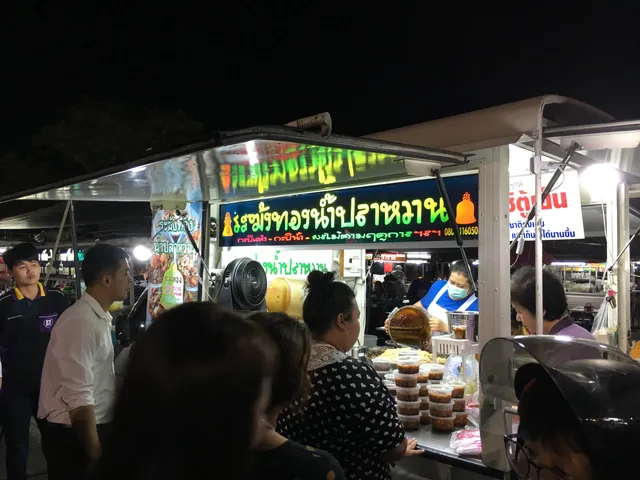
I read in the reviews that not many people there, but even though we were there in the evening, I thought there were a lot of people. But that's probably because we went in November, after the holidays. In 2024, the festival was held from 12 to 20 November. On this very special holiday, thousands of locals come and pay homage to the temple and walk around the base of the chedi. We were there 22.11
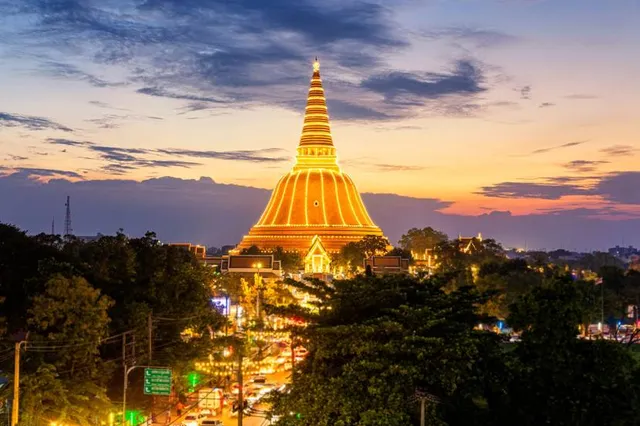
Respectful dress is required. We were there when the sun was going down, so we saw everything lit up
I was amazed at the organisation of the traffic... As I have been many times before... We arrived by bus in front of the wall of this temple, the bus stopped... immediately some official put cones on the left side of the bus to let the traffic behind the Nai know that this lane would be blocked... And being in Thailand, you get off on the left side... But we didn't have to worry about cars hitting us when we got out onto the road, because there were already cones there, so the cars didn't get into that lane... It's very surprising to me and I've seen it a few times during our visit to Thailand... That it only works with the buses and there's always an official there to make sure the tourists are parked safely and get off. Super cool
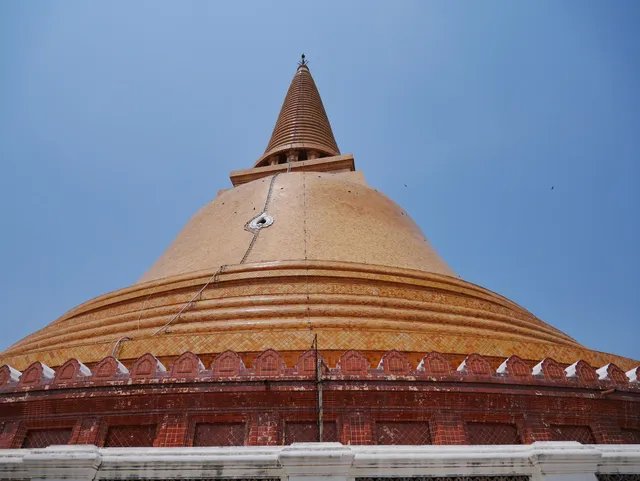
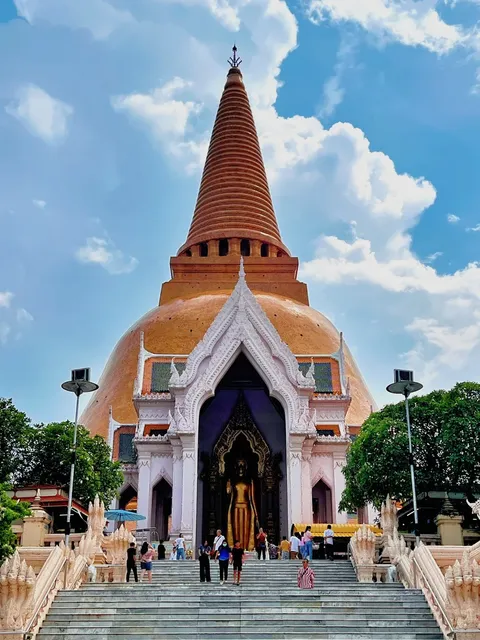
Phra Pathom Chedi, the world's tallest stupa at 120 metres, is a major Buddhist landmark in Thailand, rich in historical and religious significance. The architecture of the chedi is striking, with its massive bell-shaped stupa covered in orange tiles that glow in the sun. The complex includes several smaller buildings, including chapels, statues and a museum of Buddhist artefacts. Its name translates as 'The Holy Stupa of the Beginning', reflecting its status as one of the earliest centres of Buddhism in Thailand. The original stupa is believed to have been built around the 3rd century BC during the reign of the Indian emperor Ashoka, although the current massive structure was built in the 19th century under King Rama IV.
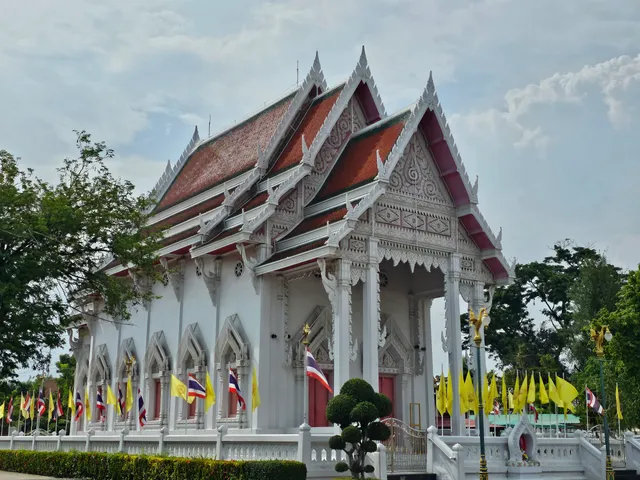
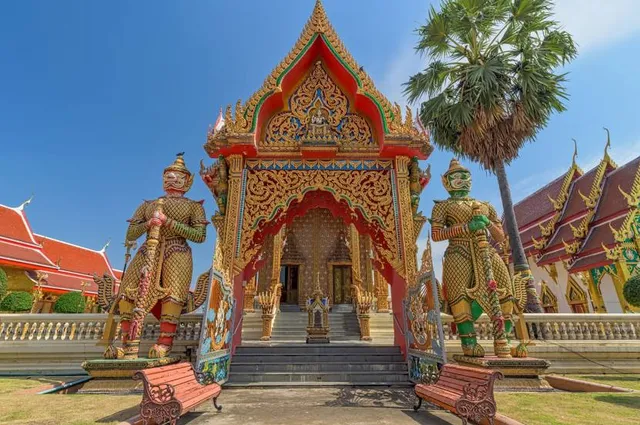
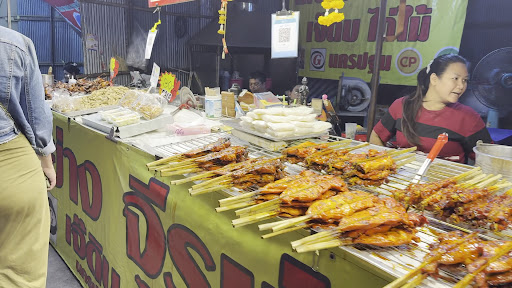
You can see Niches around the base contain hundreds of Buddha images for each day of the week. A large gilded standing Buddha (Phra Ruang Rodjanarith) holds the ashes of King Rama VI. The complex includes Wat Phra Pathom Chedi, with shrines, prayer areas and religious artwork open to visitors. The Wat Phra Pathom Chedi Museum and the National Museum display artefacts from the Dvaravati era. Nearby, a market sells Buddhist amulets and food stalls offer Thai cuisine. A viharn houses a reclining Buddha, and bells in the courtyard can be rung for good luck
It is a revered pilgrimage site for Buddhists and a popular destination for visitors interested in Thai culture and history. It hosts an annual festival in November that attracts thousands of pilgrims and tourists. Offerings: Candles/lamps: These are lit as offerings to the Buddha, symbolising the light of wisdom and compassion. Oil: Oil is a common offering in many Buddhist traditions. It can symbolise purity, nourishment and the smooth flow of life. Incense: Another common offering is joss sticks, which are burned to create incense. The smoke is believed to carry prayers and offerings to the spiritual realm. Flowers: Fresh flowers are often offered as a symbol of beauty and respect. Meaning: Devotion: Lighting lamps, making offerings and reciting prayers are ways of expressing devotion and generating merit. Respect: It's a gesture of respect and gratitude to the Buddha and the teachings. Creating positive energy: The act of offering is believed to create positive energy and blessings for...
Read morePra Pathommachedi ( Phra Pathom Chedi, Phra means monk, prist some society used for classifications, Pathom means first, initial order, Chedi means stupa where relics or remains contained) is a stupa located in “ Wat Phra Pathommachedi Ratcha Wora Maha Wihan” situated at the center of city, Tambon Phra Pathom Chedi, Amphoe Mueang Nakhon Pathom, Chang Wat Nakorn Pathom.At the beginning, dating back to the 3 th century B.C. ( before Christ) the Indian emperor Asoka wanted to spread Buddhism to Asia including this area, many monks were sent out to fulfill his requirements, relics from Buddha were brought to enshrine in the”Phra Pathom Chedi “( means first holy stupa).Initially this stupa was called in Khmer “ Phrathom Chedi” means “ big stupa “ on the other hand the northern regions called “royal stupa”, it is small size. During the reign of King Rama 4 , the bigger size of chedi was built to cover the original stupa ( totally 2 stupa, the first one was modeled after the Great Stupa of Sanchi ( built in the 3 th century) In Central India ( UNESCO World Heritage Site), the second one was modeled after ancient Kom). In A.D. 1853 the restoration was done during the reign of King Rama 6, finished the job in A.D. 1870 ( totally 17 years), finally the “ Phra Pathommachedi “ is 120 m. in height, modeled in Langa style bell shaped, during excavations stone carvings, Buddha Relics dating back to Dvaravati era. There are 4 Viharn where Buddha images contained in different posture, the standing Buddha image in the gesture of scaring dispelling (Abhaya Mudra), situated at the north side called “ Phra Ruang Rodjanarith”, large Reclining Buddha image contained in another Viharn, King Rama 6 ‘s remains are installed at the base of stature, including his beloved dog ‘s coffin kept here ( dog named “ Jalet “). “ Phra Pathom Chedi “ ‘s festival will be taken for nine days and nine nights in the twelfth month (from the evening of the full moon until the 5 th day of the waning moon) every year, the purpose of these mentioned to allow people to pay homage and worship to “ Phra Pathom Chedi “. The east side is where Museum situated, there are many interesting archaeological and historical objects worth to be seen, dating back to Dvaravati and Baan Chiang era, opened daily from 08.00 a.m. to 04.30...
Read moreวัดพระปฐมเจดีย์ เป็นพระอารามหลวงชั้นเอก ชนิดราชวรมหาวิหาร ตั้งอยู่ที่ ตำบลพระปฐมเจดีย์ อำเภอเมืองนครปฐม จังหวัดนครปฐม มีจุดเด่นที่สำคัญคือ พระปฐมเจดีย์ หรือ พระธมเจดีย์ ซึ่งเป็นเจดีย์ที่ใหญ่และสูงที่สุดแห่งหนึ่งในประเทศไทย (120.45 เมตร)
องค์พระปฐมเจดีย์ปัจจุบันนี้ เป็นพระเจดีย์ทรงลังกา แบบสุโขทัย สร้างขึ้นในสมัยพระบาทสมเด็จพระจอมเกล้าเจ้าอยู่หัว ซึ่งสร้างครอบเจดีย์เดิมถึงสององค์ ได้แก่ เจดีย์ทรงสถูปสาญจีตามแบบอินเดียยุคพระเจ้าอโศกมหาราช และเจดีย์ทรงขอมโบราณ
นอกจากองค์พระปฐมเจดีย์แล้ว ในลานชั้นลดด้านทิศใต้องค์พระปฐมเจดีย์และพระอุโบสถมีพระประธาน พระพุทธรูปศิลาขาว ซึ่งเป็นสองในสี่พระพุทธรูปประทับนั่งห้อยพระบาท ปางแสดงธรรม ที่สร้างขึ้นในยุคทวารวดี
พระปฐมเจดีย์ องค์พระปฐมเจดีย์ เป็นปูชนียสถานอันสำคัญของประเทศไทย อยู่ภายในวัดพระปฐมเจดีย์ราชวรมหาวิหาร มีประวัติความเป็นมายาวนาน เชื่อว่าเป็นที่ประดิษฐานพระบรมสารีริกธาตุขององค์พระโคตมพุทธเจ้า
องค์พระปฐมเจดีย์ เป็นพระเจดีย์ใหญ่ รูป ระฆังคว่ำ ปากผายมหึมา โครงสร้างเป็นไม้ซุง รัดด้วยโซ่เส้นมหึมาก่ออิฐ ถือปูน ประดับด้วยกระเบื้องปูทับ ประกอบด้วยวิหาร 4 ทิศ กำแพงแก้ว 2 ชั้น ถือเป็นเจดีย์ที่ใหญ่ที่สุด เป็นอันดับ 1 ของประเทศไทยอีกด้วย เป็นที่ประดิษฐานพระบรมสารีริกธาตุ ของพระพุทธเจ้า เป็นที่เคารพสักการบูชาของบรรดาพุทธศาสนิกชนทั่วโลก ทางวัดกำหนดให้มีงานเทศกาลนมัสการองค์พระปฐมเจดีย์ ในวันขึ้น 12 ค่ำ เดือน 12 ถึง วันแรม 5 ค่ำ เดือน 12 รวม 9 วัน 9 คืน เป็น ประจำทุกปี
ประวัติองค์พระปฐมเจดีย์ พระปฐมเจดีย์ หรือเดิมเรียกว่า พระธมเจดีย์ มีฐานะเป็นมหาธาตุหลวง ทั้งนี้พระบาทสมเด็จพระจอมเกล้าเจ้าอยู่หัวมีพระราชวินิจฉัยว่า พระธมเจดีย์องค์นี้อาจเป็นเจดีย์ที่สร้างขึ้นเมื่อคราวที่พระสมณทูตในพระเจ้าอโศกมหาราชเดินทางมาเผยแผ่ศาสนายังสุวรรณภูมิก็เป็นได้ เพราะพระเจดีย์เดิมมีลักษณะทรงโอคว่ำหรือทรงมะนาวผ่าซีกแบบเดียวกับพระสถูปสาญจี แต่ปรากฏว่ามียอดเป็นแบบปรางค์ ซึ่งพระองค์ฯ มีพระราชวินิจฉัยว่า อาจมีเจ้านายพระองค์ใดมาบูรณะไว้ก็เป็นได้ ซึ่งตรงกับความในศิลาจารึกหลักที่ 2 (ศิลาจารึกวัดศรีชุม) ของพระมหาเถรศรีศรัทธา อันได้กล่าวไว้ว่า พระมหาเถรศรีศรัทธาฯ ท่านทรงได้แวะมาบูรณะพระธมเจดีย์องค์นี้ ก่อนที่ท่านจะเดินทางกลับ เมืองราด เมื่อคราวที่ท่านเสด็จกลับจากศึกษาศาสนาพุทธในประเทศศรีลังกา ทั้งนี้พระบาทสมเด็จพระจอมเกล้าเจ้าอยู่หัวจึงพระราชทานนามใหม่ว่าพระปฐมเจดีย์
ในเรื่องนี้นักประวัติศาสตร์และนักโบราณคดีบางท่านได้ระบุว่า พระปฐมเจดีย์ไม่ได้เป็นเจดีย์ที่เก่าที่สุดของสุวรรณภูมิ แต่เป็น พระมหาธาตุหลวง ในยุคทวารวดีมากกว่า เนื่องด้วยเหตุผลประกอบหลายประการ โดยเฉพาะการค้นพบเจดีย์ที่มีอายุเก่าแก่กว่าพระธมเจดีย์และหลักฐานลายลักษณ์อักษร ที่ระบุว่า " พระเจดีย์องค์นี้ เดิม ขอมเรียก พระธม ซึ่งไม่ว่าจะเป็นชาวขอมจริงๆ หรือชาวลวรัฐ ซึ่งสมัยนั้นเราก็เรียกว่าขอม เช่น ขอมสบาดโขลญลำพง คำว่า ธม สำหรับ ชาวขอม นั้น แปลว่า ใหญ่ ตรงกับคำเมืองว่า หลวง ซึ่งเราก็เรียกพระนครธม ว่า พระนครหลวง ด้วยเหตุผลเดียวกัน
นอกจากนี้วัดพระปฐมเจดีย์ยังเป็นที่พระบรมราชสรีรางคารพระบาทสมเด็จพระมงกุฎเกล้าเจ้าอยู่หัว พระสรีรางคารพระนางเจ้าสุวัทนา พระวรราชเทวีในรัชกาลที่ 6 และพระสรีรางคารสมเด็จพระเจ้าภคินีเธอ เจ้าฟ้าเพชรรัตนราชสุดา สิริโสภาพัณณวดี ซึ่งบรรจุไว้ที่ผนังเบื้องหลังพระร่วงโรจนฤทธิ์ ที่พระวิหารทิศเหนือ องค์พระปฐมเจดีย์
พระร่วงโรจนฤทธิ์ ปี พ.ศ. 2451 พระบาทสมเด็จพระมงกุฎเกล้าเจ้าอยู่หัวเมื่อครั้งดำรงพระอิสริยยศเป็นสยามมกุฎราชกุมาร เสด็จประพาสหัวเมืองเหนือ ได้ทอดพระเนตรพระพุทธรูปโบราณเป็นอันมาก แต่มีพระพุทธรูปองค์หนึ่งที่ศรีสัชนาลัย (จังหวัดสุโขทัย) ประกอบด้วยพระลักษณะงามเป็นที่ต้องพระราชหฤทัย แต่ชำรุดมากเหลืออยู่แต่พระเศียร พระหัตถ์และพระบาท จึงโปรดเกล้าฯ ให้อัญเชิญลงมากรุงเทพฯ แล้วให้ช่างปั้นสถาปนาขึ้นมาบริบูรณ์เต็มพระองค์ และโปรดเกล้าฯ ให้จัดการพระราชพิธีเททองหล่อขึ้นเมื่อวันที่ 30 ธันวาคม พ.ศ. 2456 ณ วัดพระเชตุพนวิมลมังคลาราม กรุงเทพมหานคร
พระร่วงโรจนฤทธิ์ เป็นที่เคารพบูชาของพุทธศาสนิกชนชาวไทยทั่วไป ชื่อเต็มก็คือ พระร่วงโรจนฤทธิ์ ศรีอินทราทิตย์ธรรโมภาส มหาวชิราวุธราชปูชนียบพิตร ตามประกาศกระแสพระบรมราชโองการลงวันที่ 12 ตุลาคม พ.ศ. 2466 แต่ประชาชนทั่วไปจะเรียกว่า หลวงพ่อพระร่วง หรือ พระร่วงโรจนฤทธิ์
พระร่วงโรจนฤทธิ์ มีขนาดความสูงวัดจากพระบาทถึงพระเกศ 7.42 เมตร หรือราว 12 ศอก 4 นิ้ว เป็นพระพุทธรูปปางห้ามญาติ ศิลปะแบบสุโขทัย ประทับยืนอยู่บนฐานทองเหลืองลายบัวคว่ำบัวหงาย ทำวงพระพักตร์ตามยาว พระหนุเสี้ยมนิ้วพระหัตถ์และพระบาทไม่เสมอกัน ห้อยพระหัตถ์ซ้ายลงข้างพระวรกาย แบฝ่าพระหัตถ์ขวายกตั้งขึ้นยื่นออกไปข้างหน้าระดับพระอุระ เป็นกิริยาห้าม...
Read more