Beautiful, breathtaking temple complex! This is a must see if you are in Ayutthaya. You can buy the ticket on the spot and just take a slow walk around the grounds. We went with a local Thai guide. The first thing he told us was not to take pictures of the Buddha standing, not to be higher than his head.. Be respectful
People could borrow umbrellas to protect themselves from the sun. It is necessary to carry a lot of water because the sun is strong. It was necessary to follow the dress code, not to have bare knees and bare shoulders.
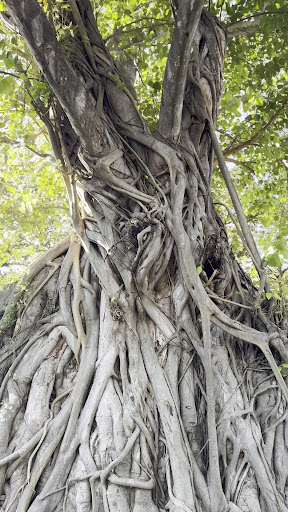
It is known for its historical value and the iconic Buddha head embedded in the roots of the tree. The complex is large, in 45 minutes you can walk around it at a fast pace and take photos, for a comfortable walk and enjoy the complex I recommend a minimum of 2 hours. The site is full of ancient ruins that tell the story of the city's rich history. The atmosphere is tranquil, making it a perfect place for meditation. If you are interested in history, ruins and ancient sites, this is the place for you.
We saw many groups of people sitting on the lawn painting and drawing. I have seen on some travel blogs the recommendation to rent a bicycle to get around Ayutthaya between the different monuments.
A tip for photographers: stay until sunset and the golden hour... The bricks will have a glorious warm colour and shots of the setting sun between the magnificent ruins will have soul. The temples are beautifully illuminated by lanterns and other lights. You can also see them during the day, they are very pretty.
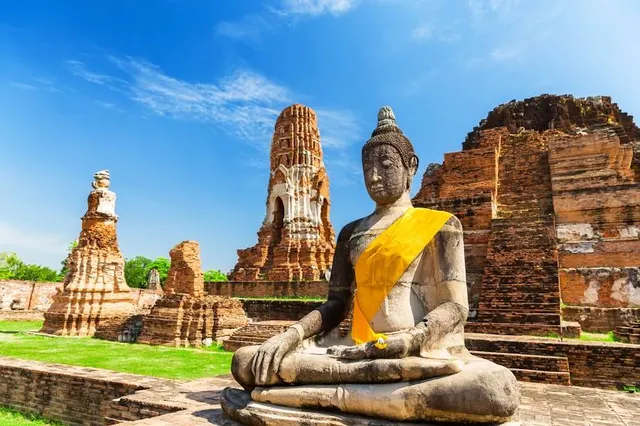
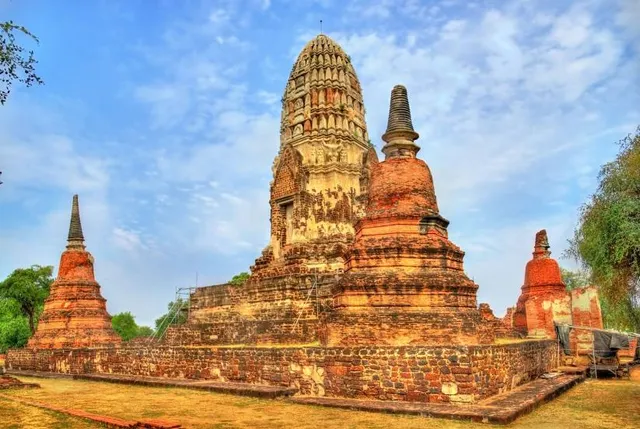
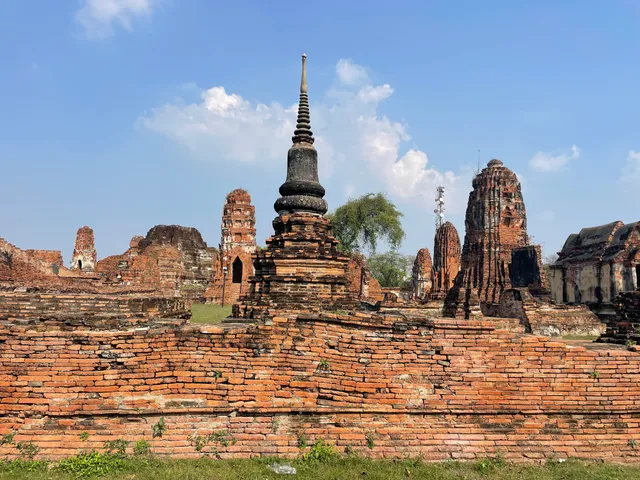
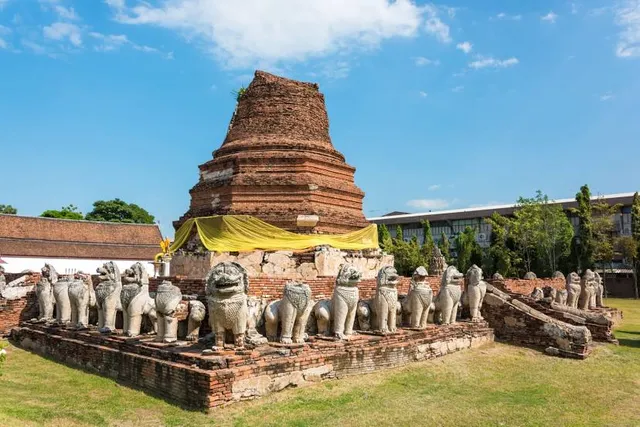
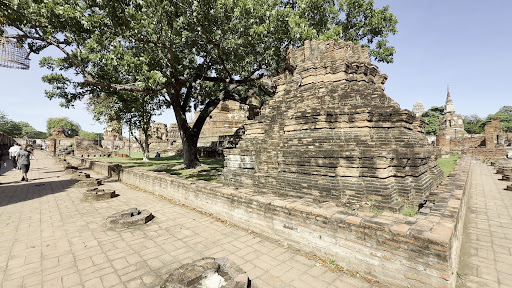
This is one of the most important temples in the Ayutthaya Historical Park, which was once the spiritual and administrative centre of the ancient capital. It is famous for its historical value and the iconic Buddha head embedded in the roots of a tree. Its history dates back to the 14th century and was the centre of religious life in the Ayutthaya kingdom. The remains of the temple include a large central stupa (prang) surrounded by the ruins of other buildings and Buddha statues. The architectural style is typical of the Ayutthaya period, with an influence of Khmer architecture. The missing Buddha heads are one of the most interesting mysteries at this historic site. There are several theories that try to explain this phenomenon, for example that the most likely cause is the devastating period when Ayutthaya was attacked and burned several times. The sacking by Burmese troops in 1767, which was one of the most significant and devastating attacks, was when the city was completely destroyed. During the invasion, many statues were destroyed or damaged and their heads were often chopped off. Soldiers and looters often chopped off the heads of statues as trophies or out of religious intolerance. The heads were valuable because they were believed to contain spiritual power. These heads were either taken as trophies or sold on the black market for antiquities.
Wat Mahathat is famous for holding some of the relics of the Buddha. This temple was one of the most important spiritual centres in the kingdom of Ayutthaya and was considered an important place to keep relics of the Buddha, adding to its religious significance.
Relics of the Buddha were often kept in stupas (prangs) or chedis in Thai temples, and Wat Mahathat was no exception. The main stupa of this temple was supposed to be the place where the relics were kept. This tradition adds to the spiritual and historical significance of the temple, making it an important site for Thai Buddhists and tourists seeking spiritual and cultural experiences.
Wat Mahathat is part of the Ayutthaya Historical Park, a UNESCO World Heritage Site. This park includes several important temples and monuments from the period when Ayutthaya was the capital of Siam (now Thailand), between 1350 and 1767. The UNESCO listing ensures the protection and preservation of this historic site, helping to safeguard its cultural and historical significance for future...
Read moreWat Mahathat - A Symbol of Ayutthaya’s Glory
Wat Mahathat, located in the UNESCO World Heritage Site of Ayutthaya, Thailand, is one of the most iconic and historically significant temples in the region. Built during the 14th century, it served as a royal monastery and was once a center for religious ceremonies and spiritual practices. Today, it stands as a remarkable reminder of Ayutthaya’s rich cultural and architectural heritage.
Key Highlights of Wat Mahathat: Buddha Head in the Tree Roots: • One of the most famous and photographed features of Wat Mahathat is the serene Buddha head entwined in the roots of a Banyan tree. This unique image is a powerful symbol of nature reclaiming history and is deeply meaningful to visitors. Historical Significance: • The temple was built to enshrine relics of the Buddha and served as a key religious and political center during the Ayutthaya Kingdom. It reflects the architectural style and grandeur of its era. Imposing Central Prang (Tower): • Although the central prang has partially collapsed over time, its remains still exude a majestic aura. It was originally built to house sacred relics and was a symbol of the temple’s importance. Beautiful Buddha Statues: • Scattered throughout the temple grounds are numerous Buddha statues, some of which have been weathered by time, adding a haunting yet peaceful charm to the ruins. Tranquil Ambiance: • Despite being a popular tourist destination, the temple retains a serene and reflective atmosphere, perfect for those seeking a moment of peace and connection with history.
Why Visit Wat Mahathat?
Wat Mahathat is not only a stunning historical site but also a place of deep cultural and spiritual significance. It offers visitors a glimpse into the glory of Ayutthaya’s past while providing a tranquil setting to reflect on the passage of time and the enduring nature of spirituality.
Whether you are a history enthusiast, a photography lover, or a spiritual seeker, Wat Mahathat is a must-visit destination that will leave you in awe of its...
Read moreWat Mahathat in Ayutthaya is one of the most iconic and historically significant temples in Thailand. Built during the reign of King Borommarachathirat I in the late 14th century, it once served as the royal monastery and the religious heart of the Ayutthaya Kingdom. The temple was the residence of the Supreme Patriarch, the head of the Thai Buddhist monastic order, which made it not only a spiritual center but also a place of immense political and cultural influence.
The temple complex was designed with grandeur, featuring a central prang (Khmer-style tower) that symbolized Mount Meru, the mythical center of the universe in Buddhist and Hindu cosmology. Although the prang has collapsed over the centuries, the ruins still reflect the architectural brilliance and religious devotion of Ayutthaya’s golden age. Surrounding the central tower were numerous chedis, halls, and Buddha statues, forming a vast sacred space where ceremonies and royal rituals took place.
Today, Wat Mahathat is most famous for the sandstone Buddha head entwined in the roots of a Bodhi tree. This hauntingly beautiful image has become a symbol of Ayutthaya, embodying the passage of time and the resilience of faith. It is one of the most photographed and visited spots in the entire historical park. Visitors often pause here to reflect on the mysterious power of nature and religion blending together.
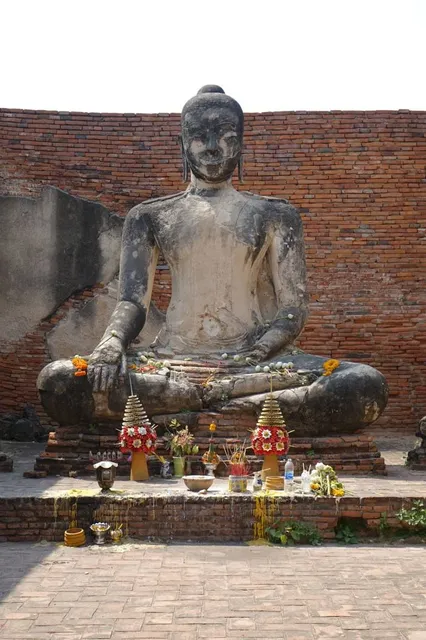
The temple ruins still preserve rows of seated Buddha statues, many damaged during the fall of Ayutthaya to the Burmese in 1767. These broken images stand as silent witnesses to the city’s tragic destruction and its enduring legacy. Walking through the site, one can sense both the grandeur of the past and the fragility of human creations.
Wat Mahathat remains a place of reverence, history, and symbolism, offering travelers a profound glimpse into the spiritual and cultural soul of...
Read more