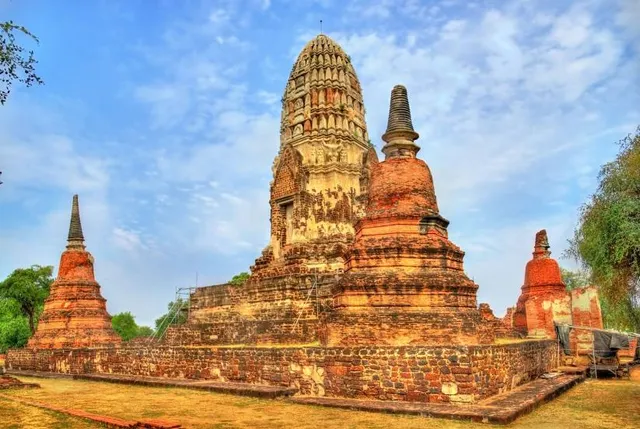
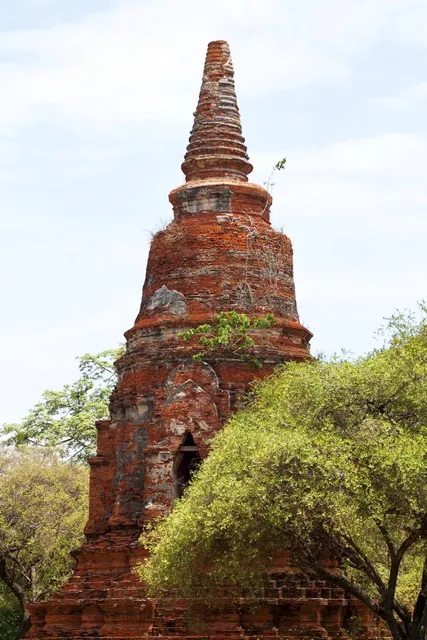
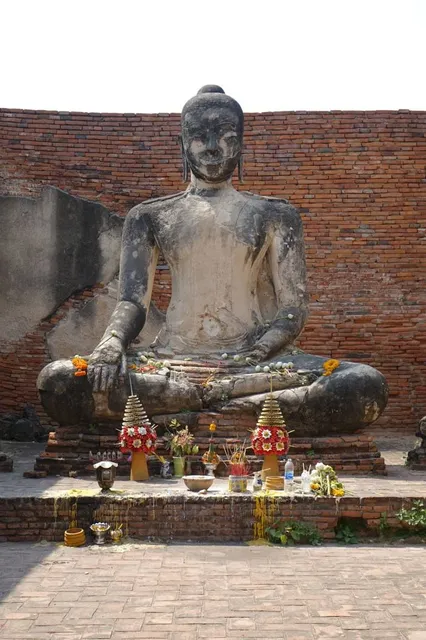
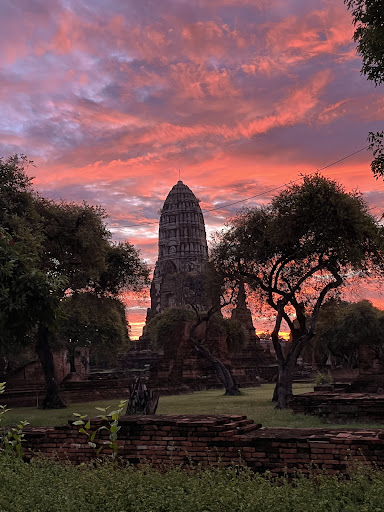
Wat Ratchaburana( Wat= temple, Ratcha= king or royal, Burana=restoration, there are many temples named Wat Ratchaburana, the other temple such as Chakkraphet rd. , Bangkok,Amphoe Mueang Phitsanulok,Phitsanulok province ) resided in the historic park, Tambon Tha Wa Sukri( Pathan bridge’s foot) between the Chi Kun and Naraesaun roads ,ancient palace nearby. In B.E. 1424 the huge and oldest temple, built by king Boromrachathirat 2( Chao Sam Phraya) at the cremation site of his two elder brothers, had fought to their death in a duel for the royal succession to their father Intha Racha( Chao Sam Phraya, Chao = king , Sam = 3 , Phraya= rank or position). Main Prang is one of the finest of any other temple in Ayutthaya, crypt accessible by steep stairway where relics were founded during the Fine Art Department excavated and restored, Prang is on an elevated platform,stucco ornamentation shown sculpture with the belief of charm the mythical creatures of Garudas and multi headed Naga snake displayed( Garudas in swooping down on naga position according to the tales in Brahman-Hindu).Others such as lotus and four Sri Lankan stupas surrounded the main Prang.Architecture followed the Khmer design, temple resembles the Mount Meru( temple of Angkor), the monastery faces the rising sun direction ( East), with the Buddhist and Hindu ‘s belief of Mount Meru is the center of universe. The central Prang surrounded by 4 small towers alternately the gallery enclosing a courtyard. At the old time of restoration , Ubosot and Viharn were added, Viharn ‘s roofs ( made of wood) long gone left only the brick wall standing.In B.E.1957 many temples were robbed including Wat Ratchaburana ( according to the FAD ‘s publications of the gang ‘ statement they confessed that their gang ( around 20 persons ) started their dirty job at 07.00 p. m. on September 25, A.D. 1957 by using 8 pounds hammer hit open the covered stone and dug down the first and second layer rooms, gold artifacts and huge amount of valuable things ( golds, diamonds, silvers and copper alloys ) such as loyal chariot, Supan Hong ( Royal boat ), more than 2,000 golden rings were found, it took them 2 and a half nights for digging job approximately 4 hours for moving valuable things out, it was raining all the whole time of working,the most valuable thing are crown and sword ( symbol of power, called Phra Saeng Kan Chai Sri ), FAD started excavation job shortly after this story opened to public the valuable things 2,121 pieces were collected and last layer room the reproduced golden Chedi was found ( Relics in the cassette put inside ), totally around 20 % left after the gangster did their job, apart from these they found the realationship of Ayutthaya with neighbors ( Chinese, India,Burma ), 6 golden tablets ( some were Chinese language written on backside ), club of angels ( the same as written stone at Wat Sri Chum, Chang Wat Sukhothai ) paintings, Chinese carried ewer ( water pots ) and food trays paintings, they covered these pictures with stone, it means that these paintings contributed to the late king in particular, these valuable things displayed in Chao Sam Phraya Museum ( built by donation fund from the people which Buddha image found in this under hiding place given for gratitude ), some artifacts gold shown in the pictures down below including the newspapers “ Sarn Seri “ dated on Wednesday, August 29, A.D. 1956 or B.E. 2499, the Find Art Department at excavation job and dated on Monday, September 30, A.D.1957 or B.E. 2500, an authority hold the sword ( symbol of power ) as aforementioned. Chao Sam Phraya National Museum open daily from 08.00 a.m. until 05.00 p.m. (17.00) , entrance fee is THB...
Read moreWat Ratchaburana, which translates to “the temple of Royal Restoration” was built in 1424 by King Borommarachathirat II as a memorial to his two elder brothers. It is located on the historical island near Wat Mahathat.
When it was constructed it was accessible by boat as it was on the banks of a canal, that has been filled up about a century ago.
History of Wat Ratchaburana When King Intharacha I died his two eldest sons fought each other to be the next King. As both died the King’s third son Prince Sam Phraya ascended the throne. The Prince built Wat Ratchaburana on the spot where his two older brothers were cremated. Two chedis were erected on the spot where the princes died. The temple was largely destroyed and looted during the Burmese invasion of 1767.
Treasures from the temple crypt In 1957 the crypt of the Wat Ratchaburana was looted and many precious artifacts as votive tablets, golden Royal regalia, gems and Buddha images were stolen. The thieves were caught and some of the treasures were recovered.
A year later the Fine Arts Department started excavation and restoration of the temple. Many more priceless objects were discovered that are now exhibited at the nearby Chao Sam Phraya National Museum.
Architecture of the Wat Ratchaburana Wat Ratchaburana was built following Khmer design concepts. Its design resembles the early mountain temples of Angkor. The monastery faces East, the direction of the rising sun.
The temple’s center is a large Khmer style prang symbolizing Mount Meru, the center of the universe in Buddhist and Hindu cosmology. The prang is surrounded by four smaller towers, in turn surrounded by a gallery enclosing a courtyard.
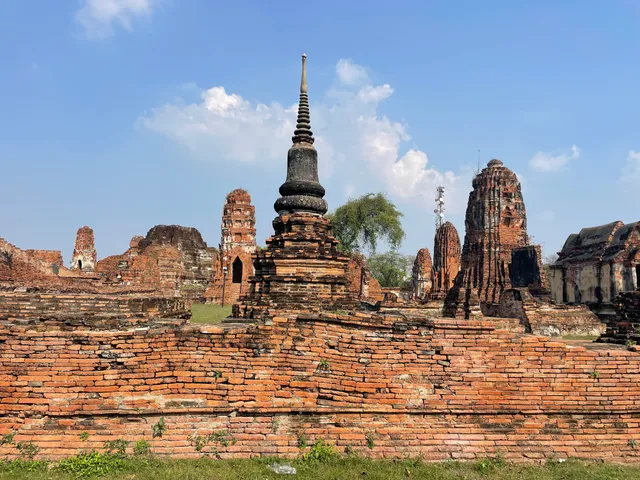
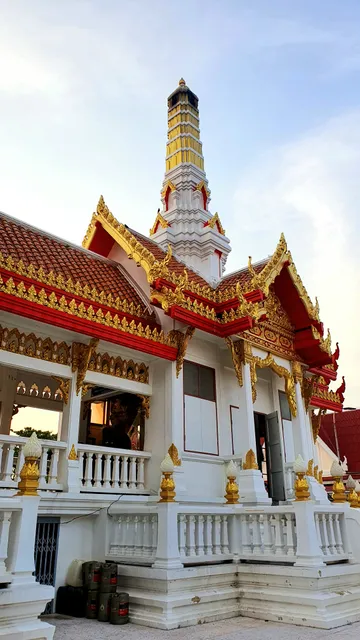
Much later an ordination hall (ubosot) and a large assembly hall (viharn) were added. The viharn’s walls are still standing, its wooden roof has long gone.
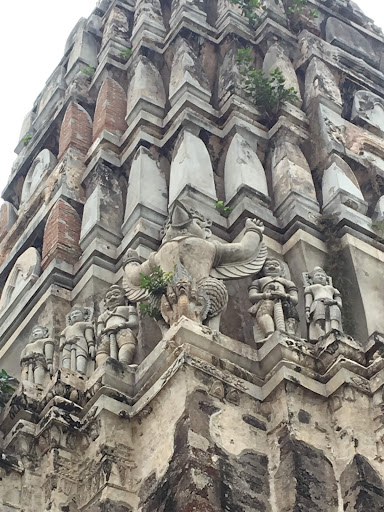
Khmer style prang At the center of the temple stands a large corncob shaped prang on an elevated platform. Some of the fine stucco ornamentation is still visible as well as sculptings of mythical creatures as Garudas and multi headed Naga snakes.
On the East side is a steep stairway leading to the crypt where relics were discovered that are now exhibited in the nearby Chao Sam Phraya National Museum.
The main prang has been restored by the Fine Arts Department.
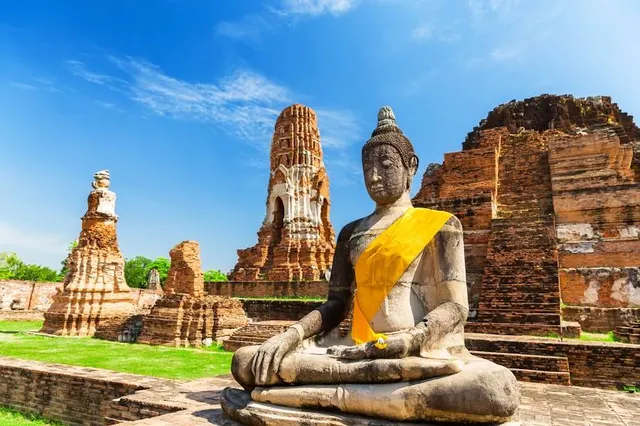
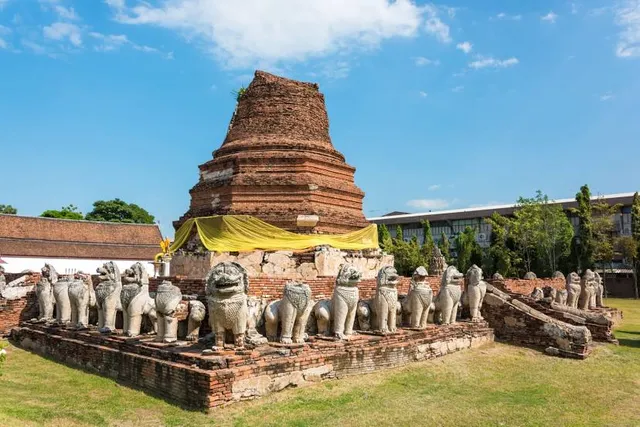
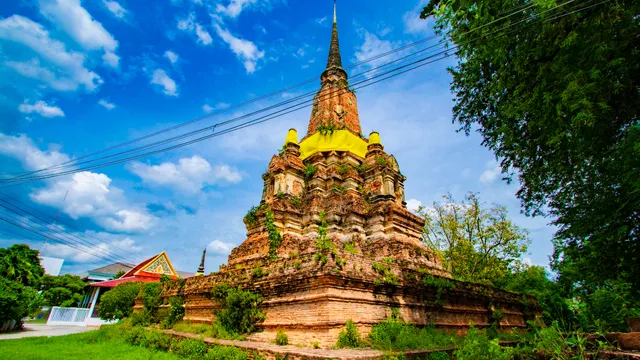
Subsidiary chedis and viharns Around the main buildings is a large number of chedis in various styles and states of preservation as well as several subsidiary viharns.
Opening hours Wat Ratchaburana opens daily from 8 am until 5 pm.
Entrance fees Entrance fee is 50...
Read moreวัดราชบูรณะ ตั้งอยู่ตำบลท่าวาสุกรี อำเภอพระนครศรีอยุธยา จังหวัดพระนครศรีอยุธยา บริเวณเชิงสะพานป่าถ่าน ติดกับวัดมหาธาตุทางบริเวณทิศตะวันออก ห่างจากพระราชวังโบราณ เพียงเล็กน้อย จัดเป็นหนึ่งในวัดที่ใหญ่และมีความเก่าแก่มากที่สุดในพระนครศรีอยุธยา สร้างโดยสมเด็จพระบรมราชาธิราชที่ 2 หรือเจ้าสามพระยา ในปี พ.ศ. 1967 วัดราชบูรณะมีชื่อเสียงและความโด่งดังมากในเรื่องการถูกกลุ่มคนร้ายจำนวนหนึ่ง ลักลอบขุดกรุภายในพระปรางค์ประธาน ในปี พ.ศ. 2499 และช่วงชิงทรัพย์สมบัติจำนวนมากมายมหาศาลหลบหนีไป ต่อมากรมศิลปากรเข้าทำการบูรณะขุดแต่งต่อภายหลัง พบทรัพย์สมบัติที่หลงเหลือและเครื่องทองจำนวนมากมาย ปัจจุบันทรัพย์สมบัติภายในกรุถูกเก็บรักษาไว้ที่ห้องราชบูรณะ ภายในพิพิธภัณฑสถานแห่งชาติ เจ้าสามพระยา
ประวัติ วัดราชบูรณะสร้างขึ้นในรัชสมัยของสมเด็จพระบรมราชาธิราชที่ 2 ในบริเวณพื้นที่และตำแหน่งเดิมที่พระองค์ได้ทรงถวายพระเพลิงศพให้กับเจ้าอ้ายพระยาและเจ้ายี่พระยา พระเชษฐาทั้งสองพระองค์ที่สิ้นพระชนม์ภายในหลังจากการกระทำยุทธหัตถี เพื่อแย่งชิงราชสมบัติของสมเด็จพระนครอินทราธิราชพระราชบิดาที่เสด็จสวรรคตลงในปี พ.ศ. 1967
เมื่อครั้งที่สมเด็จพระนครอินทราธิราช เสด็จขึ้นครองราชสมบัติ เป็นพระมหากษัตริย์ลำดับที่ 6 แห่งกรุงศรีอยุธยา และพระมหากษัตริย์พระองค์ที่ 3 แห่งราชวงศ์สุพรรณภูมิ โปรดเกล้าให้พระราชโอรสของพระองค์ทั้ง 3 พระองค์ได้แก่ เจ้าอ้ายพระยา เจ้ายี่พระยาและเจ้าสามพระยา แยกย้ายกันปกครองหัวเมืองต่าง ๆ โดยทรงมอบหมายให้เจ้าอ้ายพระยา พระราชโอรสองค์ใหญ่ปกครองเมืองสุพรรณบุรี เจ้ายี่พระยา พระราชโอรสองค์กลางปกครองเมืองแพรกศรีราชา และเจ้าสามพระยาพระราชโอรสองค์เล็ก ปกครองเมืองชัยนาท (พิษณุโลก)
ในปี พ.ศ. 1967 สมเด็จพระนครอินทราธิราช เสด็จสวรรคตโดยที่ยังมิได้สถาปนาพระมหาอุปราชผู้เป็นรัชทายาทครอบครองกรุงศรีอยุธยาสืบต่อไป ภายหลังการสิ้นพระชนม์ เจ้าอ้ายพระยาและเจ้ายี่พระยาทราบข่าวการสิ้นพระชนม์ จึงยกกองทัพจากเมืองสุพรรณบุรีและเมืองแพรกศรีราชา มุ่งหน้าเข้าสู่กรุงศรีอยุธยาเพื่อทำสงครามในการช่วงชิงราชสมบัติต่อจากพระราชบิดา
ในปี พ.ศ. 1967 สมเด็จพระนครินทราธิราชเสด็จสวรรคตโดยที่ยังมิได้สถาปนาพระมหาอุปราชผู้เป็นรัชทายาทครอบครองกรุงศรีอยุธยา เมื่อเจ้าอ้ายพระยากับเจ้ายี่พระยาทราบข่าวการสวรรคต จึงยกกองทัพเข้ากรุง เพื่อชิงราชสมบัติสืบแทนพระราชบิดา ทั้งสองพระองค์ยกทัพมาเวลาเดียวกันพอดี เจ้าอ้ายพระยาตั้งทัพอยู่ใกล้วัดพลับพลาไชย ป่ามะพร้าว เจ้ายี่พระยาตั้งทัพอยู่ใกล้วัดชัยภูมิ ป่ามะพร้าว แล้วทั้งสองพระองค์ก็เคลื่อนทัพเข้าสู้กัน บริเวณสะพานป่าถ่านในปัจจุบัน ทั้ง 2 พระองค์ทรงพระแสงของ้าวฟันต้องพระศอขาดพร้อมกันทำให้สวรรคตพร้อมๆกัน เจ้าสามพระยาซึ่งไม่ได้มาร่วมด้วย จึงเสด็จจากเมืองชัยนาท ขึ้นครองราชย์ในกรุงศรีอยุธยา แทนพระราชบิดาทันที มีพระนามว่า สมเด็จพระบรมราชาธิราช ที่ 2 เมื่อเจ้าสามพระยาทรงขึ้นครองราชย์แล้ว จึงจัดการถวายเพลิงพระศพ พระเชษฐาธิราชทั้งสองพระองค์พร้อมกัน สถานที่ที่ถวายพระเพลิงนั้น ก็ทรงอุทิศสร้างพระปรางค์และพระวิหาร มีนามว่า เจดีย์เจ้าอ้ายพระยาเจ้ายี่พระยา
โบราณสถาน พระปรางค์วัดราชบูรณะมีกรุใหญ่และลึก กรมศิลปากรทำการขุดเรียบร้อยแล้ว เมื่อปี พ.ศ. 2500 ในปัจจุบันเปิดให้เข้าไปชมกรุได้ตามปกติ กรุพระปรางค์วัดราชบูรณะมีทั้งหมด 4 ห้องใหญ่ๆ เรียงกันลงไปแนวดิ่ง โดยชั้นล่างสุดอยู่ในแนวระดับพื้นดิน ดังนี้
กรุชั้นที่ 1 เป็นชั้นที่อยู่บนสุด เดิมมีผนังก่อปิดภาพทั้งหมด (ภาพคนจีน เทพชุมนุม ฯลฯ) หลังผนังทำเป็นช่องเล็กๆ ใส่พระพิมพ์ และ พระพุทธรูปไว้จนเต็ม และในนั้น คนร้ายพบพระพุทธรูปทองคำขนาดหน้าตัก 1 ศอก อยู่ 3-4 องค์
กรุชั้นที่ 2 เป็นชั้นกลาง มีถาดทองคำ 3 ใบเต็มไปด้วยเครื่องทอง กรมศิลปากรได้รื้อพื้นออก จึงทำให้กรุห้องที่ 2 และ 3 เชื่อมกัน มีจิตรกรรมเป็นภาพอดีตชาติพระพุทธเจ้า วาดอยู่ในช่องสี่เหลี่ยม และ รอบๆมีโต๊ะสำริดเล็กๆตั้งอยู่ทุกซุ้มเว้นด้านใต้ ใช้วางเครื่องทอง และ ผ้าทองที่ขโมยให้การว่าแค่แตะก็ป่นเป็นผงแล้ว
กรุชั้นที่ 3 เป็นห้องที่อยู่ในสุด เป็นห้องที่สำคัญที่สุด บรรจุพระบรมธาตุ ซึ่งเก็บรักษาอย่างดีในเจดีย์ทองคำ และ รอบๆยังเต็มไปด้วยพระพุทธรูปต่างๆ
การลักลอบขุดกรุ การค้นพบกรุเมื่อปี พ.ศ. 2499 เป็นข่าวโด่งดังไปทั่วประเทศ ปีถัดมาทำให้มีขโมยกลุ่มใหญ่ลักลอบมาขุดกรุวัดราชบูรณะ พบเครื่องทองและอัญมณีจำนวนมาก แต่ทว่าฝนตกหนักและรีบเร่งกลุ่มขโมยจึงขนของไปไม่หมด เจ้าหน้าที่ตำรวจใช้เวลาไม่กี่วันก็จับและยึดของกลางได้บางส่วน หลังจากนั้นกรมศิลปากรได้เข้ามาขุด ปรากฏว่าพบสิ่งของกว่า 2000 รายการ พระพิมพ์กว่า แสนองค์ ทองคำหนักกว่า 100 กิโลกรัม ปัจจุบันเก็บรักษาอยู่ที่พิพิธภัณฑสถานแห่งชาติ เจ้าสามพระยา
เมื่อ พ.ศ. 2548...
Read more