HTML SitemapExplore
logo
Find Things to DoFind The Best Restaurants

Temple of Augustus — Attraction in Altındağ

Name
Temple of Augustus
Description
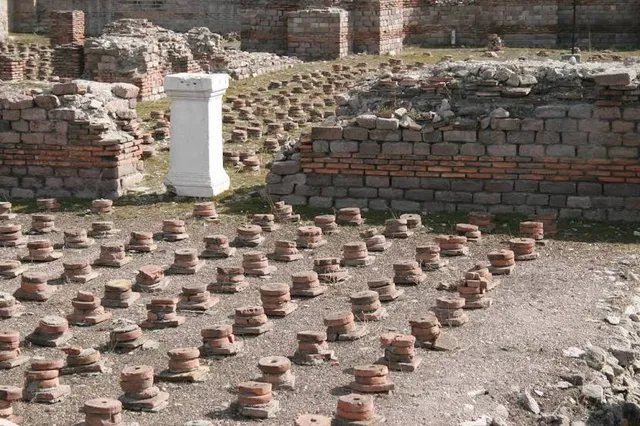
The Temple of Augustus is a well-preserved Roman temple in the city of Pula, Croatia. Dedicated to the first Roman emperor, Augustus, it was probably built during the emperor's lifetime at some point between 27 BC and his death in AD 14.
Nearby attractions
Haci Bayram Mosque
Hacı Bayram, Sarıbağ Sk. No:13, 06050 Altındağ/Ankara, Türkiye
Hacı Bayram-ı Veli Tomb
Hacı Bayram, Şht. Keskin Sk. No:7, 06050 Altındağ/Ankara, Türkiye
Museum of the War of Independence
Hacı Bayram, Cumhuriyet Cd. No: 2/1, 06050 Altındağ/Ankara, Türkiye
Roman Baths and Open Air Museum
Hacı Bayram, Çankırı Cd. No:43, 06050 Altındağ/Ankara, Türkiye
Ancient Roman Theater
Merkez, Altındağ Merkez, Altındağ, Bentderesi Cd., 06050 Ulus/Ankara, Türkiye
Republic Museum (The Second Parliament Building)
Doğanbey Mahallesi, Cumhuriyet Cd. No:7, 06050 Altındağ/Ankara, Türkiye
Museum of Anatolian Civilizations
Kale, Gözcü Sk. No:2, 06240 Ulus/Altındağ/Ankara, Türkiye
Ankara Castle
Kale, 06240 Altındağ/Ankara, Türkiye
Rahmi M. Koc Museum Ankara
Kale, Hacettepe, Depo Sokak No:1, 06230 Altındağ/Ankara, Türkiye
Erimtan Archaeology and Art Museum
Kale, Gözcü Sk. No:10, 06240 Altındağ/Ankara, Türkiye
Nearby restaurants
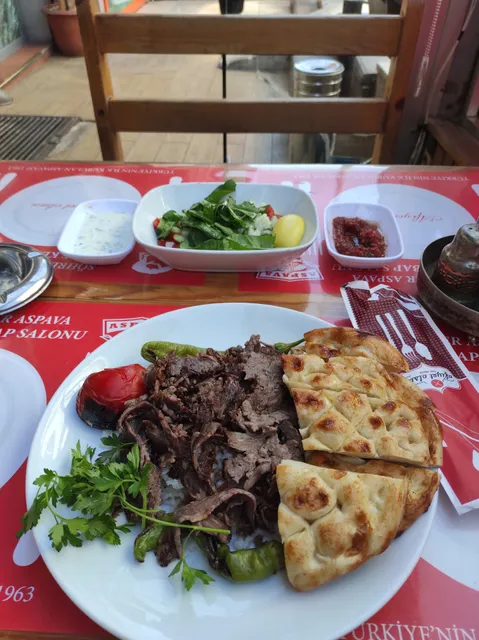
Şöhretler ASPAVA
Hacı Bayram, 06030 Altındağ/Ankara, Türkiye
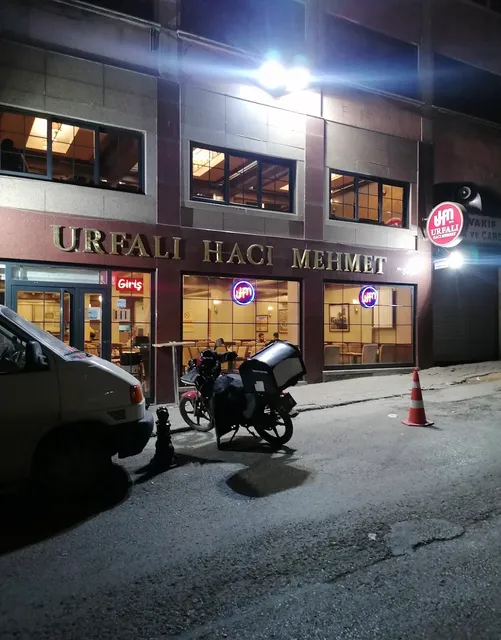
Urfali Haci Mehmet
Anafartalar & Sanayi Cad. &, Kızılbey Sk. 3/A, 06050 Altındağ/Ankara, Türkiye
ÇİÇEK Lokantası
Hacı Bayram Mh., Çankırı Cd. D:56/B, 06030 Ulus/Altındağ/Ankara, Türkiye
Bogazici Lokantasi
Ulus, Denizciler Cd. no 1/A, 06050 Altındağ/Ankara, Türkiye
Yalçın piknik
Anafartalar caddesi, ulus, Mevsim Sk. No:6 D:a, 06130 Altındağ/Ankara, Türkiye
Urfa Halil Ibrahim Sark Sofrasi
Hacı Bayram, Denizciler Cd. No:2/A, 06050 Altındağ/Ankara, Türkiye
Aspava Pide Kebap Salonu
Ulus, Anafartalar Mh, Sanayi Cd. Sanayi Han No:23 D:35, 06030 Altındağ/Ankara, Türkiye
KK Aspava
Hacı Bayram, Kazım Karabekir Cd. No:112/C, 06050 Altındağ/Ankara, Türkiye
Meşhur Çöp Şişçi Ömer Usta
İskitler, Zübeyde Hanım, Kazım Karabekir Cd. Örnek Han No : 27/11, 06070 Altındağ/Ankara, Türkiye
Meshur Aspava
Örnek, Atmaca Sk. 12/1, 06110 Altındağ/Ankara, Türkiye
Nearby hotels
Berlitz Hotel
Hacı Bayram, Hükümet Cd., 06030 Altındağ/Ankara, Türkiye
Royal Carine Hotel Ankara
Hacı Bayram, Çankırı Cd. No:16, 06030 Altındağ/Ankara, Türkiye
Atalay Hotel
Hacı Bayram, Çankırı Cd. No: 20, 06030 Altındağ/Ankara, Türkiye
Yeni Bahar Oteli
Hacı Bayram, Çankırı Cd. No:25, 06030 Altındağ/Ankara, Türkiye
Asal Hotel
Doğanbey Mahallesi, Ulus, Çankırı Cd. No:29, 06050 Altındağ/Ankara, Türkiye
Turist Hotel
Doğanbey, Çankırı Cd. No:37, 06050 Altındağ/Ankara, Türkiye
STAYCITY HOTEL
Doğanbey Mahallesi, Çankırı Cd. No:17, 06050 Altındağ/Ankara, Türkiye
Yavuz Hotel
Kale, Konya Sk. No:6, 06624 Altındağ/Ankara, Türkiye
HİTİT OTEL- ŞIK BİR ŞEHİR OTELİ
Kale, Hisar Parkı Cd. No:20, 06050 Altındağ/Ankara, Türkiye
TAÇ HOTEL
Doğanbey Mahallesi, Çankırı Cd. No: 35, 06050 Altındağ/Ankara, Türkiye
Related posts
Keywords
Temple of Augustus tourism.Temple of Augustus hotels.Temple of Augustus bed and breakfast. flights to Temple of Augustus.Temple of Augustus attractions.Temple of Augustus restaurants.Temple of Augustus travel.Temple of Augustus travel guide.Temple of Augustus travel blog.Temple of Augustus pictures.Temple of Augustus photos.Temple of Augustus travel tips.Temple of Augustus maps.Temple of Augustus things to do.
Temple of Augustus things to do, attractions, restaurants, events info and trip planning
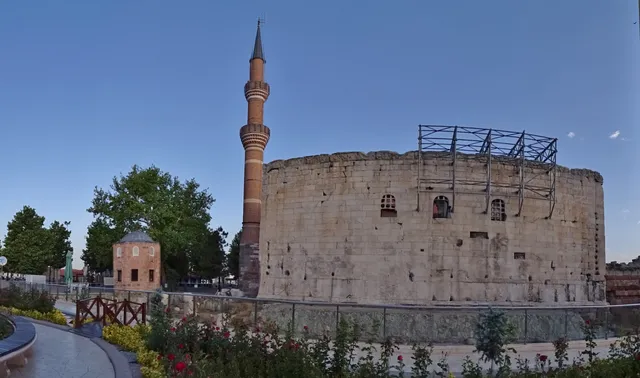
Temple of Augustus
TurkeyAnkaraAltındağTemple of Augustus

Basic Info

Temple of Augustus

Hacı Bayram, 06030 Altındağ/Ankara, Türkiye
4.4(313)
Open 24 hours
Save
spot

Ratings & Description

Info

The Temple of Augustus is a well-preserved Roman temple in the city of Pula, Croatia. Dedicated to the first Roman emperor, Augustus, it was probably built during the emperor's lifetime at some point between 27 BC and his death in AD 14.

Cultural
Scenic
attractions: Haci Bayram Mosque, Hacı Bayram-ı Veli Tomb, Museum of the War of Independence, Roman Baths and Open Air Museum, Ancient Roman Theater, Republic Museum (The Second Parliament Building), Museum of Anatolian Civilizations, Ankara Castle, Rahmi M. Koc Museum Ankara, Erimtan Archaeology and Art Museum, restaurants: Şöhretler ASPAVA, Urfali Haci Mehmet, ÇİÇEK Lokantası, Bogazici Lokantasi, Yalçın piknik, Urfa Halil Ibrahim Sark Sofrasi, Aspava Pide Kebap Salonu, KK Aspava, Meşhur Çöp Şişçi Ömer Usta, Meshur Aspava
logoLearn more insights from Wanderboat AI.

Plan your stay

hotel
Pet-friendly Hotels in Altındağ
Find a cozy hotel nearby and make it a full experience.
hotel
Affordable Hotels in Altındağ
Find a cozy hotel nearby and make it a full experience.
hotel
The Coolest Hotels You Haven't Heard Of (Yet)
Find a cozy hotel nearby and make it a full experience.
hotel
Trending Stays Worth the Hype in Altındağ
Find a cozy hotel nearby and make it a full experience.

Reviews

Nearby attractions of Temple of Augustus

Haci Bayram Mosque

Hacı Bayram-ı Veli Tomb

Museum of the War of Independence

Roman Baths and Open Air Museum

Ancient Roman Theater

Republic Museum (The Second Parliament Building)

Museum of Anatolian Civilizations

Ankara Castle

Rahmi M. Koc Museum Ankara

Erimtan Archaeology and Art Museum

Haci Bayram Mosque

Haci Bayram Mosque

4.8

(9.2K)

Open until 12:00 AM
Click for details
Hacı Bayram-ı Veli Tomb

Hacı Bayram-ı Veli Tomb

4.8

(3.7K)

Open 24 hours
Click for details
Museum of the War of Independence

Museum of the War of Independence

4.9

(2.3K)

Open 24 hours
Click for details
Roman Baths and Open Air Museum

Roman Baths and Open Air Museum

4.3

(582)

Closed
Click for details

Things to do nearby

Build_ on SUI Hackathon #2
Sat, Dec 6 • 6:00 AM
Çankaya, Ankara
View details
Babylon Meetup
Babylon Meetup
Sat, Dec 6 • 12:00 PM
Üniversiteler, ODTÜ Kampüsü, 06800 Çankaya/Ankara, Türkiye
View details
Tron DAO × Çankaya Blockchain Coffee Meet-Up
Sat, Dec 6 • 1:00 PM
Coffee UP, Bahçelievler, Azerbaycan Cd. No:23, 06490 Çankaya/Ankara, Türkiye
View details

Nearby restaurants of Temple of Augustus

Şöhretler ASPAVA

Urfali Haci Mehmet

ÇİÇEK Lokantası

Bogazici Lokantasi

Yalçın piknik

Urfa Halil Ibrahim Sark Sofrasi

Aspava Pide Kebap Salonu

KK Aspava

Meşhur Çöp Şişçi Ömer Usta

Meshur Aspava

Şöhretler ASPAVA

Şöhretler ASPAVA

3.9

(375)

Click for details
Urfali Haci Mehmet

Urfali Haci Mehmet

4.3

(1.1K)

$

Click for details
ÇİÇEK Lokantası

ÇİÇEK Lokantası

4.1

(453)

$$

Click for details
Bogazici Lokantasi

Bogazici Lokantasi

4.3

(1.4K)

$

Click for details
Get the Appoverlay
Get the AppOne tap to find yournext favorite spots!
Wanderboat LogoWanderboat

Your everyday Al companion for getaway ideas

CompanyAbout Us
InformationAI Trip PlannerSitemap
SocialXInstagramTiktokLinkedin
LegalTerms of ServicePrivacy Policy

Get the app

© 2025 Wanderboat. All rights reserved.
logo

Posts

Muhanad AmeenMuhanad Ameen
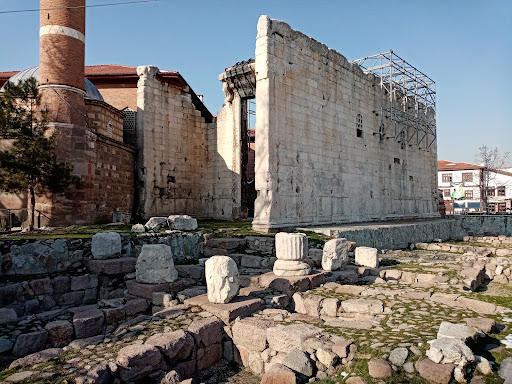
Temple of Augustus and Rome; is an augusteum located in Altındağ district of Ankara. It is thought to have been built around 25-20 AD. Besides being one of the most important Roman period ruins in the city, it is also known for Monumentum Ancyranum. This is an inscription about the works of Augustus, who was considered the first Roman emperor, throughout his life. It is the most complete copy of Res Gestae Divi Augusti that has survived to the present day, as the original in Rome had disappeared. An earlier, 2nd century BCE Phrygian temple on the site was destroyed.[1] History: The Augusteum was built between 25–20 BC after the conquest of central Anatolia by the Roman Empire and the formation of the Galatia province, with Ancyra as its administrative capital. It was reintroduced to the western world by Ogier Ghiselin de Busbecq, ambassador of Ferdinand of Austria, to the Sultan Suleyman the Magnificent (1555–1562) at Amasia in Asia Minor. Busbecq first read the inscription and identified its origin from his reading of Suetonius; he published a copy of parts of it in his Turkish Letters.[2] Only the side walls and the ornamented door frame remain; the positions of six columns can still be recognized. Monumentum Ancyranum: After the death of Augustus in AD 14, a copy of the text of the Res Gestae Divi Augusti was inscribed on both walls inside the pronaos in Latin, with a Greek translation on an exterior wall of the cella. The inscriptions are the primary surviving source of the text, since the original inscription on bronze pillars in front of the Mausoleum of Augustus in Rome has long been lost, and two other surviving inscriptions of the text are incomplete.[3] Squeezes of the Monumentum Ancyrum were obtained by the Cornell Expedition in 1907–1908, and have been the basis for epigraphic study including by the epigrapher Mariana McCaulley.
Mustafa İlke YalınMustafa İlke Yalın
First of all, this place is historically very significant as the only surviving copy of Res Gestae Divi Augusti is here, a Roman inscription talking about the doings of "Divine" Emperor Augustus, that isn't even present in Rome, so if you are by any chance interested in history of Roman Empire, specifically the Roman history of Ankara, this place is a must visit. However do not be mistaken by thinking that this place consists of only the remnants of a Roman temple dedicated to Augustus as it is adjoined to Haci Bayram Veli Cami and without the support of the mosque and support beams that unfortunately look ugly for a monument of this amount of significance the temple can't even support itself. Still, don't let this deter you from visiting the place, but take proper caution and do your research before visiting this marvelous piece of history.
ertan seymanoğluertan seymanoğlu
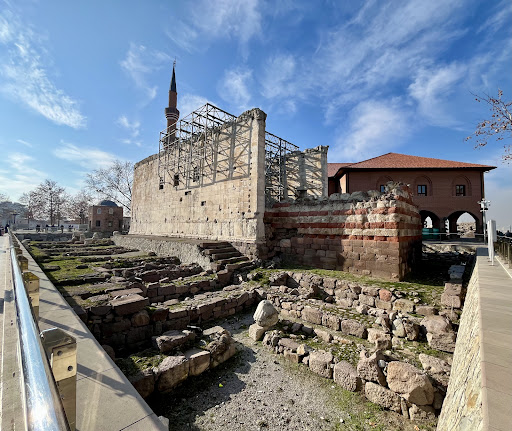
Hacı Bayram-ı Velî Camii nin bulunduğu yerin hemen yanında bulunan tarihi tapınak. Herhangi bir giriş bölümü veya gişesi yok. Açık hava müzesi gibi düşünebilir. Cam bir ayrı bölme dışından çevresini dolaşabilirsiniz. Tapınak ile ilgili bilgiler; “Ankara’da Roma Dönemi’nin en önemli yapılarından biri olan Augustus-Roma Tapınağı, Galatia Eyaleti’nin İmparator Augustus (M.Ö 27-M.S. 14) tarafından Roma İmparatorluğu’na katılmasından sonra, yeni eyalet merkezi olan Ankyra’da (Ankara) İmparator Augustus ve kentin yerel tanrıçası Roma’ya ithaf edilerek inşa edilmiştir. Tapınak güneybatı-kuzeydoğu doğrultulu, 36x54.82 m. ölçüsünde, Korinth düzeninde, pseudo-dipteral planlı olup, yaklaşık 2 m. yüksekliğinde, sekiz basamakla çıkılan bir podyum üzerine oturtulmuştur. Tapınağı dar kenarlarında 8, uzun kenarlarında 15 adet sütun çevrelemektedir. Ayrıca ön oda (pronaos) önünde 4, derin arka odasında (opisthodomos) iki duvar çıkıntısı arasında (in antis tarzında) 2 adet sütun yer almaktadır. Bugün tapınağın güney ve güneydoğusunda yer alan temellerin büyük bir bölümü, belki hiç tamamlanamamış olan sütun dizisine (peristasis) ve platformun çevresindeki basamaklı kesime (krepidoma) ait temel duvarlarıdır. Tapınak mimarisinin daha geç dönemlerde bazı değişikliklere uğradığı görülmektedir. Tapınak, 6. yüzyıl başlarında Bizanslılar tarafından kiliseye çevrilmiştir. Kiliseye dönüştürme sürecinde, kutsal odanın (cella) taban seviyesi tesviye edilmiş, cella ile opisthodomos arasındaki duvar kaldırılmış, tapınağın arka kısmına apsis eklenmiş ve cellanın güneydoğu duvarına 3 büyük pencere açılmıştır. 1427-1428 yıllarında ise Hacı Bayram Camii, tapınağın kuzeybatı köşesine bağlantılı olarak inşa edilmiştir. Tapınak hakkında yazılmış ilk yazılı belgelerden, tapınağın opisthodomos kısmının arkasına eklenen eyvandan ve tapınak duvarlarına yazılan grafitiden, Hacı Bayram Camii’nin yapılmasından sonra tapınağın bir süre medrese olarak kullanıldığı da düşünülmektedir. Zaman içerisinde değişikliklere uğrayan cami ve hemen yanı başında bulunan türbe halen başkentin en önemli ibadet yerlerinden birini teşkil etmektedir. Hacı Bayram Camii’nin de üzerine inşa edildiği bu tepe, bin yıllar boyunca kutsal alan ve ibadet mekanı olarak kullanılmıştır. 1834 yılında cellanın kuzeybatı duvarının büyük bir bölümü tahrip edilmiş olmasına karşın, pronaos, büyük kapı, cella ile tapınak günümüze kadar büyük oranda korunabilmiştir. Kaynak: muze.gov.tr “
See more posts
See more posts
hotel
Find your stay

Pet-friendly Hotels in Altındağ

Find a cozy hotel nearby and make it a full experience.

Temple of Augustus and Rome; is an augusteum located in Altındağ district of Ankara. It is thought to have been built around 25-20 AD. Besides being one of the most important Roman period ruins in the city, it is also known for Monumentum Ancyranum. This is an inscription about the works of Augustus, who was considered the first Roman emperor, throughout his life. It is the most complete copy of Res Gestae Divi Augusti that has survived to the present day, as the original in Rome had disappeared. An earlier, 2nd century BCE Phrygian temple on the site was destroyed.[1] History: The Augusteum was built between 25–20 BC after the conquest of central Anatolia by the Roman Empire and the formation of the Galatia province, with Ancyra as its administrative capital. It was reintroduced to the western world by Ogier Ghiselin de Busbecq, ambassador of Ferdinand of Austria, to the Sultan Suleyman the Magnificent (1555–1562) at Amasia in Asia Minor. Busbecq first read the inscription and identified its origin from his reading of Suetonius; he published a copy of parts of it in his Turkish Letters.[2] Only the side walls and the ornamented door frame remain; the positions of six columns can still be recognized. Monumentum Ancyranum: After the death of Augustus in AD 14, a copy of the text of the Res Gestae Divi Augusti was inscribed on both walls inside the pronaos in Latin, with a Greek translation on an exterior wall of the cella. The inscriptions are the primary surviving source of the text, since the original inscription on bronze pillars in front of the Mausoleum of Augustus in Rome has long been lost, and two other surviving inscriptions of the text are incomplete.[3] Squeezes of the Monumentum Ancyrum were obtained by the Cornell Expedition in 1907–1908, and have been the basis for epigraphic study including by the epigrapher Mariana McCaulley.
Muhanad Ameen

Muhanad Ameen

hotel
Find your stay

Affordable Hotels in Altındağ

Find a cozy hotel nearby and make it a full experience.

Get the Appoverlay
Get the AppOne tap to find yournext favorite spots!
First of all, this place is historically very significant as the only surviving copy of Res Gestae Divi Augusti is here, a Roman inscription talking about the doings of "Divine" Emperor Augustus, that isn't even present in Rome, so if you are by any chance interested in history of Roman Empire, specifically the Roman history of Ankara, this place is a must visit. However do not be mistaken by thinking that this place consists of only the remnants of a Roman temple dedicated to Augustus as it is adjoined to Haci Bayram Veli Cami and without the support of the mosque and support beams that unfortunately look ugly for a monument of this amount of significance the temple can't even support itself. Still, don't let this deter you from visiting the place, but take proper caution and do your research before visiting this marvelous piece of history.
Mustafa İlke Yalın

Mustafa İlke Yalın

hotel
Find your stay

The Coolest Hotels You Haven't Heard Of (Yet)

Find a cozy hotel nearby and make it a full experience.

hotel
Find your stay

Trending Stays Worth the Hype in Altındağ

Find a cozy hotel nearby and make it a full experience.

Hacı Bayram-ı Velî Camii nin bulunduğu yerin hemen yanında bulunan tarihi tapınak. Herhangi bir giriş bölümü veya gişesi yok. Açık hava müzesi gibi düşünebilir. Cam bir ayrı bölme dışından çevresini dolaşabilirsiniz. Tapınak ile ilgili bilgiler; “Ankara’da Roma Dönemi’nin en önemli yapılarından biri olan Augustus-Roma Tapınağı, Galatia Eyaleti’nin İmparator Augustus (M.Ö 27-M.S. 14) tarafından Roma İmparatorluğu’na katılmasından sonra, yeni eyalet merkezi olan Ankyra’da (Ankara) İmparator Augustus ve kentin yerel tanrıçası Roma’ya ithaf edilerek inşa edilmiştir. Tapınak güneybatı-kuzeydoğu doğrultulu, 36x54.82 m. ölçüsünde, Korinth düzeninde, pseudo-dipteral planlı olup, yaklaşık 2 m. yüksekliğinde, sekiz basamakla çıkılan bir podyum üzerine oturtulmuştur. Tapınağı dar kenarlarında 8, uzun kenarlarında 15 adet sütun çevrelemektedir. Ayrıca ön oda (pronaos) önünde 4, derin arka odasında (opisthodomos) iki duvar çıkıntısı arasında (in antis tarzında) 2 adet sütun yer almaktadır. Bugün tapınağın güney ve güneydoğusunda yer alan temellerin büyük bir bölümü, belki hiç tamamlanamamış olan sütun dizisine (peristasis) ve platformun çevresindeki basamaklı kesime (krepidoma) ait temel duvarlarıdır. Tapınak mimarisinin daha geç dönemlerde bazı değişikliklere uğradığı görülmektedir. Tapınak, 6. yüzyıl başlarında Bizanslılar tarafından kiliseye çevrilmiştir. Kiliseye dönüştürme sürecinde, kutsal odanın (cella) taban seviyesi tesviye edilmiş, cella ile opisthodomos arasındaki duvar kaldırılmış, tapınağın arka kısmına apsis eklenmiş ve cellanın güneydoğu duvarına 3 büyük pencere açılmıştır. 1427-1428 yıllarında ise Hacı Bayram Camii, tapınağın kuzeybatı köşesine bağlantılı olarak inşa edilmiştir. Tapınak hakkında yazılmış ilk yazılı belgelerden, tapınağın opisthodomos kısmının arkasına eklenen eyvandan ve tapınak duvarlarına yazılan grafitiden, Hacı Bayram Camii’nin yapılmasından sonra tapınağın bir süre medrese olarak kullanıldığı da düşünülmektedir. Zaman içerisinde değişikliklere uğrayan cami ve hemen yanı başında bulunan türbe halen başkentin en önemli ibadet yerlerinden birini teşkil etmektedir. Hacı Bayram Camii’nin de üzerine inşa edildiği bu tepe, bin yıllar boyunca kutsal alan ve ibadet mekanı olarak kullanılmıştır. 1834 yılında cellanın kuzeybatı duvarının büyük bir bölümü tahrip edilmiş olmasına karşın, pronaos, büyük kapı, cella ile tapınak günümüze kadar büyük oranda korunabilmiştir. Kaynak: muze.gov.tr “
ertan seymanoğlu

ertan seymanoğlu

See more posts
See more posts

Reviews of Temple of Augustus

4.4
(313)
avatar
5.0
4y

Temple of Augustus and Rome; is an augusteum located in Altındağ district of Ankara. It is thought to have been built around 25-20 AD. Besides being one of the most important Roman period ruins in the city, it is also known for Monumentum Ancyranum. This is an inscription about the works of Augustus, who was considered the first Roman emperor, throughout his life. It is the most complete copy of Res Gestae Divi Augusti that has survived to the present day, as the original in Rome had disappeared. An earlier, 2nd century BCE Phrygian temple on the site was destroyed.[1]

History: The Augusteum was built between 25–20 BC after the conquest of central Anatolia by the Roman Empire and the formation of the Galatia province, with Ancyra as its administrative capital.

It was reintroduced to the western world by Ogier Ghiselin de Busbecq, ambassador of Ferdinand of Austria, to the Sultan Suleyman the Magnificent (1555–1562) at Amasia in Asia Minor. Busbecq first read the inscription and identified its origin from his reading of Suetonius; he published a copy of parts of it in his Turkish Letters.[2]

Only the side walls and the ornamented door frame remain; the positions of six columns can still be recognized.

Monumentum Ancyranum:

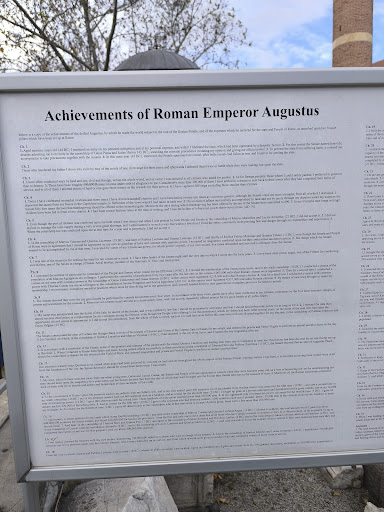
After the death of Augustus in AD 14, a copy of the text of the Res Gestae Divi Augusti was inscribed on both walls inside the pronaos in Latin, with a Greek translation on an exterior wall of the cella.

The inscriptions are the primary surviving source of the text, since the original inscription on bronze pillars in front of the Mausoleum of Augustus in Rome has long been lost, and two other surviving inscriptions of the text are incomplete.[3] Squeezes of the Monumentum Ancyrum were obtained by the Cornell Expedition in 1907–1908, and have been the basis for epigraphic study including by the...

   Read more
avatar
5.0
6y

Augustus Tapınağı Örenyeri Roma İmparatorluğundan Augustos tarafından Kybele ve Men Kutsal alanının üzerine muhtemelen İ.Ö. 25-20. Yüzyıllarda yapılmıştır. 36 x 54.82 M. boyutlarındaki Mermer tapınak, 2.m. yüksekliğindeki çok basamaklı bir podyum üzerinde durmaktadır. Kısa kenarlarında 8, uzun kenarlarında 15 er İon sütunun yer aldığı psevdodipte Ros planlı yapı batıya yöneliktir. İç yapı (Naos) üç bölümlü olup, arka bölümde Duvarlar(Antalar) arasında 2. Giriş tarafında (Pronaos) ise ataların önünde 4. Korinth. Sütunu yer almaktadır. Tapınak Augustus'un yaptığı işleri aktaran kitabeleri ile önem taşır. Aynı konuyu içeren Latince yazıtların Pisi dia Antiocheia'sında (Yalvaç), Yunanca yazıtların ise Frigya Apollania'sında (Uluborlu) ele geçmesine karşın Augustus Tapınağı yazıtları en iyi korunmuş olanıdır. Dünyada Ankara anıtı (Monumentum Ankyranum) olarak bilinen ve "Index rerum Gestarum" adlı bu kaynak tapınağın duvarlarına Yunanca ve Latince olarak iki dilde yazılmıştır. Latince yazıtlar Pronaos'taki Anta iç ve uç duvarlarını, yunanca yazıtlar ise Naus'un güneybatı dış duvarına Augustus'un ölümünden sonra yazılmıştır. Hiristiyanlar tapınağı kiliseye çevirerek Cellanın güney duvarına üç pencere açmış, Naos'un arkasına yer altında tonozlu bir mekan (cryptos) inşa etmişlerdir. Ankara İ.S. II. yüzyıl sonlarında Türkler tarafından alınmış, Hacı Bayram Camii tapınağın kuzey batı köşesine bağlantılı olarak 15 ci yüzyılda inşa edilmiştir. 1834 yılında Cellanın kuzey duvarının tahrip olmasına karşın, Büyük Kapı Cella ve Pronaos ile tapınarak günümüze kadar korunabilmiştir. Tapınak, Fransız Ch. Texıer ve G. Perrot ile Alman M. Schede ve D. Krencker'in yaptığı incelemelerden sonra arkeolojik kazılar Dr. Hamit Z. Koşay tarafından yürütülmüştür.

Temple of Augustus It was probably from the Roman Empire by Augustos over the Kybele and the sanctuary of Men. 25-20. It was built in centuries. 36 x 54.82 m dimensions of marble temple, 2.m. It stands on a multi-stage podium in height. On the short sides 8, on the long sides of the 15 er Ion column psevdodipte Ros plan building is directed towards the west. The inner structure (Naos) has three sections and the back part is between the walls (Antalar). 2. On the entrance side (Pronaos) is the 4th corinth in front of the ancestors. The column is located. The temple is important for Augustus's inscriptions of his work. The inscriptions of the Temple of Augustus are the best preserved, although the Latin inscriptions containing the same subject are found in the Pisi dia Antiocheia (Yalvaç) and the Greek inscriptions in the Phrygian Apollania (Uluborlu). This source, known as the Monument of Ankara (Monumentum Ankyranum) in the world and named as kaynak Index rerum Gestarum ", was written in Greek and Latin languages ​​on the walls of the temple. The Latin inscriptions were written on the inner and end walls of Anta in Pronaos, and the Greek inscriptions were written on the southwestern exterior wall of Naus after the death of Augustus. By turning the temple into a church, the Christians opened three windows on the southern wall of the basement, and built a vaulted space (cryptos) behind the Naos. Ankara, Turkey. II. Hacı Bayram Mosque was built by the Turks at the end of the 19th century and was built in the 15th century in connection with the north-west corner of the temple. Although the northern wall of the Cellar was destroyed in 1834, the Great Gate was worshiped with Cella and Pronaos and preserved until today. Temple, French Ch. Texer and G. Perrot and German M. Schede and D. Krencker after the investigation of archaeological excavations. It was conducted by Hamit Z....

   Read more
avatar
5.0
2y

Augustus Tapınağı, Ankara Ulus’ta Hacı Bayram Camii bitişiğindedir. MÖ 25 yılından sonra, Frigya tanrısı Men adına yapılmış olan tapınak zamanla yıkılmıştır. Bugün kalıntıları bulunan tapınak ise son Galat hükümdarı Amintos’un oğlu kral Pilamenes tarafından Roma İmparatoru Augustus adına bir bağlılık nişanesi olmak üzere yaptırılmıştır. Bizanslılar zamanında çeşitli eklemeler yapılıp, pencereleri açılarak kilise haline getirilmiştir.

Bu tapınak 1555 yılında İmparator Ferdinand’ın yolladığı Hollandalı Busbecque tarafından bulunmuştur. 1926 – 1928 yıllarında Schede ve Krecker tapınağın çevresini kazmış, ardından 1939 yılında, Müzeler Müdürlüğü’nün yönlendirmesiyle Hamit Zübeyr Koşay tarafından bir kazı yapılmıştır ve tapınağın tüm mimari yapısı ortaya konmuştur.

Etrafı dört sütunla kuşatılmış dört duvar halindedir. Etrafını çevreleyen boyuna on beşer, enine altışar adet kırk iki, tapınağın kapısı önünde dört, arkada iki adet sütunun yerleri bulunmaktadır. Yalnız iki yan duvarı ile kenarları işlemeli olan kapı kısmı eski hali ile ayakta durmaktadır. Aslı Roma tapınağında bulunan ve Agustus’un başardığı işleri gösteren Latince ve Yunanca dilleri ile yazılmış vasiyetnamesi (Res Gestae Divi Augusti) bir yazıt ile bu tapınağın türbeye bitişik duvarına konulmuştur.

İmparator Augustus’un ölmeden önce Vesta Rahipleri’ne metal levhalar üzerine yazılmış dört belge (kimi kaynaklarda 3 levha olduğu da söylenmektedir) verdiği bilinmektedir. Augustus’un ölümünün ardından, bu metinlerin Roma eyaletindeki tüm Augustus Tapınaklarına gönderilmiştir. Ancak zamanla hem orijinal metinler kaybolmuş hem de çeşitli tapınaklardaki kopyaları aşınmış ve bozulmuştur. Ankara Anıtı’nın günümüze kalan en eksiksiz kopya oluşu, önemini daha da arttırmaktadır. Bu dört belgenin kopyası niteliğindeki yazıtlardan oluşan anıtta imparatorun vasiyetnamesi, cenaze töreni hakkında emirleri, imparatorluğun maddi ve askeri durumu ile yaşamı boyunca yaptığı işler anlatılır.

Birinci Bölüm (1.- 14. paragraf): Bu bölümde Augustus’un politik kariyerinden; ona verilen ve hayatta iken adına ihdas edilmiş olan özel şeref unvanları, payeler ve şerefsel görevler sıralanmaktadır.

İkinci Bölüm (15.- 24. paragraf): Bu bölümde, Romalı halka Augustus tarafından dağıtılan paralar, onlar için tertip edilen sirk gösterileri ve alaylar ile halk için inşa edilen anıtlardan söz edilmektedir.

Üçüncü Bölüm (25.- 33. paragraf): Bu bölümde, Augustus’un gösterdiği büyük askeri başarılar ve diplomatik faaliyetlerle imparatorluğa sağladığı kazançlardan bahsedilmektedir.

Dördüncü Bölüm (34.- 35. paragraf): Bu bölümde, Augustus adının ve “Ülkenin Babası” unvanlarının aslının ne olduğunu açıklayan belgesel delillere yer verilmektedir.

Ek: Daha önceki metinlerde kullanılan üslup birinci şahıs gözüyle hitap şekilde olmasına karşılık bu ekte üçüncü şahıs görüşüyle yazılma üslubu kullanılmaktadır. Bu nedenle bu metnin Augustus tarafından şahsen hazırlanmadığı kabul edilmektedir. Bu ek önce belgede bildirilen metinlerin tümünün bir özetini vermektedir. Sonra Augustus’un Roma devleti içinde gayet müstesna pozisyonundan bahsetmektedir. Son olarak da Augustus’un kendi şahsi mali fonlarını kullanarak yeniden yaptırdığı veya restore ettirdiği anıtların isimlerinin listesi verilmektedir.

Tarih boyunca halk tarafından kutsal kabul edilen mekânlar, sonra gelen inanç sistemleri için de kutsiyetini korumuştur. Augustus Tapınağı ile sırt sırta bulunan Hacı Bayram Veli Camii bu durumun önemli...

   Read more
Page 1 of 7
Previous
Next