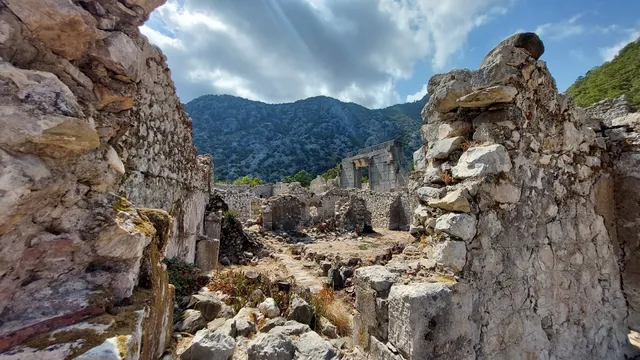
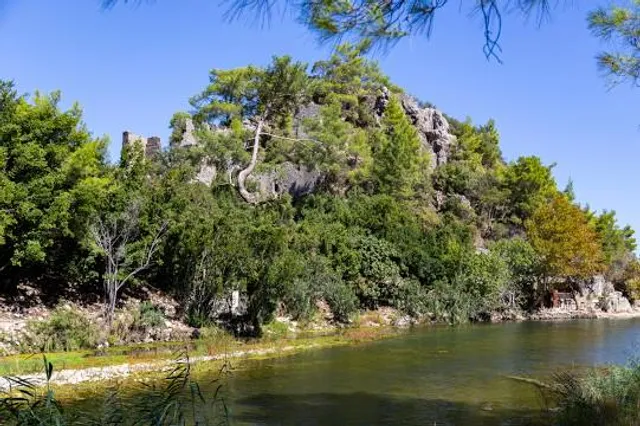
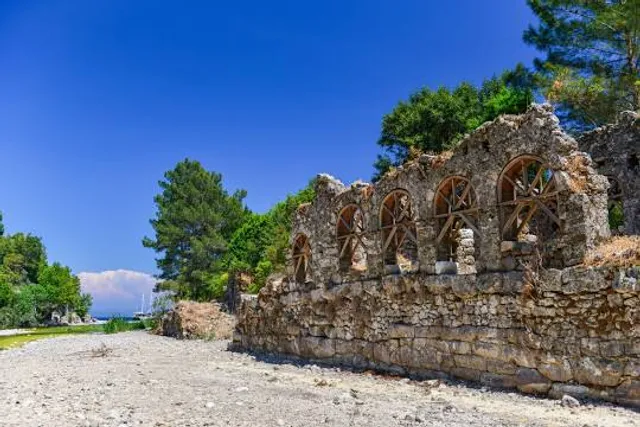
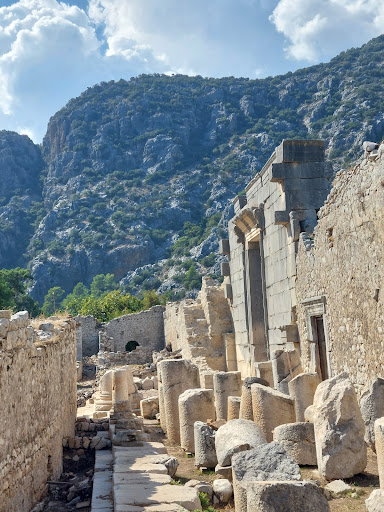
Olympos (Greek: Ὄλυμπος; Latin: Olympus) was an ancient city in Lycia. It was situated in a river valley near the coast. Its ruins are located south of the modern town Çıralı in the Kumluca district of Antalya Province, Turkey. Together with the sites of the ancient cities Phaselis and Idyros it is part of the Olympos Beydaglari National Park. The perpetual gas fires at Yanartaş are found a few kilometers to the northwest of the site.
The exact date of the city's foundation is unknown. A wall and an inscription on a sarcophagus have been dated to the end of the 4th century BC, so Olympus must have been founded at the latest in the Hellenistic period.[1] The city presumably taking its name from nearby Mount Olympos (Turkish: Tahtalı Dağı, Timber Mountain), one of over twenty mountains with the name Olympos in the Classical world.
The city was a member of the Lycian League, but it is uncertain when it joined the League. It started minting Lycian League coins from the end of the second century BC, possibly the 130s.[2] At this time Olympos was one of the six largest cities of the League, which possessed three votes each.[3]
Around 100 BC Olympos started issuing its own coins separate from the League. At this point the Cilician pirates had taken control of the city, either through conquest or profitable collaboration with the inhabitants. As a consequence the city abandoned the League or was evicted from it.[4] The pirate chief Zenicetes made it his stronghold from where he controlled the rest of his possessions, which included Corycus, Phaselis and many other places in Pamphylia.[5] His rule ended in 78 BC, when the Roman commander Publius Servilius Isauricus, accompanied by the young Julius Caesar, captured Olympos and his other territories after a victory at sea.[citation needed] At his defeat Zenicetes set fire to his own house and perished.[5] At the time of the Roman conquest Olympus was described by Cicero as a rich and highly decorated city.[6] Olympos then became part of the Roman Republic. The emperor Hadrianvisited the city after which it took the name of Hadrianopolis for a period,...
Read moreIncredible...but in need of COLOSSAL improvement.
This is an idyllic ancient Lycian site by the river, inhabited by many cultures throughout history.
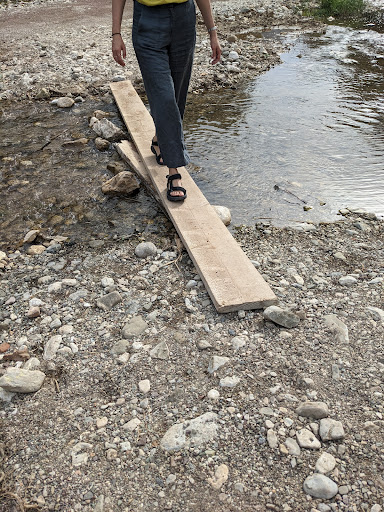
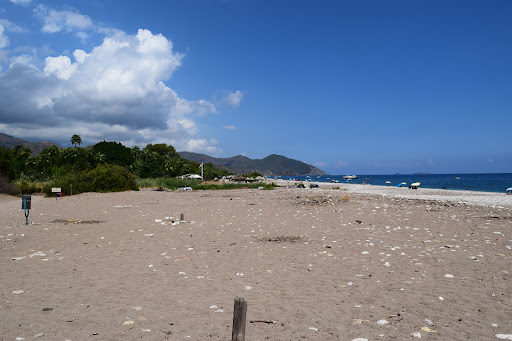
Large site, easily 2-3 hours can be spent here if interested in ruins and less if you just want to walk around a nice quiet scenic spot. Well preserved buildings Easy access via Cirali beach and Olympus beach (but be aware you must cross a stream)
This is not a world class presentation of an ancient site. There is little information and it's very hard to imagine some of the structures. There are ongoing excavations happening which are awesome to see. However, why are you allowing some workers to play dance music very loud. Complete ambience killer, and absolutely mind-blowing. There are two sites separated by a river. One side has lots of buildings and the other side has a few within forested land. Both sides are a must. But how does the institution expect people to cross this river? Of course on a flimsy wooden plank halfway into the river and then you have to negotiate the rest of the way somehow. And once on the forest side, there's minimal signposts to say where to go, leaving the visitor to hope they don't take a wrong turn. none of the toilets (men, women, disabled) had running water. As a result they were completely disgusting. No flushes working and nowhere to wash hands. An absolute DISGRACE. (We paid almost 400 lira per person to enter......
Read moreThis is a great place! Olympos is an ancient city located in a valley on the southern coast of Turkey, 90 km southwest of Antalya, near the village of Chirali. Olympos was one of the most important harbor cities during its heyday. If you start your visit of the city from the right, you will see a sarcophagus belonging to Captain Eudomos. There is an inscription dedicated to Eudomos on it that you shouldn't miss. The ancient city was built on both sides of the Akçay stream and is very impressive. The city of Olympos was probably founded in the 3rd century BC. The ruins are located near the beach, at the mouth of a river. It is necessary to pass through the water in order to see structures, such as the theater, the bathhouse, and the basilica. The ruins on the north bank of the river are buried under thick vegetation and are more difficult to reach. Near a pond stands the propylaeum of a temple bearing a dedicatory inscription in the name of Marcus Aurelius. You can also visit a Olympos Beach, which Located in the middle of the nature reserve, the pebble beach impresses with beautiful vegetation, ancient ruins, and a unique atmosphere. This fact makes Olympos Beach very interesting especially for nature lovers. Bathing in beautiful clear sea water in the middle of a nature reserve and enjoying the peaceful seclusion by day is an...
Read more