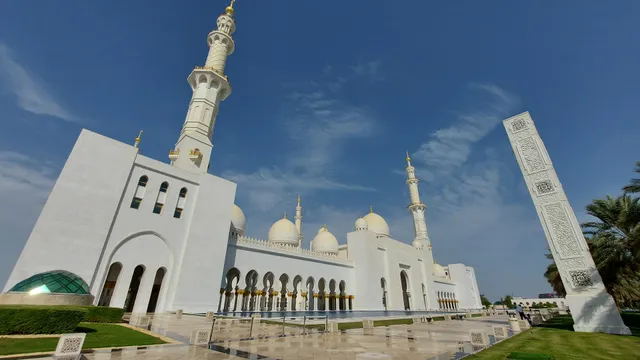
We had to visit the Sheikh Zayed Grand Mosque at Abu Dhabi as one our itinerary items.
We hired a driver to drive us from Dubai to Abu Dhabi and it took us approximately 1.5hrs there and 1.5hrs back, which made the journey itself, about 3 hours.
I recommend bringing some snacks or sweets and some non-alcoholic drinks like water or isotonic drinks to replenish yourself as the drive can be long and the weather may get hot. If you're travelling with kids, make sure they have adequate wear like caps to shield them from the sun.
For the attire, for females, a head scarf is required and for the entire body to be covered (either through jeans and long sleeve) or with the traditional wear, including covered shoes. For males, covered shoes and covered legs are required. Attire for the male torso can be short or long sleeve. All tattoo for male or female that are visible also needs to be covered up.
Before you even take the trip to the mosque, don't forget to buy your passes for each individual. We didn't buy ours till the night before, until our driver informed us that we needed passes to enter. Luckily, we still managed to get the passes in time.
The passes can be purchased online. Just type in the mosques name in Google and head to their website. Upon purchasing it online, they should send you an email with the QR code attachment that you will use as your virtual pass on your phone and show it to the staff before entering the mosque.
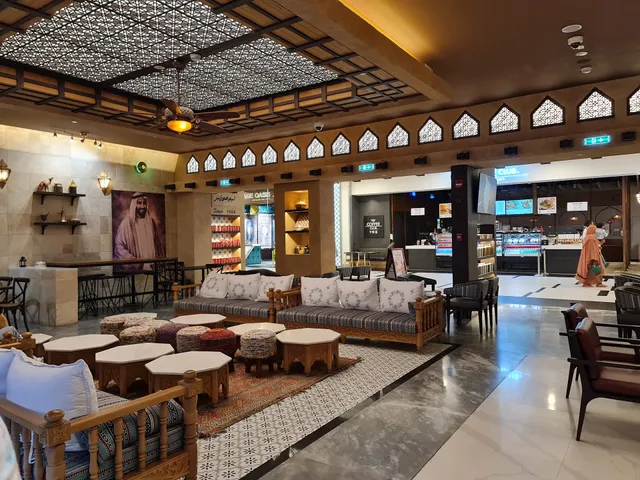
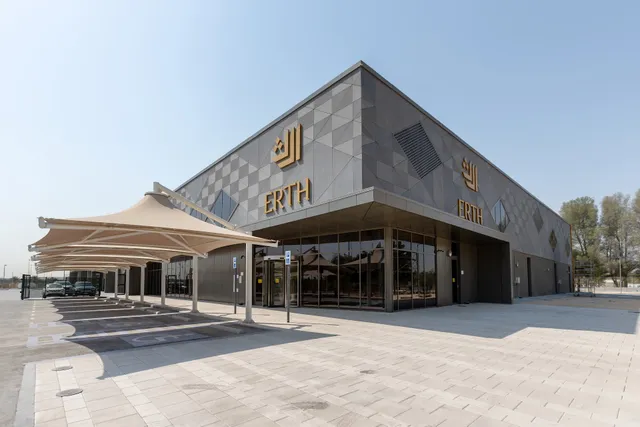
The entrance to the mosque is through a shopping centre, so don't get confused when your driver stops at an underground carpark.
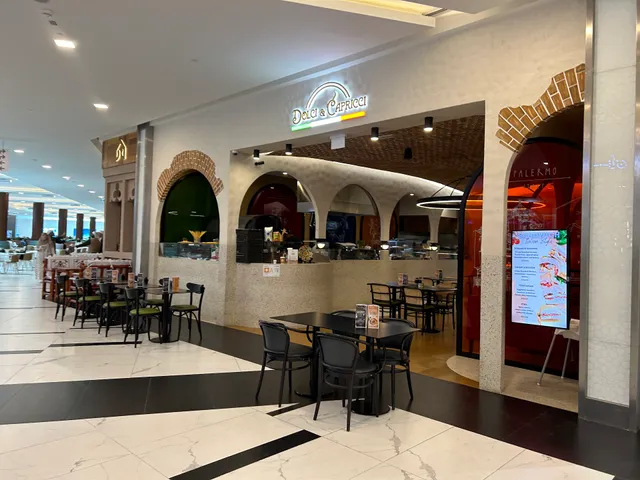
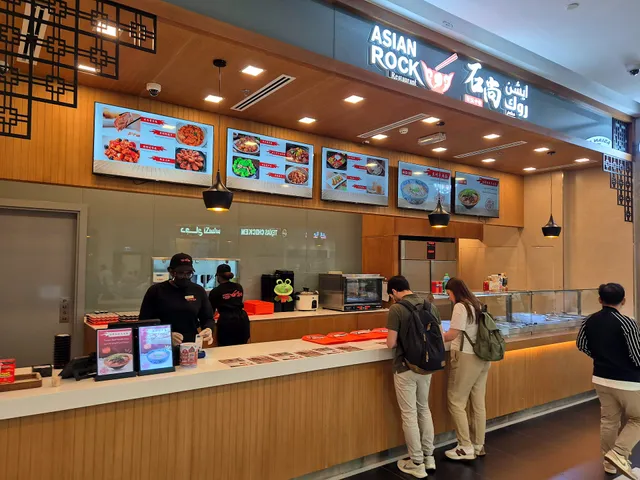
Similar to how you enter any large shopping centre, your driver will stop at the underground carpark and there will be an entrance to the main shopping area on that level. You enter the main shopping centre and there are many shops from fast food eateries to retail shops (again, similar to major shopping centres anywhere else). The prices here may be a little bit more expensive though, so keep that in mind.
Once you are in, you will turn left and follow the signages towards the walkway of the mosque entry. You may have to take a few turns. The entry point would be prominent as there would be security guards at the barricaded entry way and they would check your passes before hand.
Once you are past the security, the walkway to the mosque itself is consists of about 10 minutes of walking through underpasses. There are travellators where you can hop on, but it would still be about 10 minutes in total.
During this walk, it could be a good time for females to practice putting on their head scarf as once you enter the mosque, it's mandatory to have their head scarfs on at all times (there are female staff who would remind you to keep them on if it slips off).
Once you finish the walk, you would be greeted with a security checkpoint where you would do the usual process of checks including metal detectors etc. Similar to an airport, any lighters etc would have to be surrendered to the staff and you would be given a receipt to collect it later when you're exiting. After completing this, you would now be entering the mosque.
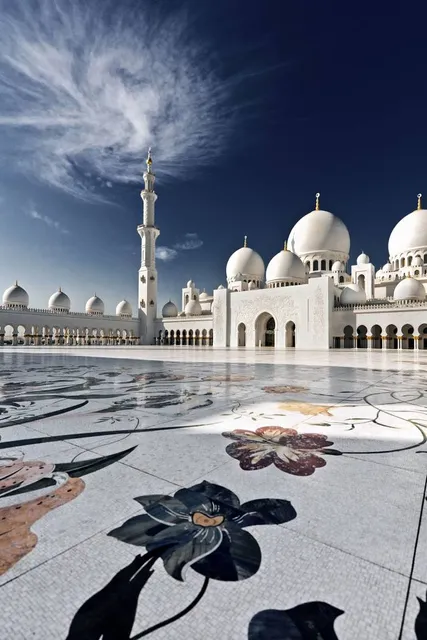
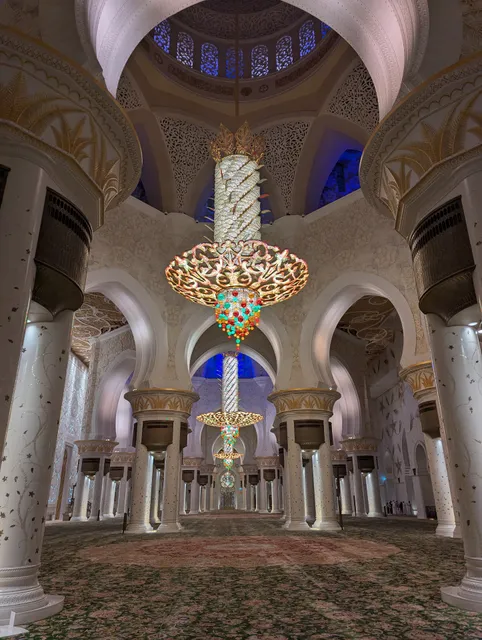
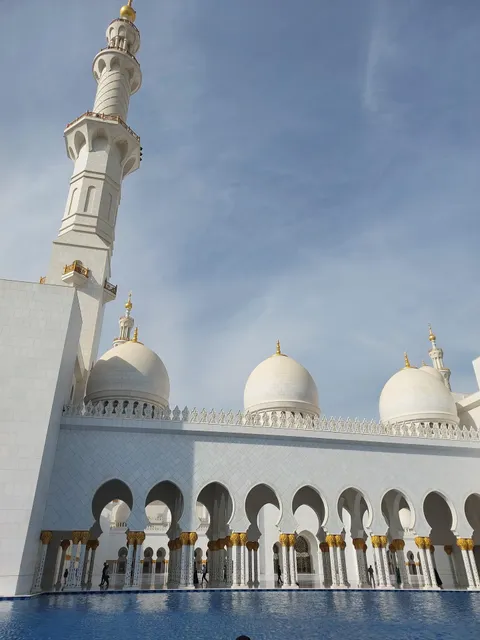
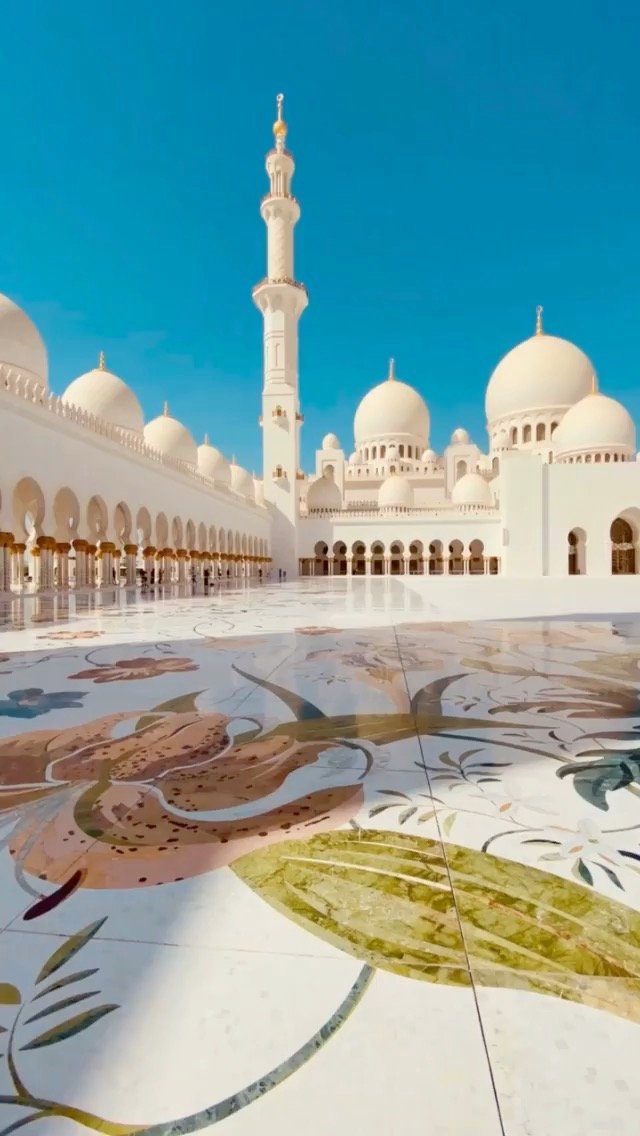
As it was end of year, the mosque was a little bit crowded, but still bearable. And the weather was much better (25+ degrees celcius) towards the end of year as well. The architecture was beautiful pearly white with intricate gold covering the internal pillars. There are many locations where you can take good photos and I recommend maximising the photos taken at each location.
I highly recommend taking good photos of yourself and your loved ones with the place. This can be considered one of those iconic places in the Middle East, that you need a photo with. For photo inspiration, head to IG and search for photos of the mosque by people who have posted photos publicly and you can get some inspiration for your own photo angles.
Overall, if you're planning a trip to Dubai or Abu Dhabi, this should be one of your items on your list and it'll be a shame if you...
Read more🇦🇪Sheikh Zayed Grand Mosque:🇦🇪🕌
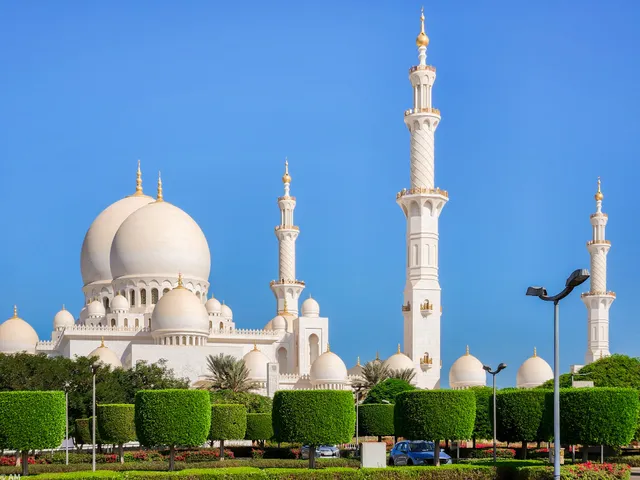
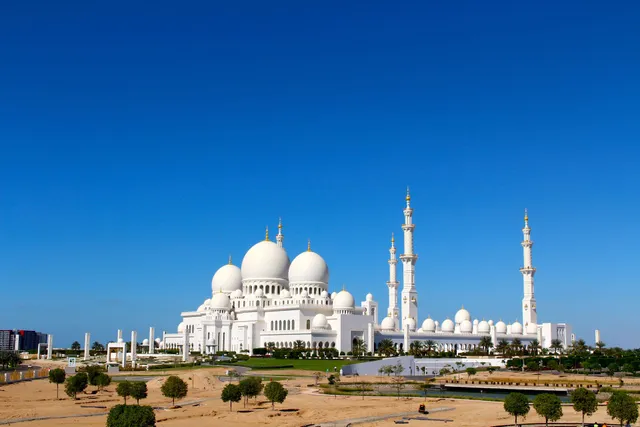
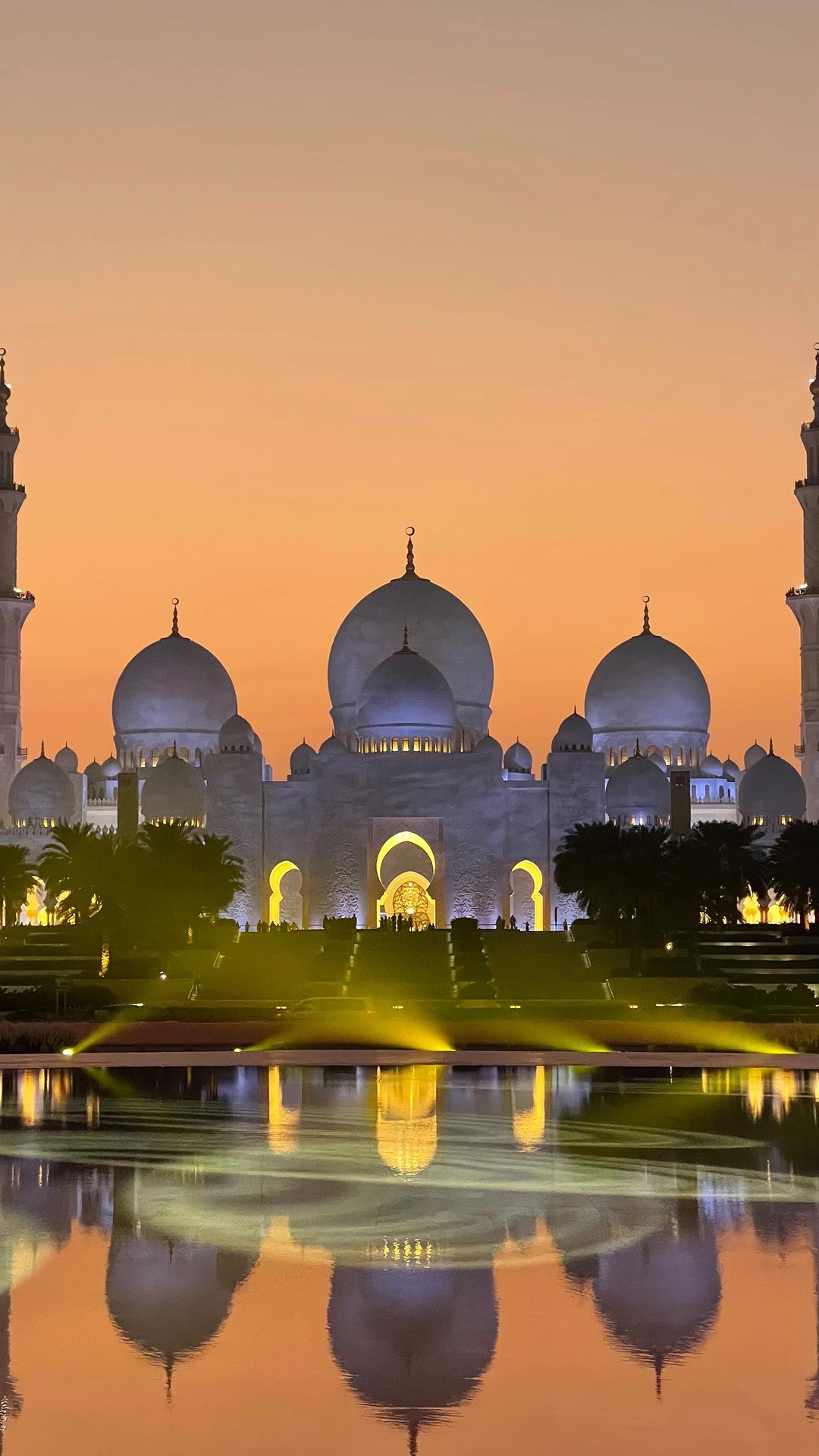
The Sheikh Zayed Grand Mosque is a breathtaking architectural marvel and a significant place of worship in Abu Dhabi, UAE. It showcases a blend of Islamic, Moorish, Mughal, and Ottoman architectural styles. With a capacity of 40,000 worshippers, it is the largest mosque in the country. The mosque is not only a place of worship but also a symbol of Islamic culture and tolerance, open to visitors of all faiths. Reviews often highlight its stunning white marble structure, intricate designs, and the overall serene atmosphere.
🇦🇪Islamic Culture in the UAE:🇦🇪
Islam is the predominant religion in the UAE, deeply influencing the country's culture and traditions. Hospitality and generosity are highly valued. While the population is diverse, reflecting over 200 nationalities, Islamic traditions are widely observed. This includes the five pillars of Islam: Profession of Faith, Prayer, Fasting, Charity, and Pilgrimage. Muslims pray five times a day, and you may see them praying in public spaces. During visits, it's respectful to be mindful of local customs, such as dressing modestly and refraining from eating, drinking, or smoking in public during Ramadan.
🇦🇪Ramadan in the UAE:🇦🇪
Ramadan is a holy month of fasting, worship, service, and community gathering. Muslims abstain from eating, drinking, and smoking from dawn till dusk. It's a time for reflection, increased prayer, and charitable acts. The exact dates of Ramadan vary each year, following the lunar calendar. During Ramadan, work hours are often reduced, and there are many community events, markets, and Iftars (the meal to break the fast). Non-Muslims are encouraged to respect those who are fasting. Many hotels and restaurants remain open, but it is respectful to avoid eating and drinking in public during fasting hours.
🇦🇪Ramadan Responsibilities:🇦🇪
During Ramadan, Muslims observe Sawm (fasting), which involves abstaining from food and drink from dawn to sunset. There are also other responsibilities, including abstaining from swearing, lying, fighting, and sexual activity. Fasting is intended to encourage self-discipline, spiritual growth, and empathy for those less fortunate. Certain groups are exempt from fasting, including the elderly, frail, those with poor health, pregnant or breastfeeding women, and travelers. Those who are exempt from fasting may be required to pay Fidya (a charitable donation).
🇦🇪Iftar Traditions in the UAE:🇦🇪
Iftar is the meal taken at sunset to break the fast during Ramadan. It traditionally begins with dates and water. Iftar is often a communal event, with families and friends gathering to share the meal. Many venues across the UAE host Iftars, ranging from lavish buffets to traditional meals. Ramadan tents are common, offering a traditional ambiance with Arabic decorations and sometimes live music. Giving to the less fortunate is a key part of Ramadan, and many organizations provide free Iftar meals. #lovesheikhzayedgrandmosque #loveabudhabi...
Read moreIt’s the largest mosque in the UAE Sheikh Zayed Grand Mosque is a colossal place of worship; big enough to accommodate over 40,000 visitors. The largest mosque in the UAE and third largest in the world, the complex covers over 22,400sqm. The main prayer hall can hold more than 7,000 worshippers, and there are two smaller prayer halls with a capacity of 1,500 each. Such is the mosque’s size that more than 100,000 tonnes of Greek and Macedonian marble were used in its construction.
It’s a masterpiece of modern Islamic architecture The 2.5bn AED project took 12 years to complete, starting in 1996. The mosque draws on classic Mamluk, Ottoman, and Fatimid architectural styles, and features a lighting system that reflects the lunar phases, projecting colours onto the mosque’s exterior that change nightly according to the moon. Its interior marries classic Middle Eastern arched doorways and geometric shapes with contemporary, innovative design. It was built by an international team of artisans While Arabic in appearance and design, the creation of Sheikh Zayed Grand Mosque was a collaboration between construction companies from around the world. Italian engineers Salini Impregilo led 3,000 workers from 38 contracting companies, while artisans from India, Germany, Egypt, Turkey, United Kingdom, China and Pakistan all lent their skills. The main prayer hall’s carpet — the world’s largest — was hand-knotted by 1,300 Iranian craftsmen using New Zealand wool. It’s so heavy that it had to be dismantled, flown in on two aeroplanes, then re-stitched on arrival.
All in the detail It’s the details that make Sheikh Zayed Grand Mosque so stunning. Semi-precious stones such as amethyst, lapis lazuli and jasper are embedded into columns. Delicate floral patterns in mother of pearl radiate from the walls. Six Faustig chandeliers made from twinkling Swarovski crystals and 24-carat galvanised gold hang from the ceiling. The largest chandelier is suspended from the roof of the central dome at a height of 15m.
The mosque was conceived by the first president of the UAE The Grand Mosque takes its name from the UAE’s first president, the late Sheikh Zayed bin Sultan Al Nahyan, who was the driving force behind this majestic construction. He chose the location – the entrance of Abu Dhabi island between Musaffah Bridge and Maqta Bridge – and gave architectural direction on the project. His wish was for it to be his final resting place, and his body now resides in the mosque’s courtyard.
It’s open to non-Muslim visitors Sheikh Zayed Grand Mosque offers free guided tours in English or Arabic. It’s open to visitors from Saturday – Thursday between 09:00 – 22:00 and on Friday from 16.30 – 22:00. Abayas are provided for women and long trousers for men. Don’t forget your sunglasses for those dazzling...
Read more