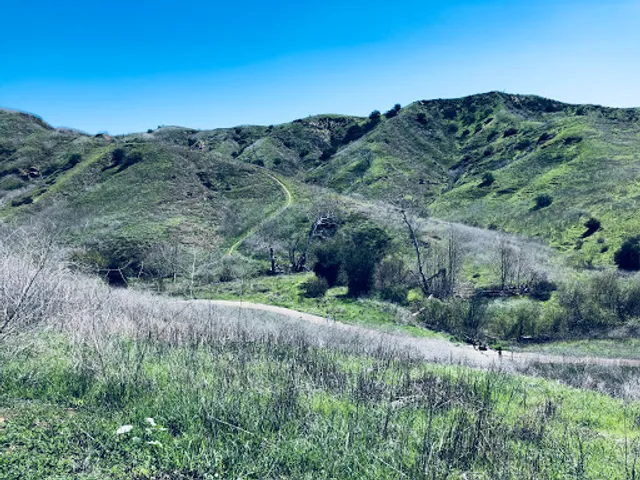
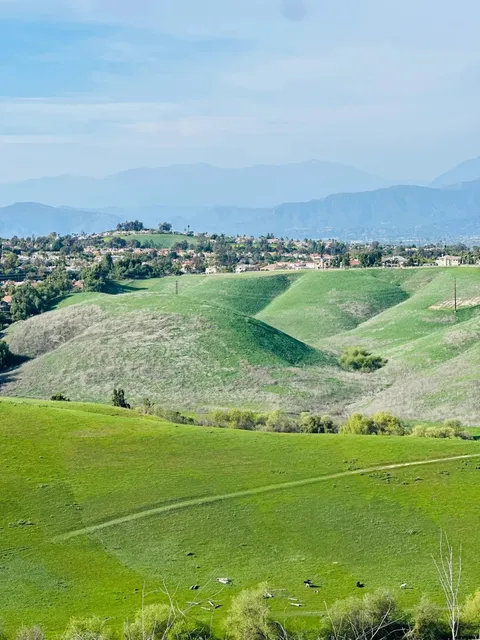
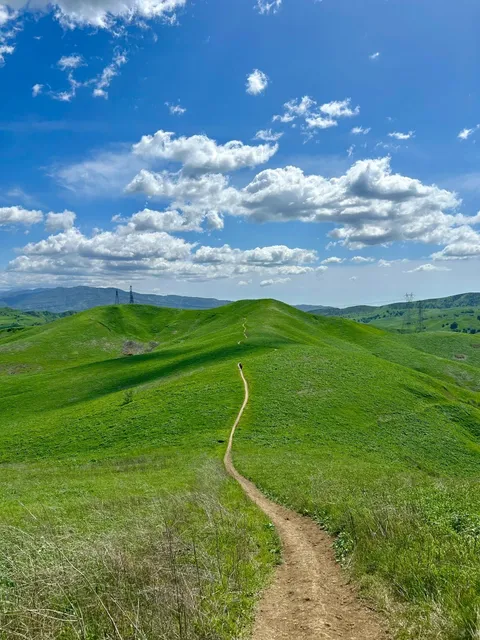
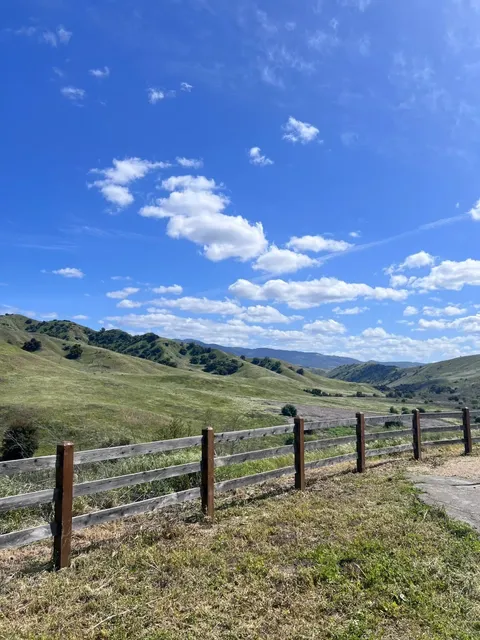
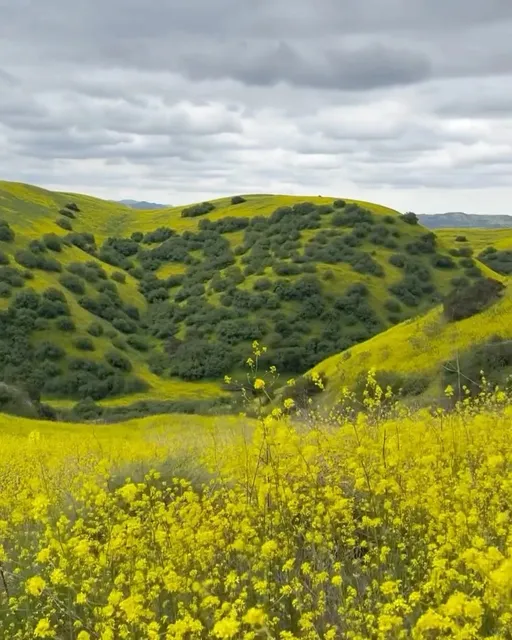
The park is exceptionally beautiful with serene and scenic views. A good way to burn and test your cardiovascular. Right now is certainly the best time to take any professional or Instagram worthy photos. The flower fields were surreal as it could get. Almost as if you could use your photos as a windows desktop background lol. There is an abundant amount of trails within the park so I must warn you that it could be overwhelming and a bit confusing when attempting to navigate especially if there little to no signal from your phone. My girlfriend and I decided to enter this park from the Chino Hills entrance. We parked our car off Elinvar Dr where there were 20+ cars parked for the park. This street was perpendicular to the street with the park entrance (Sapphire Rd). There's a long paved road that takes you far into the park for miles leaving you at the Rolling M Campground. We decided to speed walk for the whole duration of this paved road that has a short series of inclines and steep hills. At the end of the paved road, we finally entered the trail from the south side through the upper aliso trail. The trail started off with a lot of room with a bit of shaded trees. As we kept walking, the trail started to get narrow with the surrounding flowers and plants caving in and we noticed two mountain bikers heading our way. These guys were filled with pollen stuck to their clothes and they warned us about the narrow trail they had just got through. Our biggest mistake here was following the all trails app and taking the upper aliso trail (8 miles) without making a right into the sidewinder trail which I'm assuming the mountain bikers came through. The trail started to get so narrow, my girlfriend and I found ourselves in a struggle to even walk through the flowers and plants. I know it doesn't seem like anything crazy but it was extremely overwhelming with the pollens literally covering your whole body. We felt like after a couple of miles of this, we would've ended up out of the trail safely but instead resulted in a dead end. The trail took you to a tree and a small creek that showed no signs of any type of trail. We turned around and this supposedly 8 mile hike ended up turning into a 12 mile hike. The park ranger should've blocked that trail to protect people rather than misleading them to a dead end. It can be dangerous if you started this hike later in the afternoon. We started at 8 A.M. and didn't finish till 2 P.M. but we walked from the neighborhood. Won't be taking that route...
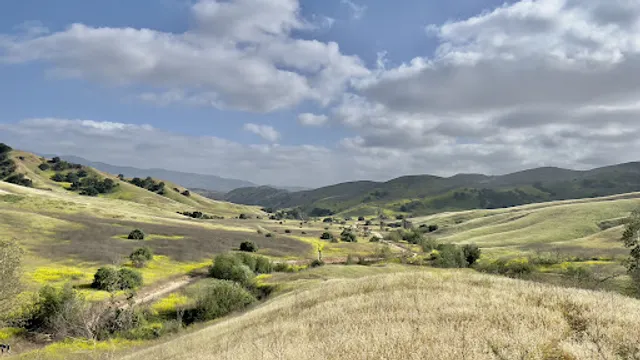
Read moreThe photos and video are from March 2019. It was the wettest spring in years and the "superbloom" of wildflowers was spectacular. You don't see the bloom while driving in from the drive-in entrance at Saphire Rd (off Soquel Cyn at Elenvar Rd) because you're looking at the north slopes of the hills. But once you get into the park and look north, you see old oak trees that survived fires surround by green grasslands and golden poppy mixed with dramatic purple and white flowers.
After the Tongva-Gabrieliño Indians were rounded up into missions, the Spanish at Mission San Gabriel grazed their cattle among the hills there. The hills probably haven't changed much since. Driving in is like driving back in time. Most of the park, including the campground are almost completely isolated from the noise of the surrounding suburbia and four major freeways. At night you hear coyotes, owls, frogs, nighthawks and occasionally a distant train making it's way up the Santa Ana Canyon alongside the 91 freeway.
The campground can get muddy when it rains. It has 4 restrooms and 4 showers, but no RV hookups and usually no cell reception. There are a few places in the park with cell coverage. Maybe the entrance station and higher peaks. Because there are coyotes and sightings have been reported of bobcats and mountain lions, it's a good idea to keep smaller children within sight.
Campsites are no shade to some shade by small oak trees scattered around. Looking south-east from the campground is a good view of Santiago Peak in the Santa Ana mountains, on the other side of the Santa Ana Canyon and the 91 freeway.
The only street entrance to the park is gated. Campers get the code to open the gate if they pay for a site then decide to leave the park and return after the 5PM closing time. So you don't have people joy-riding through the campground after dark. If you can do without cell reception (which could be more of a blessing than a curse, especially if you have "digital" kids) and RV hookups, the Rolling M Ranch campground is unique in it's wilderness setting in the midst of Southern California suburban...
Read moreFind available street parking outside the entry gate on Sapphire Rd. and hike/bike in for no cost, or you can pay the $10 fee to drive in. From the entrance, it's a 3 mile paved road that leads to the campground and day use parking areas. There are ~95 miles of trails for hiking, mountain biking, and horseback riding, with several trail access points along the road. Most trails are easy to moderate, some can be difficult (mostly in terms of steep slopes and elevation gain.) The park is extremely busy with limited parking during wildflower season (usually late February through early May) but very peaceful and quiet for the whole rest of the year.
You can also make campsite reservations online, $30/night for the first vehicle and $5/night for each additional vehicle. Restrooms and showers are available on site!
The park has great birdwatching and other wildlife sightings since it's an essential wildlife corridor between the Santa Ana Mountains to the south and the Puente Hills to the west. There are plenty of birds: red tailed hawks, cooper's hawks, american kestrels, peregrine falcons, barn owls, great horned owls, and the occasional golden eagle, lots of ravens, turkey vultures, roadrunners, and a large variety of songbirds. There are small rodents like rabbits, squirrels, and even some weasels, as well as larger mammals like coyotes, bobcats, and deer, and a mountain lion has been seen on very rare occasions. Lots of reptiles: rattlesnakes, gopher snakes, striped racers, alligator lizards, fence lizards, and desert horned lizards. There's the typical variety of bugs and insects, but especially noteworthy are the tarantulas, tarantula hawk wasps, and scorpions!
There's a large variety of native trees, shrubs, and grasses, in addition to some widespread invasive species (primarily mustard and thistle.) Everything has grown back abundantly and beautifully since the Blue Ridge fire in fall of 2020, so it's a great place for a drive, ride, hike, leisurely saunter, or just to relax for...
Read more