Without question, one of the most influential universities regarding mathematics and physics research. This review is directed to the Department of Physics. Those involved in Particle Physics may find this review thought provoking. The King of the Sciences is Physics. The Crown Jewel is The General Theory of Relativity. The Holy Grail is The Unified Field Theory. The path taken to resolve Unified Field Theory issues is purely subjective and has little to do with physical laws. The impulse to resolve UFT issues is a monotheistic religious one which, at its core, is derived from the Judeo-Christian tradition. Now, the high energy/ high cost path chosen by CERN and Brookhaven National Lab is based on the controlled dissection of atoms and subatomic particles using kinetic energy via acceleration. It is but one path. These researchers think they hold the Keys to the Kingdom, so to speak, while the rest of us dummies wait with baited breath until the next Higgs Boson or God Particle is "discovered". What actually occurs in the CERN LHC is the creation of matter from the conversion of substantial kinetic energy into matter- more correctly, particles with specific attributes are created, and result from these highly controlled collisions. These particles do not exist in Nature- only fleetingly in the LHC. These particle physicists have convinced themselves that the one and only path to resolving UFT issues is to demonstrate the particulate nature of the Four Fundamental Forces, which is ridiculous, and to catalog an endless number of subatomic particles that supposedly exist in Nature. String Theory is their Golden Ring. The truth, however, is that String Theory is a misdirected line of inquiry. It is a dark alley with no exit. Four Fundamental Forces? There are actually TWO. DUALITY rules our Universe! DUALISM is what I ascribe to. There's gravity, and then there's everything else which are actually sublimations of that OTHER UNNAMED FORCE. Additionally, the "multiverse" does not exist and phrases such as "Dark Energy" and "Dark Matter" are utilized when scientists, quite frankly, don't know what the hell they're talking about! If you ascribe to the belief that gravitons exist, then you need to reacquaint yourself with the work of Albert Einstein! Gravity is simply the deformation of spacetime by mass. Spacetime is a CONTINUUM much like a physical medium. Gravity is not a particle and it has no velocity, and it doesn't need to be a particle and it doesn't need to have a velocity of c since it is the deformation of a CONTINUUM that everything is embedded in to begin with. It is simply the bending or distortion of spacetime. True, gravity waves exist and ripple through spacetime at c whenever there is a cataclysmic galactic or astronomical event, such as the collision of two large "black holes", but this is more an attribute of the continuum than of gravity. Likewise, light travels at c because the spacetime continuum limits light to c. Light is not self limiting. Its actual velocity is much higher than c ! This is not experimentally demonstrable and it never will be, however. Anyway, my path to solving UFT issues is the observation and studying of galaxies such as our own and the nearby Andromeda galaxy. All galaxies adhere to every physical law we know, and probably other laws we don't know. The black holes at their rotational centers are not the engines of destruction; they are the engines of creation. Creation of matter (stars) occurs in the accretion zones just outside the event horizons of some of these more massive black holes. All the naturally occurring elements originate in the formation of stars. Every atom in existence and every atom in your body has its origin in stellar formation and the proportions of these elements relative to one another is unique to the galaxy these atoms...
Read morePrinceton University is a prestigious private Ivy League research university in Princeton, New Jersey, United States. Here are some critical points about Princeton University:
Foundation: Princeton University was founded in 1746, making it one of the oldest universities in the United States. It started as the College of New Jersey and was initially located in Elizabeth, New Jersey, before moving to its current location in Princeton in 1756.
Ivy League: Princeton is a member of the Ivy League, a group of eight private universities in the northeastern United States known for their academic excellence, selective admissions, and historic prestige.
Academic Excellence: Princeton is renowned for its rigorous academic programs and world-class faculty. It offers undergraduate and graduate programs in various disciplines, including arts and humanities, natural sciences, social sciences, engineering, and public affairs.
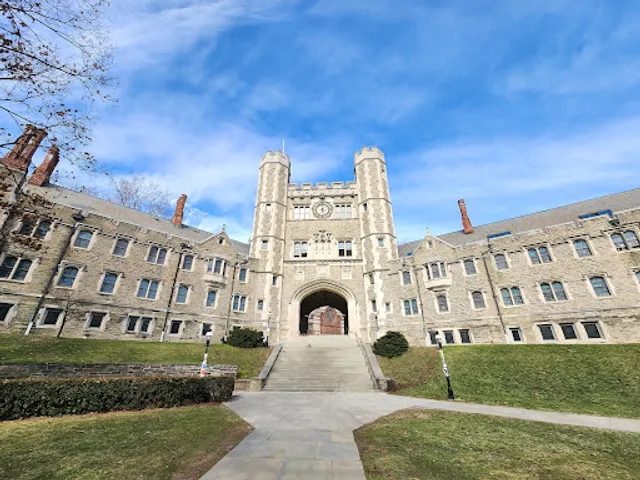
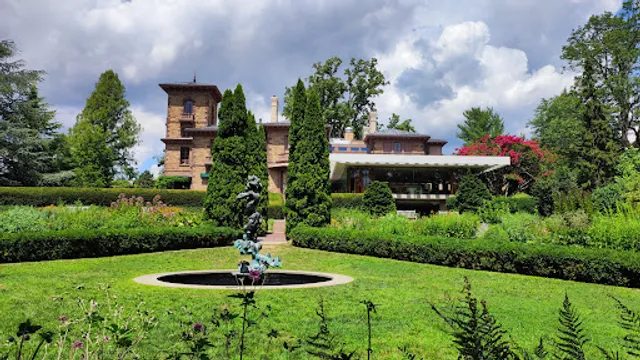
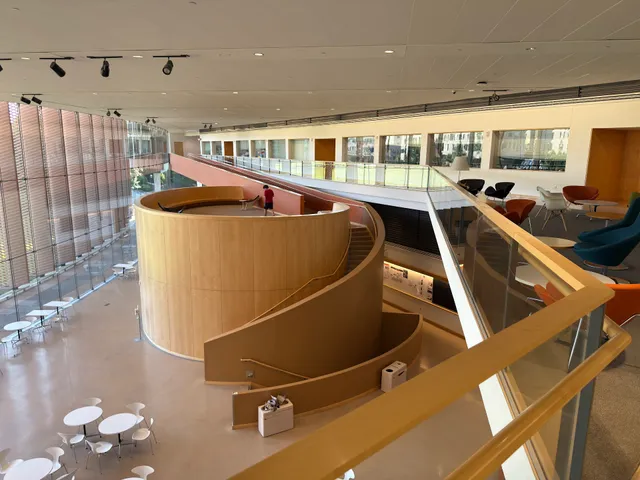
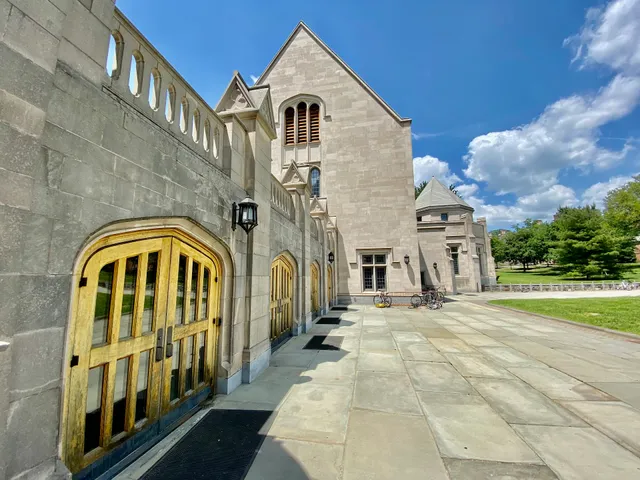
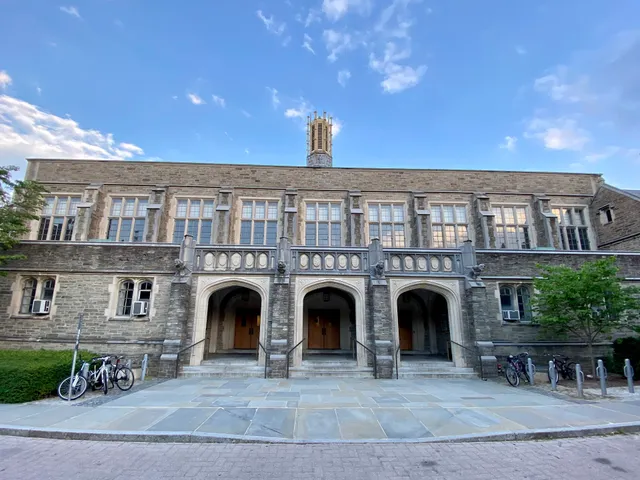
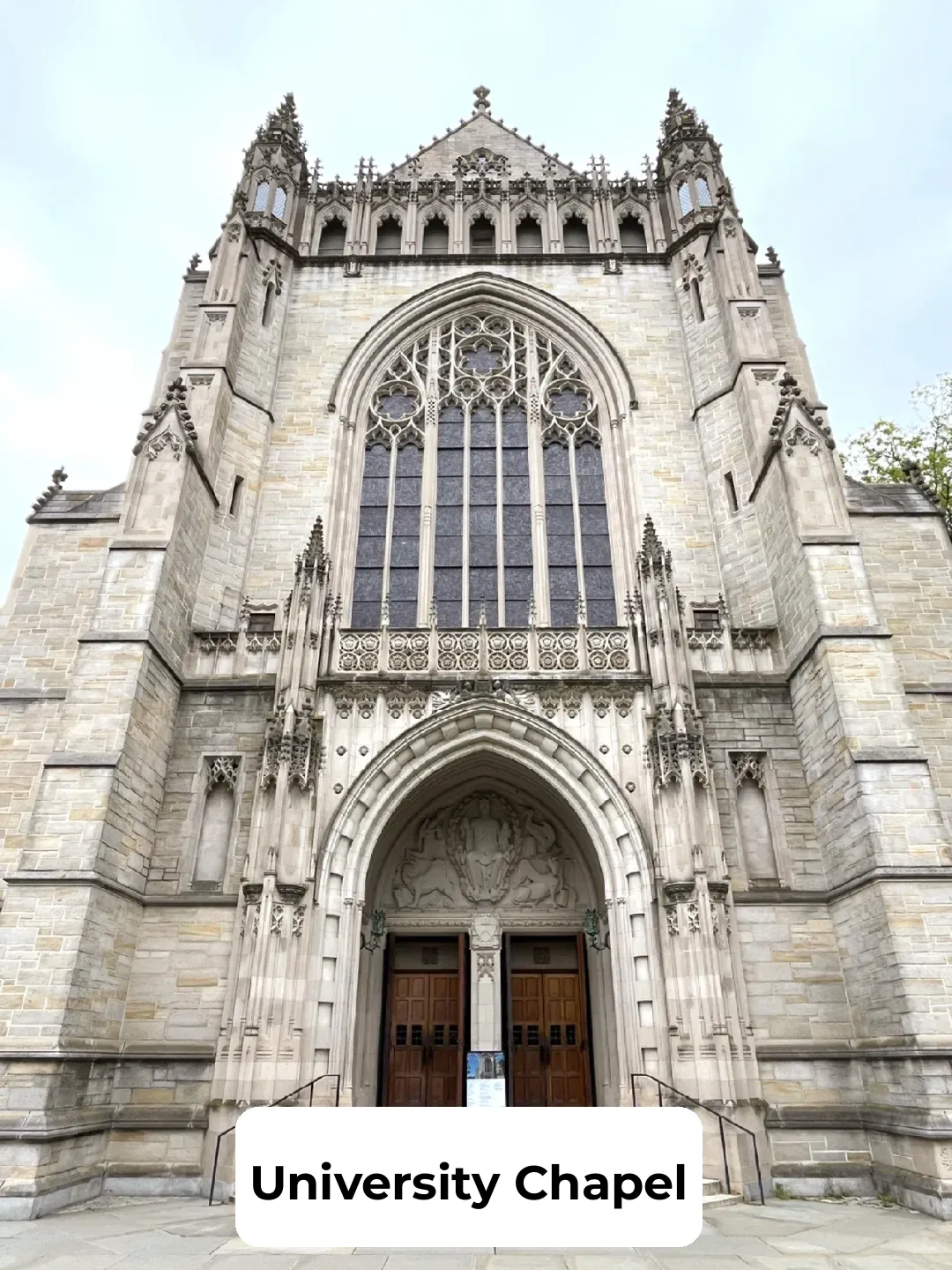
Campus: Princeton's picturesque campus spans over 600 acres in Princeton, New Jersey. It blends historic and modern buildings, including iconic landmarks such as Nassau Hall, the university's oldest building, and the Princeton University Chapel.
Research: Princeton is a leading research institution, conducting groundbreaking research across various fields, including physics, mathematics, computer science, economics, and public policy. It is affiliated with numerous research centres, institutes, and laboratories.
Notable Alumni and Faculty: Princeton has produced numerous notable alumni and faculty members, including Nobel laureates, Pulitzer Prize winners, U.S. presidents, Supreme Court justices, scientists, writers, and entrepreneurs. Some famous alumni include James Madison, Woodrow Wilson, Albert Einstein, and Jeff Bezos.
Undergraduate Focus: Princeton strongly emphasises undergraduate education, with a low student-to-faculty ratio and a focus on small class sizes, independent research, and close interaction between students and faculty.
Community and Culture: Princeton has a diverse and vibrant campus community, with students, faculty, and staff worldwide. It fosters a collaborative and intellectually stimulating environment with numerous extracurricular activities, clubs, and organisations. Princeton University is widely regarded as one of the world's premier institutions for higher education and research, with a distinguished history, a commitment to excellence, and a global impact across...
Read morePrinceton University Overview:
Princeton University, located in Princeton, New Jersey, is one of the world's most prestigious Ivy League institutions. Founded in 1746, it's renowned for its academic excellence, beautiful campus, and notable alumni. The university offers undergraduate and graduate programs across various disciplines, including humanities, sciences, engineering, and social sciences.
Tourist Guide for Princeton University:
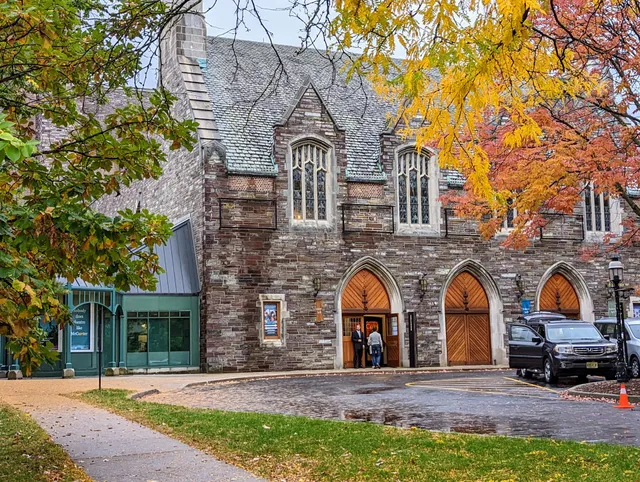
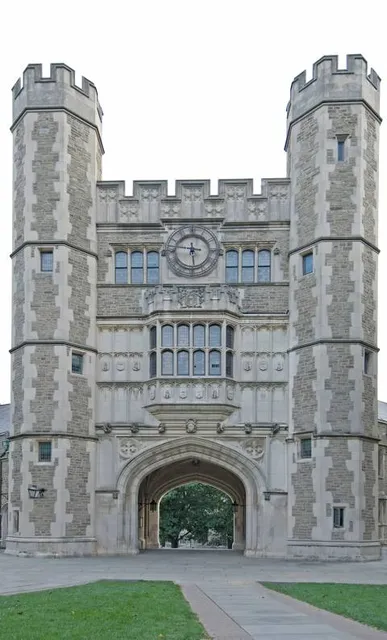
Campus Tour: Begin your visit with a guided or self-guided tour of the picturesque campus. Highlights include Nassau Hall, the historic heart of the university, and the stunning Gothic architecture of buildings like the University Chapel and Blair Hall.
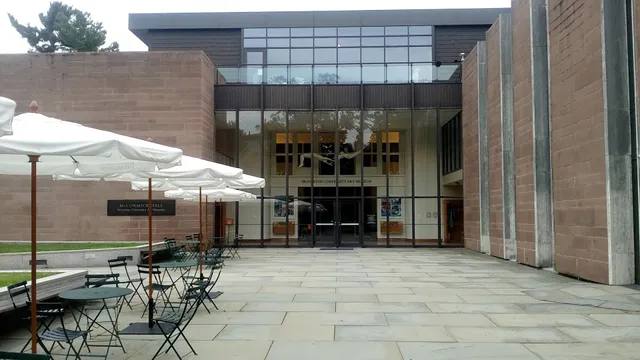
Art Museum: Explore the Princeton University Art Museum, which boasts an impressive collection spanning ancient to contemporary art. Admission is free, making it a must-visit for art enthusiasts.
Einstein's Corner: Visit the Albert Einstein House, located a short walk from campus. This modest residence was home to the renowned physicist during his time at Princeton and offers insights into his life and work.
Princeton Cemetery: Pay your respects at the Princeton Cemetery, where notable figures such as former U.S. Presidents Grover Cleveland and Aaron Burr are buried. The cemetery also features beautiful grounds for quiet reflection.
Shopping and Dining: Explore Nassau Street, the main thoroughfare adjacent to campus, lined with charming shops, cafes, and restaurants. It's an excellent place to grab a bite to eat or pick up souvenirs.
McCarter Theatre Center: Catch a performance at the McCarter Theatre Center, a renowned venue for theater, dance, and music productions. Check the schedule for upcoming shows during your visit.
Institute for Advanced Study: While technically separate from Princeton University, the nearby Institute for Advanced Study is worth a visit. This academic hub has been home to many influential scholars, including Einstein, Oppenheimer, and Gödel.
Nature Walks: Take a stroll through nearby nature preserves like the Delaware and Raritan Canal State Park or Mountain Lakes Preserve for a refreshing break from campus life.
Enjoy your visit to Princeton University, where history, culture, and academic...
Read more