
The Dusk of the Roman Empire
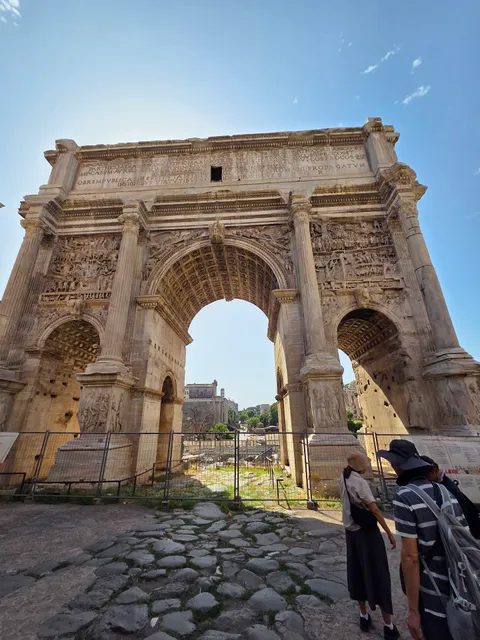
The fading glow of Roman civilization Gradually fades away within these stones. 🪨 The Foro Romano (Roman Forum) was once the core hub of ancient Rome’s political, religious, judicial, and commercial activities—and the very heart of the empire. It witnessed debates in the Republican Senate, imperial triumph processions, important temple rituals, and market transactions, making it one of the most symbolic public spaces in the entire Mediterranean world at that time. 🏛️ This site was home to numerous pivotal buildings, such as the Curia (Senate House), the Temple of Romulus, the Temple of Vesta, and several triumphal arches. Its grandeur could rival the Weiyang Palace of China’s Han Dynasty Chang’an, and the central hubs of all ancient cities across the East and West. Yet this once bustling and prosperous forum gradually fell into silence and oblivion after the fall of the Western Roman Empire: Abandonment and Desolation Since the 8th century CE, the Roman Forum was completely abandoned. Architectural ruins collapsed under the weight of time, earthquakes, and human destruction, gradually covered by soil and vegetation. By the Middle Ages, it was even used as a pasture for cattle—earning it the name "Campo Vaccino (Cow Field)." 🐄 The Age of Quarrying (Renaissance Era) In the 15th and 16th centuries, with the construction of large-scale projects like St. Peter’s Basilica, the ancient Roman ruins became an "urban quarry." Massive amounts of marble and stone columns were dismantled and transported, further damaging the relics. 🪨 First Formal Archaeological Excavation (1803) Archaeologist Carlo Fea began clearing the soil around the Arch of Septimius Severus, marking the start of archaeological excavations. 🔍 National Systematic Excavation and Restoration (from 1898) The Italian government organized more systematic excavations, led by archaeologist Giacomo Boni. He gradually restored numerous relics (such as the Temple of Jupiter Stator and Latin inscriptions), a landmark achievement for Roman historical research. This work continues to this day, with new discoveries still emerging. Opening to Visitors As early as the late 19th century, parts of the site were open to the public. It was not until the mid-to-late 20th century that it truly became an organized scenic spot, gradually developed into an open-air archaeological site and a core area of a World Cultural Heritage site. #TwilightOfTheGods #EternalSunset #Rome #RomanForum #RomeTravel #Italy #RomanCivilization