A number of attempts at establishing collections of Australian portraits were made during the 19th century; and during the first decade of the 20th, the Australian painter, Tom Roberts, encouraged the Commonwealth government to give some thought to the creation of a ‘painted record' of the nation's ‘prominent statesmen'.
While the suggestion ultimately resulted, in late 1911, in the formation of the Historic Memorials Committee – the body that, since that time, has commissioned official portraits of prime ministers, governors-general and chief justices of the High Court – it was not until the final decade of the 20th century that the possibility of a dedicated place for a national, publicly owned portrait collection began to take shape.
In 1988, with the then almost 80-year-old Archibald Prize having more than proven our interest in images of other people and portraiture's place in Australian art, the Melbourne philanthropists Gordon Darling AC CMG and Marilyn Darling AC decided to make a reality of the idea of an Australian national portrait gallery, visiting the already established examples in London and Washington DC.
Thereafter, and with the particular encouragement of then National Portrait Gallery Washington Director, Alan Fern, they conceived the vision for an Australian counterpart, consequently seeing to the development of an exhibition that would ‘show people in various parts of the country a sample of what a National Portrait Gallery would do for Australia'. Featuring 116 portraits, in various mediums, of sitters representing spheres such as politics, exploration, the arts, science, business and sport, the exhibition Uncommon Australians: Towards an Australian Portrait Gallery opened at the National Gallery of Victoria in May 1992 and then toured to Canberra, Brisbane, Sydney and Adelaide, introducing visitors not just to the concept of a national portrait gallery but also to the unique interpretive approach such an institution might take: an approach which, through the interplay of art, word and biography, could succeed in creating an enriching and accessible narrative of the country's history, culture and people.
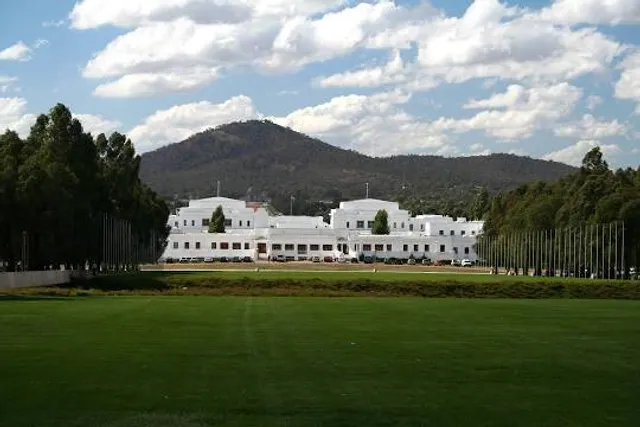
In the wake of Uncommon Australians, the Federal government allocated funds towards the establishment of a portrait gallery, to be located in three rooms in Old Parliament House and managed by the National Library of Australia. This new venture's first exhibition, About face: aspects of Australian portraiture 1770–1993 was launched by Prime Minister Paul Keating in 1994. For the next three years, the Gallery fulfilled its brief to present three or four exhibitions per year drawn from the ‘distributed national collection' of portraits from public and private sources.
In 1997, early on in his term as prime minister and again at the instigation of Gordon and Marilyn Darling, John Howard visited the National Portrait Gallery in Washington DC, encountering there an Australian tourist who expressed to him the opinion that there should be ‘one of these at home'. Subsequently, the Howard government announced that the Gallery was to become a institution in its own right, with a budget and a brief to develop a collection of portraits reflecting the breadth and complexity of Australian history...
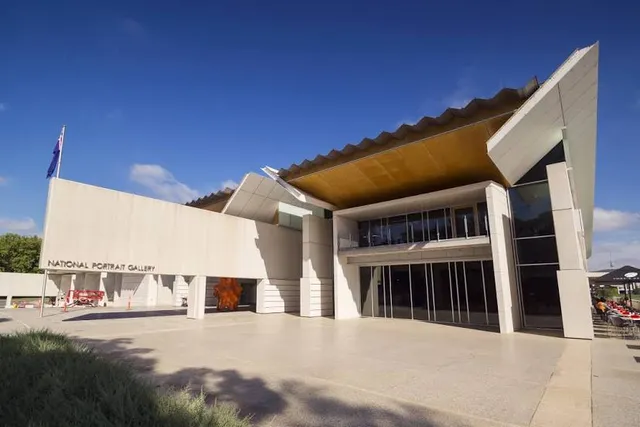
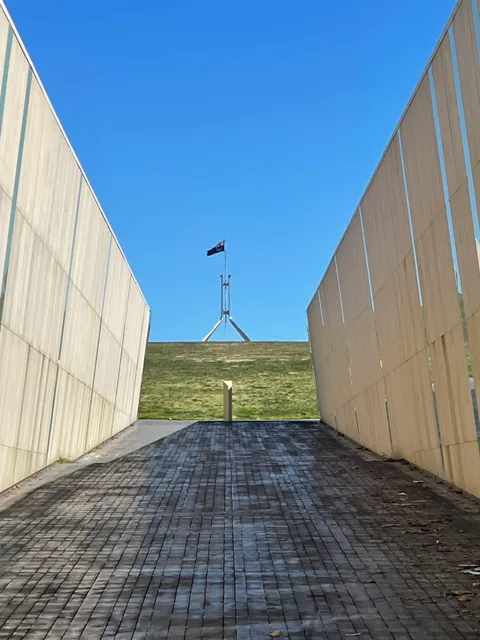
Read moreThe National Portrait Gallery in Canberra is a collection of portraits of prominent Australians (by birth or association) who are important in their field of endeavour or whose life sets them apart as an individual of long-term public interest. The collection was established in May 1998, and until 2008 was housed in Old Parliament House and in a nearby gallery on Commonwealth Place. On 4 December 2008, its purpose-built permanent home was opened on King Edward Terrace, Canberra – beside the High Court of Australia – by Prime Minister Kevin Rudd.
In the early 1900s, the painter Tom Roberts was the first to propose that Australia should have a national portrait gallery, but it was not until the 1990s that the possibility began to take shape.
The 1992 exhibition Uncommon Australians – developed by the Gallery's founding patrons, Gordon and Marilyn Darling – was shown in Canberra and toured to four state galleries, igniting the idea of a national portrait gallery. In 1994, under the management of the National Library of Australia, the Gallery's first exhibition was launched in Old Parliament House. It was a further four years before the appointment of Andrew Sayers as inaugural Director signalled the establishment of the National Portrait Gallery as an institution in its own right, with a board, a budget and a brief to develop its own collection. The opening of displays in the refurbished Parliamentary Library and two adjacent wings of Old Parliament House in 1999 endorsed the Gallery's status and arrival as an independent institution.
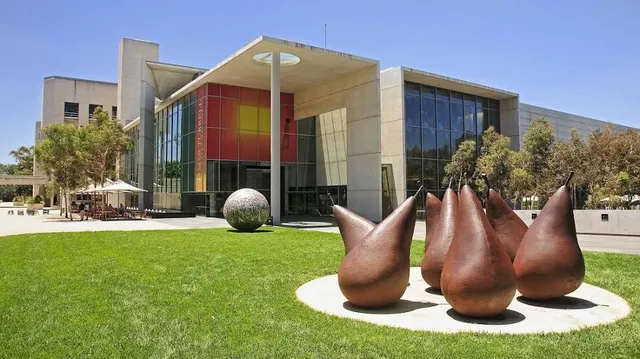
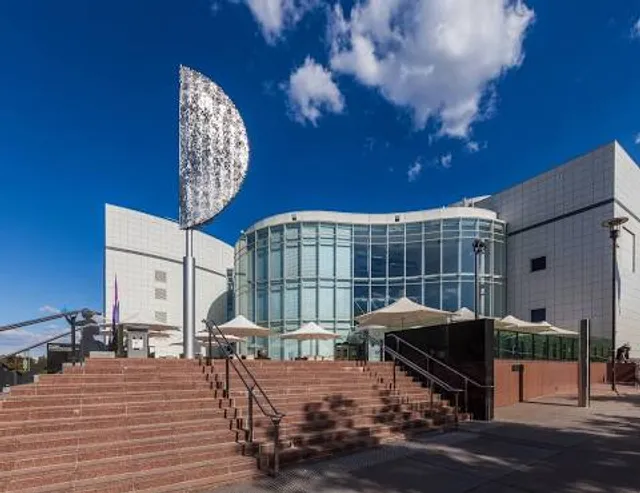
While the spaces of Old Parliament House proved adaptable to the National Portrait Gallery's programs, its growing profile and collection necessitated the move to a dedicated building. Funding for the $87 million building was provided in the 2005 Federal Budget and Sydney-based architectural firm Johnson Pilton Walker was awarded the job of creating the Gallery, with construction commencing in December 2006. The new National Portrait Gallery opened to the public on 4 December 2008.
The Gallery’s National Photographic Portrait Prize (NPPP) is a highlight of the Australian arts calendar. Judges select 40 to 50 finalists from thousands of entries from across the nation, with these comprising the annual NPPP exhibition. 2020 also sees the arrival of the inaugural Darling Portrait Prize for painted portraits, featuring a AUD$75,000 winner’s prize. The Darling Prize exhibition’s March opening means it joins the NPPP in the Gallery’s autumn calendar, with the two exhibitions presented in tandem as the Gallery’s inaugural ‘National Portrait Prizes’.
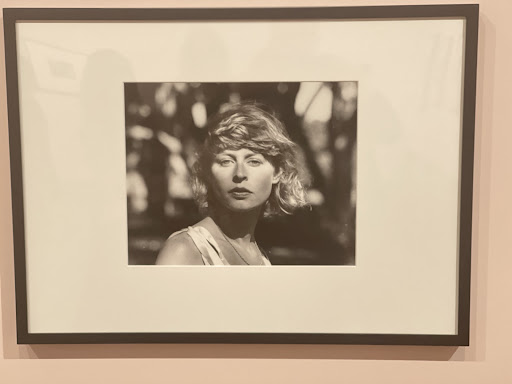
The inaugural prize was awarded to Anthea da Silva for her portrait of dancer and choreographer Elizabeth...
Read moreBen says it all
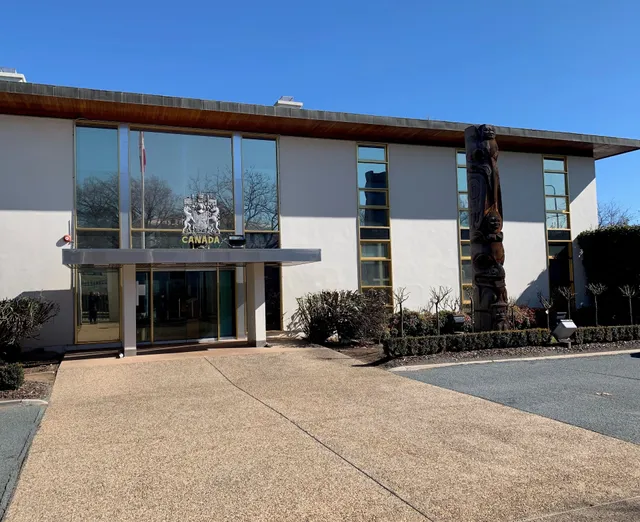
Walking into the National Portrait Gallery feels like stepping inside the raw, exposed heart of our national narrative. This isn't just a building – it's a visceral canvas where Australian identity is splayed open, messy and magnificent.
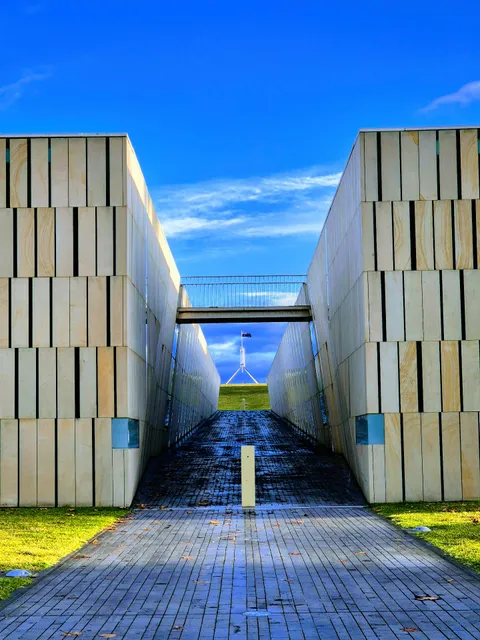
The architecture itself speaks volumes - angular, uncompromising, much like the stories it contains. Those clean lines and vast spaces? They're not about sterility, but about giving each portrait room to breathe, to scream, to whisper its truth.
As an artist who's always been obsessed with the complexity of Australian identity, I'm struck by how this gallery doesn't just display portraits – it interrogates them. Each frame is a battlefield of representation, challenging our comfortable mythologies. The Indigenous portraits especially pulse with an energy that demands you confront our complicated history.
The curation here is fearless. It's not about pretty pictures, but about psychological landscapes. Each subject is stripped back, like my own portraits – no polite facades, just the brutal honesty of human experience. You see the wrinkles, the scars, the moments of vulnerability that define us far more than any heroic stance.
My mate Gough Whitlam's portrait hangs here – and bloody hell, it captures something essential about political courage. The portraits of athletes, artists, activists – they're not just images, they're testimonies. They challenge the viewer to look beyond the surface, to understand the weight of individual stories.
The gallery does what great art should do: it makes you uncomfortable. It forces you to see ourselves – our nation – not as we wish we were, but as we actually are. Complex. Contradictory. Endlessly fascinating.
For anyone who wants to understand Australia beyond the sanitized tourism brochures, this is your pilgrimage. Come face to face with our national soul – warts, beauty, and...
Read more