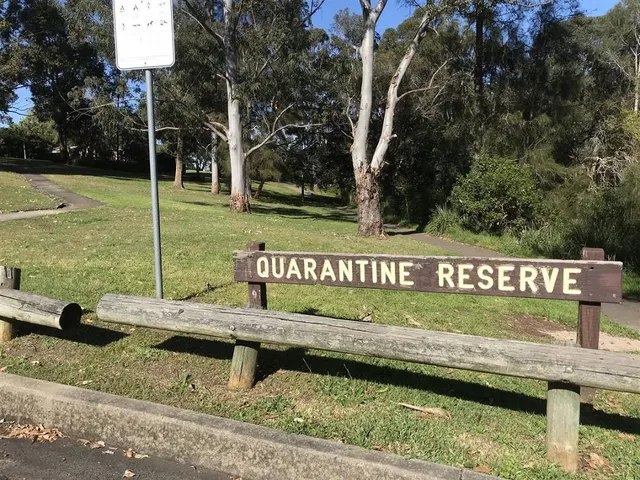
Definitely 4.5 stars. I headed off for a visit to Quarantine Reserve on foot in some light rain and with a forecast of clearing showers. Instead it was an all day deluge - that no paper cup, however big, could hold. So my text, as opposed to the photographs by the river simultaneously with a dead low tide (especially), are probably incapable of adding much to so many excellent reviews of this place. For me to say it is almost deserted and remarkably peaceful all day long is useful if planning to visit during a future rain event.
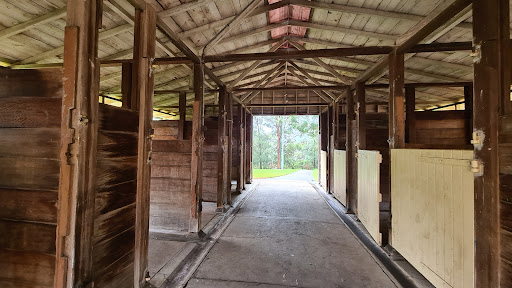
Nonetheless, it is a beautiful place; with an interesting history as an animal quarantine station (1917 - 1980) that is explained by signage and some well-maintaned (historical) structures. Not all the relevant structures to the historical use of the site remain, but those that do are being carefully preserved and are integrated in a considerate way with the "upper part" of the Reserve.
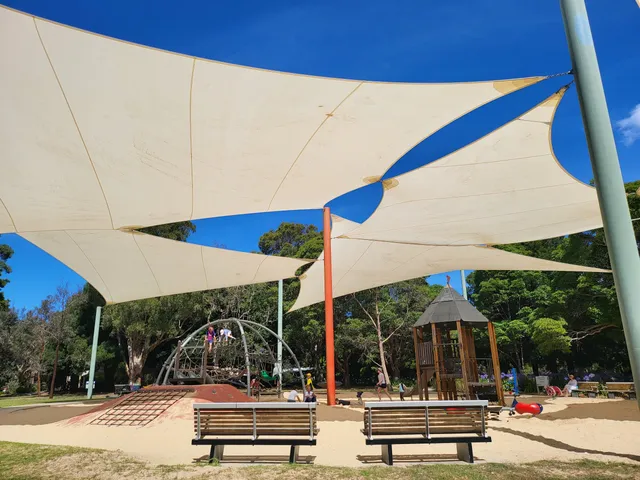
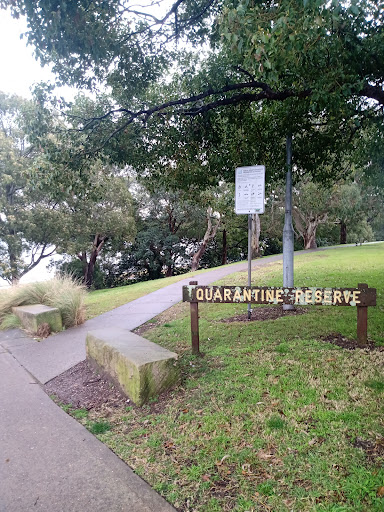
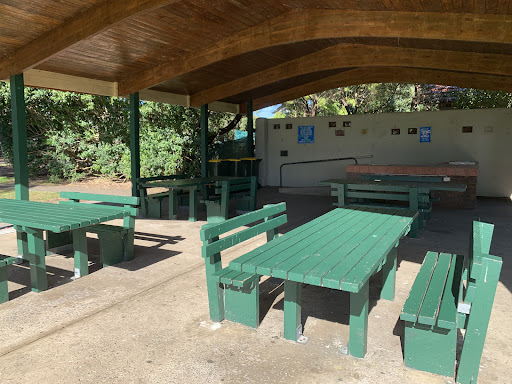
The upper part of the Reserve is a sloping grassed and lightly vegetated area, crossed by relatively inconspicuous concrete paths with an occasional bench seat. There are also public toilets - the Reserve is a touch off the busier areas of Abbotsford - and a large covered picnic area with seating, tables and electric cooker. Handy also if wanting to read a book or spend a lot of time on a mobile device; or in a prolonged deluge to dry out a little; but especially valuable for picnics lunches of a sunny day protected from any unexpected short but violent summer storm.
It might be worthwhile if records exist, for the history signs to include some information about the famous visitors to Australia whose animals were kept in quarantine here, during the years of its operation. It was open in the years before international air travel (and before it was commonplace) and I suspect some famous people brought their pets with them on the ocean voyages to Australia and had them in quarantine here. A brief look on the web indicates that many famous racehorses were in quarantine here, "Horrie the War Dog", and a rumour of a giraffe buried on the grounds.
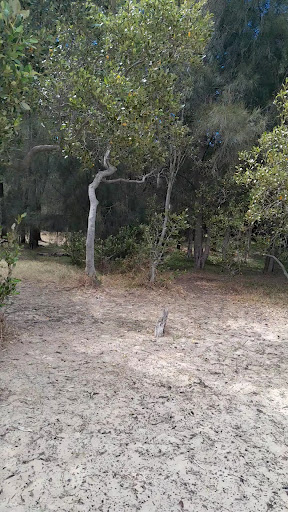
The "lower part" of the Reserve is extraordinary Riverside area that, with a low tide, has an unexpectedly wide stretch of beach. It is really a wonderful discovery where time can be very pleasantly spent observing the views or carrying out other activities. I noticed a view I recognised from a painting of a local artist - and included that in my photos.
The reason for the half-star deduction is that the transition from the upper part of the Reserve to the lower part of the Reserve is a much steeper long slope that poses real challenge to negotiate if not steady on your feet - or (released from quarantine) part mountain goat if the grass is wet and the ground soft.
There is a potential and fairly inconspicuous route through a less steep part of the slope that should be utilised for a sympathetic concrete path of the type elsewhere in the Reserve, to the lower part of the Reserve. A previous review has noted that people with limited mobility/disability would have difficulties enjoying all this Reserve can offer. The concrete "driveway" beside the Reserve near the corner of Spring Street and Abbotsford Parade is too steep for a wheelchair or walker; and if you can drive down it in a car to drop someone there, why put the sandstone blocks to the entry to the Reserve so close together at the bottom (unlike at the top) that a walker or wheelchair would have to lifted over them? A suitable gap for each of the nearby small sculptures to enter and exit the Reserve should they ever be minded.
It should be possible for a sympathetic path addition to be made preserving the historic and with it, very natural landscape, feeling this Reserve imparts/conveys.
Update 21/9/25 With uninterrupted blue sky, I made a return visit here for a typical visitor experience to the Reserve. Present today was a jamboree of the 2nd Abbotsford 'Port Neptune' Sea Scouts. I think I just might defer writing anything about a typical visitor experience. i have added some blue sky...
Read moreToilets, picnic tables, benches, BBQ facilities, horse stables, and a small beach ⛱️.
HISTORY Quarantine reserve is a part of Hexham. This place was originally known as Cluthaville. The property was located between Hexham and the Parramatta River. The annexue of Cluthaville to Hexham was short-lived as the Commonwealth government required it for a quarantine station. The station was to replace the quarantine station at Bradley Head, which had to be moved to make way for the Taronga Zoological park, which by 1912 had outgrown its site at Moore Park. Development of the Abbottsford quarantine station occurred between 1917- 1930,initially accommodating sheep 🐑, cattle, pigs 🐖, horses 🐎, dogs 🐕 and cats 🐈. Animals imported to Australia were quarantined to ensure they were disease free prior to being released to their owners. The quarantine station originally included 24 cattle stalls plus yards surrounding the stall, 10 horse 🐎 stalls in 5 buildings, 32 dog 🐕 kennels, which increased to 83 when rebuilt in 1950s, a piggery 🐖 which was seldom used for fear of Swine fever, a dogs 🐕 kitchen where the food for the dogs was prepared as well as an incinerator, feed store,caretakers cottage then in 1950s a cattery 🐈 was added but was later demolished. The quarantine station was closed in 1980, and in 1981, the quarantine reserve was opened...
Read moreThe quarantine facilities are far roomier and have a less rapy vibe than most of Melbourne. Of course the original inhabitants, the knoble horse, are far better behaved than most Victorians. The facilities are great, I went fishing, didn't catch anything but a photo of my 'professional' Fisher buddy getting a lure stuck in a tree. Priceless. Also met a beautiful white Husky who was just roaming like corona didn't exist. Good...
Read more