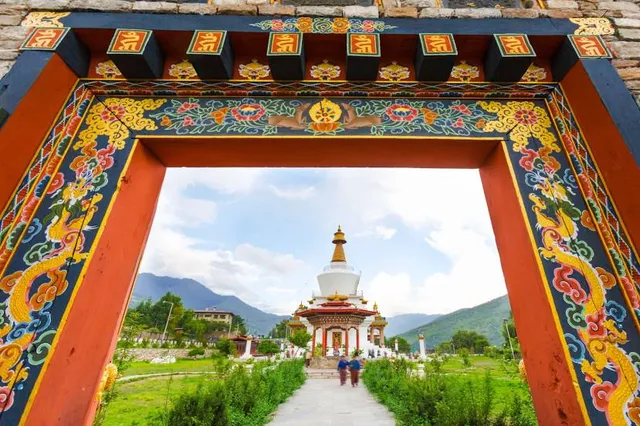
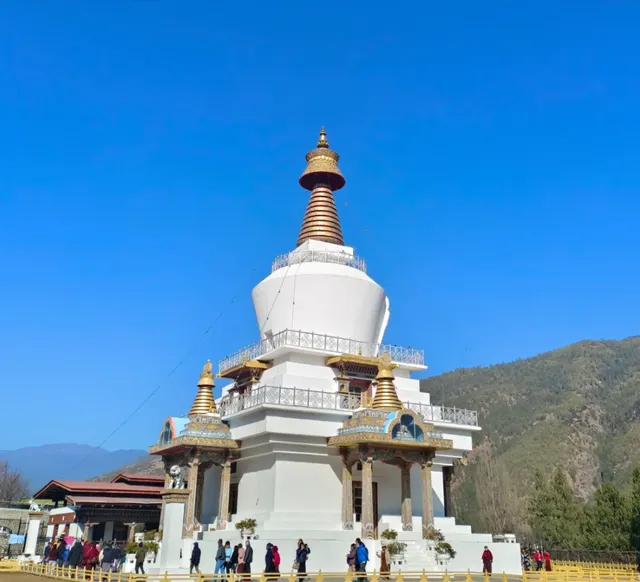
The National Memorial Chorten was built in memory of Third Druk Gyalpo and is dedicated to World Peace. The chorten is a large white structure crowned with a golden spire. It is located close to the center of Thimphu city and is one of its most iconic monuments. Visitors will find elderly Bhutanese people circumambulating the Chorten throughout the day. Chorten literally means ‘Seat of Faith’ and Buddhists often call such monuments, the ‘Mind of Buddha’. The Chorten is an extraordinary example of Buddhist architecture and artwork with its gorgeous paintings and intricate sculptures. The Memorial Stupa, Thimphu, also known as the Thimphu Chorten, is a stupa (Dzongkha chöten, cheten) in Thimphu, Bhutan, located on Doeboom Lam in the southern-central part of the city near the main roundabout and Indian military hospital. The stupa, built in 1974 to honor the third Druk Gyalpo, Jigme Dorji Wangchuck (1928–1972), is a prominent landmark in the city with its golden spires and bells.In 2008, it underwent extensive renovation. It is popularly known as "the most visible religious landmark in Bhutan". It was consecrated by Dudjom Jigdral Yeshe Dorje. This stupa is unlike others as it does not enshrine human remains. Only the Druk Gyalpo’s photo in a ceremonial dress adorns a hall in the ground floor.When he was alive, Jigme Dorji wanted to build "a chorten to represent the mind of the Buddha". The Memorial Chorten of Thimphu was conceived by Thinley Norbu Rinpoche (1931–2011),according to the Nyingma tradition of Tibetan Buddhism.It was erected in 1974 in memory of Jigme Dorji Wangchuck, 3rd Druk Gyalpo, who had died in 1972. The main patron was the Druk Gyalpo's mother, Phuntsho Choden. The architecture of the chorten has been designed to present it as “one of the most visible religious structures in Thimphu”.The Memorial Chorten, in the heart of the city, is designed is a Tibetan style chorten, also called the Jangchup Chorten, patterned on the design of a classical stupa, with a pyramidal pillar crowned by a crescent moon and sun. The feature that is distinct here is the outward flaring of the rounded part to give the shape of a vase (a pyramidal shape), unlike a dome shape.The chorten depicts larger than life size images of wrathful deities with their female consorts in large numbers, and many in explicit Yab-Yum sexual poses. The chorten is a large white structure with a golden spire crowning it and a smaller golden spire above the front porch. It is approached through a small garden and a gate decorated with three slate carvings. On the exterior of the gate are representations of the three protective bodhisattvas–Avalokiteśvara (the symbol of compassion), Mañjuśrī (the symbol of knowledge) and Vajrapāṇi, the symbol of power. On the interior are slates engraved with the image of Ngawang Namgyal, Gautama Buddha and Padmasambhava. Large prayer wheels are located to the left.The chorten attracts many elderly Bhutanese on a daily basis who circumambulate the chorten, whirl the large red prayer wheels and pray at the shrine. It has four entrances but only one entrance is open for devotees to visit the shrine. The chorten is decorated with richly carved annexes facing the four directions, and contain mandalas, statues and a shrine dedicated to the third king.The ground floor of the chorten is consecrated to the teachings of Vajrakīlaya. It has four shrines, each with different pictures of the king; with the eastern shrine housing a Buddha image. From the ground floor, a staircase leads to two more floors and each floor has four shrines. A centrally placed large wooden carving covers all three levels, behind the shrines; a large number of wooden carvings mostly depict wrathful looking protective deities. The roof of chorten is accessed from the second level and a protective railing covers the terrace on the third floor. The second floor is dedicated to teachings of the Drukpa Lineage of the Kagyu school to subdue eight varieties of evil spirits and the top floor is dedicated to the teachings of...
Read moreThimphu, the capital city of Bhutan, is a fascinating blend of the old and the new, offering a unique experience to its visitors. Nestled in the heart of the Himalayan Kingdom, Thimphu is a city where traditional Bhutanese culture thrives amidst modern developments. Here’s a review based on the insights gathered:
Cultural Richness and Historical Significance Established as the capital in 1961, Thimphu has quickly become the center of Bhutanese governance and culture. The city’s history dates back to the 13th century, and it has since evolved into a bustling hub that still honors its past. Visitors can explore the Tashichho Dzong, the throne room of the King of Bhutan, or delve into ancient texts at the National Library1.
Modern Influences and Development Despite its rapid modernization, Thimphu has managed to preserve its cultural heritage and traditional architecture. The city’s approach to development, prioritizing Gross National Happiness over GDP, is evident in its careful balance between progress and preservation1.
Top Attractions and Experiences Thimphu is home to one of the largest Buddha statues in the region, which is not only a spiritual landmark but also offers panoramic views of the valley. The city hosts the annual Thimphu Tshechu festival, a vibrant celebration of Bhutanese culture and religion1. For those interested in activities, there are numerous options from private sightseeing tours to multi-day treks that showcase the natural beauty of the area.
Why Visit Thimphu? Thimphu is a city that must be experienced firsthand. Its allure lies in its ability to offer a glimpse into the soul of Bhutan. Whether you’re a history buff, a cultural enthusiast, or simply seeking a serene escape, Thimphu has something to enchant every traveler1.
In conclusion, Thimphu is a city that captivates with its charm, from its rich cultural tapestry to its stunning natural landscapes. It’s a place where tradition meets modernity, and where every corner has a story to tell. A visit to Thimphu is more than just a trip; it’s an immersion into the...
Read moreWhen I visited the National Memorial Chorten in Thimphu, I immediately felt the deep sense of peace that everyone talks about. Located right in the heart of the city, this white stupa with its golden spire isn’t just a monument — it’s a living symbol of Bhutan’s devotion, faith, and love for its late Third King, Jigme Dorji Wangchuck, known as the Father of Modern Bhutan. Built in 1974 by his mother, Queen Phuntsho Choden Wangchuck, it was her way of fulfilling his wish to build a chorten representing the “mind of the Buddha.”
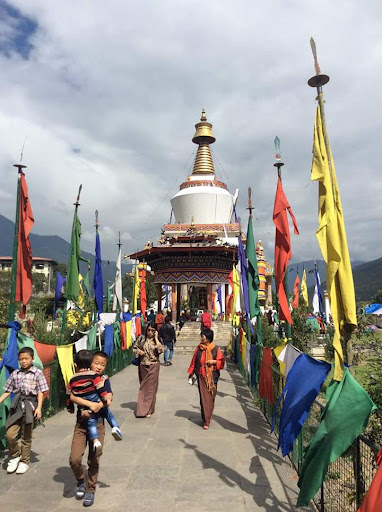
As I walked around the stupa, I joined locals — elderly people, monks, and families — who were circumambulating clockwise, spinning large red prayer wheels and softly chanting mantras. The air was filled with the sound of fluttering prayer flags and the gentle ringing of bells, which gave the whole place an incredible sense of calm. It felt like time slowed down here; even in the center of busy Thimphu, this spot was pure serenity.
Architecturally, the chorten is stunning. Its Tibetan-style design flares outward like a vase and gleams under the sunlight. Inside, each floor is filled with intricate paintings and statues — from fierce protector deities to serene Buddhas — all meant to guide the mind toward peace and enlightenment. Though photography isn’t allowed inside, the art and atmosphere stay with you long after you leave.
What really touched me most was watching how deeply this place is woven into daily life. Locals come every morning and evening to pray, meditate, or just sit quietly — and as a visitor, you can’t help but feel moved by their devotion. The best time to visit, I found, is early morning or late afternoon when the light hits the golden spire and the energy feels especially spiritual.
In the end, the National Memorial Chorten isn’t just something to see — it’s something to feel. It’s a place where Bhutan’s spirituality, culture, and history come together beautifully, and it left me with a lasting sense of peace...
Read more